AI-Assisted Directing for Dialogue-Heavy Scenes Works When the Director Keeps the Human Scene in Charge
AI-Assisted Directing for Dialogue-Heavy Scenes matters because directing is not only choosing images. It is shaping behavior, rhythm, mood, movement, and intention so an audience can feel the scene. Dialogue-heavy scenes live in rhythm, listening, interruption, and what characters avoid saying. AI can help directors compare options, organize rehearsal material, test visual or performance ideas, and notice production questions earlier. The tool is useful only when it supports human judgment. The director still has to decide what the scene means, what actors need, and which choices belong in the final film.
Begin With the Scene's Human Need
The strongest starting point is the scene's human need. Dialogue-heavy scenes live in rhythm, listening, interruption, and what characters avoid saying. Before asking AI for options, a director should know what changes between the first beat and the last. Does a character hide something, reveal something, lose control, gain courage, or misunderstand another person. That change is the center of the work.
When the human need is clear, AI-assisted planning becomes more specific. It can help test mood, blocking, pacing, or visual consistency in service of the scene. When the need is unclear, generated suggestions can feel polished while pulling attention away from the actual performance problem.
Use AI as a Rehearsal Aid
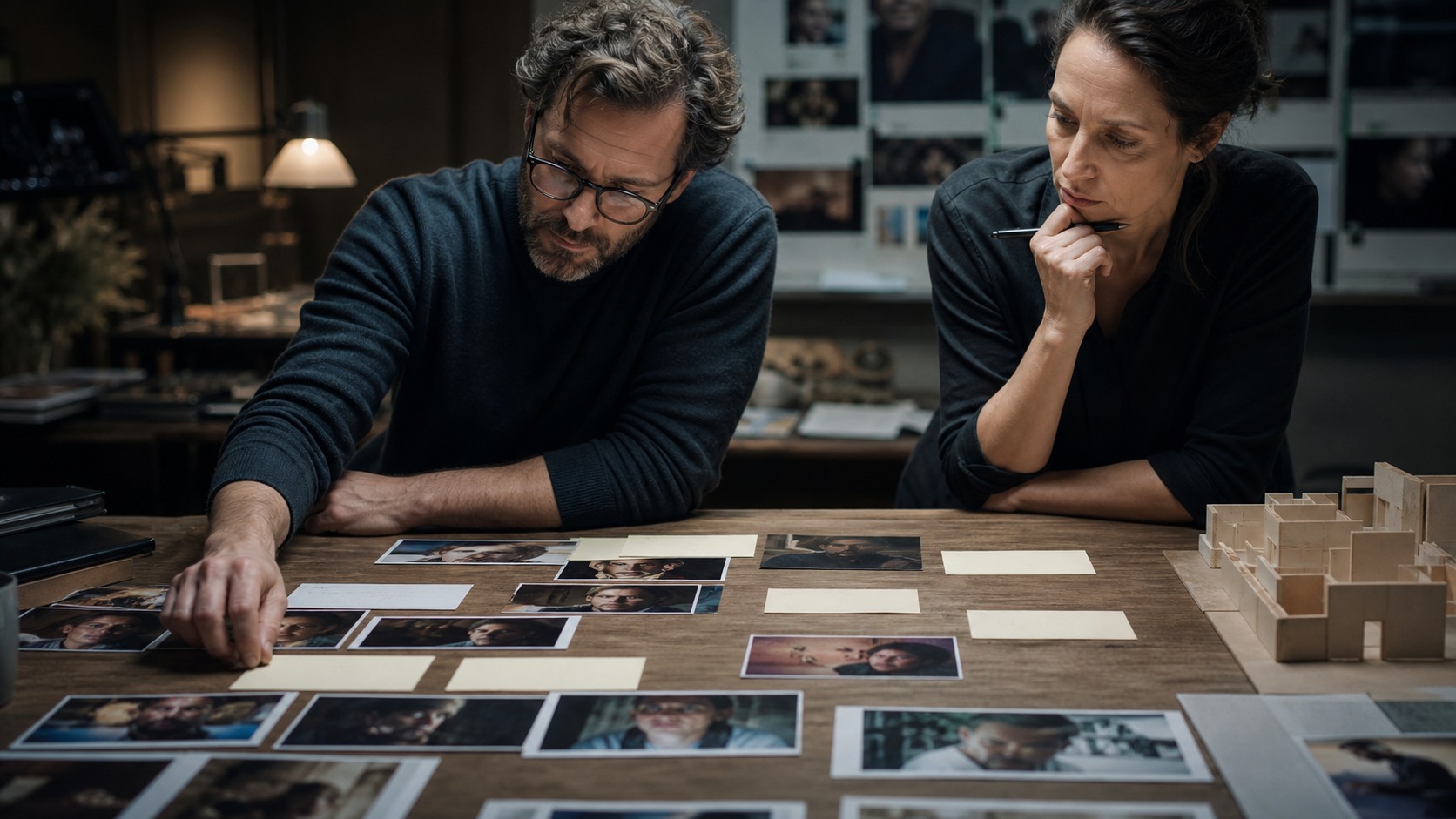
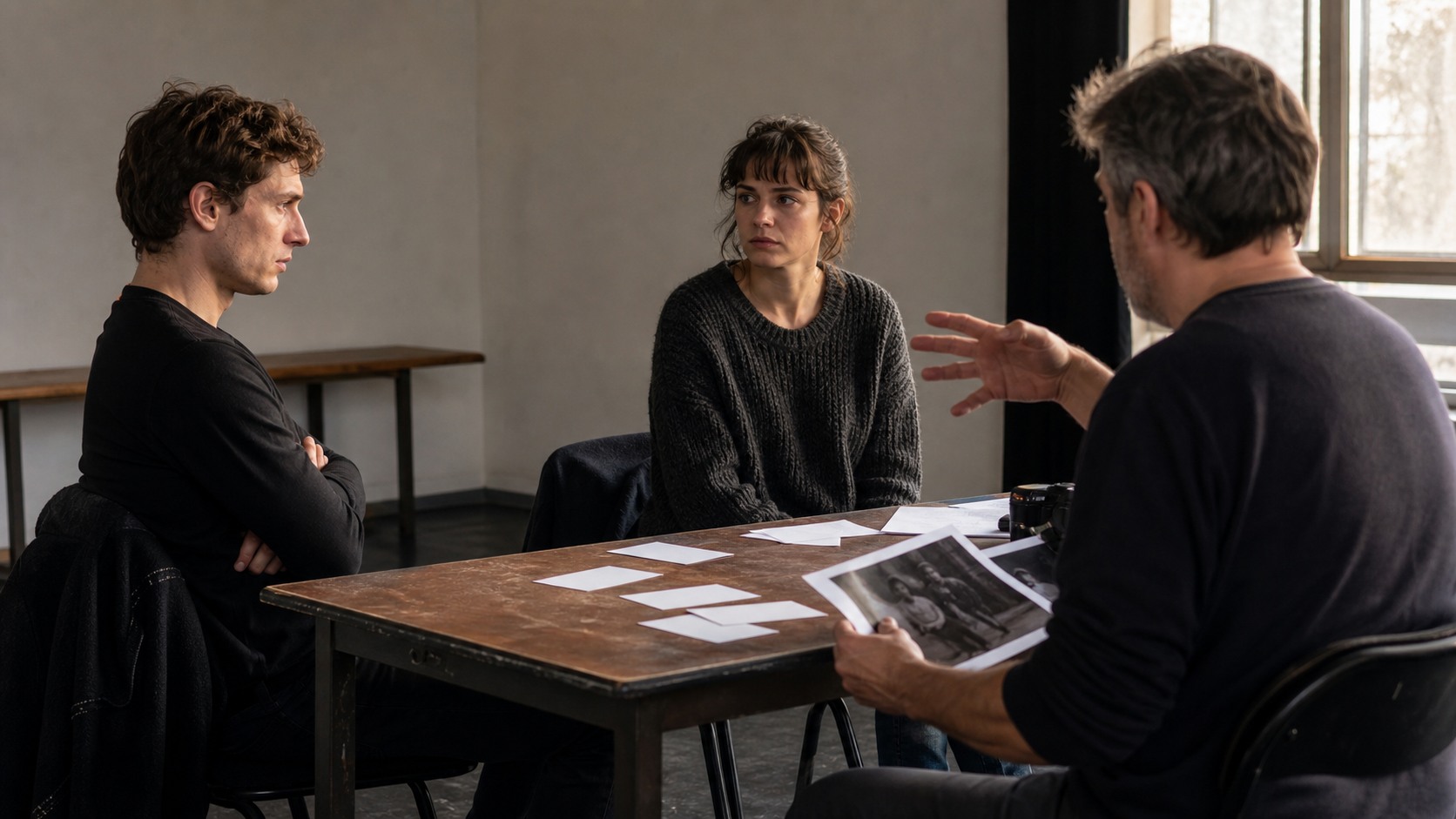
AI-Assisted Directing for Dialogue-Heavy Scenes can support rehearsal by giving directors material to compare before the room gets crowded. A director might prepare emotional beat references, alternate blocking paths, visual atmosphere studies, or questions for actors and department heads. Those materials can help a rehearsal begin with purpose.
The director should keep the materials flexible. Actors need room to discover behavior, and the best rehearsal often changes the plan. AI-assisted prep should make the room more responsive, not more rigid. The useful plan is the one that helps everyone understand what is being tested.
Protect Actor Trust
Actor trust is central to AI-assisted directing. Performers should not feel that a tool has already decided their choices before they arrive. AI-Assisted Directing for Dialogue-Heavy Scenes should help the director ask sharper questions, not replace listening. Actors bring timing, instinct, vulnerability, and surprise that cannot be predicted from a generated outline.
Directors can protect trust by explaining how AI material is being used. A reference might show emotional pressure, not a required facial expression. A blocking study might suggest geography, not a fixed performance. Clear framing keeps the actor inside the creative process.
Performance Beats
Performance beats are small but powerful. A silence, glance, hesitation, or shift in posture may carry more meaning than a larger action. AI can help organize these beats for review, but the director has to judge whether the beat feels truthful in the actor's body.
The review should ask what the audience learns at each beat. If a tool suggests a change that makes the scene clearer but less alive, the director may reject it. If a suggestion reveals a missing reaction or a better order, it can become useful. The standard is not novelty; it is dramatic truth.
Subtext and Dialogue
Dialogue-heavy scenes and subtext-driven scenes need special care. The literal words may say one thing while the body, pause, and camera say another. AI-Assisted Directing for Dialogue-Heavy Scenes can help map the difference between text and intention, but it cannot feel the tension in the room the way actors can.
A practical approach is to separate spoken information from emotional pressure. What does the character say. What do they want. What are they avoiding. What does the camera need to protect. These questions keep AI-assisted analysis grounded in actable choices.
Blocking and Movement
Blocking should reveal relationships. A character crossing the room, staying seated, turning away, or moving closer can change the whole meaning of a scene. AI can suggest blocking patterns, but the director must test them with real bodies, real space, and real camera limits.
Movement also has cost. A complicated move may require more rehearsal, more camera support, or more lighting adjustment. A simple move may carry more emotional weight. Directors should review blocking for meaning first and complexity second.
Pacing and Timing
Pacing is not just speed. It is the rhythm of attention. AI-Assisted Directing for Dialogue-Heavy Scenes can help compare where beats land, where pauses belong, and where the scene loses pressure. But timing becomes real only when actors speak, breathe, interrupt, and listen.
Directors and editors can work together here. The editor may see where a reaction is missing. The director may know why a silence needs to stay. AI can organize possibilities, but the final rhythm comes from performance and editorial judgment.
Visual Consistency
Visual consistency supports performance by giving the audience a stable world. Mood, color, atmosphere, camera distance, and set texture all shape how a performance is received. AI-Assisted Directing for Dialogue-Heavy Scenes can help compare those choices across scenes so the film does not drift visually.
Consistency does not mean sameness. A film can shift tone if the story demands it. The point is intention. Directors should know why a scene changes mood and whether that change helps the audience feel the right thing.
Virtual and VFX Scenes
Virtual production, motion capture, and VFX-heavy scenes can make actor direction harder because the final world may not be fully visible. AI-assisted prep can help explain scale, eyelines, atmosphere, and imagined forces. That context can support actors who are performing inside incomplete spaces.
The director should translate technical context into playable circumstances. Actors do not need every pipeline detail. They need to know what they see, what they fear, what they want, and how the imaginary world affects the moment. The technology should serve that clarity.
Feedback Systems
Feedback can help rehearsals when it is specific and respectful. AI-Assisted Directing for Dialogue-Heavy Scenes may involve reviewing performance variations, beat maps, or scene notes after a take. That information is useful only if it helps the director communicate better with actors.
Feedback should not become surveillance or scoring. A scene is not a math problem. Directors should avoid reducing performance to metrics that ignore intention, context, and vulnerability. The best feedback gives language to something the room already senses.
Creative Control
Creative control belongs to the director, but control does not mean ignoring collaborators. AI-Assisted Directing for Dialogue-Heavy Scenes works best when the director uses AI to prepare better questions for actors, editors, cinematographers, VFX supervisors, and producers. The director remains responsible for choosing what serves the film.
The main risk is making dialogue notes too mechanical. That risk grows when generated suggestions seem neutral or authoritative. A director should remember that every tool carries assumptions. Human taste has to decide which assumptions fit the scene.
Production Handoff
Once a directing choice is approved, the next question is handoff. mapping pauses, eyelines, coverage, and subtext before shooting dialogue may affect actors, camera, lighting, scheduling, VFX, or post-production. A clear note should explain what has been decided and what remains flexible.
Handoff language protects the shoot. It tells the cinematographer what emotional beat the shot must hold, tells the assistant director which rehearsal matters, and tells the editor what moment is essential. AI-assisted planning becomes production value only when people know how to use it.
Ethics and Boundaries
AI-Assisted Directing for Dialogue-Heavy Scenes also requires ethical boundaries. Performers should understand how their rehearsal material, likeness, or performance references are being used. Productions should avoid using AI to imitate an actor's emotional choices without consent or to pressure actors into a predetermined pattern.
Healthy boundaries make the technology easier to use. They protect trust, clarify ownership, and keep the room focused on collaboration. Directors who use AI responsibly can still preserve the human vulnerability that acting requires.
Specialist Review
Specialists matter when the scene becomes technically complex. Motion capture supervisors, VFX teams, intimacy coordinators, stunt coordinators, editors, cinematographers, and acting coaches may all see issues a director should not solve alone. Writers and actors should be invited before the plan becomes too expensive to change.
Specialist review is not a loss of vision. It is how vision survives production. AI can help create a first map, but skilled collaborators test whether that map works with bodies, cameras, schedules, safety, and the final image.
Rehearsal Memory
AI-Assisted Directing for Dialogue-Heavy Scenes can also help preserve rehearsal memory. A director may discover a useful pause, gesture, eyeline, or movement pattern during a session and lose it later in the rush of production. AI-assisted notes, stills, and organized beat records can help the team remember what was discovered without turning rehearsal into paperwork.
That memory should stay selective. Not every moment deserves to be locked. The director should capture the discoveries that clarify the scene, support the actor, or protect continuity. The best notes help people return to a living choice, not imitate a stale version of it.
Camera Translation
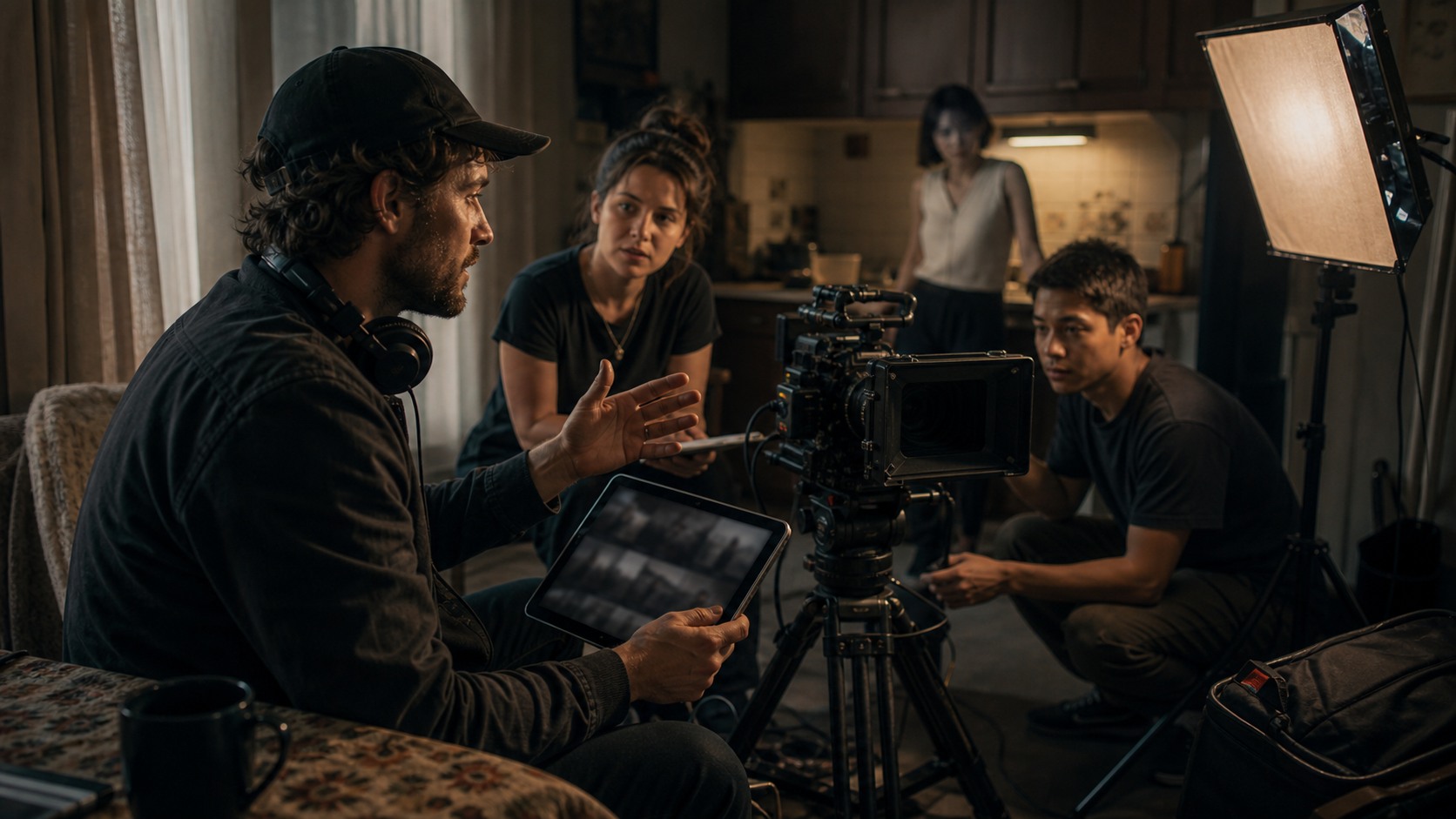
Directing choices eventually have to translate through the camera. A performance adjustment that feels powerful in the room may need different framing, distance, or timing on screen. AI-Assisted Directing for Dialogue-Heavy Scenes can help compare how a beat reads as a wide shot, a close-up, or a moving camera plan, but the director and cinematographer still have to test the result.
This translation is where AI-assisted planning can save time. If a crucial emotional turn needs to be seen in the eyes, the camera plan should protect that. If the movement matters more than the face, the setup may need space. Matching performance intention to camera design keeps the scene from losing its strongest discovery.
Director Language
The language a director uses matters. AI may produce analytical descriptions, but actors often need playable notes. Instead of saying a scene needs more tension, the director might ask an actor to avoid answering, protect a secret, or listen for the moment the other person gives up. AI-Assisted Directing for Dialogue-Heavy Scenes should help directors find clearer language, not more abstract language.
A useful note is brief, specific, and actable. It gives the actor something to do or pursue. If AI-assisted analysis creates a paragraph that nobody can play, the director should translate it into a human instruction before bringing it into rehearsal.
Learning From the Shoot
The workflow should improve after each shoot day. Directors can compare what AI-assisted prep predicted with what actually happened in rehearsal, on set, and in the edit. Some suggestions will prove useful. Others will reveal patterns of overcomplication, generic taste, or unrealistic assumptions.
Keeping that feedback loop makes the tool more practical over time. The director learns which kinds of AI support are worth using, which should be ignored, and which need specialist review earlier. The process becomes less about novelty and more about building a directing practice that still belongs to the filmmaker.
A Practical Stop Point
Every ai-assisted directing for dialogue-heavy scenes workflow needs a stopping point. The goal is not endless analysis of actors, movement, mood, or timing. The goal is enough clarity to rehearse better, shoot smarter, and protect the scene's emotional life.
A good stop point arrives when the director can name the scene priority, explain the actor need, identify the production constraint, and hand the plan to collaborators. After that, the work belongs in rehearsal, performance, and the camera.
The Practical Takeaway
AI-Assisted Directing for Dialogue-Heavy Scenes is valuable when it helps directors, actors, writers, editors, and cinematographers make more specific, humane, and production-ready directing choices. It can reveal options, organize review, and reduce confusion before expensive decisions are made.
Its weakness is overconfidence. A tool can analyze, compare, or suggest, but it cannot replace the director's responsibility to listen, adapt, and choose. Use AI to prepare the room, then let actors, collaborators, and human instinct bring the scene to life.