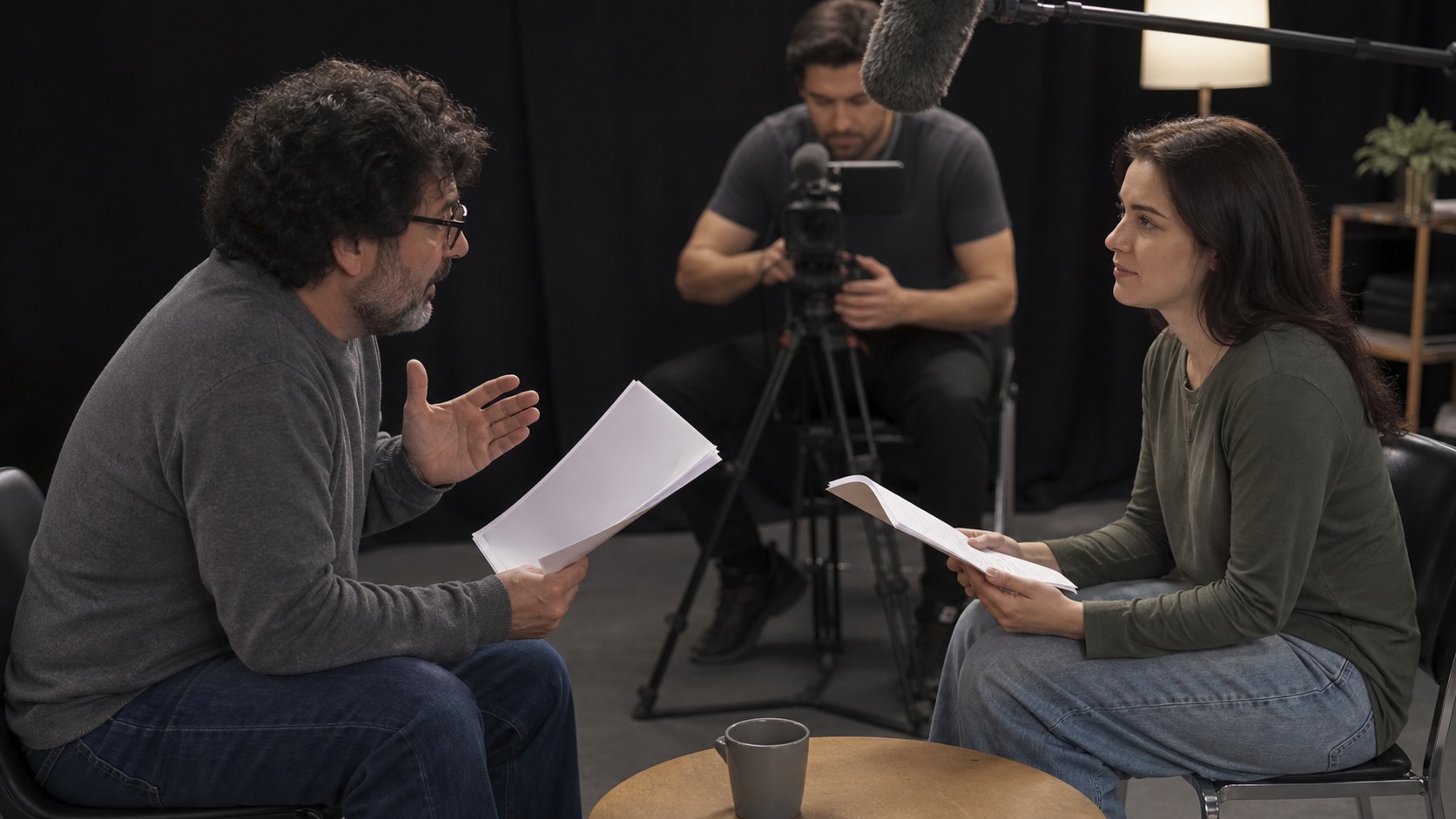
How AI Realistic Dialogue Tools Helps Writers Make Better Script Choices
AI Realistic Dialogue Tools is useful when it gives writers clearer choices, not when it pretends to solve the whole screenplay. For screenwriters polishing scenes for performance, AI can support exploration, diagnosis, and revision while the writer keeps control of voice, theme, and final judgment. The craft remains human; the workflow simply gains a faster way to compare possibilities.
Why AI Realistic Dialogue Tools Belongs In The Workflow
AI Realistic Dialogue Tools belongs in the workflow when it helps screenwriters polishing scenes for performance make sharper choices. AI can generate material quickly, but speed only matters when the writer knows what problem the material is supposed to solve. The useful starting point is a clear creative intention, not a request for pages in the abstract.
For this topic, the important work happens before the first generated answer. The writer names the pressure, the constraint, the character need, and the desired change. Once those pieces are visible, AI can become a thinking partner rather than a machine that adds more words to a vague draft.
The best results come from treating the tool as a way to test possibilities. It can reveal weak assumptions, offer alternate structures, or expose where a scene is too easy. Human judgment decides which path has the most dramatic life.
Start With A Specific Creative Question
A specific creative question gives AI something useful to answer. Instead of asking for a better version, the writer can ask how to increase pressure without changing the location, how to make a character more active, or how to preserve a reveal while cutting exposition. Specificity turns the exchange into craft.
realistic dialogue needs that kind of question because surface fluency can hide weak story logic. A page may sound good and still fail to move the story. A clear question makes it easier to judge the answer by dramatic function.
Writers should also name what must not change. If a scene needs to remain quiet, the prompt should say so. If the character should not confess directly, the prompt should protect that silence.
Use AI For Options, Not Permission
AI is strongest when it creates options the writer can compare. It should not become the authority that decides what the script means. Writers can ask for three different approaches, identify the tradeoffs, and choose the one that best fits the story's promise.
That comparison step matters. It slows the process just enough for taste to enter. A writer may discover that the most elegant answer is not the most playable one, or that the cheapest production choice creates the strongest scene.
Keep Character Action At The Center
Screenplays move through character action. Whether the topic is character, plot, genre, or collaboration, AI output should be tested against what characters actually do under pressure. A suggestion that explains motivation but gives the character no active choice is not yet useful dramatic writing.
A practical prompt asks what the character wants, what tactic they use, what obstacle blocks them, and what changes by the end. Those questions keep the tool close to behavior and away from summary.
This is where human writers remain essential. They can feel when a line is technically clear but emotionally false, or when a small gesture carries more power than a long explanation.
Shape The Draft In Passes
One of the healthiest ways to use AI is through separate passes. A writer can run a structure pass, then a character pass, then a dialogue or tone pass. Keeping the passes separate prevents the tool from changing everything at once.
After each pass, the writer should compare the result with the original intention. Did the change actually improve the screenplay, or did it merely make the page smoother? That question protects the draft from polished sameness.
Focused passes also make collaboration easier. A producer, director, or co-writer can see what layer is being discussed instead of trying to interpret a total rewrite.
Watch For The Smoothness Trap
The smoothness trap appears when generated writing sounds competent but weakens the script. It may reduce tension, soften conflict, or make every character speak with the same rhythm. Because the language is fluent, the problem can be hard to notice at first.
Writers should read AI-assisted material for conflict before polish. If no choice becomes harder, no relationship changes, and no new pressure appears, the output may need to be rejected even if the sentences are clean.
Make The Process Collaborative Without Becoming Confusing
When more than one person is involved, AI needs clear boundaries. Teams should decide when the tool is used, how suggestions are labeled, and who has authority to accept changes. Otherwise, the draft can become crowded with invisible influences.
Good collaboration keeps authorship readable. Human notes, AI suggestions, and final decisions should not blur together. The goal is not to make the machine part of the team in a mystical way; the goal is to give the human team better choices.
That clarity is especially important when scripts move toward production. Decisions need to survive meetings, revisions, budgets, and schedules.
Turn Good Suggestions Into Human Writing
Even strong AI suggestions need a human pass. The writer can keep the idea, the turn, or the diagnostic insight while rewriting the language to match the project. That rewrite is where voice returns to the page.
A useful practice is to mark what was valuable in the suggestion before rewriting it. Maybe the value was a clearer obstacle, a sharper genre move, a better emotional cost, or a more efficient sequence. Identifying the value prevents the writer from keeping words only because they arrived quickly.
Measure Success By The Next Draft
Success is visible in the next draft. The script should have clearer pressure, stronger decisions, more specific scenes, or a better sense of direction. If the writer only has more possibilities, the process is not finished.
Realistic dialogue sounds human because it carries intention, avoidance, and interruption. That is the standard worth using. AI should make the writer more able to revise, not less willing to choose.
Over time, good use of AI Realistic Dialogue Tools can build better instincts. The writer learns which prompts create useful contrast, which notes produce noise, and which parts of the script need quiet human attention.
The Bottom Line
AI Realistic Dialogue Tools is useful when it helps writers think more clearly about the work already in front of them. It should create range, pressure-test decisions, and support focused rewrites. It should not become a substitute for finishing the scene.
The practical rule is simple: give the tool a job, judge the result by the script, and keep authorship human. When writers use AI that way, the technology becomes a craft aid rather than a shortcut.
A Repeatable Practice
A repeatable practice begins with one sequence. The writer defines the problem, asks for options, chooses a direction, drafts or revises, and then checks whether the scene actually changed. This small cycle is easier to trust than a giant open-ended AI session.
Once the method works, it can expand across an outline, a character arc, a genre pass, or a collaboration workflow. The writer should keep a short decision log so the project does not lose its path. The log does not need to be elaborate; it only needs to capture what changed and why.
The best long-term habit is selective use. Bring AI in when comparison, diagnosis, or fast variation will help. Leave it aside when the script needs silence, intuition, or a difficult final choice. That balance keeps the work alive.
How To Apply AI Realistic Dialogue Tools Across A Full Project
Applying AI Realistic Dialogue Tools across a full project requires more discipline than using it on one scene. The writer should decide which problems belong to AI support and which ones need quiet human judgment. Early work may benefit from option generation and structural comparison. Later work often needs diagnostics, continuity checks, and focused revision rather than new material.
The process should begin with a project brief that is short enough to use every day. It should name the audience promise, the main character pressure, the tone, the production reality, and the current weakness in the draft. When AI sessions refer back to that brief, suggestions are less likely to drift into a different project.
After each major session, the writer should record the accepted decision in plain language. The note might say that a character now hides guilt instead of anger, that a midpoint has shifted from discovery to betrayal, or that a co-writing pass preserved the ending while changing the route. These notes protect the draft from circling back over settled ground.
A full-project workflow also needs limits. AI can keep generating possibilities forever, but screenplays improve when the writer eventually chooses. Set a stopping point for each session: one selected outline path, one revised scene goal, one character rule, or one rejected direction. The smaller the commitment, the easier it is to move forward.
The best full-project use of AI Realistic Dialogue Tools makes the writer more consistent. The draft should feel as if one creative intelligence is shaping it, even when AI has supported many small steps along the way. That unity comes from human selection, repeated review, and a willingness to discard material that sounds good but does not belong.
How To Review AI-Assisted Choices
Review should happen after the excitement of generation has cooled. A writer can read the new material and ask whether the core scene or structure became more dramatic, more specific, or more producible. If the answer is no, the output may still contain useful fragments, but it should not be treated as a successful pass.
One review method is to compare before and after versions against a single question. Did the protagonist gain agency? Did the plot turn create a real cost? Did the genre promise become clearer? Did the co-writing workflow make collaboration easier? A single question keeps the review from becoming vague approval.
The writer should also listen for sameness. AI can subtly normalize rhythm, conflict, and character voice. If several scenes begin to sound like they were solved by the same invisible hand, the next pass should reintroduce specificity through behavior, silence, setting, and contradiction.
Good review does not reject AI because it is AI. It rejects weak dramatic choices and keeps useful ones. That distinction matters because the goal is not purity; the goal is a stronger script. Human taste remains the standard that every generated suggestion has to meet.
The Practical Takeaway
The practical takeaway is that AI Realistic Dialogue Tools works best as a structured conversation with the draft. The writer brings a problem, the tool offers a range of possible responses, and the writer chooses the option that deepens the story. That rhythm can support character, plot, genre, and collaboration without turning the screenplay into a generic product.
Writers should look for gains that are visible on the page. The arc should feel more earned, the dialogue should carry more subtext, the plot should create stronger consequence, the genre should feel more deliberate, or the collaboration should become easier to manage. If those gains are absent, the workflow needs adjustment.
Used well, AI gives writers more ways to interrogate their choices. It can make alternatives easier to see and weaknesses harder to ignore. The final authority still belongs to the screenwriter, because the audience experiences the finished story, not the tool that helped shape it.