Machine Learning Is Becoming a Production Layer
Machine learning is transforming film production by adding pattern recognition, prediction, and automation to many stages of the filmmaking process. It can help analyze scripts, organize footage, support scheduling, clean audio, match shots, identify visual problems, and speed up post-production tasks. That does not mean a film becomes automatic. From script to screen, machine learning works best as a support layer that helps people make decisions faster and with better information. The creative responsibility still belongs to writers, directors, producers, cinematographers, editors, sound teams, and everyone else shaping the final movie.
What Machine Learning Adds to Production
Machine learning systems learn patterns from data and use those patterns to classify, predict, generate, or improve material. In film production, that material might be text, images, audio, video frames, schedules, audience data, or metadata from a camera workflow. The technology is broad, which is why it appears in so many different tools.
The transformation is not one dramatic switch. It is a series of smaller changes across the pipeline. A script can be broken down faster. Footage can be searched more easily. Dialogue can be cleaned more quickly. Color and exposure differences can be detected sooner. These improvements may sound technical, but they can change how much time creative teams have for judgment.
The useful question is where machine learning reduces friction without removing accountability. If the system helps an editor find a take faster, that is valuable. If it makes a creative choice no one reviews, that is risky. Film production depends on trust, context, and taste.
Script and Development Changes
In development, machine learning can summarize scripts, identify characters, group locations, track motifs, and compare drafts. Producers may use these tools to understand scope, while writers and directors may use them to organize revisions. The technology can make a script easier to discuss, especially when a project has many stakeholders.
This does not mean machine learning understands storytelling the way a filmmaker does. It may identify a pacing pattern or repeated phrase, but it cannot know whether a silence is powerful or accidental. Human readers still need to evaluate voice, subtext, originality, and emotional truth.
The strongest use is organizational. Machine learning can help teams see the structure of a draft, but the team decides what that structure means. A report can point toward a question; it cannot answer the creative purpose of the film.
Pre-Production and Scheduling
Pre-production involves many moving parts: locations, cast, crew, props, wardrobe, effects, travel, permits, and budget. Machine learning can support breakdowns, scheduling assumptions, resource grouping, and risk identification. It can help producers see where a project is likely to become complicated before the schedule is locked.
A system might flag scenes with similar locations, identify night work, or group effects-heavy moments. That information can help the assistant director and producer plan more intelligently. The final schedule still needs human negotiation because real production includes actor availability, weather, union rules, location access, and countless practical constraints.
Machine learning can also support visual preparation by organizing references, boards, and previs assets. When a team has a large volume of planning material, searchable organization can prevent important details from disappearing.
Production Support on Set
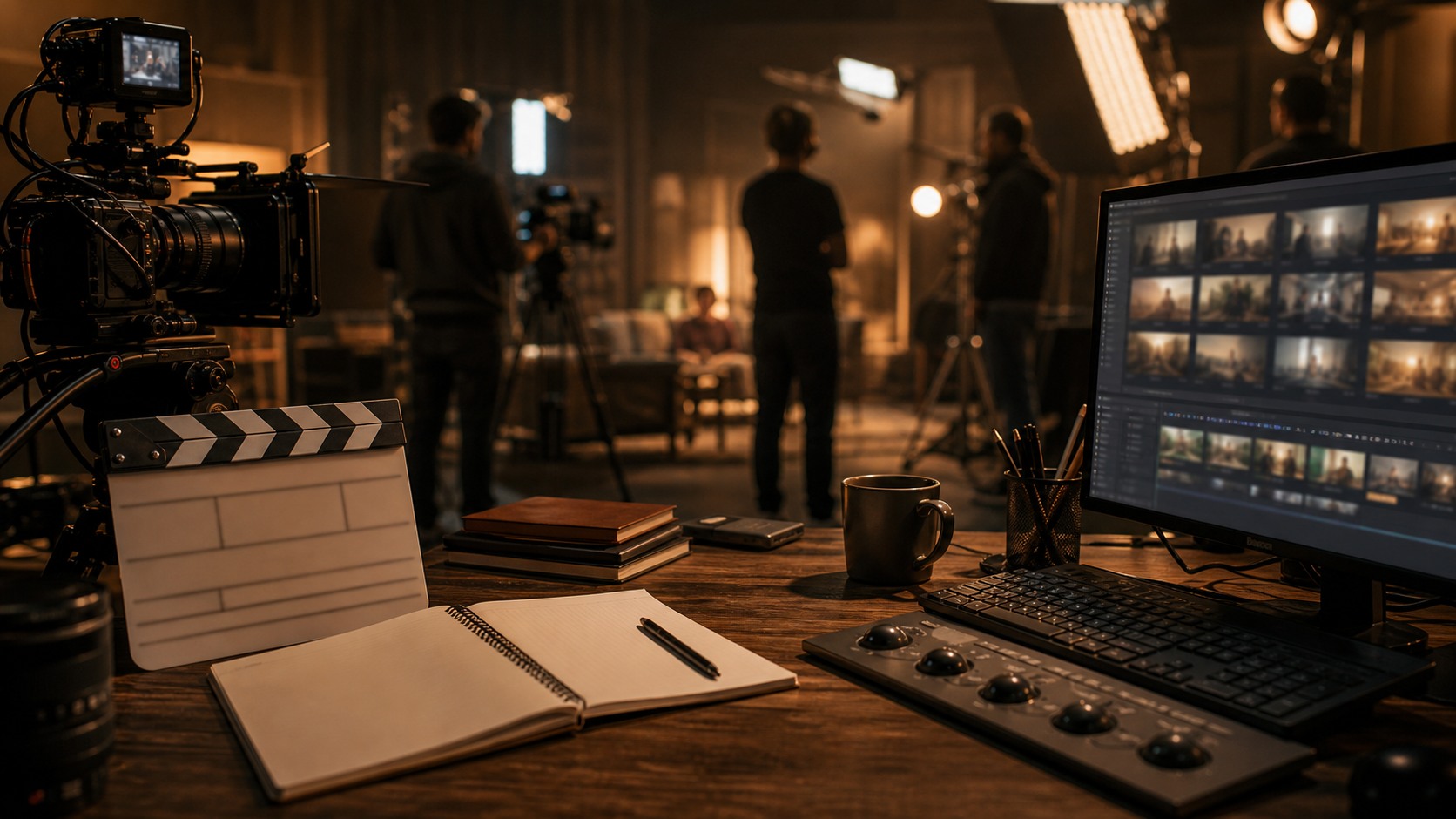
On set, machine learning can appear in camera systems, focus assistance, virtual production tools, metadata workflows, and review platforms. It may help track objects, assist with monitoring, organize takes, or support real-time visual effects. These tools can be useful when they reduce confusion and help the crew work with more confidence.
The set is also where overreliance can become dangerous. A production day is full of human judgment. Actors adjust performances, directors respond to discoveries, cinematographers shape light, and assistant directors manage time. Machine learning should not distract from that live collaboration.
The best set uses are quiet and practical. They support the people doing the work instead of becoming the center of attention. A tool that saves time without pulling focus from the scene has a better chance of earning its place.
Post-Production Transformation
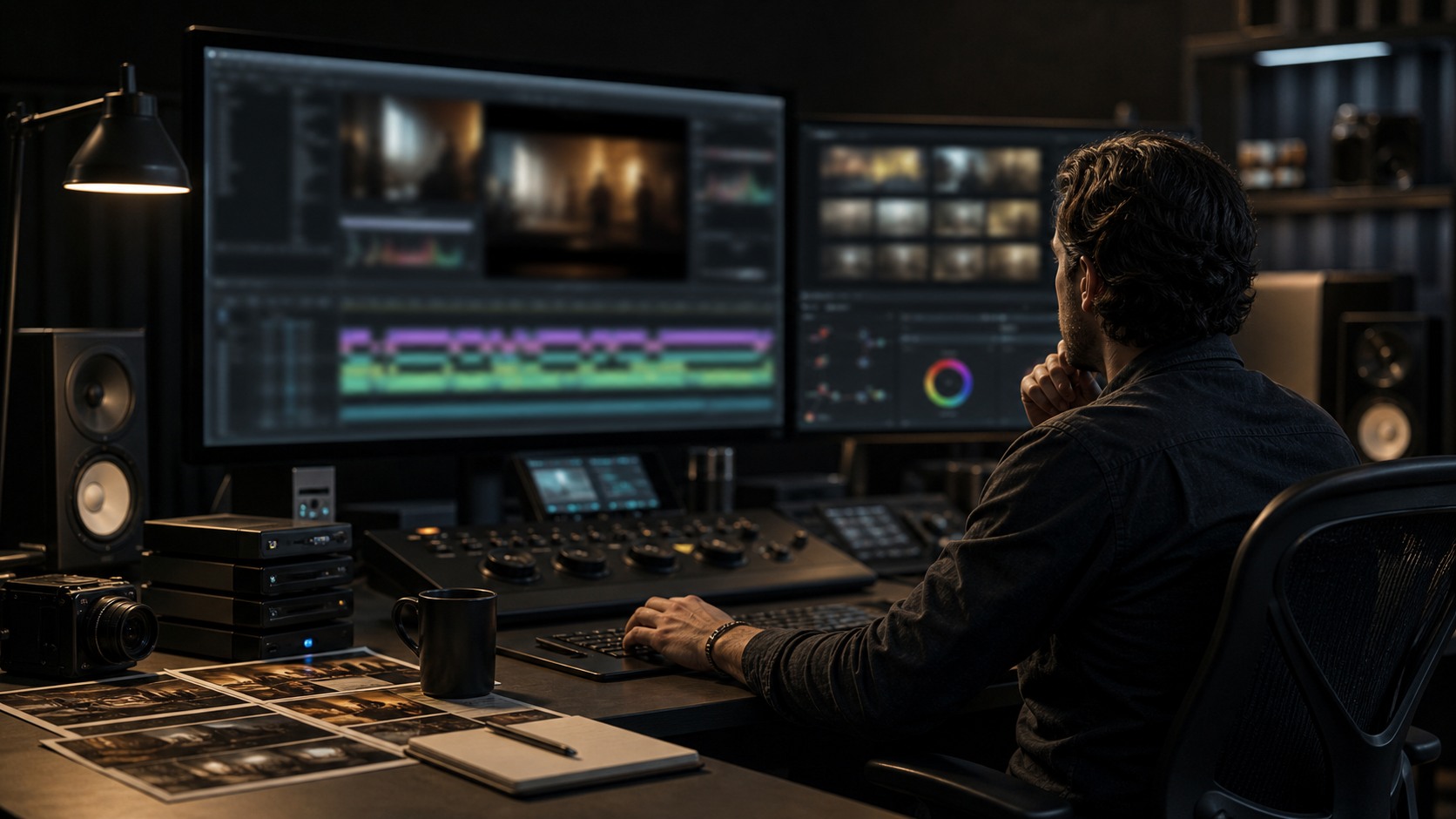
Post-production is where machine learning has already made a strong impact. Transcription, scene detection, dialogue isolation, noise reduction, rotoscoping, stabilization, shot matching, subtitle timing, and content organization can all be accelerated. Editors and assistants can spend less time on repetitive searching and more time on story.
Sound workflows benefit as well. Machine learning can separate voices from background noise, identify problematic frequencies, and support cleanup. These tools can rescue difficult material, but they need careful listening. Removing noise should not remove the life of a performance.
Visual effects and finishing also use machine learning to speed tasks that once required extensive manual labor. The key is review. A faster matte, cleaner frame, or matched color pass is useful only when it supports the intended result.
Delivery, Accessibility, and Audience Materials
Machine learning also affects delivery. Captions, translations, content tagging, thumbnails, accessibility descriptions, and version management can all be assisted by intelligent systems. These tasks matter because a film's life does not end with the final edit. It has to be found, understood, distributed, and experienced by different audiences.
Automated captions and translations need human review. A technical transcript can miss tone, names, slang, or dramatic meaning. Accessibility descriptions should be accurate and useful, not merely generated. Delivery tools can help, but they should not be treated as a replacement for care.
Marketing materials also need caution. Audience prediction and recommendation tools can inform positioning, but they should not flatten the film into whatever seems easiest to sell. A film's identity still needs human stewardship.
What Filmmakers Should Watch
The central benefit of machine learning is leverage. It can help a team process more information, catch problems earlier, and reduce repetitive work. The central risk is unreviewed automation. If a system quietly shapes decisions without human understanding, the production can lose control over quality, ethics, or creative direction.
Filmmakers should ask what the tool is optimizing. Is it saving time, improving clarity, reducing errors, or creating more options. Or is it simply producing outputs that look confident. The answer matters because film work is full of values that are not easily measured.
From script to screen, machine learning is transforming production by changing the speed and visibility of decisions. The best productions will use that speed to make more thoughtful choices, not fewer human ones. That is the difference between technology serving a film and technology steering it.
Why the Transformation Feels Gradual
The transformation from script to screen often feels gradual because machine learning usually enters through ordinary tasks. A team may first notice faster transcripts, then better footage search, then cleaner dialogue, then quicker visual effects prep. None of those steps looks like a revolution by itself. Together, they change how quickly a production can understand its own material.
That gradual change can be easy to underestimate. When assistants spend fewer hours labeling footage, editors can search sooner. When producers understand breakdown complexity earlier, schedules can be adjusted before problems harden. When sound teams can create cleaner review tracks quickly, directors can judge a performance without being distracted by technical noise. The creative benefit comes from many small reductions in friction.
The danger is that gradual adoption can also hide responsibility. A tool added for convenience may begin shaping decisions quietly. A transcript may influence story structure even if it contains errors. A schedule suggestion may look neutral while ignoring human constraints. A cleanup pass may change the feel of a performance. Teams need to know when machine learning is merely assisting and when it is affecting judgment.
A healthy production makes those influence points visible. It labels AI-assisted materials, checks important outputs, and gives specialists the authority to reject results in their domain. The technology becomes more useful when it is not mysterious. People can trust a workflow more easily when they understand where the machine helped and where a human made the final call.
From script to screen, the best machine learning workflows are therefore both faster and more explicit. They move information through the pipeline with less waste, but they also create review points where craft, ethics, and context can re-enter. That balance is what turns automation into production value.
The Human Handoff Still Matters
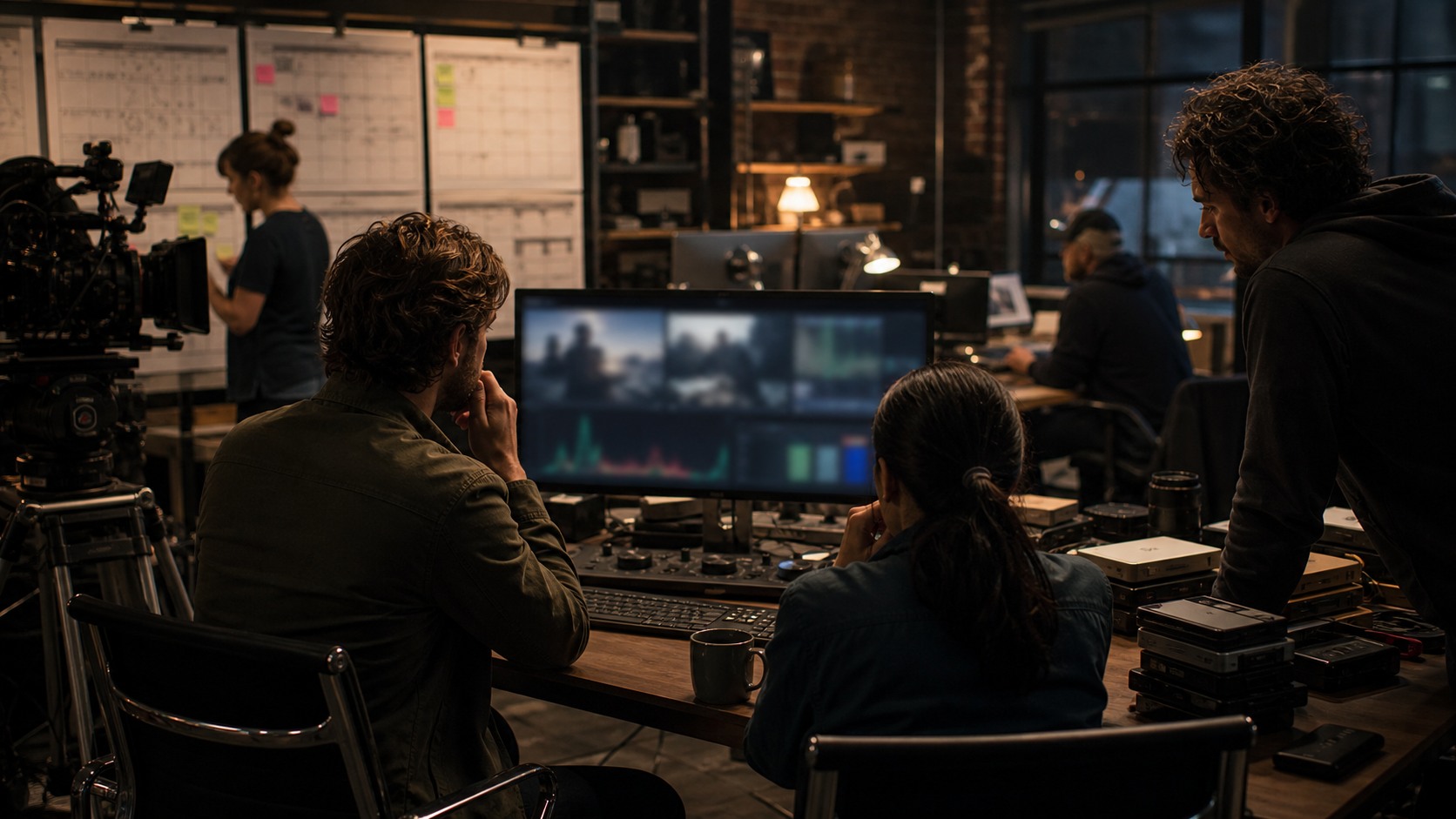
Film production is a chain of handoffs. The script moves to breakdowns, breakdowns move to schedules, schedules move to shoot days, shoot days create footage, footage moves to post, and post creates delivery materials. Machine learning can strengthen those handoffs by making information easier to find and compare. It can also weaken them if people assume the information is correct without checking it.
A transcript is useful because an editor can search it, but someone needs to know when the transcript is wrong. A schedule analysis is useful because it may reveal complexity, but someone needs to know when the model misses a location constraint. A cleanup pass is useful because it makes dialogue clearer, but someone needs to hear whether the performance has been damaged. The handoff is only strong when expertise remains attached to the output.
This is why machine learning should be introduced with roles, not just tools. Decide who checks script analysis, who approves processed audio, who reviews visual effects outputs, and who verifies delivery materials. Clear ownership prevents automation from becoming a foggy middle step that no one fully understands.
The productions that benefit most will be the ones that combine speed with accountability. They will let machine learning process material quickly, then let people with craft knowledge decide what survives. That approach keeps the film moving without treating the system as an invisible producer, editor, or director.
What Changes for Smaller Productions
Smaller productions may feel the transformation most directly because every saved hour matters. A small team can use transcription to find interview moments, automated sync tools to organize footage, noise reduction to evaluate difficult dialogue, and scene detection to prepare an edit faster. These are not glamorous changes, but they can decide whether a project has enough time for creative refinement.
The same teams need to be careful about overpromising. Machine learning can make some tasks easier, but it does not remove the need for planning, permissions, backups, or skilled review. A low-budget film can benefit from smart tools while still needing disciplined production habits. The technology stretches resources; it does not erase limits.
For independent filmmakers, the best strategy is to choose tools that solve immediate bottlenecks. If footage is hard to search, start with transcription and metadata. If dialogue is hard to judge, test cleanup on copies. If post is overwhelmed, use organization tools before adding creative automation. Practical adoption beats novelty.
This is how machine learning becomes part of the production culture rather than a separate technical experiment. It earns trust by solving visible problems and leaving the final judgment with the team.
The film improves when faster information leads to wiser human choices.
That is the real transformation: not fewer filmmakers, but better-supported decisions across the full path from draft to delivery.
The technology earns its place when it strengthens the people already responsible for the movie.
Every day.