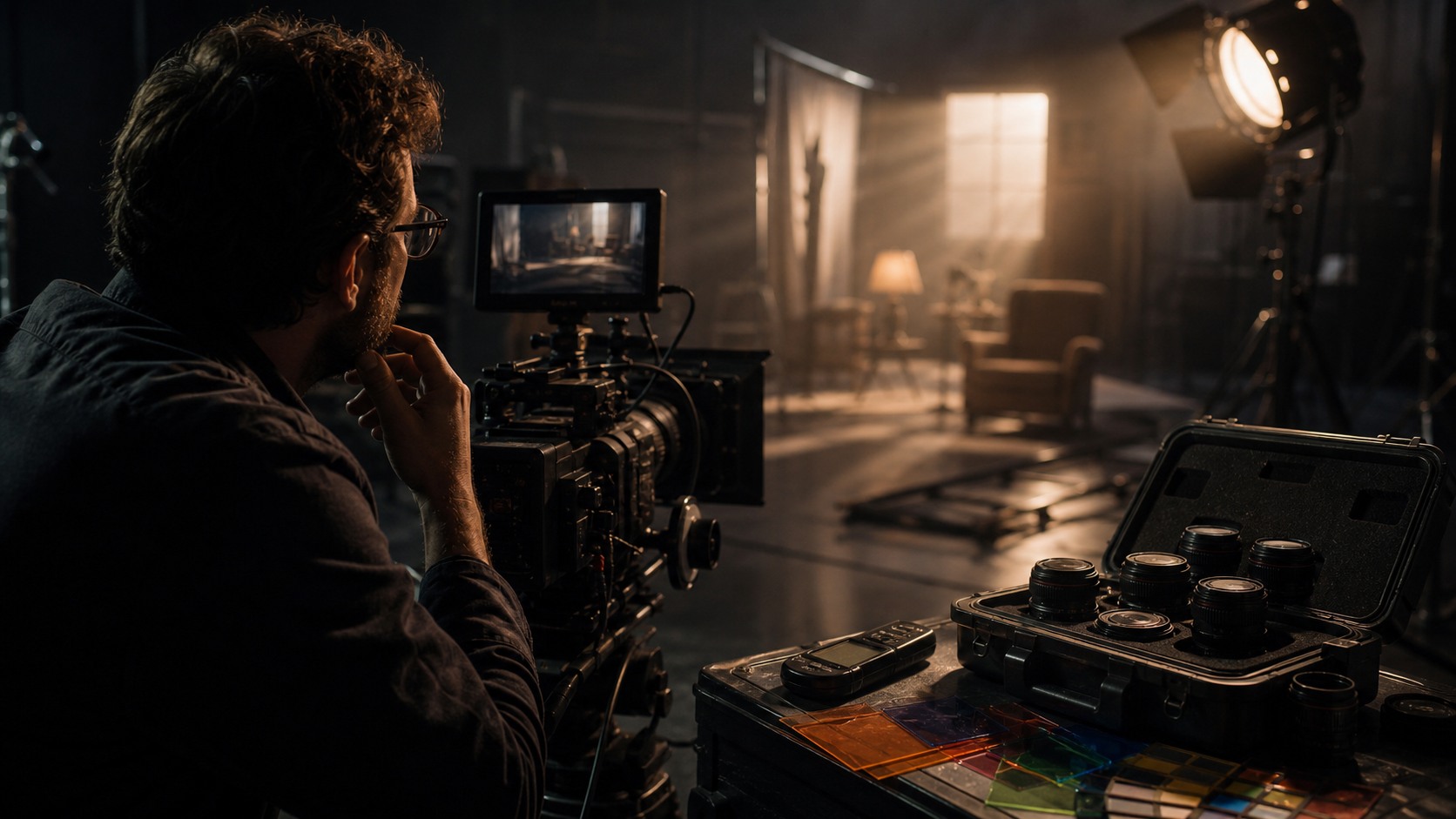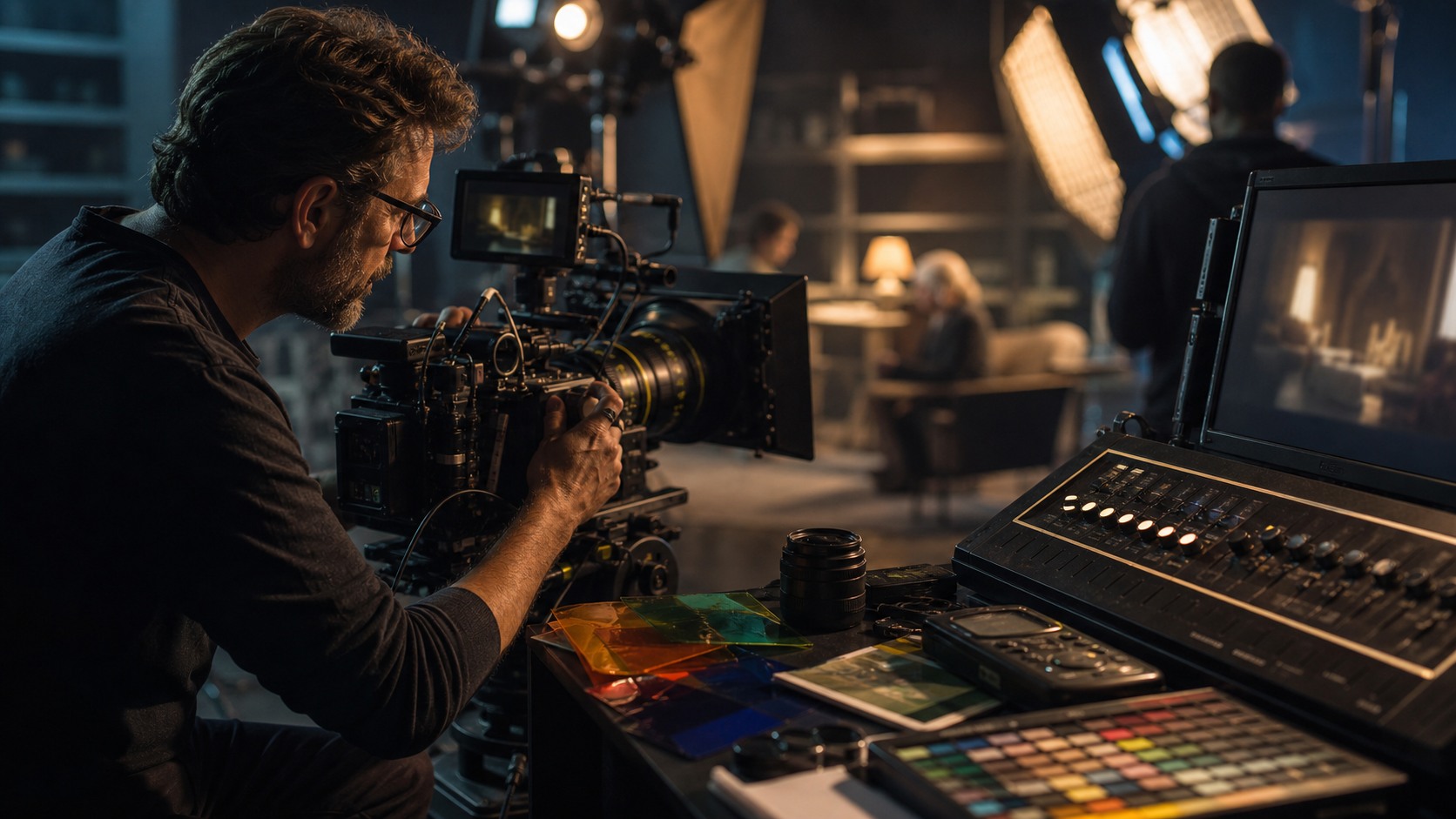
Cinematography Is Gaining Intelligent Planning Tools
AI cinematography refers to the growing use of artificial intelligence in the visual craft of filmmaking, from planning shots and studying light to matching images, previewing looks, and supporting post-production. It does not replace the cinematographer's eye. Cinematography is still about story, composition, exposure, movement, color, texture, and collaboration with the director. What AI changes is the amount of visual information that can be analyzed, compared, and prepared before and after the camera rolls. Used well, it helps cinematographers make clearer choices under real production constraints.
What AI Cinematography Means
AI cinematography is not one tool. It is a category of assistance around camera and image decisions. Some tools analyze footage, some generate visual references, some help match shots, some support virtual production, and others help with stabilization, tracking, cleanup, or color workflows. The common thread is that machine learning is being used to recognize patterns in images and suggest or automate parts of the visual process.
The cinematographer still decides what the image should do. A model can suggest a lighting mood or identify a mismatch between shots, but it does not understand the moral or emotional weight of a frame. The craft remains human because the image has to serve story, performance, and tone.
For production teams, AI becomes useful when it handles time-consuming analysis or early visualization. It can help compare looks, preview environments, organize references, or flag technical inconsistencies. These tasks support the cinematographer's judgment rather than replacing it.
Shot Planning and Visual References
Before production, AI can help create references for camera distance, lighting atmosphere, color contrast, and composition. A cinematographer and director can compare whether a scene feels stronger in soft window light, harsher overhead light, or a cooler night interior. These references can make abstract taste easier to discuss.
The risk is that generated references may ignore real equipment, crew time, location limits, and exposure behavior. A beautiful AI image might show light coming from nowhere or a camera angle that cannot exist in the room. That is why cinematographers must translate references into practical plans. The reference starts the conversation; craft makes it shootable.
AI can also help organize look books. Instead of a scattered folder of images, a team can group references by lens feeling, contrast, palette, location, or emotional beat. Better organization helps the cinematographer protect consistency across a long production.
Lighting and Exposure Support
Lighting is one of the most sensitive areas of cinematography. AI can help study reference images, suggest lighting diagrams, or preview how a mood might change with contrast and color temperature. It may also support virtual scouting by showing how a location could feel at different times of day.
These tools do not remove the need for measurement and experience. Real light falls across faces, reflects from surfaces, competes with windows, and changes with weather. A cinematographer still has to decide exposure, shape, softness, color, and motivation. AI can suggest a direction, but the set reveals what the image actually requires.
The best use is comparative. A team can look at several lighting possibilities and decide which one supports the scene. The conversation becomes more specific: this version feels too romantic, that version hides the actor's eyes, this other version makes the room feel unsafe. AI helps make those comparisons visible.
Camera Movement and Composition
AI tools can assist with camera planning by previewing movement, suggesting framing options, or analyzing how subjects are positioned within a frame. This can help when a scene has complex blocking, visual effects, or virtual production elements. The cinematographer can study whether the camera should observe, pursue, reveal, or withhold.
Composition still depends on intention. A centered frame can feel formal, trapped, comic, or sacred depending on context. A handheld move can feel alive or distracting. AI may show possibilities, but the cinematographer chooses the visual grammar that belongs to the film.
Camera movement also has physical consequences. Dollies, cranes, gimbals, handheld rigs, drones, and virtual cameras each create different production needs. A generated move has to be translated into equipment, crew, safety, and time. That translation is where cinematography remains deeply practical.
Post-Production Image Work
AI is already visible in post-production image workflows. Tools can help with denoising, upscaling, stabilization, rotoscoping, object removal, shot matching, and color reference organization. These uses can save time and allow cinematographers and colorists to focus on the final image rather than repetitive cleanup.
Shot matching is especially important. A scene shot over several hours or days may have changes in light, color, or exposure. AI can help identify differences and suggest corrections, but the final grade still depends on taste. A technically matched shot may still need to feel warmer, colder, softer, or more severe because of the story moment.
Cinematographers should remain involved when AI tools affect the image. If cleanup, relighting, or enhancement changes the mood of the shot, it becomes a creative decision. The visual authorship of the film depends on communication between production, post, and finishing teams.
The Future of the Cinematographer’s Role
AI may change how cinematographers prepare, communicate, and finish images, but it does not erase the role. In many ways, it increases the need for visual leadership. When more looks can be generated quickly, someone has to decide which look is honest to the film. When more corrections are possible, someone has to decide when the image should remain imperfect.
The cinematographer's eye is not just technical. It is interpretive. It notices how light affects a face, how a lens changes distance, how color changes emotion, and how a camera move changes power. AI can support analysis and speed, but it cannot care about the scene.
For beginners, AI cinematography is best understood as a set of planning and finishing aids. Use it to explore, compare, organize, and repair. Then return to the central question: what should the audience feel when they see this image. That question remains the heart of cinematography.
How Cinematographers Can Use AI Without Losing Taste
The central challenge for cinematographers is not whether AI can make attractive images. It can. The challenge is whether those images help define a specific film. A generated frame may have dramatic light, rich contrast, and a polished color palette, yet still feel wrong for the scene. The cinematographer's taste is the filter that separates useful reference from visual noise.
A practical workflow begins with intention. Before generating or analyzing images, the cinematographer and director should name what the scene needs: distance, intimacy, pressure, warmth, suspicion, instability, or calm. AI references can then be judged against that intention. This keeps the tool from pulling the film toward whatever style is easiest to produce.
Cinematographers can also use AI to explain tradeoffs. A bright reference may show the actor's eyes beautifully but weaken the scene's secrecy. A darker reference may create mood but hide essential behavior. A complex camera move may feel impressive but cost time that would be better spent on performance. These comparisons are useful because cinematography is full of tradeoffs.
In post-production, taste remains just as important. AI cleanup can make an image smoother, but smoother is not always better. Grain, softness, flare, shadow, and imperfection can all be part of a film's emotional texture. The cinematographer should stay involved when automated tools change the feel of the image, even if the change is described as technical.
AI cinematography works best when it strengthens visual intention rather than replacing it. The cinematographer uses the tool to explore faster, check more carefully, and communicate more clearly. The final image still belongs to the film, not to the software.
Where AI Fits on a Real Set
On a real set, cinematography is shaped by limits. The sun moves, actors need time, locations have walls, power is finite, and the schedule keeps tightening. AI can help before the shoot by clarifying intentions, but the cinematographer still has to respond to those limits moment by moment. A generated lighting reference cannot negotiate with weather or a narrow hallway.
This is why AI is often most useful before and after the shoot rather than in the middle of delicate set work. Before the shoot, it can help compare looks and organize references. After the shoot, it can help with analysis, cleanup, and matching. During the shoot, the cinematographer needs tools that support speed and confidence without distracting from the collaboration happening in front of the camera.
There will be productions where AI-assisted monitoring, virtual production, or real-time analysis becomes part of the set. Even then, the cinematographer's responsibility remains interpretive. Data about brightness or matching may be helpful, but the choice to let a face fall into shadow can be exactly right. Technical correctness is not always dramatic truth.
For filmmakers learning the craft, AI can be a powerful study aid. Compare frames, ask why one lighting direction feels more honest than another, and notice how camera distance changes emotion. Then take those lessons back to real cameras and real light. Cinematography is learned through looking, testing, and making choices under constraints.
The Image Still Has to Belong to the Film
The final test for any AI-assisted cinematography choice is whether the image belongs to the film. A generated look may be beautiful, but beauty is not the same as fit. A romantic palette may weaken a harsh scene. A clean image may remove the grit that made a location feel honest. A dramatic shaft of light may distract from a quiet performance.
Cinematographers protect the film by asking what the image is doing. Is it revealing, hiding, softening, accusing, isolating, or comforting. AI can help compare versions of those choices, but the meaning comes from the relationship between image and scene. That relationship is not automatic.
As AI becomes more common, cinematography may become even more dependent on clear intention. Tools will make many looks available. The cinematographer's job is to choose the look that carries the story and to reject the looks that merely show off. That responsibility is why the craft remains essential.
A cinematographer can use AI comparisons as a training ground for this judgment. Put two looks beside each other and ask which one reveals the character more honestly. Compare a clean image with a textured one and ask which feels closer to the world of the story. Study a suggested lighting direction and ask whether it could be motivated by the location. These questions keep the tool connected to craft.
The most valuable AI cinematography workflow may be the one that makes the cinematographer more articulate. When a director asks why one frame works better than another, the answer should reach beyond style. It should connect light, lens, color, and movement to the audience's experience of the scene.
That articulation matters on collaborative sets. Producers need to understand cost, directors need to understand feeling, gaffers need to understand motivation, and colorists need to understand the intended finish. AI references and analysis can support those conversations when the cinematographer uses them as evidence, not decoration.
The image still earns its place through story.
Every frame must answer.