Storyboards Turn Invisible Decisions Into Pictures
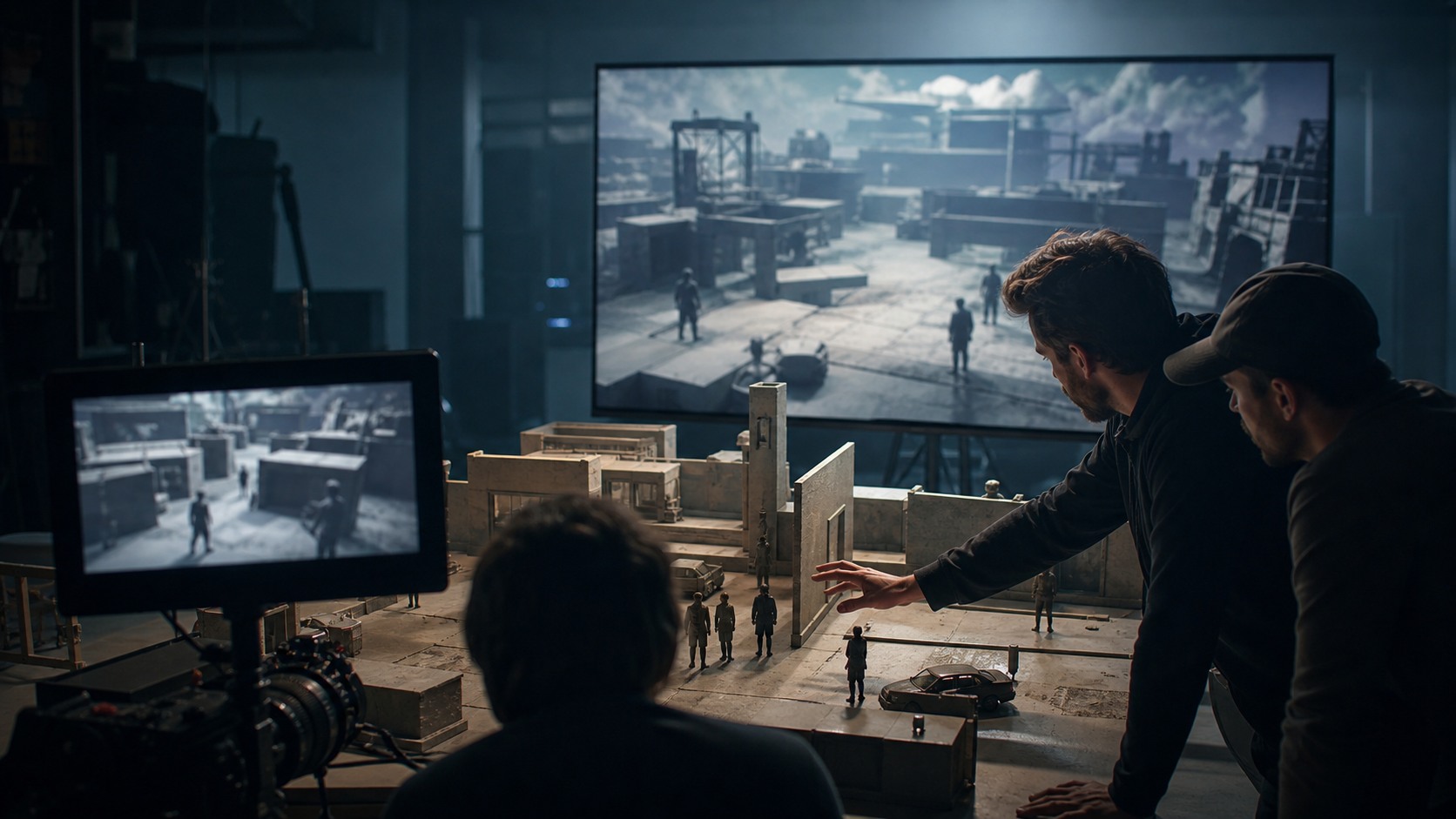
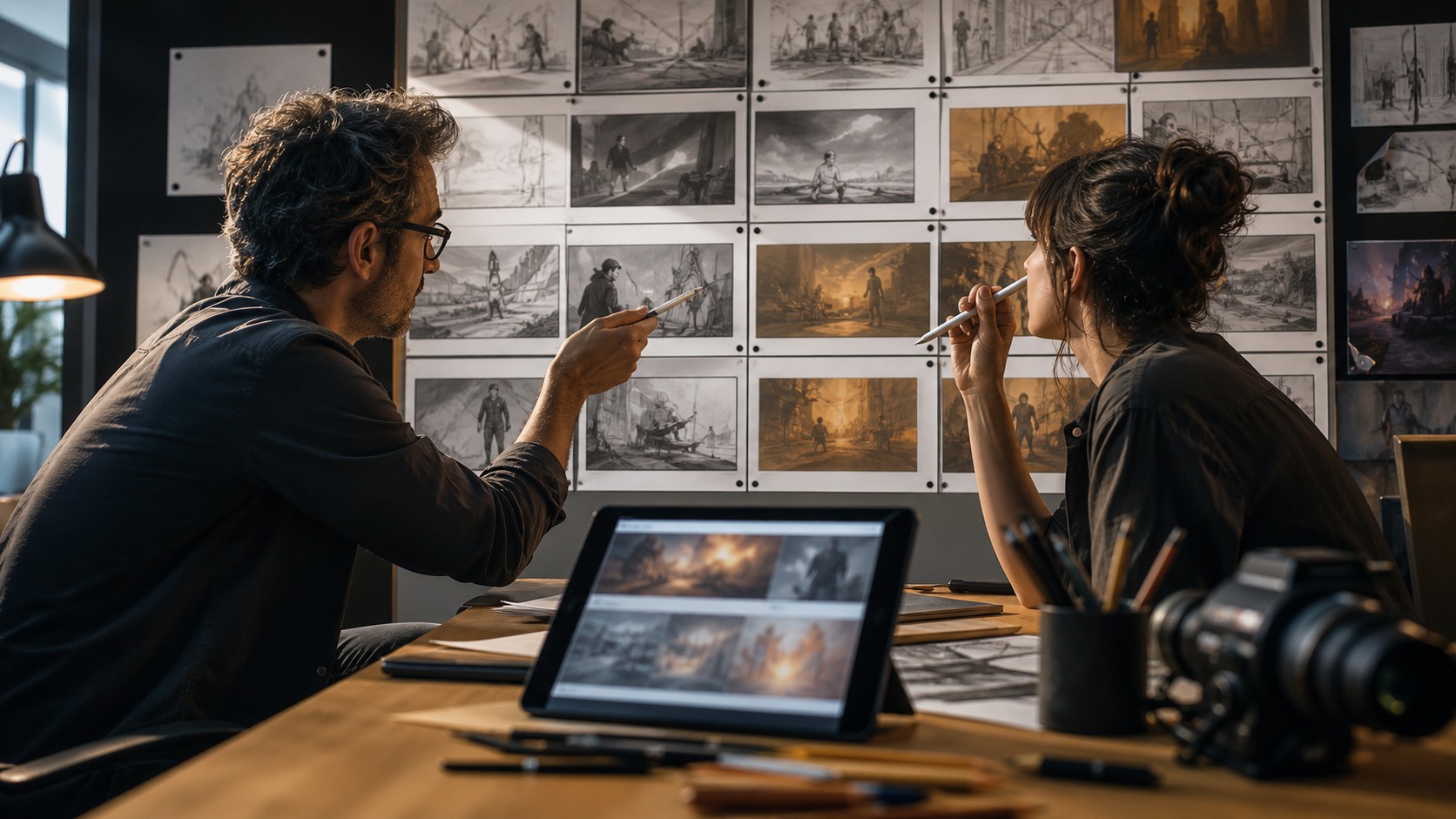
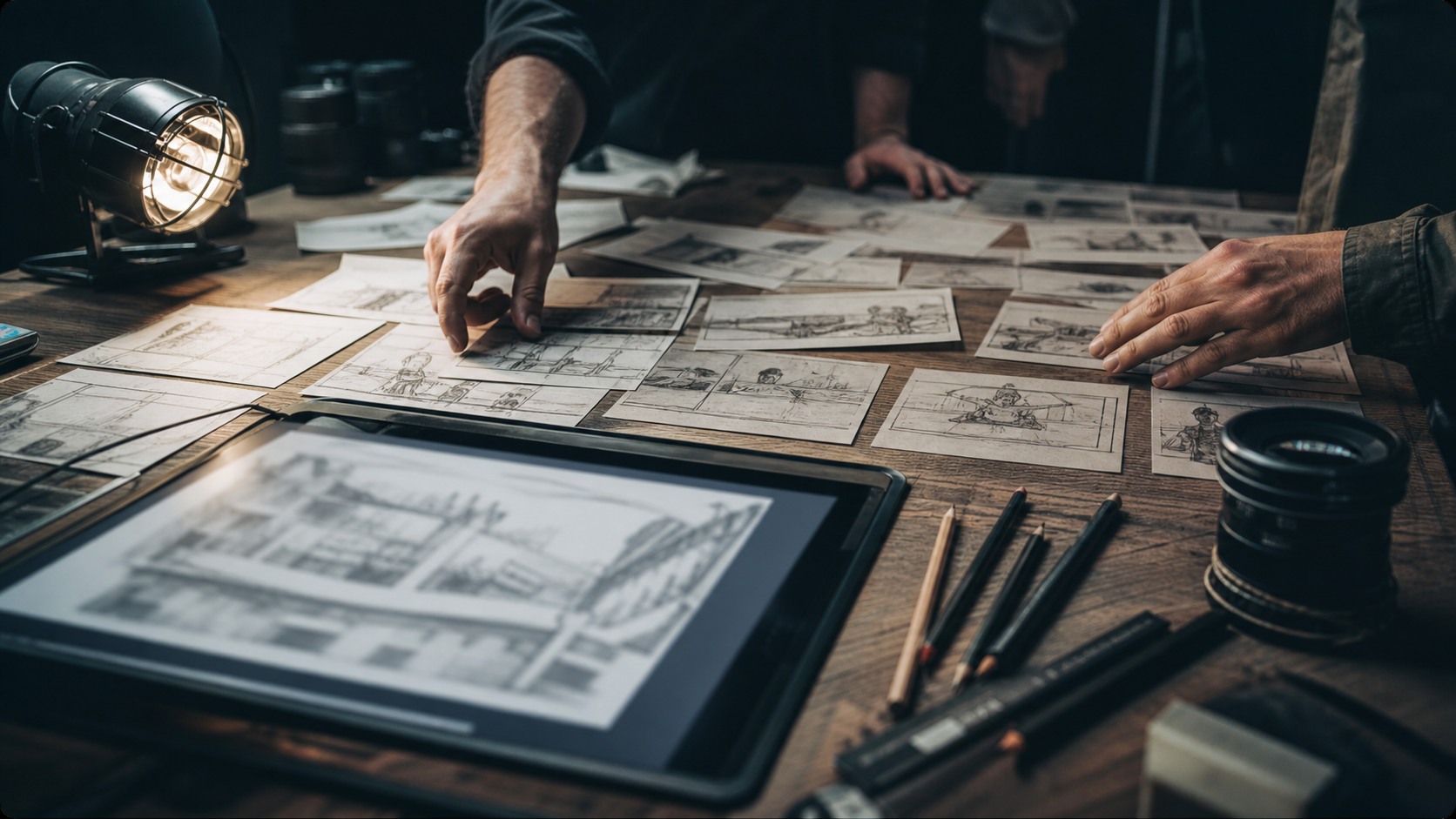
Storyboarding is one of filmmaking's most practical acts of imagination. Before a scene is shot, the team needs to understand where the camera might be, what the audience should notice, how movement will unfold, and which moments deserve emphasis. AI storyboarding brings new speed to that process by turning written scene descriptions, prompts, references, or rough sketches into visual panels that can be revised quickly. The goal is not to replace the storyboard artist's understanding of staging and sequence. The goal is to help filmmakers see options sooner, discuss them more clearly, and enter production with fewer unanswered visual questions.
What AI Storyboarding Does
AI storyboarding tools can create rough panels from a description of a scene. A director might describe a character entering a train station, a camera pushing through a crowd, or a reveal at the end of a hallway. The system responds with images that suggest framing, composition, mood, and sometimes shot order.
These panels are not automatically production-ready. They may contain continuity errors, unclear geography, or attractive images that do not cut together. Their value is that they give the team something visible to revise. A weak board can still be useful when it exposes a missing beat or a confusing angle.
Why Visualization Before Shooting Matters
Film sets are expensive places to discover basic visual problems. If a scene's geography is confusing, if the key prop is hidden, or if the emotional reveal arrives from the wrong angle, the crew may lose time solving issues that could have been caught earlier. Storyboards help move those decisions into pre-production.
AI speeds up the first pass. Instead of waiting for polished boards, a director can explore several possible approaches and then decide which one deserves professional refinement. This can be especially valuable for independent teams, short films, music videos, and pitch materials where time and budget are tight.
How Directors Can Use AI Boards
A director can use AI boards to test intent. One version of a scene might feel intimate because the camera stays close to the actor. Another might feel lonely because the character is swallowed by architecture. Seeing those options side by side makes the decision easier to explain to a cinematographer, producer, or editor.
The boards can also reveal when the director's written idea is incomplete. If every generated frame misses the emotional center, the problem may be the prompt, but it may also be the scene description. That feedback can push the filmmaker to clarify what the moment is really about.
Where Artists Still Matter
Storyboard artists do more than draw attractive frames. They understand sequence, screen direction, lens logic, rhythm, and the practical needs of a shoot. They know how one panel leads to the next and how a viewer's eye moves through a cut. AI can suggest images, but it does not reliably understand cinematic continuity.
For professional work, AI boards are often strongest as exploratory material before an artist refines the sequence. The artist can preserve the useful idea, fix the staging, simplify the action, and make sure the boards serve the production rather than merely looking dramatic.
Common Weak Spots
AI storyboards can drift between panels. A character's wardrobe may change, a hallway may reverse direction, or a prop may appear and disappear. The more panels a sequence needs, the more carefully the team must check continuity. Motion is also difficult because a still frame may imply an action that cannot actually be performed in the space.
Another weakness is over-styling. Some generated boards look like finished concept art when the team only needs clear staging. Beautiful surfaces can distract from whether the shot works. A useful storyboard is not judged by polish alone; it is judged by whether it helps the crew shoot the scene.
A Practical Review Habit
After creating AI boards, review them like production documents. Ask what the camera sees, where the actors move, what changes from one beat to the next, and whether the sequence respects screen direction. Mark the panels that answer real questions and discard the ones that are only decorative.
Then bring the boards to the right collaborators. The cinematographer can discuss lens and light, the production designer can flag physical problems, the assistant director can think about time, and the editor can imagine the cut. AI creates the first visual conversation; the filmmaking team turns it into a plan.
From Prompt to Shooting Plan
A useful AI storyboard prompt usually begins with the dramatic beat, not the decoration. Instead of asking for a cool chase scene, describe who is chasing whom, what the character fears, where the camera seems to be, and what information the audience must receive. This gives the tool a better chance of producing panels that support the scene rather than generic action imagery.
Once panels exist, the director should separate inspiration from instruction. Inspiration panels capture mood, tone, or atmosphere. Instruction panels describe a shot the crew may actually attempt. Mixing those two categories creates confusion. A beautiful inspiration image might never be shootable, while a plain instruction panel might save an hour on set.
The final step is reduction. AI can create more panels than a team needs, but production benefits from clarity. Choose the beats that matter, group related angles, and remove anything that does not affect performance, camera, design, or schedule. The goal is a better shoot, not a larger stack of images.
When used this way, AI storyboarding becomes a bridge between imagination and logistics. It helps filmmakers visualize a movie before shooting while leaving room for artists, cinematographers, actors, and editors to bring the sequence to life.
For beginners, the most revealing test is to storyboard a scene twice. In one version, keep the camera close to the main character. In the other, stage the scene from farther away so the environment dominates. The AI panels may be imperfect, but comparing them can teach a director how camera distance changes sympathy, tension, and information. That lesson is more valuable than any single generated frame.
It also helps to think in beats rather than isolated pictures. A storyboard is not a gallery. It is a sequence of decisions that guides the viewer's attention over time. AI tools can produce striking panels, but a filmmaker has to ask what changed from the previous panel and why the next panel is necessary. Without that sequence logic, the boards may look cinematic while failing as a plan.
A practical board review should include someone who is not dazzled by the images. That person might be a cinematographer, assistant director, editor, producer, or storyboard artist. Their job is to ask grounded questions: can we shoot this, can we cut this, do we need this, and does the audience understand it. Those questions turn AI output into filmmaking material.
AI storyboarding can also help directors communicate with actors, but it should be used carefully. An actor may benefit from seeing the physical space or major camera direction, yet performance should not be trapped by a generated pose. The board shows the visual intention; the actor still brings behavior, timing, and surprise that no pre-production image can fully predict.
The best boards leave room for discovery. They identify the shots that matter and the problems that must be solved, while allowing the real location, light, and performance to influence the final approach. AI can make the first version faster, but the living scene should still have permission to breathe. That flexibility keeps storyboarding from becoming a rigid imitation of a machine-made sketch.
As AI tools improve, the value of human sequencing may become even clearer. Anyone can generate a dramatic frame, but not everyone can build a scene that leads the audience through fear, curiosity, release, and consequence. Filmmakers who use AI storyboarding well will focus less on the novelty of the images and more on whether the images create a shootable emotional path.
A director can also use AI storyboards to test what should remain unseen. Horror, suspense, romance, and comedy often depend on withholding information until the right moment. A generated panel that reveals too much can teach the team to hide the source of fear, delay the reaction, or move the camera behind a character. The storyboard becomes a way to plan absence, not only spectacle.
The same process can support practical coverage. If a scene contains a phone, a letter, a weapon, or a glance across a room, the team can ask whether the audience needs an insert, a close reaction, or a wider geography shot. AI panels may not solve that question perfectly, but they can remind the director that the edit will need evidence. Many scenes fail not because the idea is weak, but because the necessary visual information was never captured.
Storyboards also help protect limited production time. When a crew has only a few hours in a location, every unnecessary setup creates pressure. AI-assisted boards can help the director choose which shots are essential and which are merely attractive. That choice is especially important for new filmmakers, because it encourages them to think like editors before they arrive on set.
The most useful AI storyboard is therefore humble. It does not claim to be the movie. It acts as a rehearsal for attention, sequence, and feasibility. Human artists and department heads can then refine the work until it becomes clear enough for production. In that partnership, the speed of AI supports the deeper craft of visual storytelling.
Beginners should also compare boards against the script after the excitement fades. If the board adds a dramatic moment that is not in the scene, decide whether the script should change or the panel should go. If the board omits the emotional turn, revise it before anyone treats the image as a plan. Storyboarding is strongest when it keeps returning to the written and performed beat.
Another useful habit is to mark each panel by purpose: establish, reveal, react, connect, or resolve. Those labels help the team see whether the sequence has too many decorative frames and too few story frames. AI can create images quickly, but labels make the director explain why a shot exists. That explanation is what turns a generated panel into a filmmaking decision.
AI boards can be especially helpful when a filmmaker is nervous about communicating visually. A rough panel gives them a starting point for conversation with more experienced collaborators. The cinematographer may change the lens idea, the artist may redraw the sequence, and the editor may request a missing reaction, but the director has begun the discussion in visual terms.
That is the healthy place for AI storyboarding: early enough to invite revision, concrete enough to reveal problems, and humble enough to be improved by people. The final movie will be shaped by light, bodies, locations, and time, but better preparation gives those discoveries a stronger frame to live inside. That shared clarity is why storyboards remain useful long after the first rough image has been replaced. That practical memory can guide the crew when pressure rises. On set.