Storyboards Are Becoming Faster to Explore
AI is transforming storyboards by making the first visual pass easier to create, revise, and discuss. A filmmaker can describe a scene, provide a rough sketch, or use a script excerpt, then generate possible panels that suggest camera distance, blocking, mood, and sequence. That speed matters across film, TV, and online video because visual planning often happens under pressure. The important point is not that AI boards are automatically final. The important point is that more teams can now see and compare visual ideas early enough to make smarter choices before production time becomes expensive.
Why Storyboards Matter Across Formats
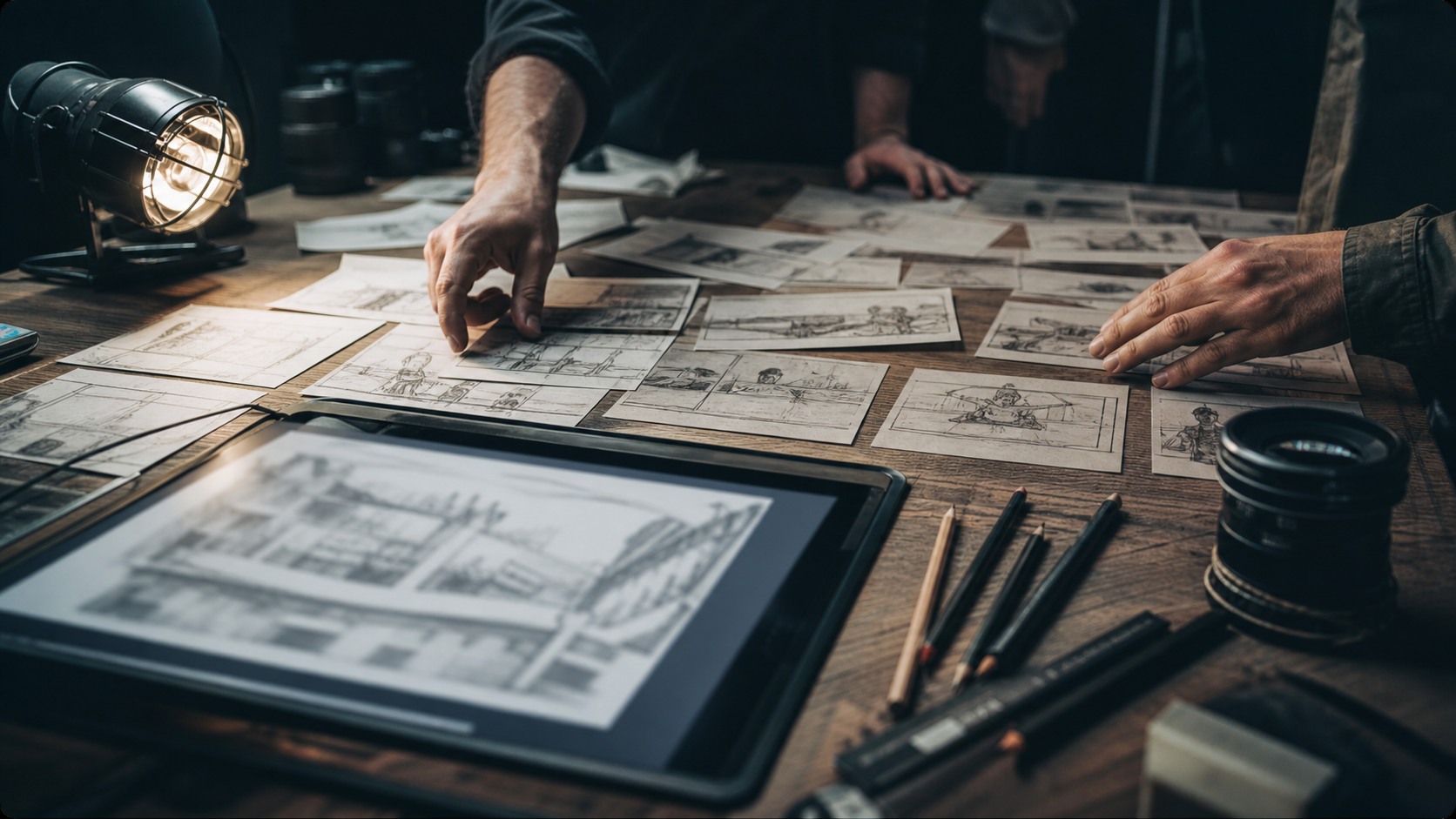
Storyboards give a production shared visual memory. In a feature film, they can help a director explain action, design, and camera movement to a large crew. In television, they can protect continuity across episodes, directors, and shooting blocks. In online video and commercial work, they can help clients, editors, and small crews agree on the main beats before a short schedule begins.
AI changes that work by lowering the cost of the first version. Instead of waiting for polished boards before anyone can react, a team can generate rough possibilities and learn from them. A weak board may reveal that the shot list is unclear. A strong board may show that the simplest visual approach carries the idea better than a more complicated plan. Either way, the team gets to the useful conversation sooner.
Different formats use storyboards differently, but they all benefit from visual clarity. A television director may need to match a show's existing language. A brand video may need to prove that the product moment is visible. A filmmaker may need to convince a producer that a complex scene has been thought through. AI does not remove those responsibilities; it gives them earlier visual evidence.
From Blank Page to Visual Options
The biggest transformation is speed at the blank-page stage. Many filmmakers can describe the feeling of a scene before they can draw it clearly. AI tools can turn that description into a set of frames, giving the director something to reject, refine, or hand to an artist. This is especially helpful when the production is still deciding whether a scene should feel intimate, chaotic, clinical, playful, or tense.
That speed should be used with intention. Generating twenty versions of a scene is not automatically better than generating three. The useful question is what each version teaches. One version might show the power of a low angle. Another might reveal that the background distracts from the performance. A third might prove that the scene needs a reaction shot the script did not mention.
Because AI can create options quickly, teams need discipline around selection. The director should define what decision is being tested before the panels are made. Is the issue geography, tone, product visibility, suspense, timing, or budget. Clear intent prevents the workflow from becoming a gallery of attractive images with no production value.
How AI Boards Support Collaboration
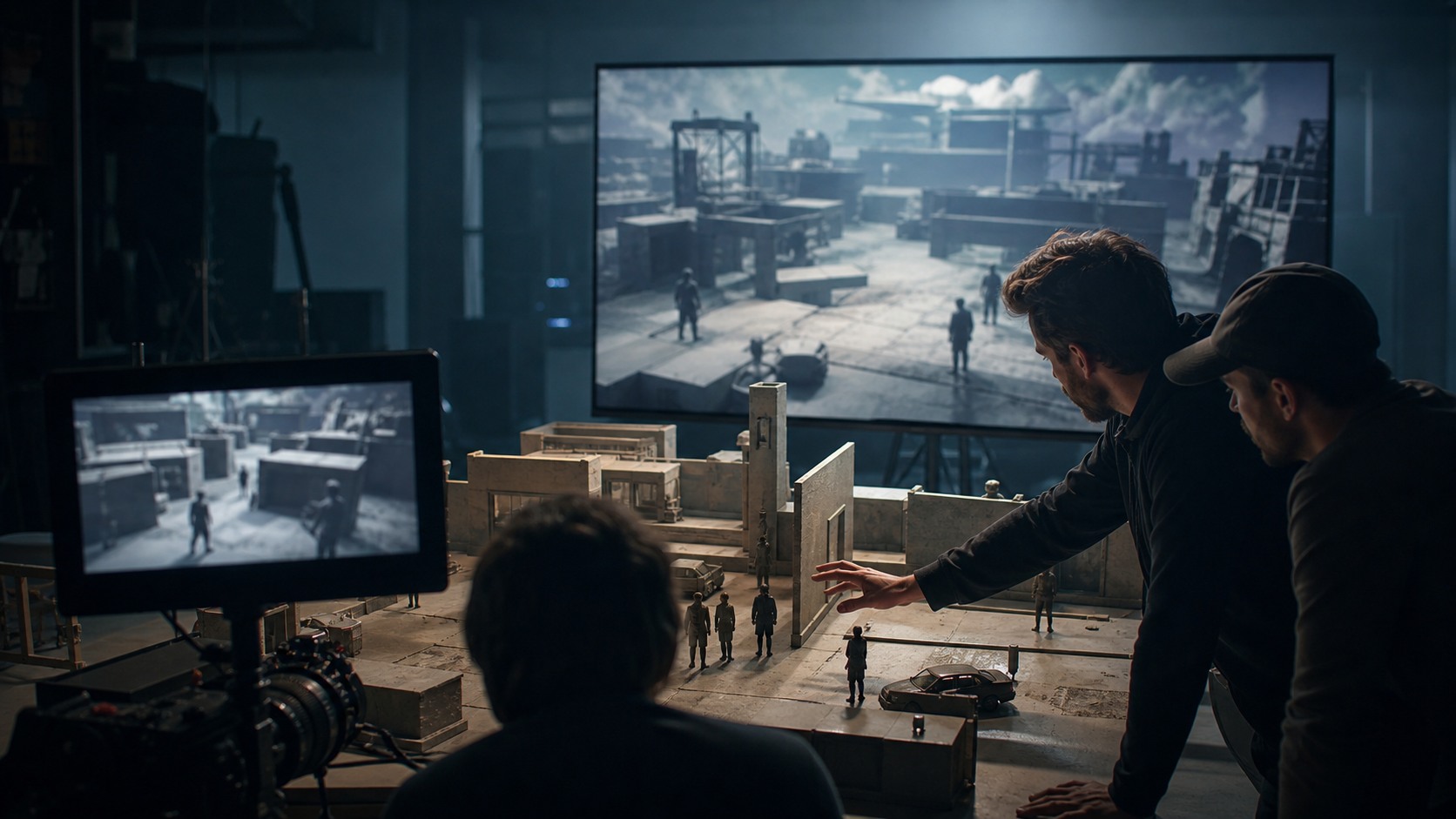
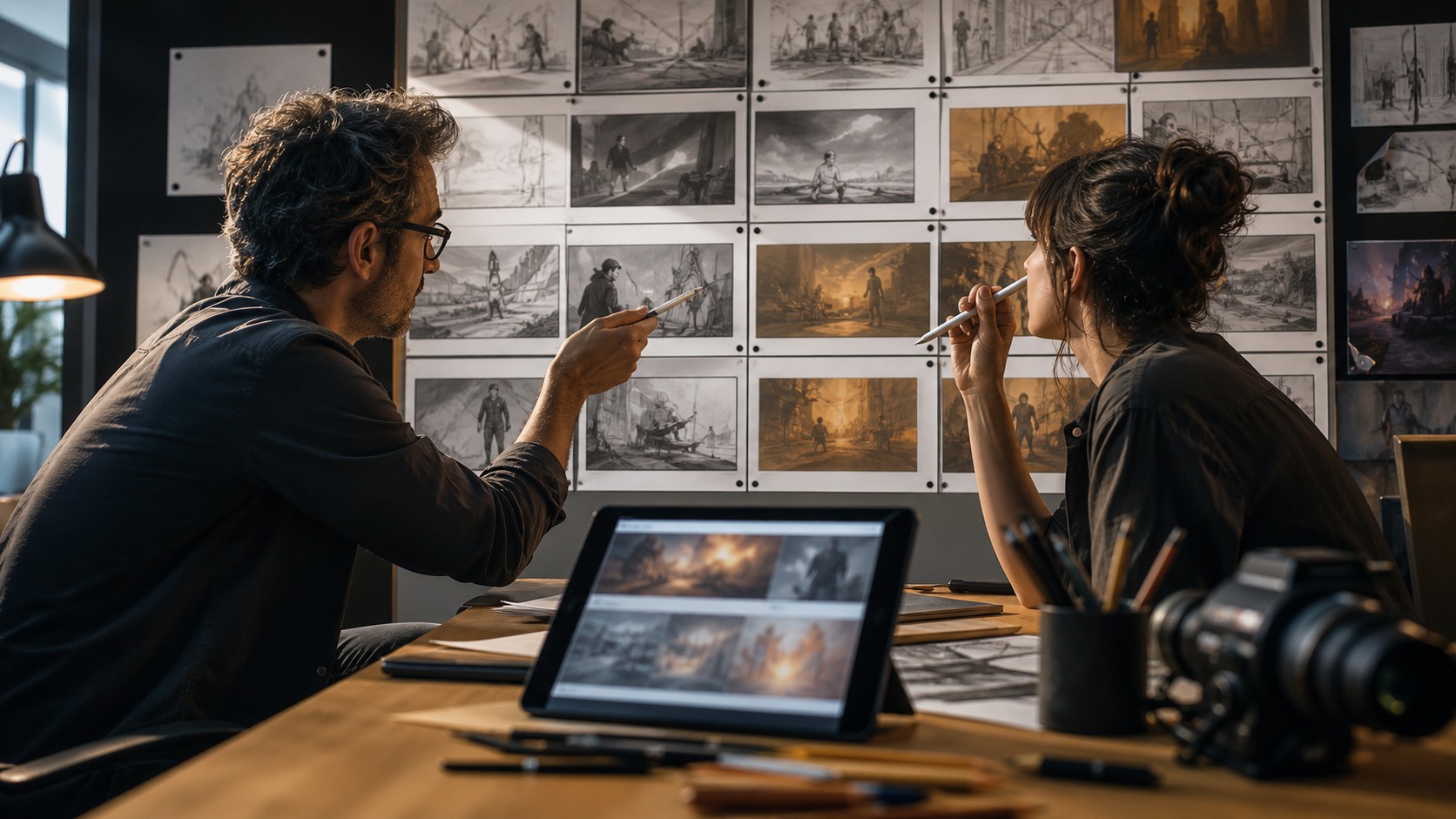
Storyboards are communication tools, and AI can make that communication more accessible. A producer who struggles to imagine the scene from a paragraph can respond to a visual sequence. A cinematographer can discuss lens language. A production designer can identify which surfaces, props, and sightlines matter. An editor can ask whether the planned frames will cut together.
This collaboration works best when the AI boards are labeled by purpose. Some panels are mood references. Some are shot proposals. Some are simply experiments. If those categories are mixed, departments may assume the image carries more authority than it should. A generated board should invite professional judgment, not bypass it.
In TV and commercial environments, AI boards can also accelerate approvals. Clients and showrunners often need to see the intended flow before giving notes. A rough board can help them react to structure rather than guessing from text. The production still needs to manage expectations, because a polished generated frame may imply a budget or finish level that has not been approved.
What Still Needs Human Craft
Storyboard artists understand sequence in a way AI systems do not reliably match. They know when a panel needs to be simple, when an eye line matters, when screen direction is breaking, and when a transition will confuse the viewer. They also understand how to draw for production, where clarity matters more than surface finish. That craft remains central.
Directors also remain responsible for emphasis. An AI tool may produce a visually dramatic frame, but the director has to ask whether that frame serves the scene. The best angle may be the quiet one that lets the performance breathe. The most expensive-looking panel may be the least useful if it draws attention away from the story beat.
Human review is also necessary for representation, rights, and taste. Generated boards can accidentally echo familiar imagery, flatten cultural detail, or introduce marks that should not appear in a public-facing asset. A professional workflow treats AI boards as supervised drafts. They move the conversation forward, but they do not get a free pass.
Practical Limits in Production
AI storyboards often struggle with continuity across multiple panels. Character features may shift, props may move, and the room may seem to rebuild itself between shots. That is manageable during exploration, but it becomes a problem if the boards are used as a serious shooting guide. The closer a production gets to set, the more exact the boards need to become.
There is also a timing problem. A still panel can imply motion, but it does not prove that the motion works. A dramatic camera angle may be impossible in the actual location. A crowd may look simple in a generated image but require extras, wardrobe, releases, and time. AI boards need to be checked by people who understand the physical production.
The best way to handle those limits is to move from AI exploration to human refinement. Use AI to discover possibilities, then ask artists and department heads to make the sequence shootable. This keeps the technology in a useful role: fast enough to open the field, but not treated as the final authority.
A Better Workflow for Modern Storyboards
A strong AI storyboard workflow begins with a specific scene question. The director might ask how to reveal a hidden object, how to stage a conversation in a narrow room, or how to show a character losing control without adding dialogue. The first boards are created to answer that question, not to decorate the project.
After the first pass, the team chooses what to keep. The useful elements might be the camera distance, the order of reveals, the feeling of the background, or the rhythm of a transition. Those elements can then be redrawn, revised, or built into a proper shot plan. The generated images are not the destination; they are a bridge to a clearer decision.
For film, TV, and video, that bridge can be powerful. It gives small teams visual leverage, helps larger teams communicate earlier, and lets directors test ideas before pressure narrows the options. AI is transforming storyboards because it makes visual planning more immediate. The craft still lies in deciding which images deserve to guide the shoot.
What This Means for Smaller Teams
The most immediate benefit may be felt by small teams that used to skip storyboards because there was no time or budget. A filmmaker making a short, a local commercial, a web series episode, or a music video can now create rough visual plans without pretending those plans are finished art. That is a meaningful shift. It gives the team a way to talk about camera direction, timing, and visual priorities before they are standing in the location with the clock running.
Smaller teams still need restraint. If AI makes it easy to create boards, it also makes it easy to over-plan the wrong things. A creator might spend hours generating dramatic frames for a scene that only needs a simple two-shot. The better habit is to use boards where they reduce risk: action, visual reveals, product moments, complicated blocking, or scenes where the edit depends on a precise sequence of information.
AI can also help newer filmmakers learn visual cause and effect. By comparing boards for the same scene, they can see how a closer frame changes sympathy, how a wider frame changes loneliness, or how a high angle changes power. That comparison builds directing vocabulary. The filmmaker is not only producing a planning document; they are learning how visual choices communicate.
For established teams, the transformation is less about access and more about speed. A director, artist, and producer can review more possible approaches before selecting one for serious refinement. The professional storyboard process still matters, but the early conversation can begin sooner and with more evidence. That can make the final boards more intentional because the team has already tested what the scene does not need.
The healthiest future for AI storyboarding is collaborative. The tool creates early options, the director chooses a direction, artists and department heads refine it, and the production uses the result to shoot with greater clarity. That chain keeps the speed of AI without surrendering the craft of sequence, staging, and production judgment.
The Best Boards Still Reduce Confusion
A good storyboard does not need to impress everyone as a piece of art. It needs to reduce confusion. If a panel helps the camera team understand the direction of movement, it has value. If it helps the editor know why a reaction matters, it has value. If it helps a client understand the order of a product reveal, it has value. AI boards should be judged by that practical standard.
That standard also protects the team from overusing the tool. When a generated panel does not clarify staging, timing, story information, or production requirements, it can be removed. This kind of editing is healthy. The point of AI transformation is not to create more storyboard material than anyone can use; it is to help the right material appear earlier.
In the long run, storyboarding may become a more common habit because the first draft is easier to reach. That is good for filmmakers if they remember why boards exist. They are a rehearsal for attention. They show what the viewer should see, when they should see it, and how one image leads to the next. AI can help start that rehearsal, but filmmakers still have to make the sequence make sense.
A Practical Standard for Approval
Before an AI storyboard is approved for wider use, the team should be able to explain its job in one sentence. It might clarify the action geography, sell the mood of a pitch, mark a product reveal, or show where the edit needs a reaction. If no one can name that job, the panel is probably not ready to guide production.
This approval habit is useful because AI images can look more finished than the thinking behind them. A polished panel may still hide an impossible camera position or a weak story beat. Naming the job forces the team to look past surface quality and ask whether the board improves the shoot.
When that standard is applied consistently, AI storyboards become easier to trust. The crew knows why each image is present, artists know what needs refinement, and producers know which visual promises are real. That is how faster storyboarding becomes better storyboarding rather than simply more imagery.