AI Can Offer Options, But Humans Decide What the Film Means
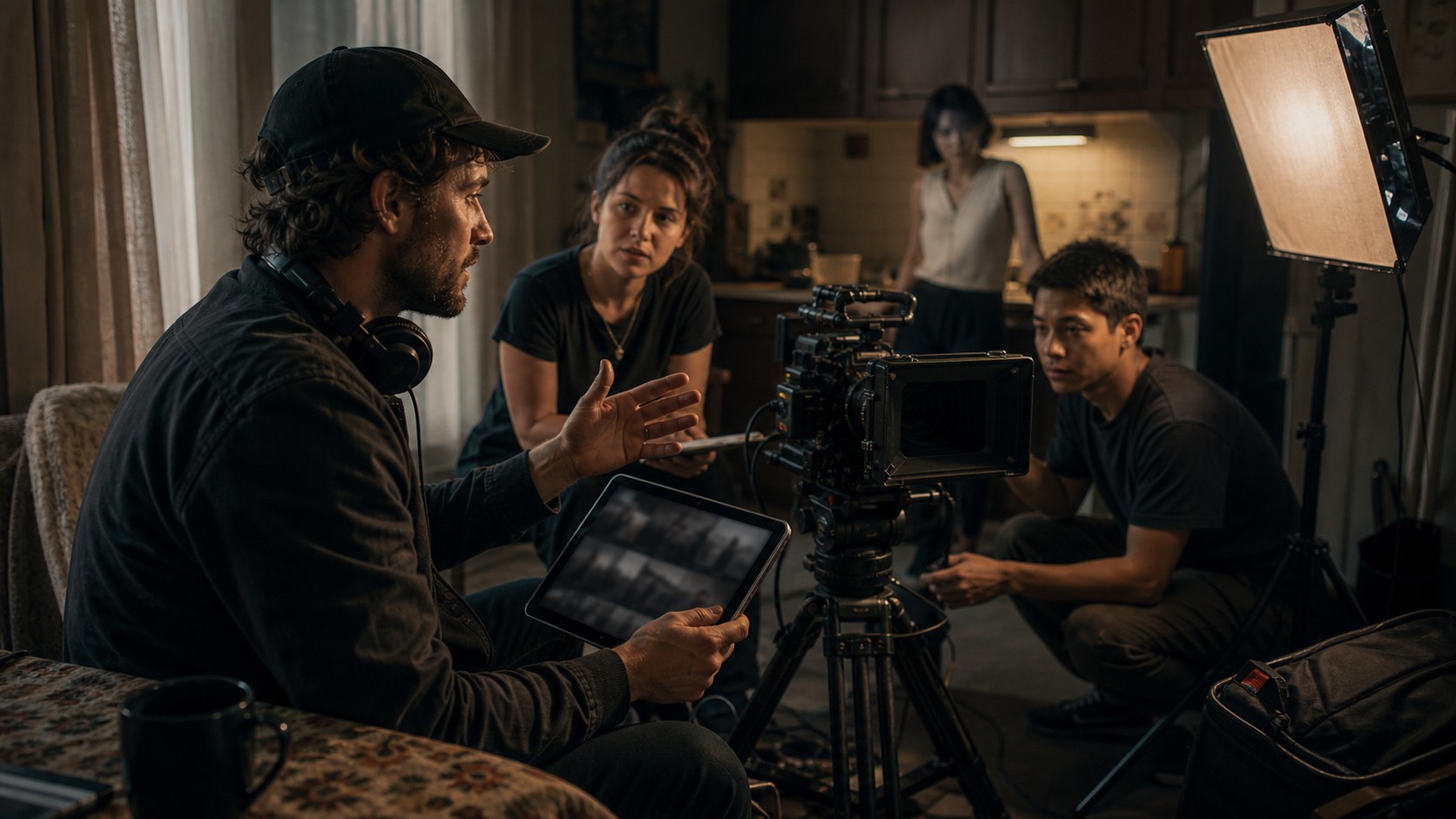
The debate over AI vs human directors is really a debate about creative responsibility. AI tools can suggest shots, generate references, summarize scripts, propose edits, and help visualize scenes. Human directors decide which of those options serve the film, which should be rejected, and how the work should feel to an audience. Creative decisions are not only choices between outputs. They are judgments about meaning, performance, ethics, context, and collaboration.
What Counts as a Creative Decision
A creative decision is any choice that shapes the audience’s experience. It may involve story structure, performance tone, camera placement, pacing, sound, color, production design, or what information is hidden or revealed. Some decisions are visible. Others are felt through rhythm or restraint.
AI can participate in the decision process by producing options. A model might suggest a mood frame, a shot list, a scene summary, or alternate dialogue. But the option is not the decision. The decision happens when a responsible creator chooses how the option affects the film.
This distinction matters because AI can make options appear quickly. Speed can make the process feel automated, but judgment is still the creative core.
Where AI Enters the Process
AI often enters early as a brainstorming or previsualization tool. It can help a director compare visual directions, generate rough storyboards, test tone, or organize script notes. These uses can expand the director’s field of view.
AI may also enter later through editing assistance, sound ideas, visual effects tests, or marketing materials. Each stage creates new choices. Should the generated shot be used. Should the suggested cut be accepted. Should the output remain internal. These are human decisions.
The more public or final the use becomes, the more responsibility the human team carries. A private experiment has different stakes than final footage or a client-facing pitch.
Why Human Directors Still Lead
Human directors lead because they hold the whole film in mind. They understand the scene in relation to the story, the actor in relation to the character, and the shot in relation to the edit. AI can analyze pieces, but it does not experience the film as a moral and emotional whole.
Directors also lead people. They build trust with actors, guide departments, make compromises, and answer questions when the plan changes. That leadership is not simply information processing.
A director’s taste is shaped by memory, values, culture, and intention. AI can imitate patterns, but it cannot be accountable for why one pattern matters here and another does not.
When AI Suggestions Are Useful
AI suggestions are useful when they clarify possibilities. A director might not use the suggested shot, but seeing it may reveal a better one. An AI-generated mood frame may show that the intended tone is too cold, too generic, or surprisingly close to the right feeling.
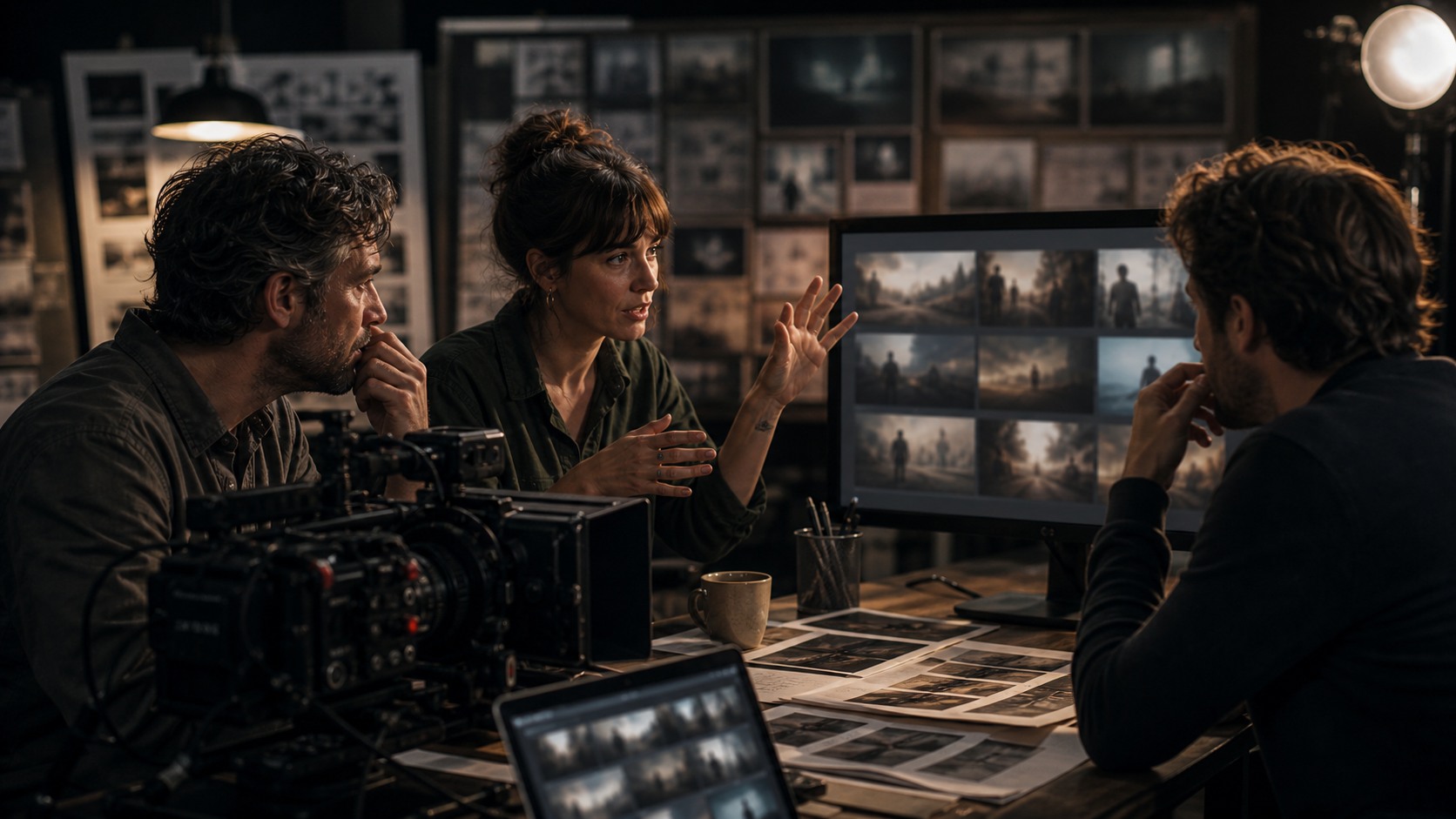
Suggestions are also useful when they help collaborators discuss specifics. A cinematographer can react to a frame. An editor can react to a proposed sequence. A producer can react to scale. AI makes the conversation visible sooner.
The key is to treat suggestions as material for judgment. A suggestion becomes creative only when someone understands why it belongs or why it should be discarded.
When AI Suggestions Become Risky
AI suggestions become risky when they are accepted because they are fast, polished, or convenient. A generated image can look confident while missing the scene’s emotional truth. A suggested edit can be efficient while flattening tension. A synthetic voice or likeness can create consent problems.
Risk also appears when creators hide behind AI. If a choice harms the film or a collaborator, saying the tool suggested it does not remove responsibility. Human creators decide whether to use the output.
The safest workflow includes review. Ask what the suggestion does to story, performance, rights, and audience trust. If those answers are weak, reject it.
Performance Decisions Belong to People
Performance decisions are especially human. A director watches an actor listen, hesitate, resist, or discover something in the moment. The best take may not be the cleanest take. It may be the one that reveals the character more truthfully.
AI may help analyze dialogue or propose emotional labels, but it cannot replace the relationship between director and performer. It does not know the actor’s process or the atmosphere on set. It cannot carry the trust needed for vulnerable work.
Human directors make performance decisions because they understand that acting is not output. It is behavior inside context.
Visual Decisions Are Shared
Visual decisions are often shared between director, cinematographer, production designer, editor, and other collaborators. AI can add references to that conversation, but it should not erase the expertise of departments.
A generated frame may inspire the lighting plan, but the cinematographer must translate it into real conditions. A generated environment may inspire design, but the designer must make it specific and buildable. A generated board may suggest coverage, but the editor may know the sequence needs another reaction.
Creative decisions become stronger when AI is one voice in the room rather than the loudest voice in the room.
Who Owns the Final Choice
The final choice belongs to the human creative authority on the project. In many productions that is the director, sometimes in conversation with producers, studios, clients, or showrunners. The important point is that a person or accountable team approves the work.
This approval includes responsibility for process. Were references appropriate. Was consent handled. Was the generated output reviewed. Does the material serve the film. Approval is not only aesthetic.
As AI becomes more common, productions may need clearer policies about who can generate, who can approve, and what can be used publicly. Creative decision-making will need both taste and governance.
How to Keep Human Judgment Central
Keeping human judgment central starts with naming the question before using AI. Are we testing tone, exploring coverage, solving a design problem, or preparing a pitch. If the question is clear, the output can be judged clearly.
The next step is review with collaborators. A director should ask whether the AI output improves the scene, confuses it, or creates new risk. This review should include story, production, and ethical concerns.
Finally, the team should document important choices. If AI output shapes a final asset or public pitch, the production should know where it came from and why it was approved.
How Decision Logs Protect the Film
A decision log can make AI-assisted direction more accountable. It does not need to be complicated. For each important AI-influenced choice, the team can record the purpose, selected output, reason for approval, reviewer, and any rights or consent concerns. This creates a trail from option to decision.
Decision logs are useful because AI can create many versions quickly. Without a record, the team may forget which frame was approved, why a prompt was changed, or whether a reference was only for internal use. That confusion can create creative and legal problems later.
A log also protects human authorship. It shows that the creative team did not simply accept machine output. They asked questions, reviewed options, and made choices. That matters when collaborators, clients, festivals, or audiences ask how the film was made.
For directors, the log can become a tool for taste. Looking back at accepted and rejected AI suggestions reveals patterns. Maybe the director keeps choosing quieter images, simpler blocking, or more human-centered reactions. That awareness can strengthen future decisions.
AI can expand the field of options, but a decision log keeps the production honest about who made the choices and why those choices served the film.
How Credits and Authorship Fit In
AI-assisted decision-making also raises credit and authorship questions. If a model generates a visual option, but a director, artist, and cinematographer reshape it into a final shot, the creative ownership is not as simple as the first output. Productions need language that reflects the real process.
Credits should protect people’s labor. A storyboard artist who refines AI frames, an editor who turns rough boards into rhythm, or a designer who translates a generated idea into a buildable set is doing creative work. AI should not become a way to make that labor invisible.
Authorship also matters for audience trust. If a project heavily uses AI, viewers may want to know how. But disclosure should be accurate, not theatrical. Saying AI made the film may erase human choices. Saying AI was used for visual exploration may be more honest.
Directors can help by being specific. Which parts were AI-assisted. Which parts were human-designed. Which assets were final and which were only references. Specificity turns a vague debate into a clear production account.
The creative decision question therefore extends beyond the set. It affects how the film is described, credited, sold, and remembered.
How Teams Can Share Decision Authority
Most films are not made by one person deciding everything alone. Even when the director has final creative authority, decisions are shaped by producers, department heads, actors, editors, clients, and practical limits. AI adds another source of options, but it does not remove the need to share decision authority wisely.
A healthy AI-assisted workflow defines who reviews what. The director may approve tone references. The cinematographer may review camera plausibility. The producer may review cost implications. The editor may review whether the coverage can cut. This keeps AI outputs from bypassing expertise.
Shared authority also prevents the model from becoming a false neutral voice. AI suggestions can carry generic assumptions or misleading confidence. Human collaborators can challenge those assumptions from their craft perspectives. A designer may see that a frame is visually rich but unbuildable. An actor may see that a performance note is emotionally shallow.
The best creative decisions emerge when AI expands the conversation and humans refine it through responsibility. The question is not whether the machine or the person chooses alone. The question is whether the team has a process that turns options into accountable choices.
Why Rejection Is a Creative Decision
Rejecting AI output is not a failure of the workflow. It is often the clearest creative decision. A director may reject a frame because it is too polished, too generic, too expensive, or simply wrong for the character. That rejection sharpens the film.
Teams should make rejection normal. If every AI suggestion is treated as valuable, the project will become crowded with weak ideas. Strong creative leadership means using the tool without being impressed by it automatically.
The best question is not whether the model produced something good. The best question is whether the film becomes better if that output stays.
The Real Balance
AI versus human directors is not a simple contest. AI is useful for generating options, organizing information, and speeding visual exploration. Human directors are responsible for meaning, performance, collaboration, context, and final approval.
The best balance is not humans ignoring AI or AI replacing humans. It is a workflow where AI expands the range of possible choices and human filmmakers make the choices that matter.
Creative decisions belong to the people accountable for the film. AI can influence those decisions, but it does not own them.