AI Can Assist Direction, But It Does Not Carry Directorial Responsibility
AI can help a movie director with planning, visual references, scene breakdowns, shot options, scheduling ideas, and rough previsualization. It can suggest possibilities that make a director’s work faster or more visible. But directing a movie is not only choosing images. It involves point of view, performance trust, collaboration, taste, ethics, pressure, and responsibility for the final audience experience. AI can support pieces of that job, but it cannot yet direct a movie in the human sense of leading a film from intention to finished meaning.
What Directing Actually Means
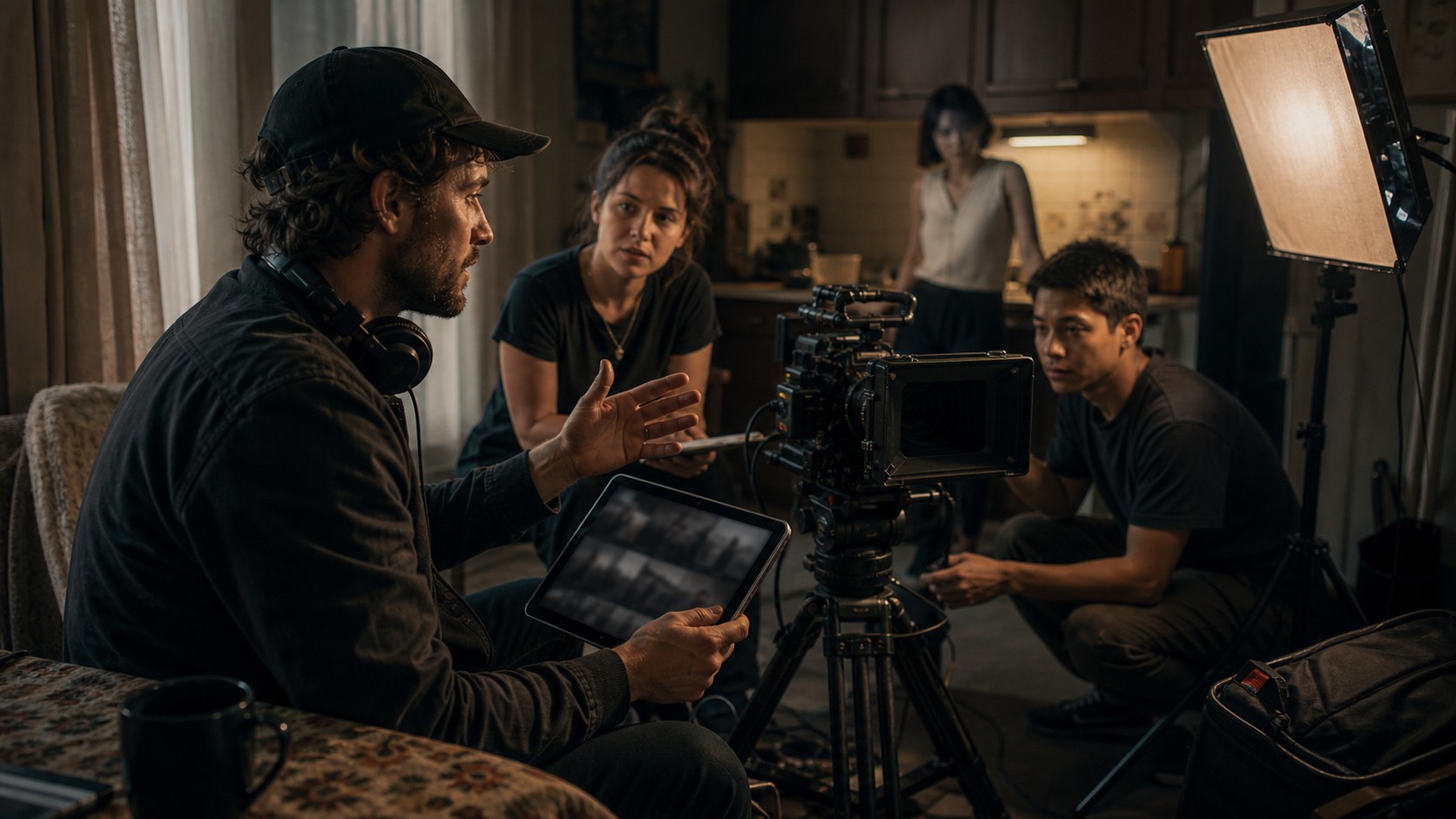
Directing is often misunderstood as telling people where to put the camera. Camera placement matters, but direction is larger than that. A director decides what the film is about, whose experience leads the scene, how performances should feel, how departments align, and what the audience should understand or question.
A director also makes decisions under pressure. Weather changes, actors find new behavior, locations fail, money runs short, and scenes reveal problems during editing. Direction is the art of protecting the film’s purpose while adapting to reality.
That is why the question can AI direct a movie needs a careful answer. AI can propose answers to narrow tasks. It does not carry the whole context of the film, the trust of the crew, or the burden of final judgment.
What AI Can Help With Today
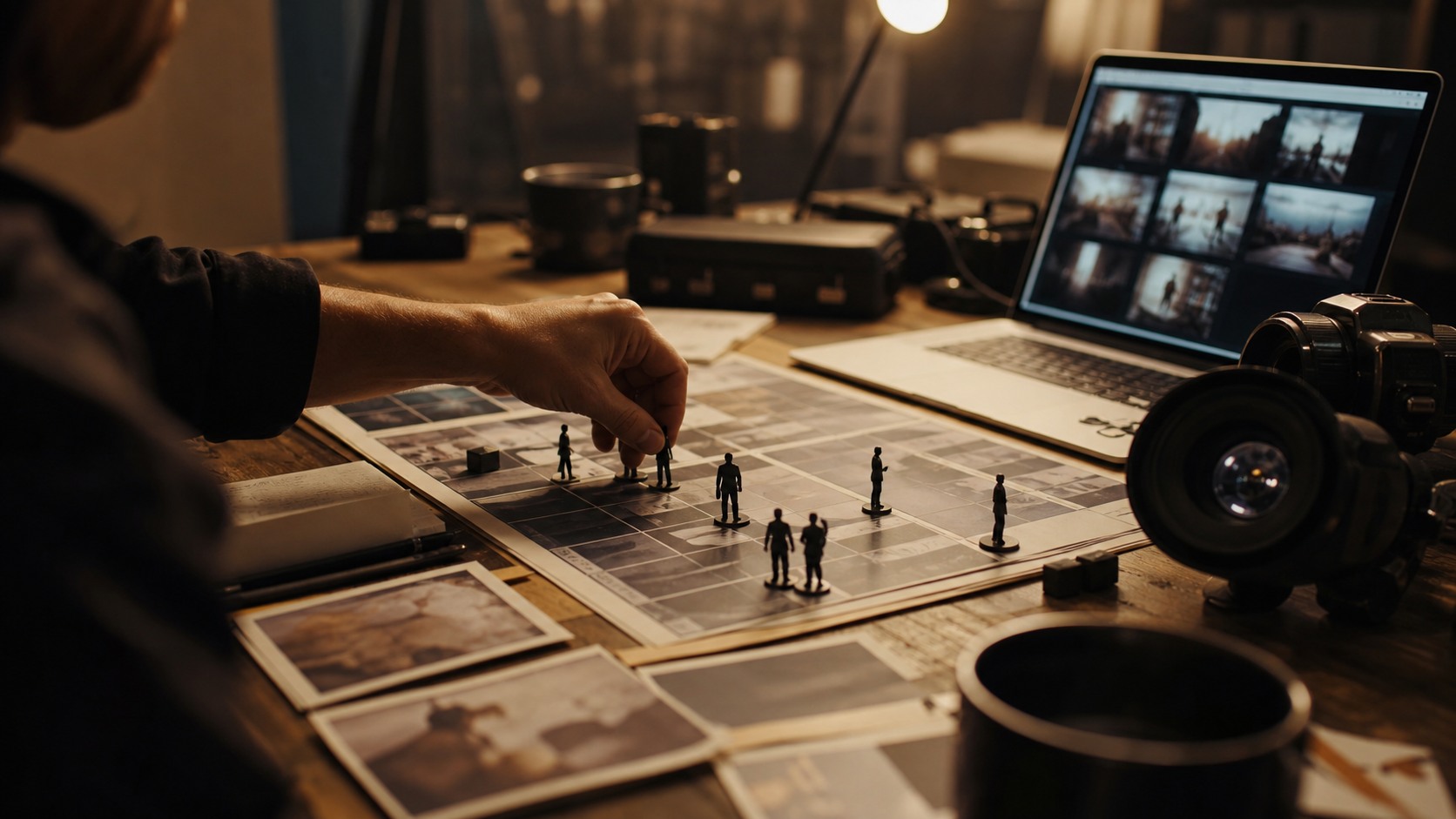
AI can help directors break down scripts, generate mood references, compare shot ideas, create rough storyboards, test scene tone, summarize notes, and organize planning materials. These uses can save time and make early direction more concrete.
AI can also help with options. A director can ask for several ways to stage a reveal, several visual moods for a location, or several approaches to a transition. Seeing options can sharpen the director’s own taste.
These tasks are useful because they support preparation. They do not replace the director. The director still decides which idea belongs to the film and which idea should be rejected.
What AI Cannot Understand Yet
AI does not understand lived performance, trust, or emotional truth the way a director must. It can describe a sad reaction or generate a face that appears intense, but it does not know whether the performance is honest inside the scene. It cannot read the actor’s process or build the confidence needed for a difficult take.
AI also lacks moral and contextual responsibility. A director may choose not to show something, not because it is visually weak, but because it changes the meaning of the film in a harmful or dishonest way. That kind of judgment depends on values, context, and accountability.
The limitation is not only technical. It is relational. Movies are made by people negotiating meaning together. AI does not yet participate in that human exchange as a responsible leader.
AI and Performance Direction
Performance direction is one of the clearest boundaries. A director listens to actors, watches behavior, adjusts language, creates safety, and helps performers connect action to intention. This work changes from person to person and moment to moment.
AI may help prepare performance notes or analyze a script beat, but it cannot replace the relationship between director and actor. It cannot know when an actor needs freedom, precision, quiet, encouragement, or a completely different adjustment.
Even synthetic or animated performances need direction. Someone must decide what behavior is truthful, what timing feels right, and what the scene is asking from the character. AI can generate or suggest, but direction requires interpretation.
AI and Shot Direction
AI is stronger with shot direction than performance direction because shot ideas can be visualized quickly. It can suggest camera angles, compositions, coverage plans, and scene boards. A director can use those ideas to prepare conversations with the cinematographer and editor.
The danger is overvaluing attractive frames. A generated shot may look cinematic but fail the scene’s point of view. It may ignore geography, production limits, or the performance. The director must judge whether the shot helps the sequence.
AI shot direction works best as exploration. The director asks questions, compares options, and then turns selected ideas into a plan that the crew can actually execute.
AI and Collaboration
Directing is collaborative leadership. A director works with producers, actors, cinematographers, production designers, editors, composers, sound teams, and many others. Each department brings expertise that changes the film.
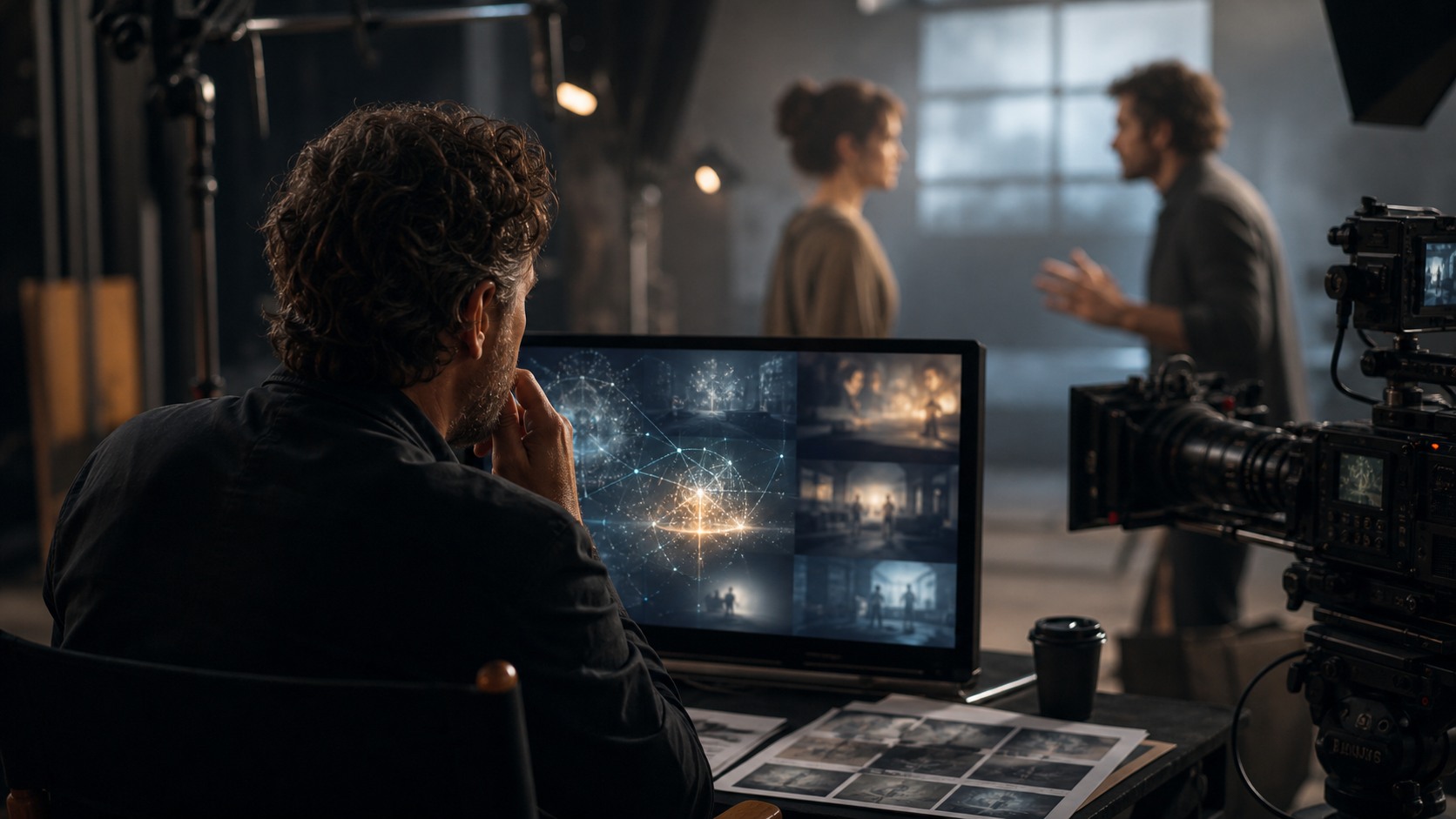
AI can help create shared references for those conversations. It can make a director’s idea visible earlier. But it should not shut collaboration down. If the director uses AI images as rigid orders, the workflow can become less creative, not more.
The best use is conversational. AI proposes a visual draft, collaborators respond, and the director decides how the idea should evolve.
Could AI Direct a Short Experiment
AI can be used to create a project where many directorial choices are generated, suggested, or automated. A filmmaker might ask AI for a script breakdown, shot list, visual style, edit suggestions, and music direction. The result could be an interesting experiment.
But even then, a human usually defines the experiment, selects outputs, resolves contradictions, and publishes the work. The human decides what counts as success. That means the authorship question remains complicated.
Calling such a project AI-directed may be useful as a concept, but it should not hide the human choices around it. The more honest phrase is AI-assisted direction unless the project is deliberately framed as an automation experiment.
Why Final Decisions Still Matter
Directing is full of final decisions. Which take stays. Which line is cut. Which shot is too beautiful to keep. Which performance tells the truth. Which scene is no longer needed. These decisions require the director to understand the whole film.
AI can suggest decisions, but it cannot be accountable for them. If a scene fails, if a likeness is misused, if a performance is treated carelessly, or if the story becomes dishonest, the responsibility belongs to the human creators.
This accountability is not a technical detail. It is part of what directing means. The director answers for the film.
How Directors Should Use AI Now
Directors should use AI where it improves preparation and clarity. It can help with early visualization, alternate coverage, tone tests, research organization, and communication with collaborators. Those are valuable uses when the director remains in control.
They should be cautious where AI touches performance, consent, likeness, cultural context, or final authorship. These areas require human care and documentation. Speed should not outrun responsibility.
A smart director treats AI as a planning partner, not a replacement self. The tool expands what can be considered. The director decides what should become cinema.
How to Test AI Direction Responsibly
A responsible test begins with a limited scene, not a whole feature. A director can choose one scene and ask AI to help with a breakdown, visual references, coverage ideas, and an animatic outline. Then the director can compare those outputs with the real needs of performance, location, crew, and edit. This keeps the experiment practical.
The test should include collaborators. Ask a cinematographer whether the generated shot ideas are filmable. Ask an actor whether the performance notes feel useful or generic. Ask an editor whether the coverage would cut. The goal is not to prove that AI is impressive. The goal is to discover where it genuinely supports direction.
The director should also document what was accepted and rejected. If an AI suggestion leads to a useful shot, note why it worked. If another suggestion fails, note what it misunderstood. These notes create a learning loop and prevent the same mistakes from repeating.
A responsible test also separates private exploration from public claims. It is one thing to experiment with AI-generated direction internally. It is another to market a film as AI-directed or use synthetic material in public. The more public the claim, the more clearly the human role should be explained.
This kind of testing keeps the question grounded. Instead of arguing abstractly about whether AI can direct, filmmakers can see where AI helps, where it fails, and where human direction remains non-negotiable.
What Would Have to Improve
For AI to come closer to directing, several things would have to improve at once. It would need better long-range story awareness, stronger continuity across scenes, more reliable understanding of performance context, and safer ways to handle rights, likeness, and consent. Even those improvements would not automatically create a director.
The harder challenge is not only producing better suggestions. It is understanding why a suggestion matters. A director may choose a less polished take because it contains a human hesitation that changes the whole scene. A model can rank patterns, but the meaning of that hesitation depends on story, actor, rhythm, and audience trust.
AI would also need to work inside collaboration. Directing is full of disagreement, persuasion, compromise, and listening. A cinematographer may challenge a shot, an actor may challenge a line, and an editor may challenge a scene. The director’s work is to hold the film together through those conversations.
Future tools may become more conversational and context-aware. They may remember a project’s style, track decisions, and offer more relevant suggestions. That would make them better assistants. It would still leave the human question: who is accountable for the final choice.
This is why the answer is likely to remain nuanced. AI will become more capable inside directorial workflows, but capability is not the same as authorship, leadership, or responsibility.
What a Human Director Notices
A human director notices more than whether a scene matches a prompt. They notice when an actor is protecting themselves, when a pause has more truth than a line, when a camera move is calling attention to itself, or when the crew is too tired to solve a problem well. These observations happen inside the living conditions of production.
AI can process patterns, but it does not stand in the room with the same responsibility. It does not feel the tension between what was planned and what is happening. It does not know when a mistake has become a gift or when a beautiful accident should be protected. Those choices are central to directing.
A human director also understands when not to explain. Sometimes an actor needs a precise note, and sometimes they need space. Sometimes a department needs a clear answer, and sometimes the director needs to ask a better question. Direction is full of these subtle adjustments.
This is why AI assistance can be powerful without becoming full direction. The tool can expand preparation, but the director’s attention turns preparation into a responsive creative act. A movie is made in those moments of response as much as in the plan.
The Real Answer
AI cannot fully direct a movie yet because directing is not only generating instructions. It is leading meaning through people, time, constraints, and choices. AI can help with many directorial tasks, and those tools will likely become more capable.
The future may include more automated planning and more AI-generated scene materials. Still, the director’s role will remain important wherever performance, ethics, collaboration, and final judgment matter.
So can AI direct a movie. It can assist, simulate, and experiment. But a movie that asks to be felt, trusted, and understood still needs human direction at the center.