AI Gives Directors Earlier Visual Contact With the Film in Their Head
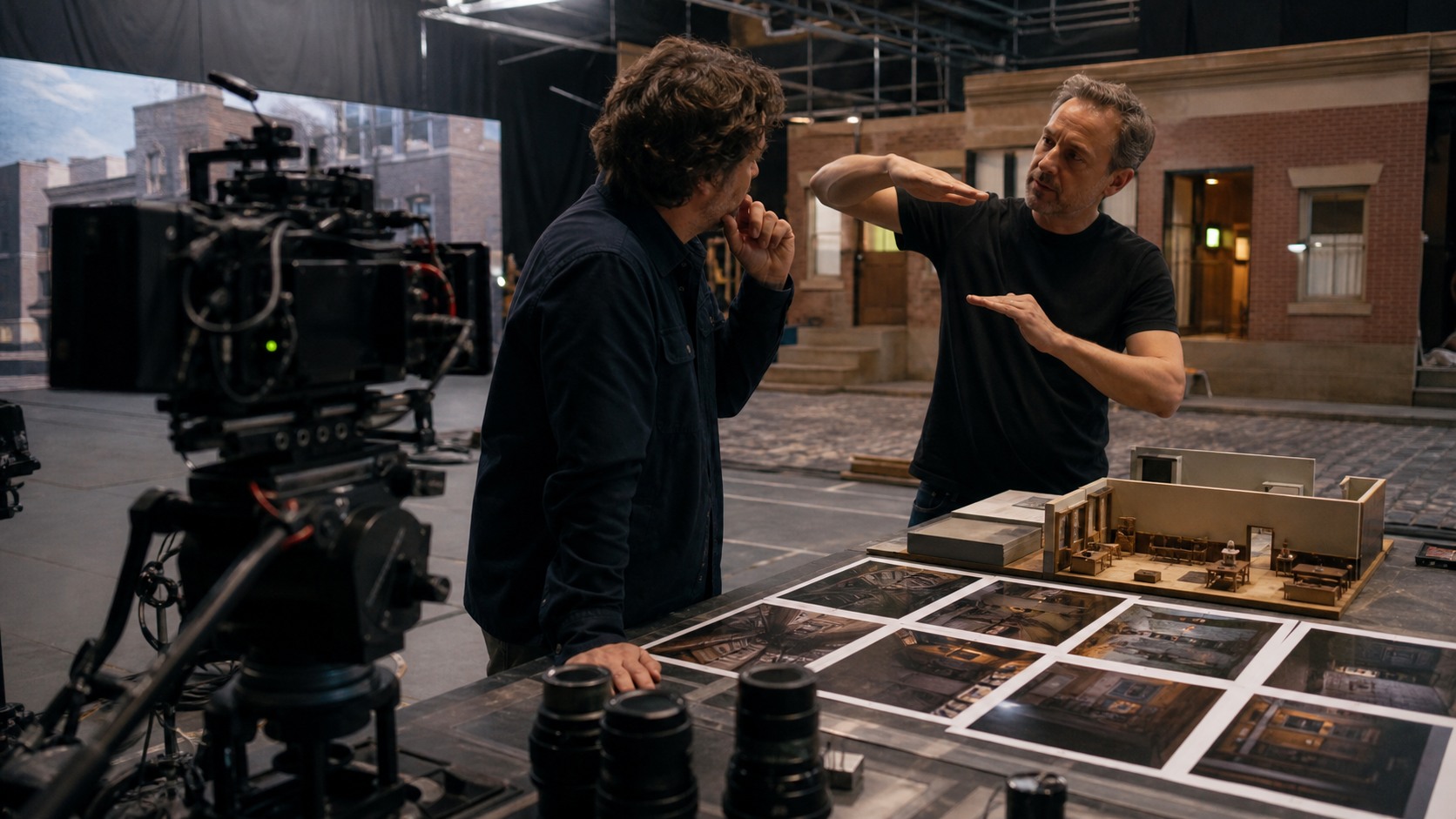
AI helps directors see a film before it exists by turning early ideas into rough images, visual sequences, tone tests, and motion experiments. Directors have always imagined scenes before shooting them, but those images could be hard to communicate until artists, locations, actors, or crews were involved. AI can make the imagined film visible earlier. That visibility can improve collaboration and planning, as long as the director remembers that seeing an option is not the same as making the final choice.
From Private Imagination to Shared Reference
A director often carries a private version of the film long before production. The challenge is sharing that version clearly with collaborators. Words can describe tone, but images help people align faster. AI can create early visual references that make the director's intention easier to discuss.
These references might show atmosphere, location scale, color mood, character isolation, camera distance, or a possible reveal. They do not have to be final. They give the team a place to begin.
The value is shared attention. Instead of guessing what the director means, collaborators can respond to a visible proposal. That response may confirm the idea, challenge it, or improve it.
Seeing Tone Early
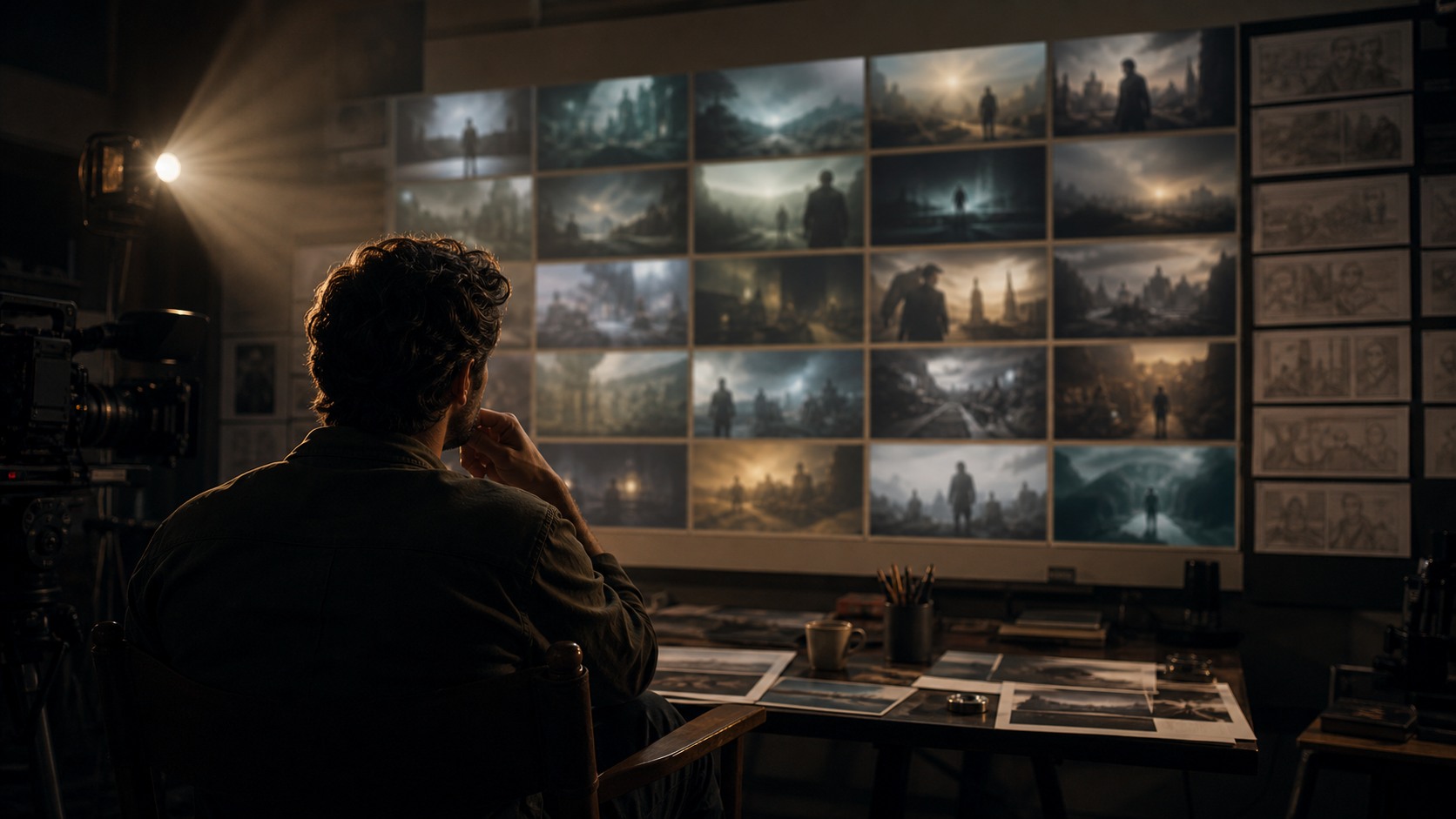
Tone can be difficult to explain. A scene may be sad but not sentimental, futuristic but not shiny, frightening but not loud. AI tone tests can help directors compare subtle differences before production design and cinematography decisions harden.
A director can generate several mood directions and ask which one feels closest to the film. This is not about choosing the prettiest image. It is about finding the emotional weather of the story.
Early tone tests can also reveal cliches. If every generated version looks familiar, the director may need a sharper visual rule. AI can expose when an idea has not yet become specific enough.
Seeing the World of the Film
Worldbuilding benefits from early visualization. Whether the film is realistic, historical, speculative, or surreal, the director needs a sense of what the world allows. AI can help explore locations, textures, lighting, scale, and atmosphere before the team commits.
The director should treat these outputs as questions. Does the world feel too large for the story. Does the color palette support the characters. Does the design distract from the emotional center. The answers guide later departments.
AI can help a director find the boundary between imagination and production. Some ideas belong in the final film. Others belong only in the discovery process.
Seeing Scenes as Sequences
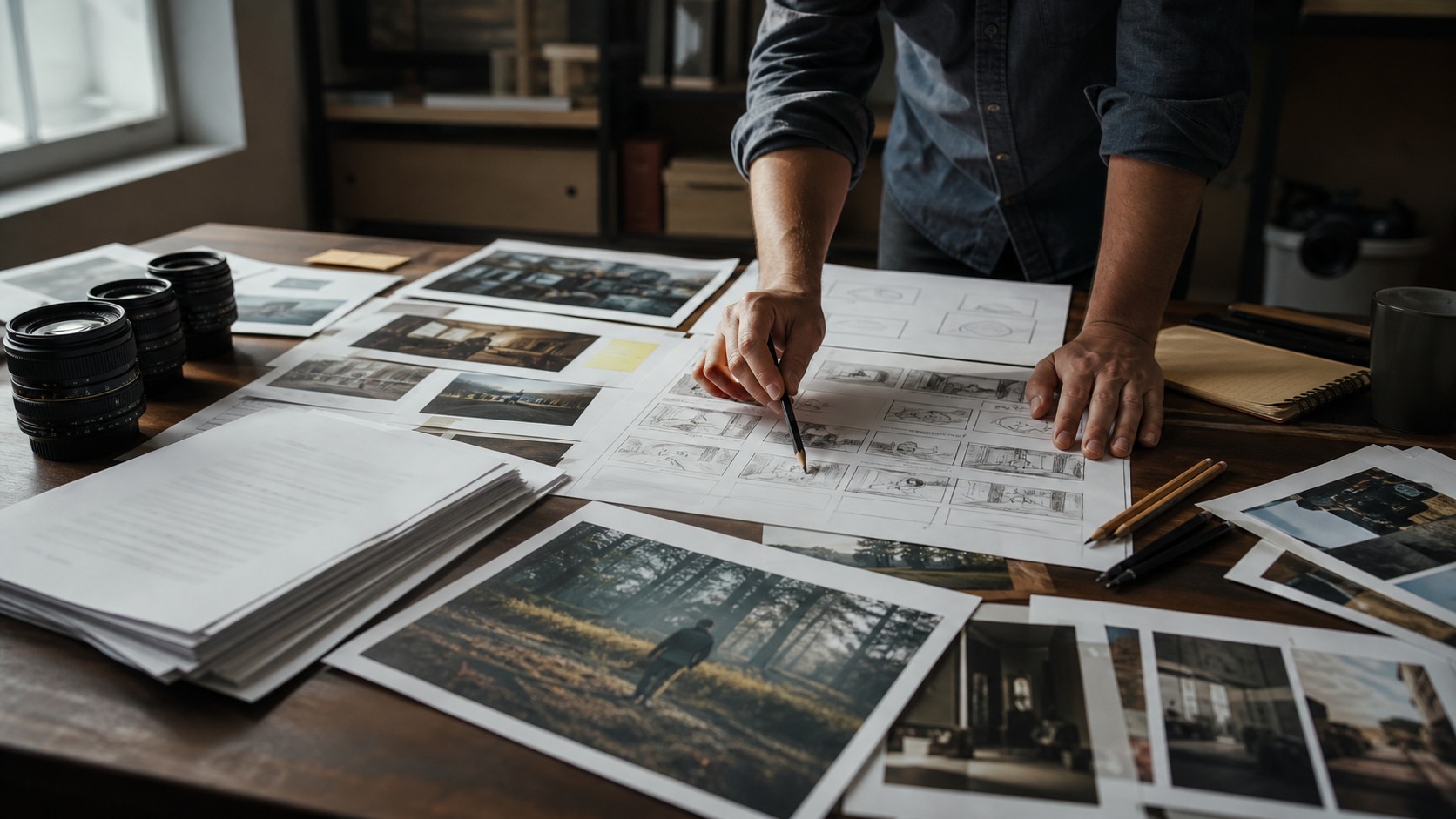
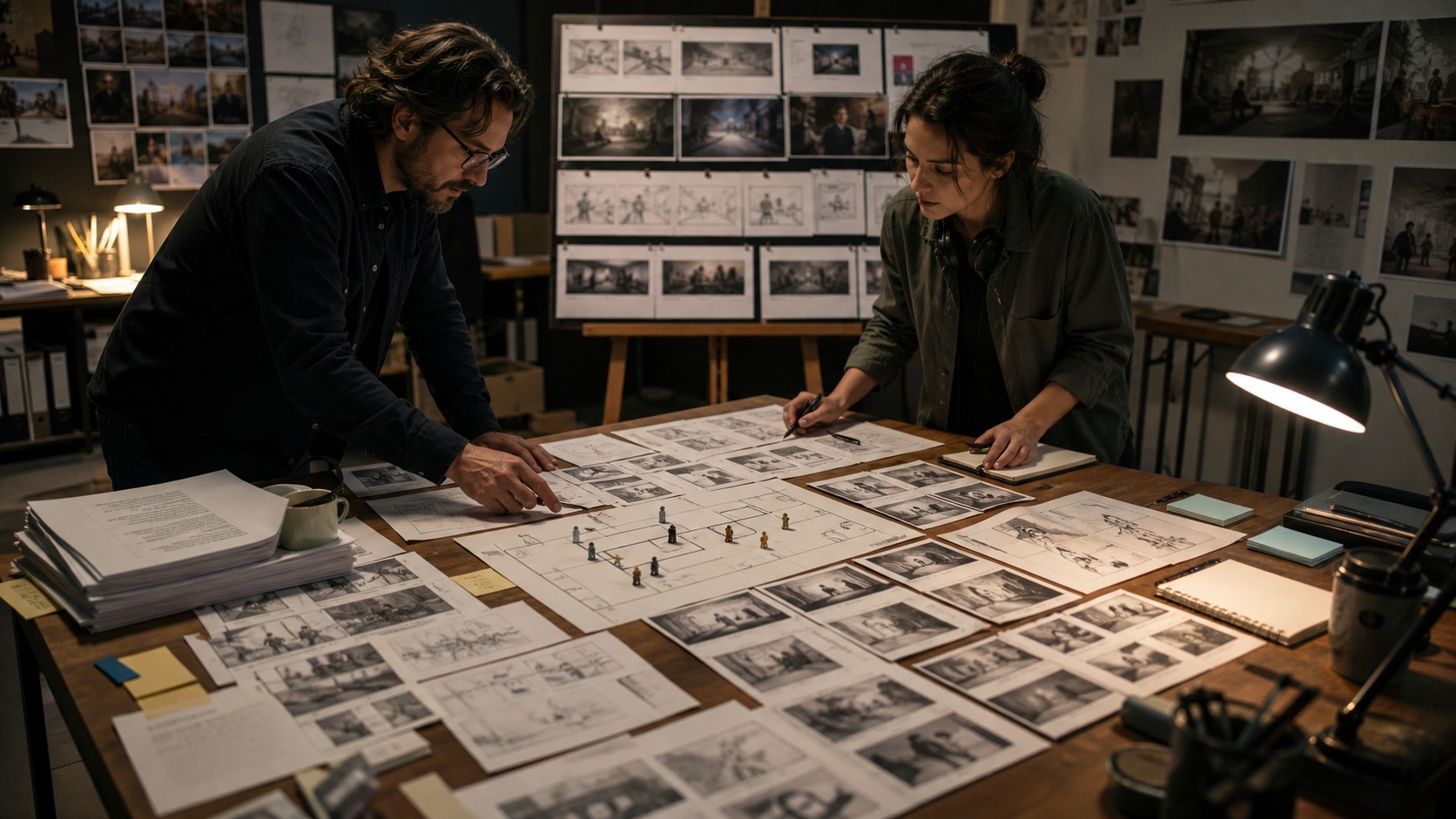
Directors do not only need single images. They need sequences. AI storyboards and rough animatics can help a director see how a scene might unfold from opening frame to final beat. This is where visual planning becomes filmmaking.
A sequence reveals problems that a single image hides. The geography may be unclear. A reaction may be missing. A reveal may happen too early. A shot may repeat information. AI can help create the pieces, but the director must judge the flow.
Seeing a sequence before production gives the director time to revise. That is a major advantage. It is easier to fix a board than to fix a missing shot after the set is gone.
Seeing Performance Space
AI can help directors think about where actors live inside the frame. A generated image may suggest distance, isolation, pressure, or closeness. But performance space is not only visual. Actors need playable movement, eyelines, and emotional logic.
Directors should use AI frames to ask performance questions. Does the actor have room to move. Is the camera too close too soon. Does the blocking support the scene's power shift. These questions keep visuals connected to performance.
If rehearsal reveals a better performance choice, the AI plan should change. The actor's truth matters more than a generated composition.
Seeing What Collaborators Need
AI can help directors communicate with departments. Cinematographers can respond to framing and light. Designers can respond to texture and space. Editors can respond to sequence. Producers can respond to scale. Composers and sound teams can respond to mood.
The director should label references by purpose. One image may be about color, another about camera distance, another about production design. Without labels, collaborators may focus on details the director did not intend.
Good directors use AI references as invitations. They do not simply hand down generated images. They ask collaborators how the film can become stronger, clearer, and more practical.
Seeing Constraints Earlier
AI can make constraints visible earlier too. A director may discover that a desired world feels too expensive, that a camera move needs special equipment, or that a scene can be simpler than expected. These discoveries help the film.
Constraints are not only budget problems. They can be creative guides. A smaller location may make a scene more intimate. A simpler shot may make a performance stronger. A limited visual palette may make the film more memorable.
AI helps when it reveals the cost of a desire before the team is locked into it. Directors can then choose which ambitions are worth protecting.
Seeing Alternatives Without Losing Direction
AI makes alternatives easy to create. A director can compare moods, frames, locations, and transitions quickly. That can be liberating, but it can also weaken direction if every choice remains open forever.
Directors need a point of view. Seeing alternatives should sharpen that point of view, not dissolve it. At some stage the director must stop exploring and commit to the version that serves the film.
The best use of alternatives is structured. Generate to answer a question, choose, and move forward. Do not generate because uncertainty feels uncomfortable.
Seeing the Film Responsibly
Directors also need to see AI use responsibly. If references involve likeness, voice, copyrighted material, or sensitive cultural imagery, the director should think carefully about consent and use. Early visualization does not remove ethical responsibility.
Even private development images can influence later decisions. Keeping records of prompts, references, and approved outputs helps the team understand the path of the film's visual development.
Responsible use protects collaborators and the project. It also builds trust when the film moves from private planning to public presentation.
Seeing the Edit Before the Edit
Directors can use AI storyboards and animatics to sense the edit before footage exists. This does not replace an editor, but it helps the director understand how images might connect. A rough sequence can reveal whether a scene needs a reaction, a transition, or a simpler opening.
Seeing the edit early also helps with restraint. A director may realize that a favorite image does not actually help the sequence. It may be beautiful, but unnecessary. That discovery is easier to accept before the shot has been filmed.
The imagined edit gives the director a stronger plan for production. It makes the shoot less about collecting images and more about capturing the pieces the scene needs.
Seeing the Film With Others
A film becomes stronger when the director lets trusted collaborators respond to early visuals. AI can make that exchange happen sooner. Instead of waiting for expensive concept art or footage, the director can share rough visual tests and ask what others see.
This requires humility. Collaborators may point out that the visual direction feels generic, that the world is too large, or that the scene needs a clearer point of view. Those comments can protect the film from private assumptions.
AI helps directors see the film, but collaboration helps them see the blind spots. The two together can make early development more honest.
Seeing When Not to Use AI
Directors also need to recognize when AI is not the right tool. Some scenes depend on a real actor's discovery, a real location's texture, or a documentary uncertainty that should not be overplanned. In those cases, too much generated visualization can narrow the work.
The question is whether AI helps the director become more prepared or merely more attached to a preconceived image. If it blocks openness, use less of it. If it clarifies intention, use it carefully.
Knowing when to stop is part of direction. The director protects the living film, not the planning tool.
Building a Director's Visual Notebook
A director can keep AI work useful by building a visual notebook rather than a giant unsorted folder. The notebook might include tone tests, world references, selected storyboard panels, rejected ideas with notes, and questions for collaborators. Its purpose is to track the developing film, not to preserve every experiment.
Each image should have a reason attached to it. Maybe it captures the loneliness of the location, the contrast between two characters, or the feeling of a final shot. Writing the reason helps the director avoid being controlled by surface polish. It also helps collaborators understand what they are meant to respond to.
The notebook can change over time. Early images may be replaced after casting, scouting, rehearsal, or budget review. That is healthy. The film becomes clearer as reality arrives. AI helps create the first visible thoughts, but the notebook should keep evolving toward the film that can actually be made.
This habit gives directors a practical memory of the project. It helps them see what has stayed consistent, what has improved, and what no longer belongs. Seeing a film before it exists is valuable only if the director keeps refining what they see.
Turning Early Vision Into a Shootable Plan
The final test of early vision is whether it becomes shootable. A director may begin with tone frames, world images, and scene boards, but those references eventually have to become choices about locations, actors, lenses, blocking, sound, and time. AI can help reveal the dream, but production has to make the dream specific.
This translation is where directors earn the image. They decide which ideas survive budget limits, which moments need real performance, and which visual concepts should be simplified. Seeing a film before it exists is powerful only when the director can move from possibility to plan.
A strong director uses AI to clarify intention, then invites the crew to make that intention practical. The finished film is not the generated notebook. It is the result of many people turning the clearest ideas into lived scenes.
Why Seeing Early Requires Letting Go
Seeing the film early can make a director attached to images that are not right anymore. Part of the craft is letting those images go when casting, locations, rehearsal, or editing reveals a better path. AI can help the director begin seeing, but the film improves when the director keeps looking.
What AI Cannot See for the Director
AI cannot see the film's moral center, emotional truth, or final meaning for the director. It can generate images that resemble intention, but it does not know what the director is trying to say. That distinction matters.
A director may see a stunning frame and still reject it because it is wrong for the film. That rejection is part of direction. The tool offers possibilities; the director protects the film's identity.
AI helps directors see earlier, but it does not replace the need to look deeply. The film exists when images, performances, sound, rhythm, and meaning are shaped into one experience.