AI Can Map Story Patterns, But Writers Still Decide Rhythm
AI models can analyze story structure and pacing by looking for patterns in outlines, scene summaries, character turns, and draft pages. They can identify where a story appears to change direction, where tension rises, where scenes repeat similar functions, or where the pace may slow. That analysis can be useful because writers and directors often become too close to a draft. But structure is not a machine setting. Pacing is emotional rhythm. AI can help map the story, but filmmakers still decide what the audience should feel and when the film should breathe.
What Story Analysis Means
Story analysis is the process of studying how a screenplay moves. It looks at scenes, beats, character choices, reversals, act turns, escalation, and payoff.
AI can help by summarizing these patterns quickly. It can create a map of what seems to happen in each section of the script.
Scene Function
One useful AI task is identifying scene function. A scene may introduce a character, raise a question, reveal information, force a choice, deepen conflict, or provide aftermath.
If several scenes serve the same function, the pacing may drag. The writer can decide whether to combine, cut, or sharpen those scenes.
Beat Mapping
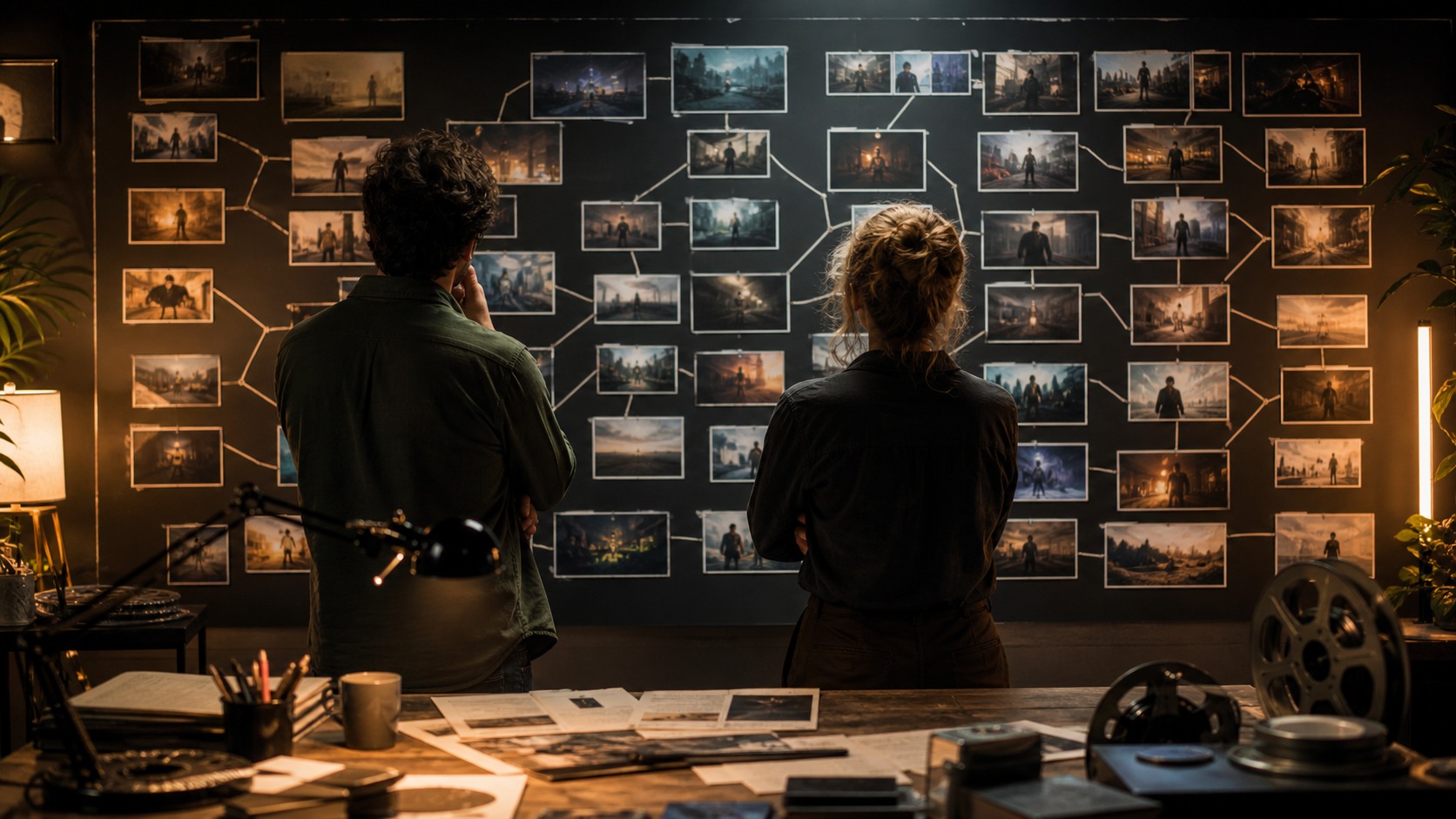
AI can break a scene or outline into beats. A beat map shows where emotional pressure changes. It can reveal whether a scene has a real turn or only delivers exposition.
Writers should review the beat map carefully. A model may miss subtle shifts, but it can still reveal places where the draft is less clear than intended.
Pacing Signals
Pacing is affected by scene length, conflict density, information flow, visual variety, emotional intensity, and silence. AI can identify some of these signals, especially when the script is structured clearly.
The danger is reducing pacing to speed. A slow scene may be powerful if the audience is waiting for something. A fast scene may feel dull if nothing meaningful changes.
Act Turns
AI can help locate likely act turns by identifying major decisions, reversals, losses, discoveries, or commitments. This can help writers see whether the story has strong directional shifts.
The model may also impose conventional structure where the script is intentionally different. Filmmakers should use act-turn analysis as a question, not a rule.
Escalation
A story usually needs escalating pressure. AI can compare early, middle, and late scenes to see whether stakes, complications, and consequences appear to grow.
If the pressure stays flat, the draft may feel repetitive. The fix might be a stronger choice, a new cost, a tighter deadline, or a more personal consequence.
Character Activity
AI can track whether a protagonist is making choices or only reacting. Passive protagonists can slow pacing because scenes happen around them rather than because of them.
The writer should ask where the character chooses, avoids, lies, risks, or sacrifices. Those choices create structure from the inside.
Information Flow
Pacing depends on when the audience receives information. AI can summarize what each scene reveals and identify clusters where too much exposition arrives at once.
Writers can then spread information through action, conflict, image, and behavior. The goal is not to hide everything. The goal is to make discovery feel alive.
Repetition and Echo
AI can find repeated scene purposes, repeated arguments, repeated emotional states, or repeated exposition. Some repetition is intentional; echoes can create theme and rhythm.
The review question is whether repetition develops or stalls the story. If the second version raises the cost, it may work. If it only repeats information, it may slow the film.
Using Visual Pacing
Film pacing is visual as well as textual. Scene scale, location shifts, movement, silence, and camera language all affect rhythm.
AI analysis based only on text may miss visual pacing. Directors and editors should add their own sense of screen time, image density, and shot rhythm.
Comparing Drafts
AI can compare two drafts and summarize what changed in structure. It may identify removed scenes, shifted reveals, shorter sections, or altered character emphasis.
This is useful when many revisions have happened. The writer can see whether the new draft actually solved the pacing issue or simply moved it elsewhere.
Avoiding Formula
AI structure notes can become formulaic if accepted too literally. A model may recommend familiar turning points because those patterns are common.
Filmmakers should ask whether the note serves this story. Some films need classical propulsion. Others need unease, delay, fragmentation, or quiet accumulation.
Tone Changes the Diagnosis
The same pacing pattern can mean different things in different tones. A long pause in a thriller may create dread. A long pause in a farce may kill momentum. A repeated conversation in a drama may deepen obsession, while the same repetition in an adventure film may feel stalled.
AI can identify the pattern, but the filmmaker has to interpret it through tone. That interpretation should include genre, audience promise, performance style, and the visual language of the film. Notes that ignore tone can push a script toward a generic rhythm.
A useful pacing review asks what kind of attention the film wants. Suspense, grief, wonder, comedy, dread, and romance all shape time differently.
Table Reads and Human Timing
AI analysis should be compared with human timing whenever possible. A table read, rehearsal, or rough assembly may reveal that a scene plays faster or slower than it looked on the page. Actors can make exposition feel alive, or they can expose dialogue that seemed fine in text.
Directors and writers should treat AI notes as pre-read diagnostics. After performers engage the material, the team should revise the diagnosis. A scene that looked too long might work because the emotional shift is clear. Another scene that looked efficient may feel rushed because the characters need more air.
This prevents the model from becoming the final authority on rhythm. Film pacing is heard, seen, and felt.
Using AI With Editors
Editors can use AI-generated structure summaries as a shared map, especially when a project has many versions. The map can show which scenes carry reveals, where emotional turns repeat, and where a sequence may be carrying too many story jobs.
That map is not a substitute for watching the cut. An editor may protect an apparently slow moment because it gives the audience time to process a loss. The model may call it low activity, while the editor sees it as necessary release.
The strongest workflow puts AI summaries beside editorial instinct. One shows patterns. The other judges screen time.
Revision Without Flattening
When writers use AI pacing notes, the danger is flattening the script into a familiar shape. Cutting every delay, clarifying every ambiguity, and accelerating every turn can remove the qualities that made the story interesting.
A better revision process separates confusion from mystery, drag from suspense, and repetition from thematic echo. AI can help locate candidates, but humans decide the category. The fix for a slow section may be a sharper image, a harder choice, or a stronger silence rather than a shorter scene.
Revision should make the film more itself, not merely more efficient.
What AI Cannot Feel
AI can describe rhythm, but it does not feel audience anticipation. It does not sit in a theater and sense when people lean forward, laugh too early, grow restless, or hold their breath after a revelation. That gap matters because pacing is partly social. It exists between the film and the audience.
A model may call a quiet scene low-energy because little action happens, while a human viewer may experience it as the most tense moment in the film. The difference is expectation. If the audience knows a secret, waits for a confession, or fears an interruption, stillness can become active.
This is why AI pacing analysis should be paired with human feedback. Readers, actors, editors, and test viewers can reveal how time actually feels. Their reactions may confirm the model's warning, or they may prove that the script is using delay with purpose.
Good filmmakers learn to read both kinds of evidence. Pattern analysis can show where to look, but emotional response decides whether the pattern is working.
Building a Revision Conversation
The most productive use of AI analysis may be the conversation it creates. Instead of saying a draft feels slow, a team can point to a sequence where four scenes deliver similar information or where the protagonist avoids a decision for too long.
That specificity helps writers avoid defensive, vague arguments. The model's map becomes a neutral object on the table. The team can agree, disagree, or reframe the issue, but everyone is discussing the same part of the script.
This is especially helpful in collaborative film work, where producers, directors, writers, and editors may use different language for the same problem. AI structure notes can translate instinct into reviewable evidence, as long as the final decision stays with the filmmakers.
A good revision meeting should end with choices, not just observations. The team might decide to cut a repeated scene, move a reveal earlier, turn exposition into conflict, or preserve a slow section because it supports tone. The AI analysis is useful only when it leads to a clearer next draft.
Writers should also keep a record of rejected notes. Sometimes an AI-flagged pacing issue is not a problem at all; it may be an intentional pause, a genre expectation, or a setup that pays off later. Recording that choice prevents the same issue from being relitigated at every draft stage.
The conversation should include the intended audience experience. A script for a festival drama, a broad comedy, and a streaming thriller may need very different rhythms. AI can surface the same structural pattern in all three, but the team must decide whether that pattern supports the promise of this particular film.
That audience lens keeps the analysis from becoming abstract. Pacing is not a scorecard; it is a relationship with attention.
The Practical Takeaway
AI models can analyze story structure and pacing by mapping scene functions, beats, escalation, information flow, and repeated patterns. That can make revision more focused.
They cannot decide the correct rhythm for the film. Pacing depends on emotion, tone, genre, performance, image, and audience expectation.
The best use is comparative rather than absolute. Run the analysis on an outline, a revised draft, and a later cut, then look for where the diagnosis changes. If the same weak turn appears in every version, the team has useful evidence. If the note disappears once actors or editing enter the process, the issue may have belonged to the page rather than the film.
Filmmakers should keep the analysis attached to actual revision choices. A map of beats is only valuable when it helps a writer sharpen conflict, move information, protect silence, or give the editor cleaner emotional transitions.
Used this way, AI gives the team a sharper vocabulary for story movement without replacing the taste that makes rhythm cinematic for viewers.
The final rhythm still belongs to the film team.
Use AI analysis as a draft diagnostic, then let writers, directors, and editors decide how the story should move.