Generative Models Can Explore Characters, But They Cannot Replace Human Observation
Generative models can support character development in film by helping writers and directors explore backstory, behavior, visual identity, dialogue patterns, emotional arcs, and contradictions. They can produce questions, options, and references quickly. That speed is useful during development, but a character is not a database entry. A memorable film character feels specific, pressured, inconsistent, embodied, and alive. AI can suggest possibilities, but filmmakers must decide which details reveal the person, which details are decorative, and which choices an actor can actually play.
Character Development Starts With Want
A film character needs a want. The want may be obvious or hidden, practical or emotional, noble or selfish. Generative models can list possible wants, but the filmmaker chooses the one that drives the story.
The want should create action. If the character's desire does not lead to choices, scenes may become descriptive instead of dramatic.
Backstory as Pressure
AI can generate pages of backstory quickly. Most of it should not appear directly in the film. Backstory is useful when it creates pressure on present behavior.
A childhood loss, old debt, failed relationship, or private shame matters only if it changes what the character does now. Filmmakers should keep backstory that acts on the scene.
Contradiction Makes Characters Alive
Generative models often create clean character profiles. Real characters are rarely clean. They may be brave in one context and cowardly in another, generous publicly and cruel privately, charming while avoiding truth.
Filmmakers can ask AI for contradictions, but they should refine them through observation and story need. Contradiction should create behavior, not trivia.
Behavior Over Description
Character development becomes cinematic when it becomes behavior. A person avoids eye contact, keeps fixing a broken object, lies too politely, or never sits with their back to a door.
AI can suggest behavioral details, but the writer and director should choose details actors can play and cameras can observe.
Dialogue and Voice
AI can test dialogue styles, but voice is more than word choice. It includes rhythm, omission, defense, humor, class, education, fear, and what the person refuses to say.
A generated voice often needs pruning. The best line may be shorter, stranger, or less explanatory than the model's version.
Visual Character References
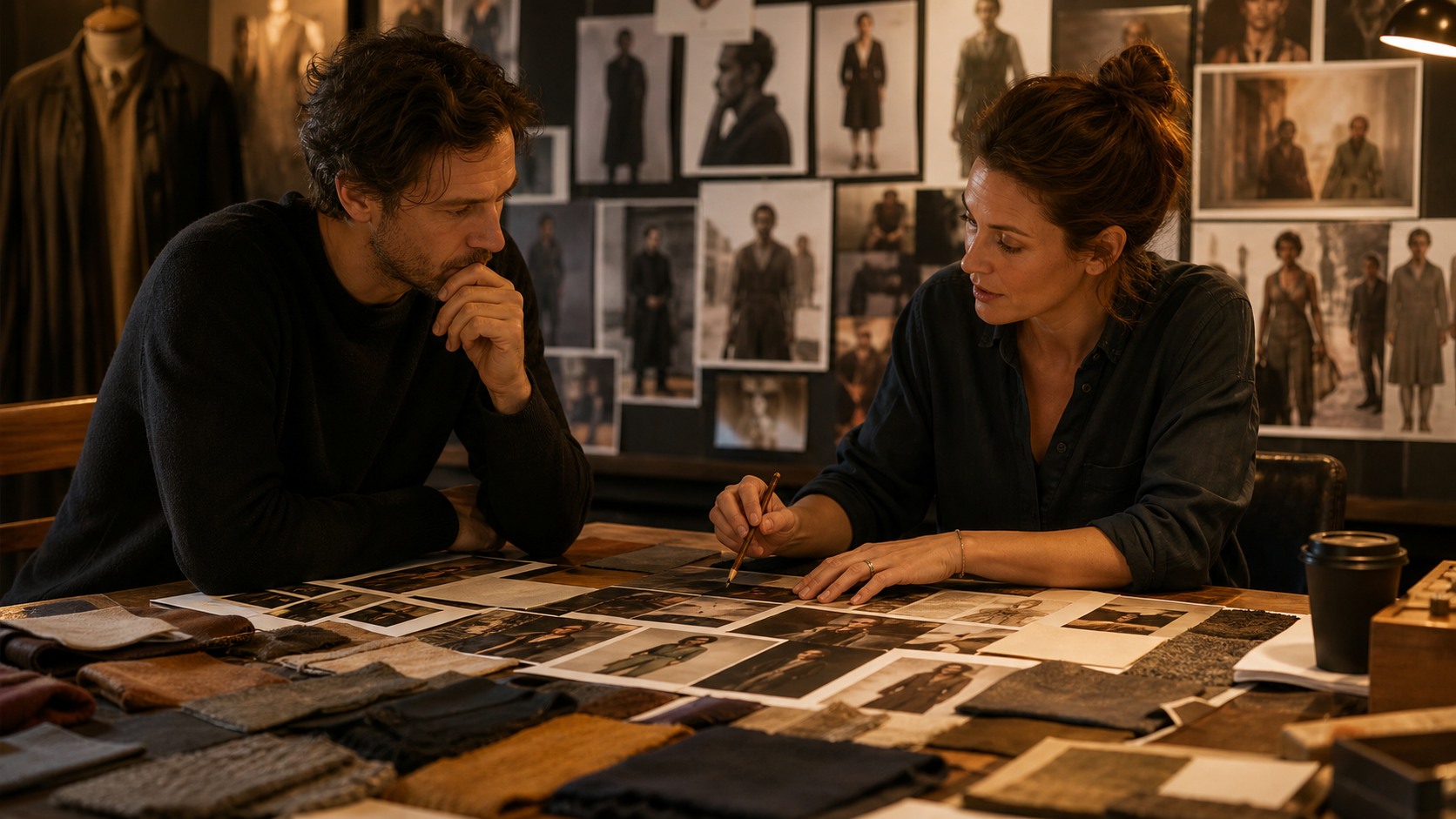
Generative models can create visual references for costume, posture, environment, and character presence. These can help directors, costume designers, and actors discuss the person earlier.
References should be labeled by purpose. A frame might express silhouette, texture, vulnerability, social status, or emotional distance. Without labels, collaborators may chase the wrong detail.
Character Arcs
AI can map a possible arc from beginning to end. It can identify turning points, repeated fears, and moments where the character changes direction.
The filmmaker should ask whether the arc is earned. Change should come from pressure, choices, and consequences, not because a structure note says the character should transform.
Actor Collaboration
Actors need room to discover. AI-generated character notes can help prepare discussion, but they should not become a rigid cage around performance.
A director might share selected references or questions with an actor, then listen to what the actor finds. Character development becomes richer when it includes the performer.
Avoiding Character Cliches
AI may produce familiar character types: the haunted detective, reluctant hero, cold genius, fearless rebel, or wise mentor. These archetypes can be useful starting points, but they need specificity.
A filmmaker should ask what makes this person unlike the default version. The answer may be a habit, wound, relationship, contradiction, or worldview.
Relationships Define Character
Characters reveal themselves through relationships. AI can generate relationship maps, conflicts, alliances, and secrets, but the filmmaker should focus on behavior between people.
A character may speak differently to a parent, rival, lover, boss, or child. These shifts make the person dimensional.
Development Documents
AI can help create character documents for a writer, director, or department. These documents might include wants, fears, contradictions, visual references, and arc notes.
They should stay compact. Too many details can bury the useful ones. A good character document helps people make choices, not memorize trivia.
Ethics and Likeness
Character visuals should avoid unapproved real likenesses. Generative references can accidentally resemble public figures or private people, especially when prompts are too specific.
Productions should keep consent and usage policies clear. Character development should not create avoidable rights or trust problems.
Characters Need Social Context
A character does not exist alone. Class, work, family, neighborhood, language, belief, and social pressure all shape behavior. Generative models can propose context quickly, but filmmakers should test whether that context creates visible choices in scenes.
A useful context detail might affect how the character enters a room, what they hide from a parent, how they spend money, or why a public mistake terrifies them. A weak detail only fills a profile page. Film character development should keep moving toward action, image, and relationship.
This is especially important when writing outside the creator's direct experience. AI suggestions need research, sensitivity, and review from people who understand the world being portrayed.
Using AI to Test Character Choices
One practical workflow is to test a character choice under different pressures. What would the character do if they were embarrassed, threatened, offered status, forced to lie, or asked to forgive someone. AI can generate possible responses, and the writer can look for the one that reveals the strongest contradiction.
The goal is not to let the model decide the answer. The goal is to expose weak assumptions. If every response sounds equally plausible, the character may not be specific enough yet. A sharper character creates limits. Some choices should feel impossible, even if they would be logical for another person.
Those limits help actors too. They define what the character can admit, what they avoid, and where pressure finally breaks the pattern.
From Profile to Scene
A common AI mistake is stopping at the profile. The model may produce fears, wounds, talents, beliefs, and secrets, but none of those matter until they alter a scene. Writers should translate profile details into moments of behavior.
For example, a character who distrusts institutions might avoid signing a hospital form, refuse a police report, or keep cash hidden in a shoe. A character who craves approval might laugh too quickly, overprepare a speech, or betray a friend for public praise.
This translation from description to action is where character becomes cinematic. It gives the camera something to see and the actor something to play.
Director and Department Alignment
Character development also affects departments. Costume, hair, makeup, production design, props, and cinematography all make choices that communicate who the character is. AI references can help align those teams early when they are curated around clear story purposes.
A costume reference should not merely look interesting. It should tell the department whether the character hides, performs status, resists care, follows rules, or tries to disappear. A prop reference should reveal habit or history. A lighting reference should support how close the film wants us to feel.
When the character purpose is clear, generated references become conversation tools instead of mood-board clutter.
Protecting Mystery
AI-generated character work often tries to explain too much. It may give every habit a cause, every wound a label, and every choice a tidy psychological reason. Film characters can be richer when some mystery remains. Audiences do not need a complete biography to believe a person on screen.
The filmmaker should decide which details are for the team and which details belong in the film. An actor may benefit from knowing a private fear that is never spoken. A director may use a backstory note to shape blocking. The audience may only see a hesitation at a doorway and understand enough.
Mystery is not vagueness. The character still needs consistent pressure and playable behavior. The difference is that the film does not stop to explain every internal mechanism. AI can help build the hidden material, but human taste decides how much stays hidden.
That restraint can make character development feel more mature. The audience is invited to observe, infer, and revise its judgment as the character acts.
Testing Character Arcs Against Scenes
A character arc should be tested scene by scene. AI may describe a transformation from isolated to trusting, reckless to responsible, or obedient to defiant. That description is only useful if the scenes show the pressure that causes the shift.
Writers can compare the proposed arc with the actual scene order. Where does the character resist change. Where do they pay a price. Where do they repeat the old pattern. Where do they make a choice they could not make earlier. If those moments are missing, the arc is only a summary.
This test keeps character development grounded in dramatic evidence. It also helps directors guide performance, because the actor can track not just what changes, but when the character knows it has changed.
The same review can reveal false growth. A character may announce a lesson without behaving differently, or the plot may reward them before they have made a hard choice. AI can help flag those gaps, but the writer has to rewrite the scene so the change is paid for.
Strong arcs often include relapse. A character tries to change, fails under pressure, and then makes a more costly choice later. Those imperfect turns feel more human than a smooth lesson delivered on schedule.
AI can also help compare how supporting characters pressure the arc. A rival may tempt the old behavior, a friend may expose the lie, and a stranger may reveal the cost of staying the same. Those relationships turn inner change into playable drama.
The final test is whether the audience can feel the change without being told. If the arc only exists in summaries, it needs to be rewritten into action.
The Practical Takeaway
Generative models help character development by producing options for backstory, behavior, voice, visual identity, relationships, and arcs. They are useful when they create better questions.
They are weak when they produce clean profiles without lived specificity. Film characters need pressure, contradiction, behavior, and performance.
A useful character workflow moves from options to evidence. Generate possibilities, choose the few that create action, then test them in scenes, rehearsals, and department choices. If a detail never changes behavior, image, relationship, or conflict, it probably belongs outside the film.
The model is strongest when it widens the field of possible choices. The filmmaker is strongest when narrowing that field into one person with habits, limits, secrets, and needs that belong to this story. That narrowing is where character development becomes authorship.
The same narrowing helps every collaborator. Actors get playable pressure, designers get purposeful references, and writers get a clearer sense of what the character will or will not do under stress. Those practical benefits matter more than a long profile.
A compact, chosen character note can do more for a scene than pages of generated biography.
Specificity beats volume every single time in character work.
Use AI to explore character possibilities, then choose the details that actors can embody and audiences can feel.