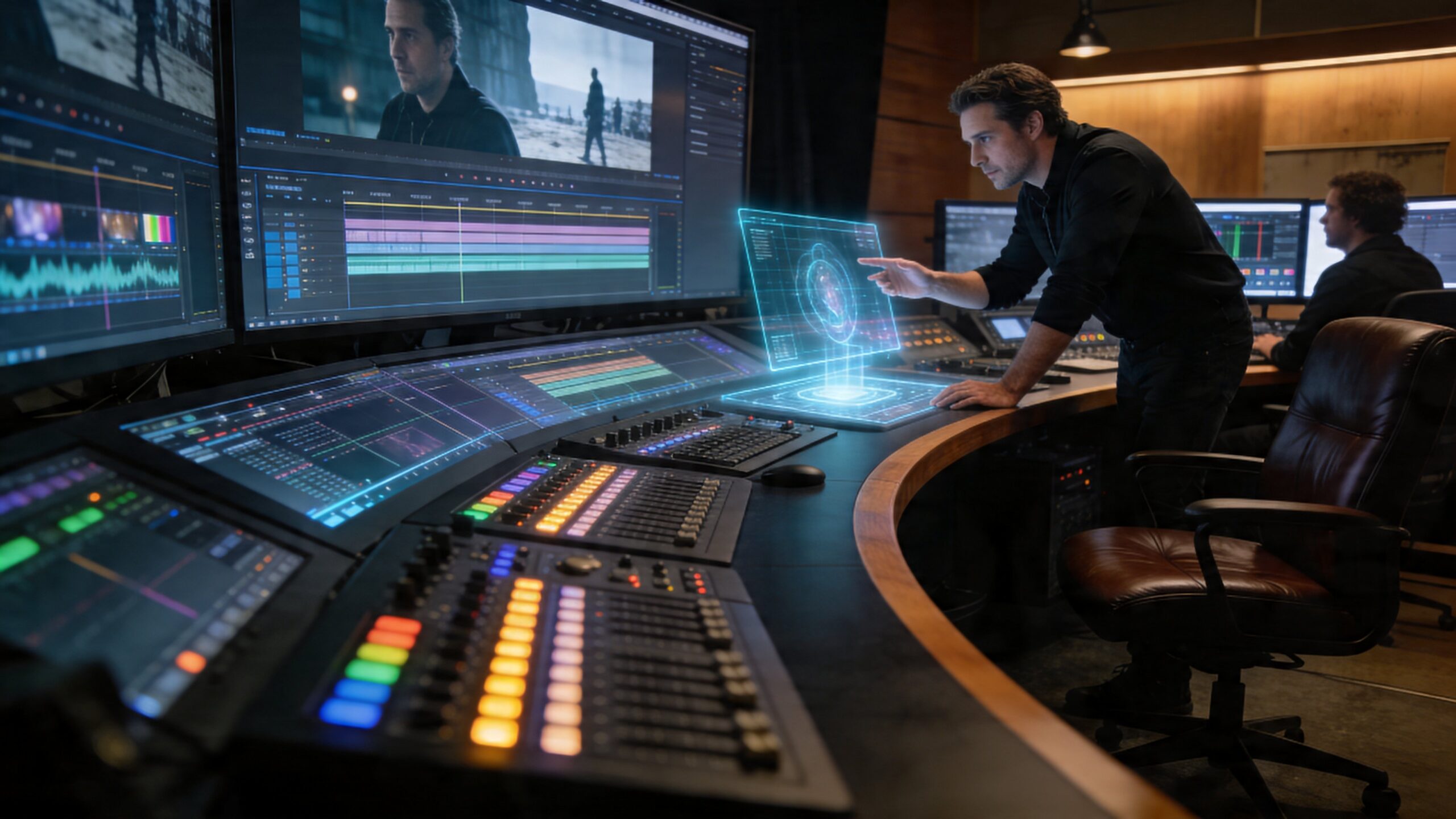
Introduction: A New Creative Partner Enters the Studio
Film production has always been shaped by technology. From the invention of synchronized sound to digital cameras and non-linear editing, each technological leap has expanded what storytellers can imagine and execute. Artificial intelligence is the next major shift, and it is already changing how films are written, planned, shot, edited, and distributed. For beginners, AI can feel intimidating, abstract, or even threatening to creativity. In reality, AI in film production is less about replacing filmmakers and more about augmenting them. It functions as a powerful creative assistant that handles complexity, accelerates workflows, and opens doors for storytellers who previously lacked access to big budgets or large crews. This guide is designed for complete beginners—writers, directors, editors, producers, students, and curious creatives who want to understand how AI fits into modern film production. You do not need a technical background to grasp these concepts. By the end of this article, you will understand what AI really is, how it is used at every stage of filmmaking, what tools are shaping the industry, and how to start using AI responsibly and creatively in your own projects.
A: No—AI supports creative decisions but does not replace human storytelling.
A: Most tools are designed for non-technical creatives.
A: Many AI tools are built specifically for indie and solo creators.
A: It can assist, but human revision is essential.
A: Used correctly, it frees time for creative focus.
A: Many tools offer affordable or free tiers.
A: Yes, restoration and upscaling are common uses.
A: Yes, when used transparently and responsibly.
A: Start small and integrate it gradually.
A: AI literacy is becoming a core filmmaking skill.
Understanding AI Without the Tech Jargon
At its core, artificial intelligence refers to computer systems that can learn patterns from data and make decisions or generate outputs based on those patterns. In film production, AI does not “think” or “feel” the way humans do. It analyzes enormous amounts of information—scripts, images, sounds, performances, audience behavior—and uses statistical models to predict, generate, or optimize outcomes.
Machine learning is the most relevant branch of AI for filmmaking. It allows systems to improve over time by training on examples. For example, an AI editing tool learns what makes a scene feel fast-paced or emotional by analyzing thousands of edited films. Generative AI goes one step further by creating new content, such as dialogue, concept art, music, or visual effects, based on what it has learned. For beginners, the key mindset shift is this: AI is not a creative replacement, but a creative amplifier. It works best when guided by human intent, taste, and storytelling instincts.
Why AI Matters in Film Production Today
The modern film industry is under constant pressure to do more with less. Budgets are tighter, timelines are shorter, and audiences expect higher visual quality than ever. AI addresses these pressures by reducing repetitive labor, increasing efficiency, and lowering barriers to entry.
Independent filmmakers can now achieve results that once required large studios. Writers can explore story ideas faster. Editors can find the best takes in hours instead of days. Visual effects that once required entire teams can be prototyped by a single artist. AI is also reshaping how films are marketed and distributed, helping creators find the right audiences more effectively. For beginners, this means opportunity. AI democratizes tools that were once exclusive, allowing newcomers to focus more energy on story, emotion, and originality rather than technical limitations.
AI in Scriptwriting and Story Development
The filmmaking journey often begins with an idea, and AI is increasingly involved at this earliest stage. AI-powered writing tools can help brainstorm concepts, expand outlines, generate scene variations, and analyze narrative structure. For beginners, these tools are especially useful for overcoming creative blocks or exploring unfamiliar genres.
Rather than writing entire scripts autonomously, AI works best as a collaborative partner. A filmmaker might ask AI to propose alternate endings, sharpen dialogue, or identify pacing issues. Some tools analyze successful screenplays and highlight structural patterns, such as act breaks, emotional arcs, and character development trends.
AI can also assist with script coverage, providing feedback on tone, clarity, and market positioning. While these insights should never replace human judgment, they can help beginners understand industry expectations and refine their work more quickly.
Pre-Production Planning with AI
Pre-production is where films are won or lost, and AI is transforming how planning is done. Scheduling, budgeting, casting, and location scouting all benefit from data-driven tools that reduce uncertainty and human error.
AI scheduling systems analyze scripts to estimate shooting days, required locations, and crew needs. They can automatically generate shooting schedules that minimize costs and logistical conflicts. Budgeting tools use historical data from similar productions to forecast expenses more accurately, helping producers avoid costly surprises.
Casting platforms increasingly use AI to match actors with roles based on performance history, physical characteristics, and even audience reception data. While final casting decisions remain deeply human, AI can streamline the search and expand awareness of emerging talent.
Location scouting is also evolving. AI can analyze images, permits, weather patterns, and travel logistics to recommend filming locations that fit creative and practical requirements. For beginners working with limited resources, these tools can make pre-production more accessible and less overwhelming.
AI on Set: Smarter Production Workflows
During production, AI operates largely behind the scenes, optimizing workflows rather than dictating creative choices. One of the most impactful uses is camera assistance. AI-powered cameras can track subjects automatically, maintain focus, and optimize exposure in real time. This allows smaller crews to capture professional-quality footage.
AI is also used in virtual production environments, where digital sets and backgrounds are rendered in real time. Instead of filming against green screens and adding environments later, filmmakers can see final-quality visuals on set. This enhances creative decision-making and reduces costly reshoots.
Sound recording benefits from AI as well. Noise reduction tools can isolate dialogue even in challenging environments, giving filmmakers more flexibility during shooting. For beginners, this means fewer technical mistakes and more usable footage.
Post-Production: Where AI Truly Shines
Post-production is currently the most AI-driven stage of film production. Editing, color grading, sound design, and visual effects have all been transformed by intelligent tools that dramatically speed up workflows.
AI-assisted editing systems can automatically organize footage, detect the best takes, and assemble rough cuts based on pacing and emotional cues. Editors remain in full control, but they start from a stronger foundation. This is particularly valuable for beginners who may feel overwhelmed by large amounts of raw footage.
Color grading tools use AI to match shots, balance lighting, and apply cinematic looks with consistency. Sound design benefits from AI-generated ambience, music, and effects that adapt dynamically to scenes. Dialogue cleanup and audio restoration have become faster and more precise than ever before.
Visual effects, once the most resource-intensive aspect of filmmaking, are now more accessible. AI can assist with rotoscoping, object removal, background replacement, and facial enhancements. While high-end VFX still require expert artists, AI allows beginners to achieve polished results that would have been impossible a decade ago.
AI in Animation and Virtual Filmmaking
For animators and virtual filmmakers, AI is a game changer. Motion capture can now be generated or enhanced using AI, reducing the need for expensive suits and studio setups. Facial animation can be driven by audio alone, allowing characters to emote realistically with minimal input.AI-generated environments, props, and textures accelerate world-building, enabling small teams to create rich, detailed universes. In virtual filmmaking, AI helps simulate camera movement, lighting conditions, and even crowd behavior. These advances blur the line between live-action and animation, expanding creative possibilities for beginners interested in experimental or hybrid storytelling.
AI-Driven Marketing and Distribution
Creating a great film is only half the challenge. Getting it seen is equally important, and AI plays a growing role in marketing and distribution. AI analytics tools examine audience behavior, genre trends, and platform performance to help filmmakers position their projects effectively.
Trailers, teasers, and promotional clips can be optimized using AI that predicts which moments will resonate most with viewers. Poster designs, taglines, and even release timing can be informed by data-driven insights. For independent creators, AI-assisted distribution helps level the playing field. Filmmakers can identify niche audiences, target marketing spend more precisely, and increase the chances of their work being discovered in crowded digital marketplaces.
Ethical Considerations and Creative Responsibility
With great power comes responsibility, and AI in film production raises important ethical questions. Issues such as authorship, originality, consent, and bias must be addressed thoughtfully. Beginners should be especially mindful of how AI tools are trained and how their outputs are used.
Using AI does not absolve filmmakers of creative accountability. Human oversight is essential to ensure authenticity, fairness, and respect for collaborators. Transparency about AI usage is becoming increasingly important, particularly in areas like performance enhancement and synthetic media. Approaching AI as a tool rather than an authority helps maintain ethical balance. The most compelling films still emerge from human experience, emotion, and intention.
How Beginners Can Start Using AI in Film Production
Starting with AI does not require a massive investment or deep technical expertise. Beginners should begin by integrating AI into one or two stages of their workflow rather than trying to adopt everything at once. Script analysis tools, AI-assisted editing, or automated color grading are accessible entry points.
The key is experimentation. Try different tools, compare results, and learn where AI genuinely adds value to your creative process. Over time, you will develop intuition about when to rely on AI and when to trust your own instincts. Education is also crucial. Staying informed about new developments helps filmmakers adapt without being overwhelmed. AI in film production is evolving rapidly, and beginners who remain curious and flexible will be best positioned to thrive.
The Future of AI and Filmmaking
AI is not a passing trend in film production. It is a foundational shift that will continue to reshape the industry for decades. As tools become more intuitive and powerful, the distinction between technical and creative roles will blur further. For beginners entering the field today, AI literacy is becoming as important as understanding cameras or editing software. Those who embrace AI as a collaborator rather than a threat will find themselves with unprecedented creative freedom. The future of film will not belong to machines alone, nor solely to humans. It will belong to filmmakers who know how to combine human imagination with intelligent tools to tell stories that resonate, inspire, and endure.
Conclusion: Creativity Enhanced, Not Replaced
AI in film production represents one of the most exciting moments in cinematic history. It expands access, accelerates workflows, and empowers storytellers at every level. For beginners, AI is not something to fear, but something to explore with curiosity and intention. By understanding how AI fits into each stage of filmmaking, you gain control over a powerful set of tools that can elevate your work without compromising your voice. The heart of filmmaking remains unchanged: compelling stories, authentic emotion, and meaningful human connection. AI simply gives you new ways to bring those elements to life.