AI Storyboarding Changes Speed, Not the Need for Visual Judgment
Traditional storyboarding and AI storyboarding share the same goal: turn a written scene into visual decisions before production begins. The difference is how quickly those visual options can appear and how much human judgment is needed to shape them. Traditional boards rely on artists translating direction into panels by hand or digital drawing. AI storyboarding can generate rough frames from scripts, prompts, or references. That speed matters, but it does not replace the filmmaker’s responsibility to choose shots that tell the story clearly.
What Traditional Storyboarding Does Well
Traditional storyboarding is deliberate. A storyboard artist, director, or visual team thinks through camera placement, composition, staging, screen direction, and the emotional purpose of each panel. The process may be slower than generating images, but that slowness often forces useful decisions.
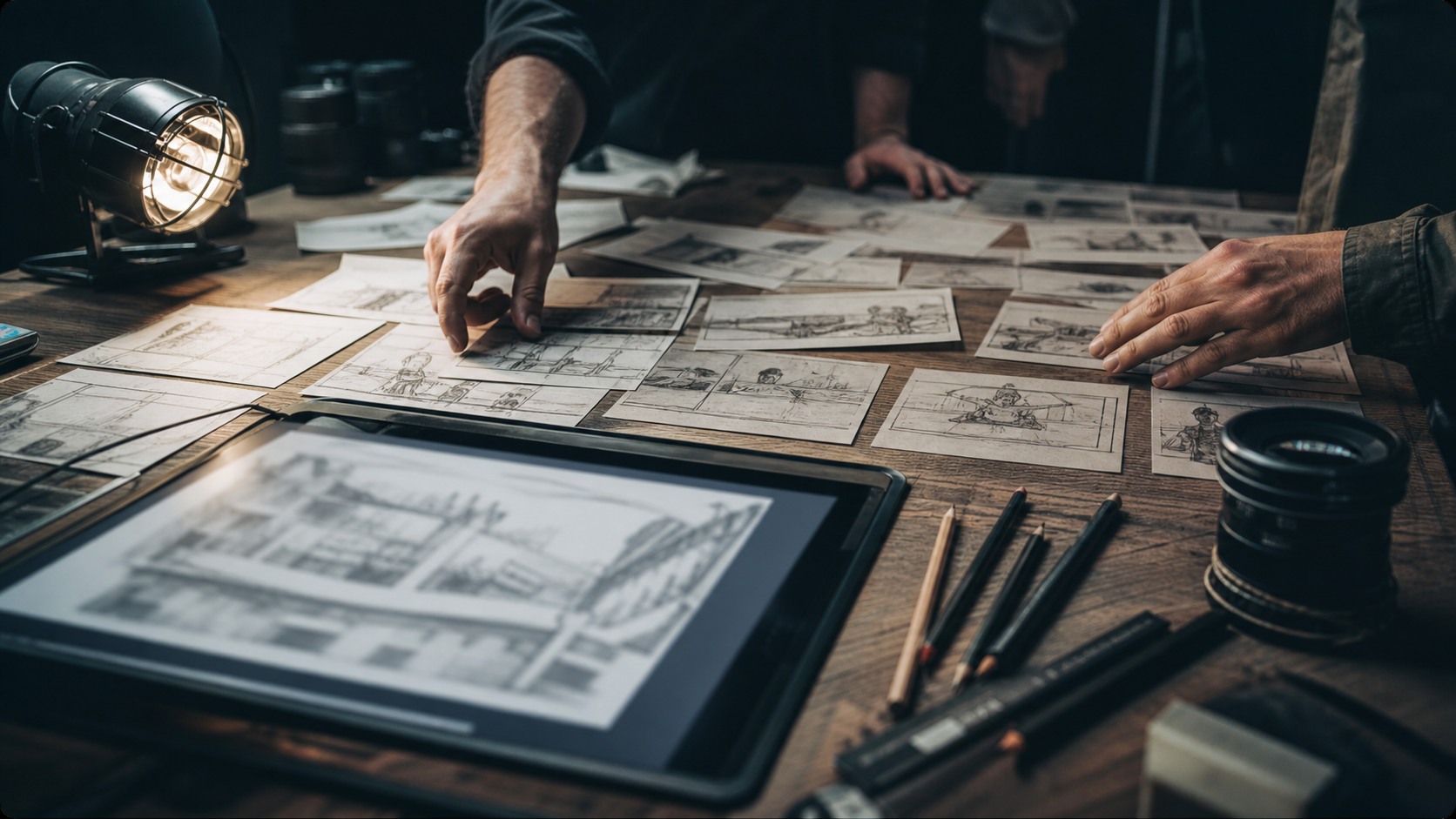
Traditional boards also carry human interpretation. A skilled artist can simplify a scene, exaggerate a gesture, clarify geography, or show exactly where the audience should look. The drawing does not need to be polished to be valuable. It needs to communicate the shot.
Because the artist is making choices with intention, traditional boards can be easier to revise in a targeted way. A director can ask for a lower angle, a tighter reaction, or a clearer eyeline, and the artist understands the dramatic reason for the adjustment.
What AI Storyboarding Changes
AI storyboarding changes the speed of visual exploration. A filmmaker can generate multiple interpretations of a scene before committing to one layout. That can be useful when the director is still discovering tone, location, or visual style. It can also help small teams see options that would be expensive to sketch manually at scale.
The main change is abundance. Instead of waiting for a few boards, a team may suddenly have dozens of possible frames. That can open creative doors, but it can also make the process noisier. More images do not automatically mean better story planning.
AI storyboarding works best when it is aimed at a specific question. Is this scene better as a wide shot or a close sequence. Should the reveal happen from behind the character or from the character’s point of view. A model can generate options, but people still have to judge which option tells the scene.
Why Speed Can Help
Speed helps when a team needs to understand a scene quickly. A director can test several visual approaches before a meeting. A producer can see whether a location idea is practical. A cinematographer can react to a rough composition earlier. The conversation becomes visual sooner.
This is especially useful in development and pre-production. A script page may describe a complex beat, but visual options reveal whether the beat is clear. AI boards can expose confusion early, when changes are still cheap.
Speed also helps beginners. A new filmmaker may not yet know how to draw or hire a storyboard artist, but they can still start thinking visually. That access can improve planning if the creator learns to critique the results rather than accept them automatically.
Why Speed Can Hurt
Speed can hurt when it encourages shallow decisions. If a team generates images faster than it can think, the storyboard can become a mood board instead of a plan. The scene may look attractive while failing to explain action, geography, or emotional progression.
AI-generated boards can also seduce a team with surface style. A dramatic frame may look cinematic, but it may not cut with the next frame. It may ignore screen direction or create a location that cannot be shot. Traditional storyboarding often stays closer to production logic because a person is actively translating the scene.
The danger is not AI itself. The danger is treating speed as quality. A storyboard’s job is not to impress; it is to clarify.
What Still Requires Human Direction
Human direction is still required because storyboards are decisions, not decorations. Someone must decide whose perspective matters, when information is revealed, how the audience moves through the space, and which image carries the emotional turn.
AI may generate a compelling angle, but it does not know whether the angle belongs to the character’s experience. It may create a striking wide shot when the scene needs an intimate reaction. These are directorial decisions, and they require context.
Human direction also protects continuity. Characters, props, location layout, and screen direction must remain understandable across panels. AI can drift unless the filmmaker supervises the sequence carefully.
How Artists Fit Into AI Storyboarding
Storyboard artists do not disappear in strong AI workflows. Their role may shift toward visual direction, cleanup, selection, sequence design, and problem solving. An artist can use AI output as rough exploration, then redraw or refine boards so they actually function for production.
Artists understand what a board must communicate. They know when a panel is too busy, when an eyeline is unclear, when a cut will confuse the viewer, or when a shot is impossible within the budget. That judgment becomes more valuable when AI creates many imperfect options.
The strongest workflow may be collaborative: AI generates rough possibilities, artists and directors evaluate them, and the final storyboard becomes a clear production tool rather than a folder of disconnected images.
What Changes for Directors
Directors may gain a faster way to explore coverage. They can compare angles, visual tone, and scene rhythm before asking a full team to build a plan. This can help directors communicate with cinematographers, production designers, editors, and producers.
The director’s job also becomes more selective. AI can produce many images that look plausible, but the director must decide which images belong to the scene’s point of view. A storyboard should reveal the director’s priorities, not the model’s defaults.
Directors should also be careful not to overcommit to generated frames too early. A generated board can inspire, but real locations, actors, schedules, and budgets may require changes. AI boards should guide planning without freezing it prematurely.
What Changes for Producers
Producers may use AI storyboards to understand scope earlier. A generated sequence can show whether a scene requires a crowd, a complex location, visual effects, or careful stunt planning. That can make budgeting conversations more concrete.
However, producers should not mistake AI boards for production-ready plans. A generated frame may ignore practical constraints, permissions, safety, or cost. It may show a beautiful shot that would require a crane, a street closure, or a digital environment.
The producer’s task is to ask what each board implies. If a frame suggests an expensive shot, the team must decide whether the story needs it or whether a simpler solution would work.
Where AI Storyboards Are Most Useful
AI storyboards are most useful when a scene needs early exploration, a pitch needs visual support, or a small team needs to think through shot options. They can help creators compare tone, scale, composition, and sequence before committing to a production path.
They are also useful for scenes that are difficult to describe in words. A dream sequence, a futuristic world, a stylized action beat, or a surreal transition may become easier to discuss when rough frames exist.
The best use is not replacing every board. It is accelerating the stages where options matter, then handing the strongest ideas back to human planning.
How AI Changes Revision Meetings
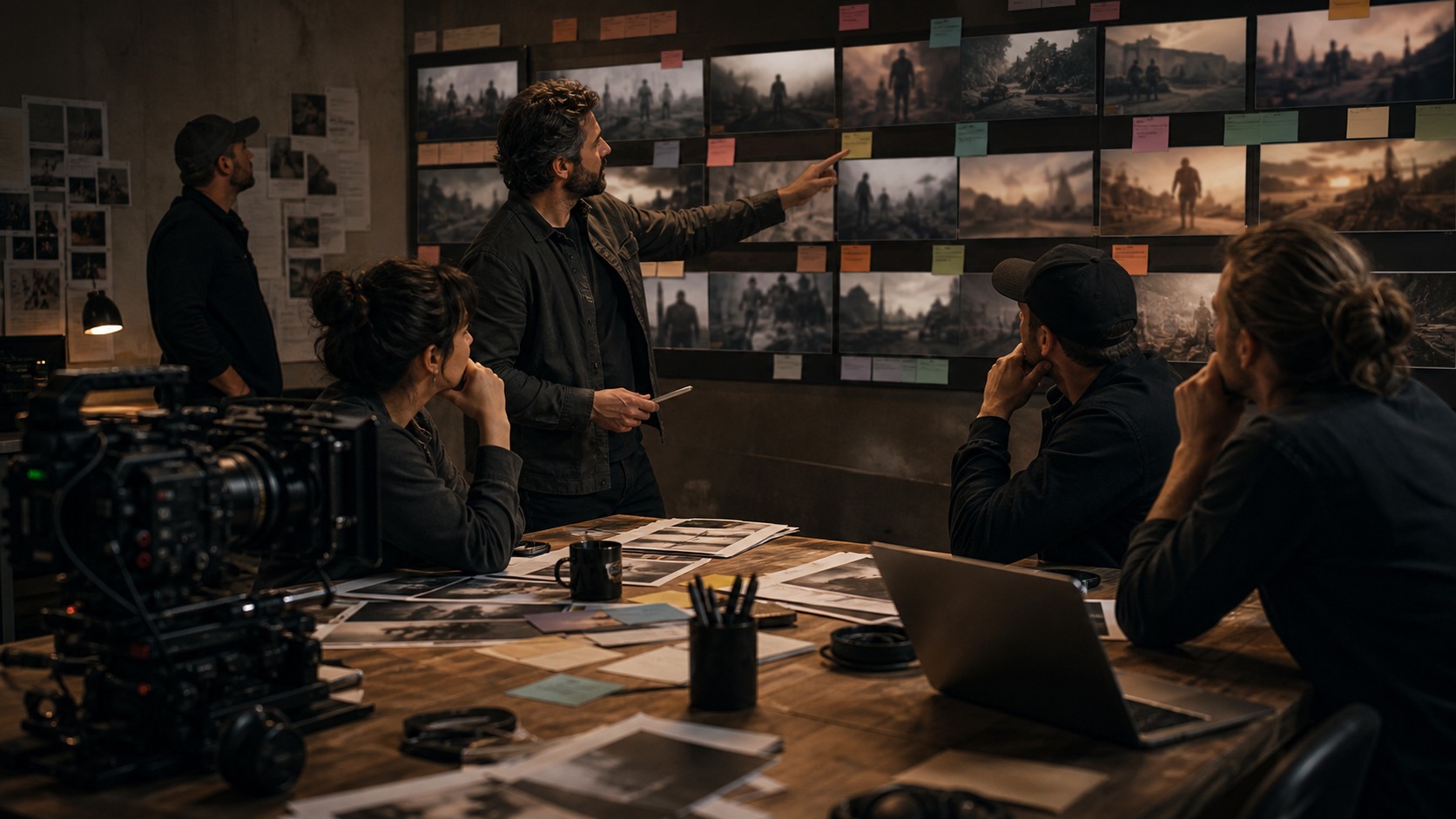
Revision meetings can change when AI storyboards are part of the process. Instead of discussing only verbal notes, a team may compare several visual alternatives in one session. That can make feedback more specific. A director can say the geography is clearer in one frame, the emotion is stronger in another, and the production design is more practical in a third.
The danger is that meetings become image shopping. If everyone reacts only to the most stylish frame, the board may drift away from the scene’s purpose. A useful revision meeting begins with the question the board is supposed to answer. Does this panel clarify the reveal. Does this sequence preserve the chase direction. Does this angle help the actor’s performance.
AI makes it easier to bring options to the room, but the room still needs discipline. The team should leave with fewer choices, clearer priorities, and a stronger sequence. If the meeting ends with more confusion, the workflow is serving the tool instead of the film.
How to Combine Hand Sketches and AI Frames
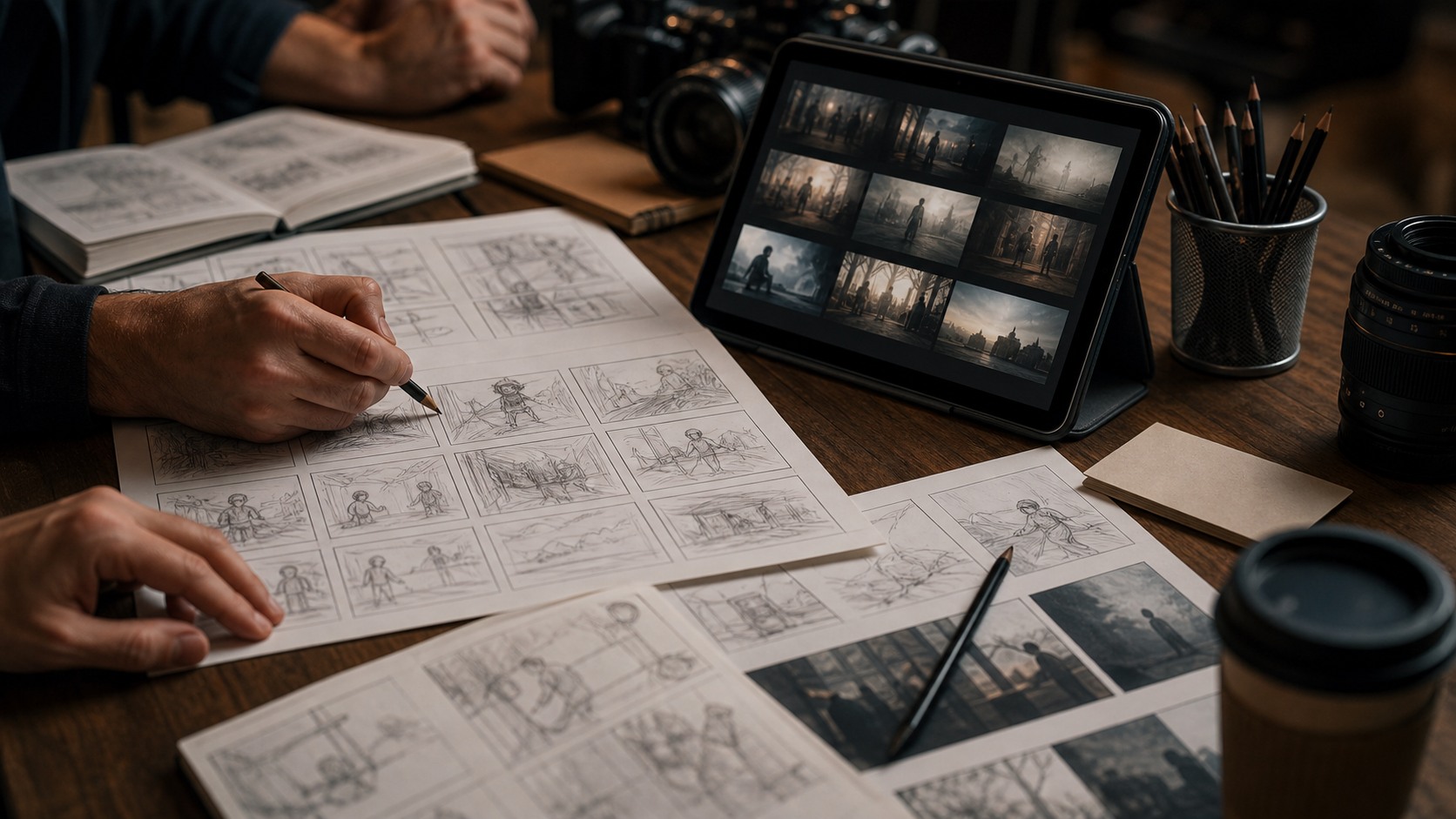
A strong hybrid process can begin with hand sketches and then use AI to explore mood, lighting, or environment detail. It can also begin with AI frames and then use hand drawing to simplify the sequence. The order matters less than the purpose of each step.
Hand sketches are excellent for clarity because they can remove unnecessary detail. AI frames are useful for quickly testing atmosphere or visual direction. Together, they can create boards that are both expressive and readable. The filmmaker should not feel forced to choose only one method.
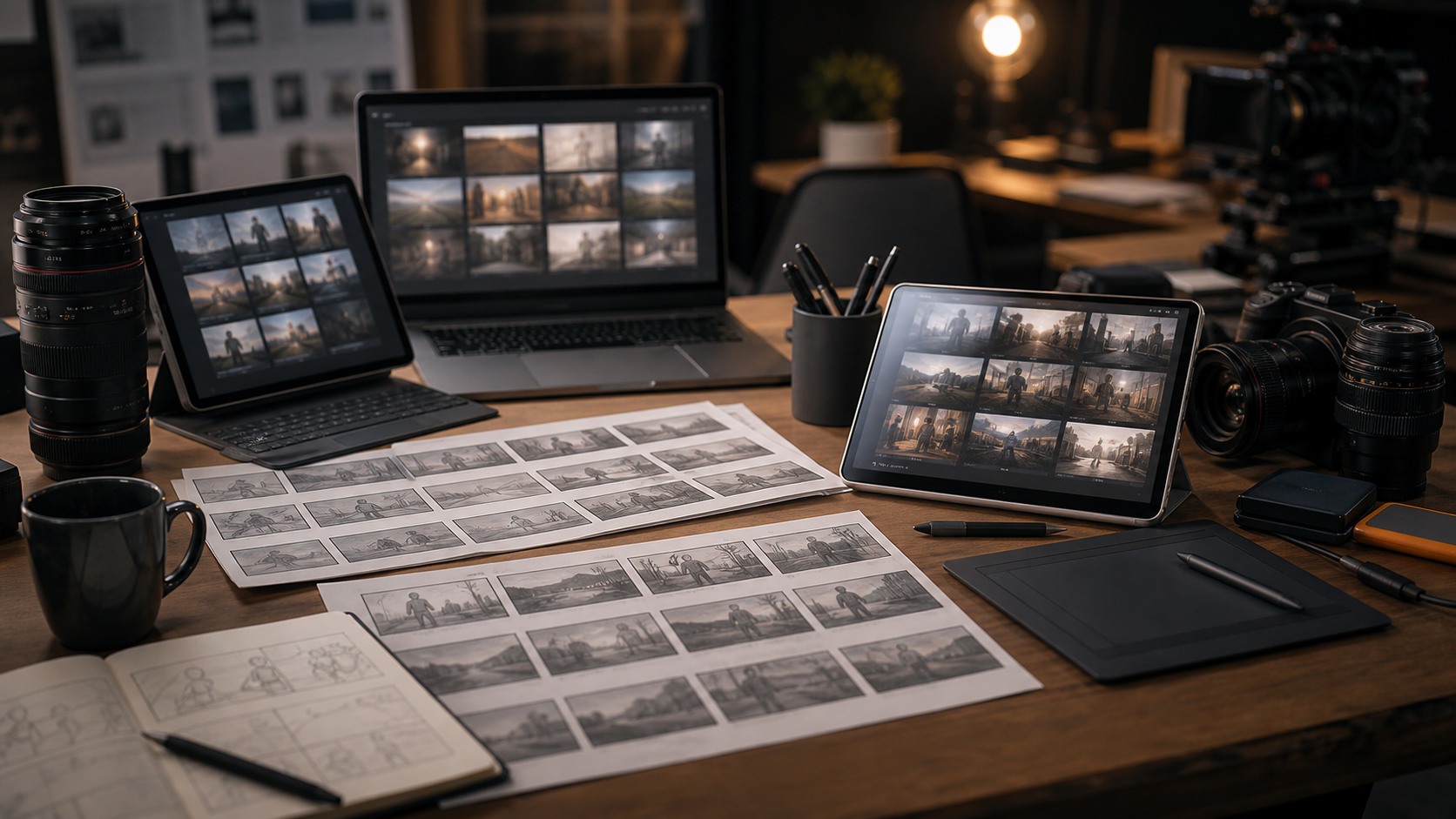
The final board may include a mix of rough sketches, cleaned AI frames, arrows, notes, and timing references. What matters is whether the production team can understand the shot. A mixed board is successful when it communicates better than either method alone.
Why Documentation Matters
AI storyboarding can create many files, and those files need organization. A team should know which frames were approved, which are alternate ideas, which use references, and which are no longer part of the plan. Without documentation, the storyboard folder can become impossible to trust.
Documentation also helps with rights and collaboration. If a generated image uses a specific reference, the team should know whether that reference is cleared for internal planning, pitch use, or public presentation. Storyboards often stay internal, but pitch materials and marketing decks may travel farther than expected.
A simple naming system can prevent problems. Label by scene, shot purpose, version, and status. That small habit makes AI storyboarding feel less like random generation and more like a professional pre-production workflow.
Where Traditional Boards Still Win
Traditional boards still win when exact clarity matters. Action scenes, comedy timing, complex blocking, stunt planning, and visual effects sequences often need boards that communicate precise relationships. A human artist can design those relationships intentionally.
Traditional boards also win when the style of the drawing is less important than the logic of the cut. A simple sketch can be more useful than a polished AI frame if the sketch clearly shows screen direction, eyeline, and movement.
The future is not a contest where one method destroys the other. It is a workflow choice. Use AI for fast exploration. Use traditional craft when precision, sequence logic, and production clarity are the priority.
Why the Difference Matters
The difference matters because storyboards shape decisions before money is spent. A confusing storyboard can lead to wasted production time. A clear storyboard can save a scene. AI changes how quickly options appear, but the stakes of planning remain the same.
Filmmakers should care because storyboarding is where the movie starts becoming visible. If AI helps that visibility arrive sooner, it can be valuable. If it replaces careful thinking with pretty frames, it can mislead the team.
The practical answer is balanced: use AI storyboarding to explore faster, use human judgment to decide better, and use traditional storyboard discipline to make the final plan clear enough for production.