Using AI to Experiment With Multiple Visual Styles Before Shooting Works Best When AI Supports Human Direction
Using AI to Experiment With Multiple Visual Styles Before Shooting matters because film work depends on decisions that other people can understand and execute. Visual style experiments are useful only when they answer what kind of film the team is making. AI can help create options, organize references, compare directions, and reveal production questions earlier. The useful version is not automatic filmmaking. It is a disciplined workflow that helps directors, cinematographers, production designers, producers, and creative teams protect story intent, make practical choices, and communicate the plan before money, time, and crew energy are committed.
Start With the Creative Problem
The first step is naming the creative problem. Visual style experiments are useful only when they answer what kind of film the team is making. A filmmaker should know whether the scene needs clearer tone, stronger blocking, faster comparison, better schedule logic, or a more persuasive visual explanation. AI is helpful only when the team knows what decision it is trying to improve.
When the problem is vague, generated options can multiply confusion. The process may feel productive because images and suggestions appear quickly, but speed does not equal clarity. A strong workflow begins with the scene, the production limit, and the audience response the director wants to create.
Translate Intention Into Shared Material
Using AI to Experiment With Multiple Visual Styles Before Shooting turns private intention into shared material. Directors and creative teams often carry an image in their heads that is hard to explain with words alone. AI-assisted boards, references, lists, and planning passes can give collaborators something to accept, reject, revise, or question.
That shared material should be labeled carefully. A reference image might express mood without approving production design. A schedule idea might suggest efficiency without locking the shot order. A visual variation might test style without becoming the final look. Clear labels prevent collaborators from mistaking exploration for approval.
Protect the Human Point of View
The director's point of view still drives the work. In using ai to experiment with multiple visual styles before shooting, AI can suggest possibilities, but it cannot know which choice belongs to the film's voice. The director decides what feels honest, what feels generic, what serves performance, and what should be discarded even if it looks impressive.
This is especially important when generated material arrives with polish. A polished frame can hide a weak dramatic idea. A neat schedule can hide a bad emotional rhythm. Human judgment turns raw options into direction, and that judgment should stay visible throughout the process.
Use Options Without Drowning in Them
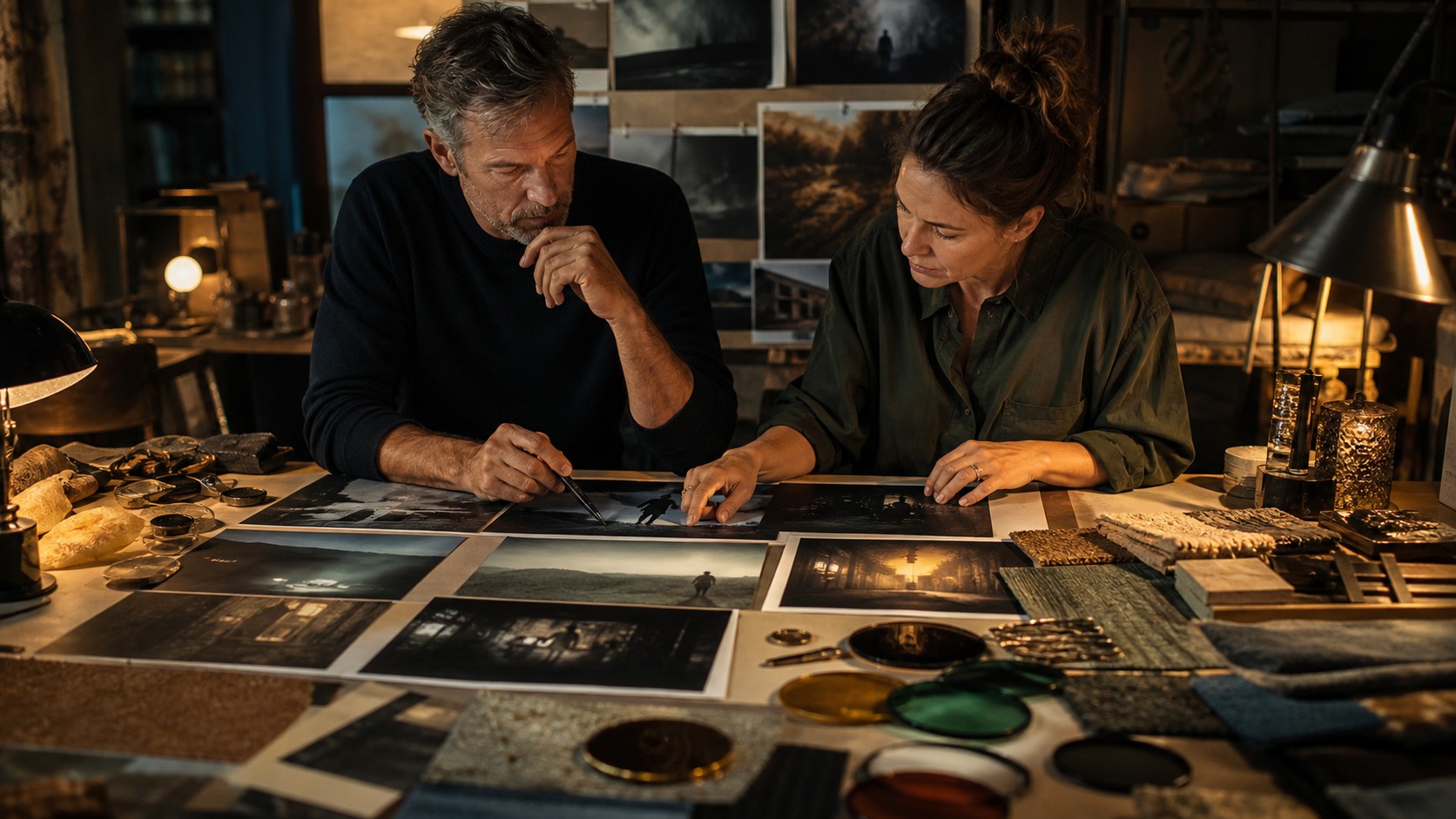
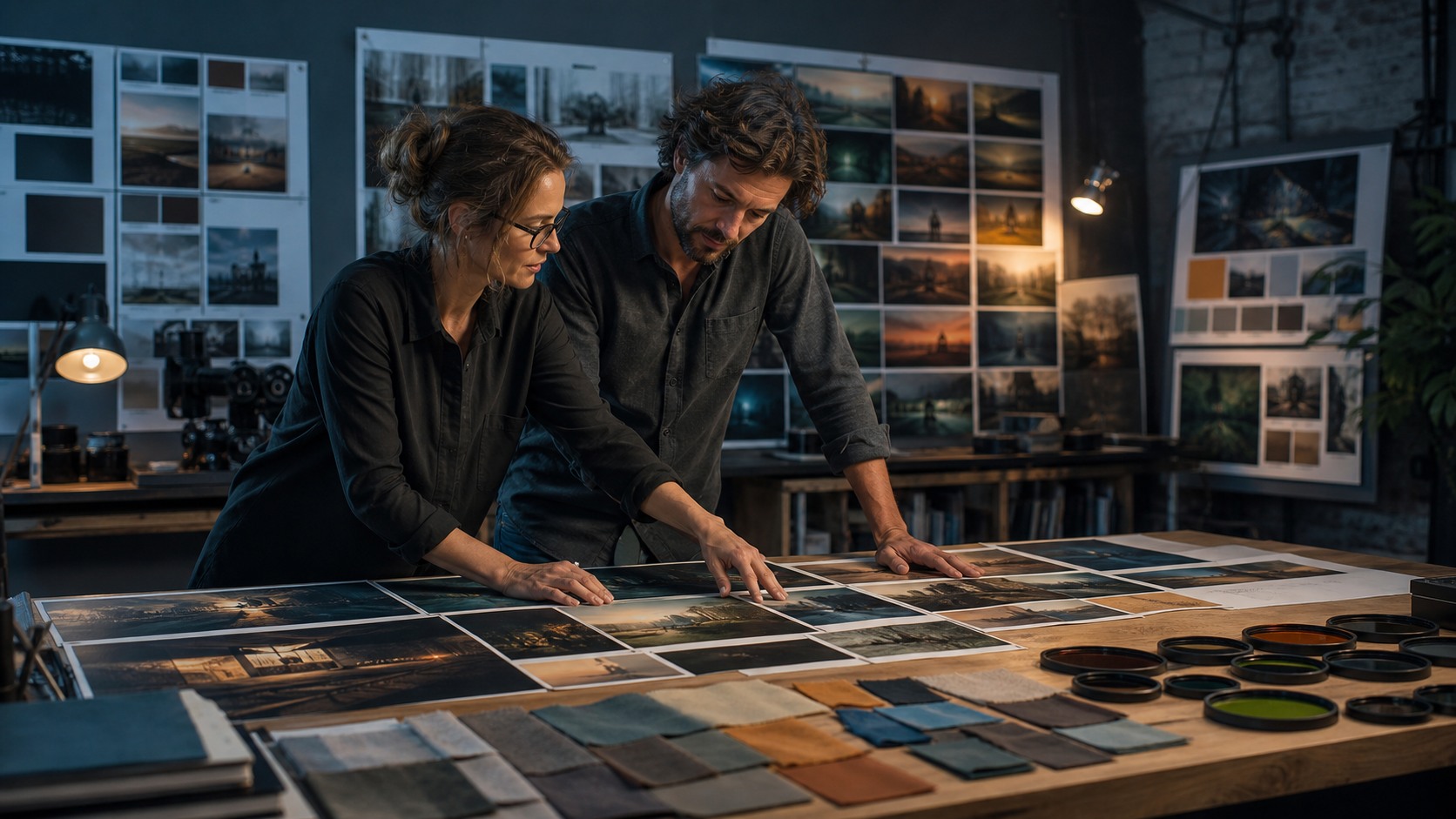
AI can create more options than a team can reasonably review. That abundance is useful only when the options are meaningfully different. comparing restrained, heightened, naturalistic, and stylized looks before the shoot should produce clear alternatives, not endless minor variations that postpone a decision.
A practical review might compare three directions: restrained, heightened, and risky. It might compare two schedule plans or two approaches to a scene. Once the team understands the tradeoffs, it should choose a path and move forward. More versions are not always more insight.
Crew Communication
Using AI to Experiment With Multiple Visual Styles Before Shooting can improve crew communication by giving departments a concrete reference. Cinematography can discuss lens, light, and movement. Production design can discuss materials, set edges, or location needs. Assistant directors can discuss time. Producers can see scope. Actors can understand context without being buried in technical detail.
The reference should invite department notes. A director does not lose control by asking specialists to test feasibility. The plan becomes stronger when the people responsible for execution can identify what is practical, what is unclear, and what needs to change before the shoot.
Performance and Blocking
Performance can be damaged when visual planning becomes too mechanical. Using AI to Experiment With Multiple Visual Styles Before Shooting should support actors by clarifying context, eyelines, movement, and emotional pressure. It should not reduce the scene to poses or treat the actor as a placeholder inside a visual system.
Blocking is where the human and practical sides meet. A generated plan may suggest an elegant camera angle, but the actor still needs room to move and a reason to be there. Directors should review whether the plan gives the performance enough space to breathe.
Production Reality
Production reality is the test that separates useful AI assistance from attractive speculation. A plan may look convincing while requiring equipment, time, locations, extras, art builds, or post work the project cannot support. The earlier those limits are visible, the more useful the tool becomes.
Producers and assistant directors should be part of the review when a plan affects schedule or cost. The goal is not to make every idea smaller. The goal is to spend ambition where it matters most and simplify the parts that do not improve the final scene.
Style and Tone
Style and tone need consistency. Using AI to Experiment With Multiple Visual Styles Before Shooting may produce images, references, or suggestions with different visual personalities. Without curation, one scene can drift toward glossy advertising, another toward gritty realism, and another toward fantasy spectacle. The film then loses a coherent voice.
A team should define style boundaries before reviewing too many outputs. Those boundaries may include color restraint, camera distance, texture, pacing, contrast, or how much realism the project wants. Consistency gives collaborators a standard for saying yes or no.
Schedule and Workflow
Workflow matters because AI can either save time or create a new review burden. If every generated idea triggers a meeting, the tool becomes expensive. If AI is used at the right moment, it can narrow decisions before the calendar becomes crowded.
A sensible workflow has stages: explore broadly, select narrowly, review with specialists, label approvals, and hand off the current plan. That rhythm keeps the process moving while protecting the director's intent.
Review Standards
Review standards should be explicit. Directors and cinematographers should ask whether each output supports the project, whether it can be executed, and whether it creates any misleading expectation. The review should also identify what is conceptual, what is current, what is rejected, and what needs another pass.
The main risk is letting style tests fragment the film's voice. This risk grows when teams treat AI output as finished because it is neat, fast, or visually persuasive. A good review process values usefulness over polish.
Version Control
Using AI to Experiment With Multiple Visual Styles Before Shooting needs version control because fast work can create many artifacts. Without dated folders, approval notes, and current-version discipline, teams may build from old material. That can confuse clients, departments, or collaborators who are trying to follow the plan.
Version control does not need to be elaborate. The team needs to know which references are active, which are archived, and who approved the current direction. That small habit prevents a surprising amount of production friction.
Client and Stakeholder Clarity
Some AI-assisted directing work is shown to clients, investors, agencies, collaborators, or school reviewers. Those people may not understand how provisional the material is. A visual or planning pass can look like a promise even when the team intended it as an internal study.
Clear explanation protects trust. Label pitch references, rough concepts, planning drafts, approved looks, and production targets. Stakeholders can give better feedback when they know what kind of decision they are being asked to make.
Ethics and Credit
Using AI to Experiment With Multiple Visual Styles Before Shooting also raises questions about authorship, references, and credit. Productions should understand when generated material uses outside references, when human artists refine it, and when it becomes visible outside the core team. Responsible use is especially important when the material resembles a living artist's style or a protected property.
Ethical practice keeps the process legible. It credits human craft, avoids misleading clients, and treats AI as one tool in a wider creative system. That makes adoption easier because collaborators can see where judgment and accountability still live.
When Specialists Should Take Over
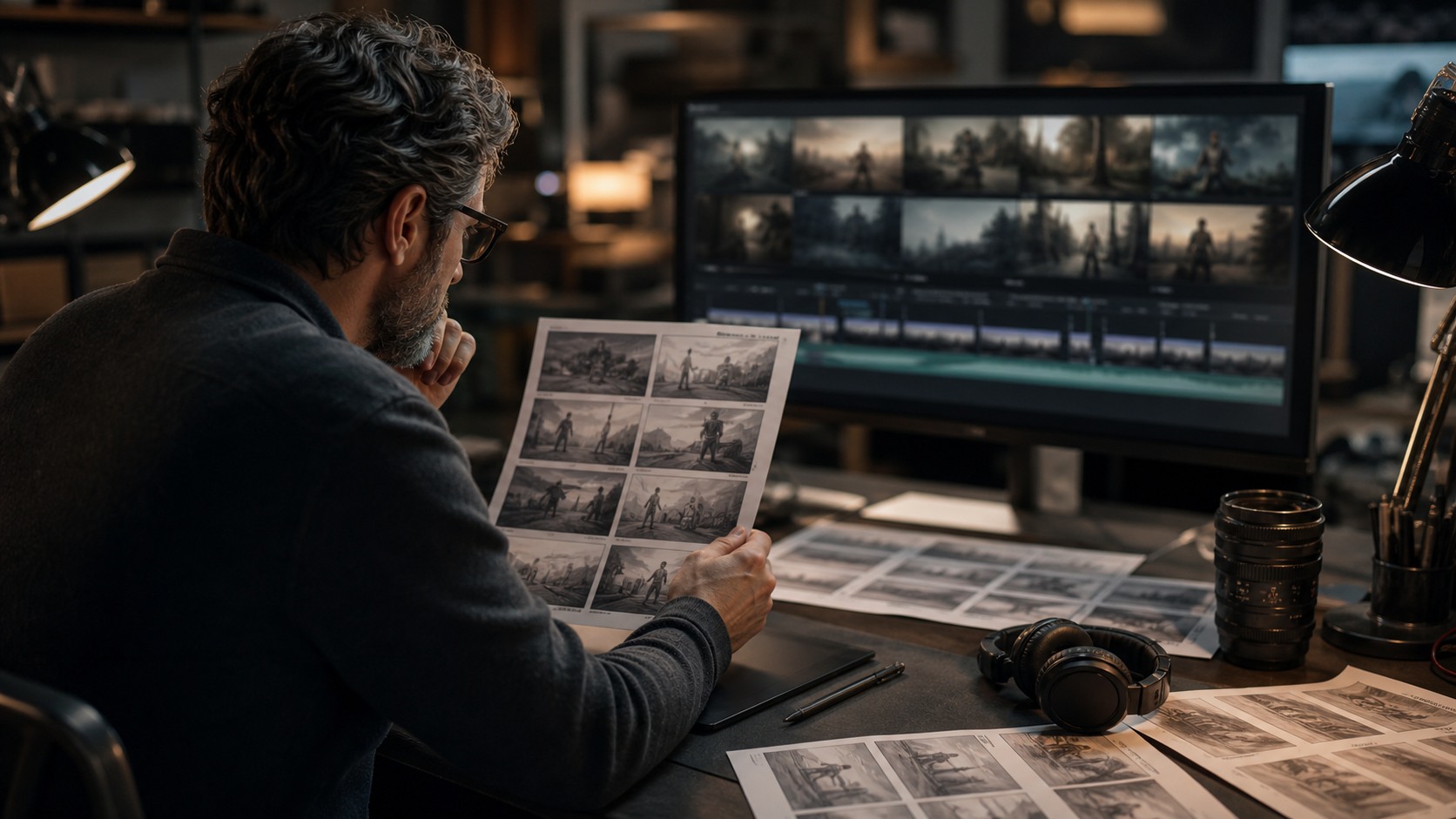
AI can help with early thinking, but specialists should take over when the plan needs precision. A storyboard artist can compress a scene beautifully. A cinematographer can solve lens and movement problems. A producer can test schedule claims. A VFX supervisor can identify what needs plates, assets, or tracking.
The strongest workflow is not a choice between AI and specialists. It uses AI to reach the right questions faster, then brings in human craft where the project needs taste, accuracy, and responsibility.
Performance Review
Using AI to Experiment With Multiple Visual Styles Before Shooting should always come back to performance. The clearest schedule, prettiest reference, or most efficient storyboard still fails if the actors do not have playable circumstances. A director should ask whether the AI-assisted plan clarifies what a character wants, what changes in the scene, and how much freedom the actor has inside the blocking.
This review is practical, not sentimental. Performance problems often become production problems because the crew spends time adjusting coverage, reworking beats, or discovering that the planned shot hides the important reaction. When AI helps expose those issues in prep, the director can protect the human moment before the camera day becomes crowded.
Edit Consequences
Directing choices also have edit consequences. Using AI to Experiment With Multiple Visual Styles Before Shooting may suggest a shot, schedule, or visual approach that looks efficient in isolation but leaves the editor without a needed transition, reaction, insert, or orientation beat. The team should review how the plan cuts together, especially when AI has generated several attractive alternatives.
Editors can identify repetition and missing emphasis early. They can ask whether the audience will understand geography, whether the emotional turn has enough screen time, and whether the scene has a clear entrance and exit. That perspective turns AI-assisted planning into a stronger sequence rather than a collection of separate decisions.
On-Set Adaptation
No plan survives the set unchanged. Weather shifts, actors discover better behavior, locations reveal limits, and time disappears. AI-assisted directing should prepare the director to adapt, not trap the team inside a rigid pre-approved map. A good plan names priorities so the director knows what can change and what must be protected.
That distinction matters under pressure. If the team knows the emotional beat is essential but the exact camera move is optional, it can adapt intelligently. If every generated recommendation feels equally important, the set becomes slower. The best AI prep gives directors more flexibility because the real priorities are clearer.
Training the Team's Taste
Over time, using ai to experiment with multiple visual styles before shooting can help a team train its taste. By comparing outputs against finished scenes, rehearsals, budgets, and audience response, filmmakers learn which AI suggestions are usually helpful and which ones tend to create noise. That feedback loop is more valuable than trusting the first impressive result.
A team can keep notes on what worked: which boards improved blocking, which schedule suggestions saved time, which visual references helped clients, and which prompts produced generic choices. This creates a local standard. The tool becomes less mysterious and the creative team becomes more confident about using it selectively.
A Practical Stop Point
Every using ai to experiment with multiple visual styles before shooting workflow needs a practical stop point. The team does not need infinite versions. It needs enough confidence to make the next decision: approve the look, revise the schedule, brief the crew, simplify the sequence, prepare the pitch, or test the camera plan.
Stopping well keeps the tool in service of production. Once the key questions are answered, the next step is not more generation. It is rehearsal, planning, specialist review, or execution.
The Practical Takeaway
Using AI to Experiment With Multiple Visual Styles Before Shooting is valuable when it helps directors, cinematographers, production designers, producers, and creative teams move from uncertainty to a clearer decision. It can make planning faster, reveal production limits earlier, and improve communication across the people who need to make the work real.
Its weakness is false certainty. A fast output can still be wrong for the story, budget, performance, schedule, or visual language. Use AI to widen the conversation, then use human direction to decide what belongs in the film.