AI Composition Tests Help Filmmakers Compare Framing Before Setups Get Expensive
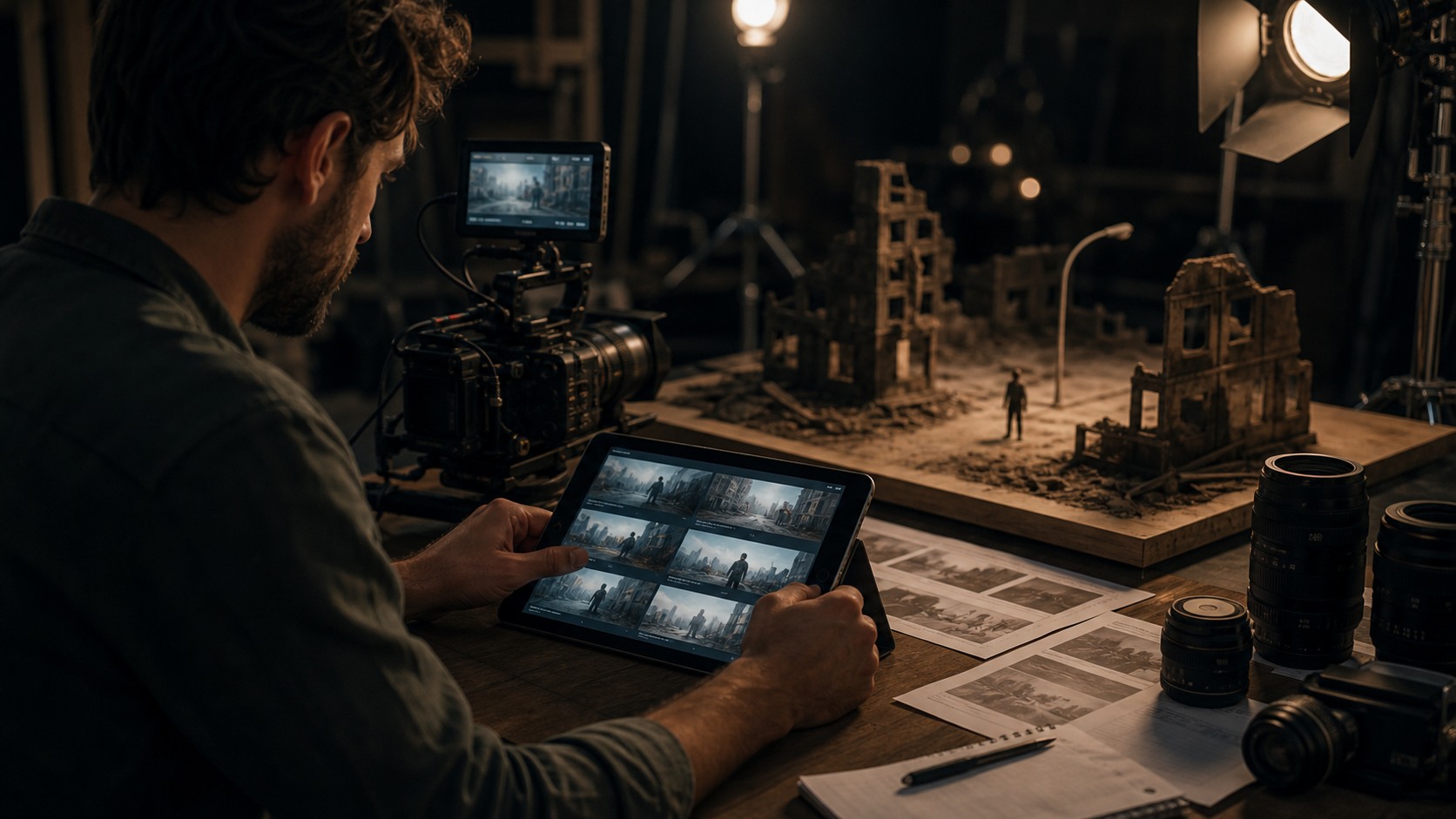
Using AI to pre-visualize camera angles and shot composition gives filmmakers a faster way to test how a scene might be framed before the crew builds the setup. A camera angle is never only a technical choice. It shapes power, attention, geography, emotion, and rhythm. AI can generate rough composition options from prompts, reference images, or story beats, but the filmmaker still has to decide what each frame means and whether it can be made in the real production space.
Start With the Meaning of the Angle
Every camera angle should have a reason. A low angle can make a character feel powerful or trapped beneath something larger. A high angle can make someone feel exposed. A profile can create distance. A frontal close-up can demand intimacy. AI can show these possibilities quickly, but it cannot decide which meaning belongs to the scene.
Before generating angles, write the emotional or informational purpose of the shot. Is the audience supposed to feel close, suspicious, overwhelmed, or oriented. That purpose should guide the prompt and the review.
If the angle does not change how the audience understands the moment, it may not be worth the setup. Previsualization helps make that decision early.
Compare Practical Framing Options
AI can help compare wide, medium, close, over-the-shoulder, insert, and point-of-view frames. The filmmaker can test how much environment should be visible, how close the audience should be to the subject, and whether the frame emphasizes action or emotion.
The comparison should stay practical. A director does not need every possible framing option. They need the few that could plausibly serve the scene. Too many options can slow planning and weaken decisions.
A useful comparison asks what each frame gives the edit. A wide shot may orient. A close shot may reveal feeling. An insert may clarify a clue. AI composition tests should lead to coverage choices, not just image appreciation.
Use References to Ground the Frame
References can make AI composition tests more useful. A location photo, floor plan, previous board, or character reference can help the generated frame stay closer to the intended production reality. Without references, the model may invent a space that looks good but cannot be shot.
A reference should be chosen for a reason. One image may guide camera height. Another may guide room layout. Another may guide lighting direction. The filmmaker should know what each reference is meant to control.
Grounded references help the cinematographer respond. The conversation becomes less about fantasy and more about how the actual camera might be placed.
Check Screen Direction Early
Screen direction is easy to break when generating separate frames. A character may face left in one image and right in the next. A doorway may shift sides. A chase may lose its direction. These problems can make a storyboard or previs sequence confusing.
AI composition work should include continuity notes. Which way does the character move. Where is the other person. Where is the object. What side of the frame should remain consistent. These notes should guide prompts and review.
If screen direction is unclear, add an establishing frame or simplify the angle plan. The audience must understand the scene before they can feel it.
Think About Lens and Distance
AI frames may not correspond to exact lenses, but they can still help filmmakers discuss lens feeling. A compressed background, intimate close distance, or wide environmental frame suggests different lens choices. The cinematographer can translate those visual intentions into real camera language.
Distance matters because it changes performance and audience relationship. A close frame can intensify a subtle expression. A distant frame can make a character feel isolated. AI can test these relationships before the team commits to coverage.
The filmmaker should avoid treating generated framing as exact technical data. It is a visual reference that starts a conversation about lens, placement, and production reality.
Use Composition to Guide Attention
Composition directs the eye. Placement, contrast, light, negative space, foreground, background, and lines all tell the viewer where to look. AI can create many compositions, but the filmmaker must ask whether the important information is clear.
A frame may be visually rich and still fail if the subject is lost. A simple frame may be stronger if it focuses attention. Previsualization is the right time to test this before the camera day becomes crowded with competing priorities.
When reviewing AI composition tests, ask what the viewer notices first, second, and last. If that order does not match the story beat, revise the frame.
Plan for Blocking
Shot composition must support blocking. If actors move through the scene, the frame should allow that movement to read. A generated image may freeze a beautiful moment while ignoring how the character arrives there or exits.
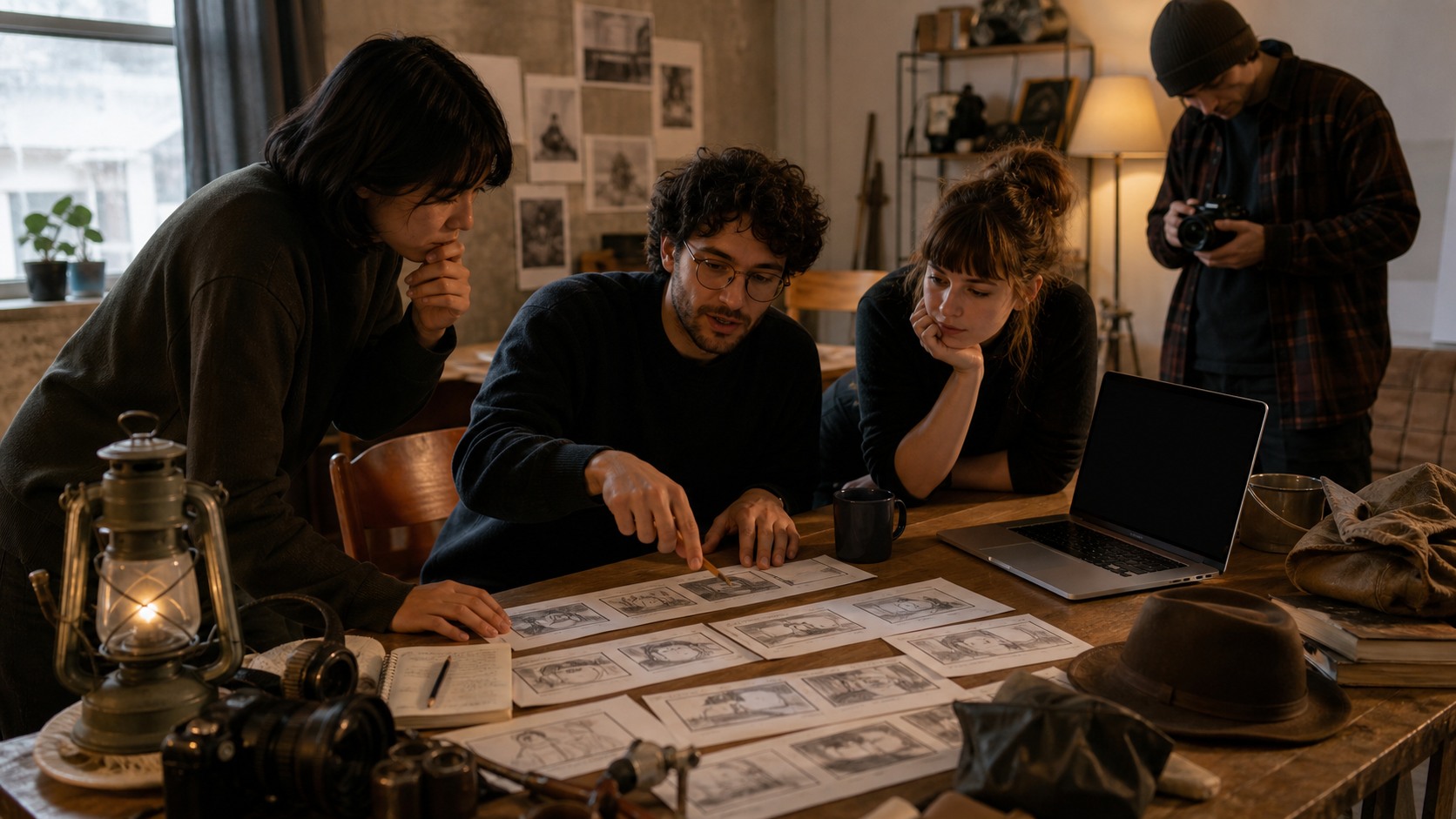
Use simple blocking diagrams alongside AI frames. Mark where the character begins, where they move, and where the camera watches from. This helps the composition become a usable plan rather than a still image.
The best previsualized angle supports performance. It gives actors room to act and gives the audience a clear view of the change that matters.
Test Camera Moves With Restraint
If the tool supports motion, filmmakers can test push-ins, pullbacks, pans, tracking shots, or reveals. These tests can show whether the movement adds meaning or only decoration. Movement should guide attention or emotion.
A camera move can look impressive in isolation but be wrong for the scene. It may reveal too early, distract from performance, or require gear the production cannot support. AI motion tests should be judged against the actual shooting plan.
Sometimes the best composition is still. Previsualization should keep that option alive. Not every scene improves when the camera moves.
Prepare the Handoff
Once angles and compositions are selected, prepare a clear handoff. Include the chosen frames, shot purpose, camera notes, blocking reminders, and any practical concerns. The cinematographer and crew need to know what the image is meant to communicate.
Avoid handing off every generated option. Too many frames can dilute the plan. The production package should show the approved direction and a few alternates only when they serve a real contingency.
A good handoff lets collaborators improve the idea. It does not demand that reality match the AI frame perfectly. The frame is a guide to intention, not a prison.
How Composition Changes Character Relationships
Composition can express relationships before anyone speaks. Placing characters far apart can show distance. Keeping one character in the foreground can create pressure. Hiding one person behind a frame element can suggest secrecy or imbalance. AI can help test these arrangements quickly.
These choices should come from the scene, not from visual habit. If the scene is about trust breaking down, the composition may need to change across the sequence. If it is about connection, the camera may gradually bring characters into the same visual space.
AI previsualization is useful because it lets filmmakers compare these relationship ideas before staging. The director can see whether the composition supports the emotional arc or only looks attractive.
How Production Design Affects Framing
Shot composition depends on what is in the frame. Furniture, doorways, windows, practical lights, color, and texture can all guide attention or create clutter. AI frames may invent design elements that are not available, so production design review is important.
A designer can look at an AI composition and identify what needs to be built, removed, simplified, or emphasized. This turns the frame into a practical conversation about objects and space.
The best composition plan works with the design rather than floating above it. A strong frame should be possible in the world the team can actually create.
How to Review Frames With the Cinematographer
A cinematographer can translate AI frames into camera reality. They may ask about lens choice, camera height, lighting motivation, blocking, grip needs, and whether the shot can be achieved in the schedule. That review makes the previsualization more honest.
The director should explain what matters in each frame. If the important detail is the emotional distance, say that. If the key is the shadow line or the character's isolation, say that. Otherwise the cinematographer may focus on details the director does not care about.
This conversation is where AI frames become useful. They stop being images and become shared planning language.
Creating a Composition Review Board
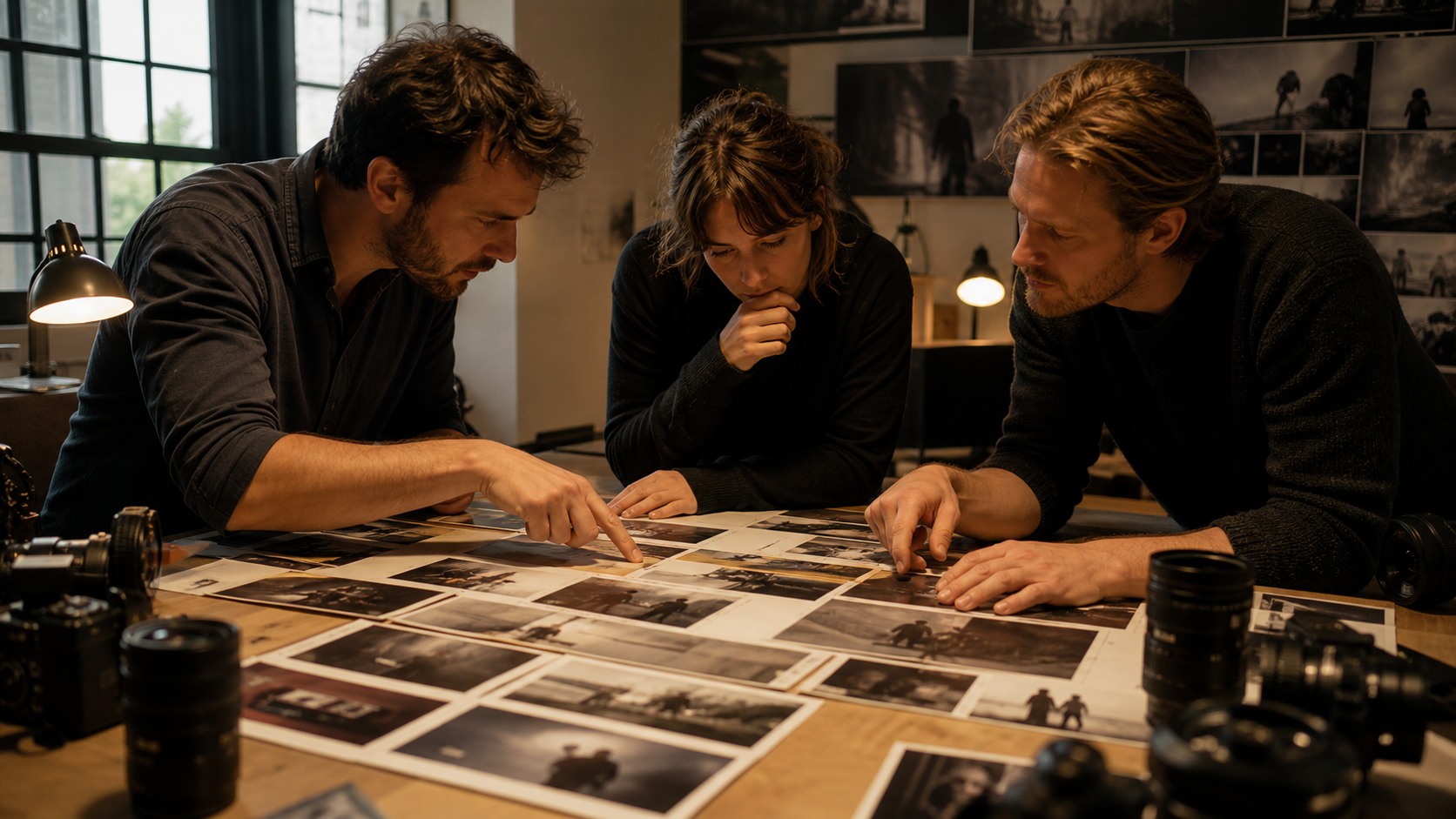
A composition review board can keep AI framing tests organized. Place the strongest wide, medium, close, insert, and movement options in one document. Add a short note under each frame explaining the intended purpose. This helps the team compare choices without losing context.
The board should also include practical flags. A frame might require a high angle, special rigging, a wall removal, extra background dressing, or a difficult lighting setup. Marking these issues early helps production decide whether the shot is worth the effort.
The review board should end with selections. Which angle becomes the main plan. Which frame is only a mood reference. Which option is a backup. Without those decisions, the board is just another collection of images.
Used well, a composition review board turns AI output into cinematography discussion. It helps directors and cinematographers align on meaning, feasibility, and visual priority before the set is under pressure.
Using Composition Tests During Rehearsal
Composition tests become more grounded when rehearsal begins. Actors may find a movement that changes where the camera should be. A planned close-up may feel too early, or a wide shot may give the performance more room. AI frames should be flexible enough to respond to those discoveries.
The director and cinematographer can bring a few selected composition references into rehearsal, then compare them with what the actors naturally do. If the rehearsal improves the scene, the plan should change. The purpose of previsualization is not to force reality to obey a generated frame.
This is where AI becomes a preparation tool rather than a prediction tool. It helps the team arrive with ideas, then adapt those ideas to living performance.
Why Framing Tests Need Decisions
Composition testing should end with choices the crew can use. The director should know the preferred angle, the backup angle, the emotional reason for the frame, and the practical concern to check on set. Without those decisions, AI framing tests remain attractive references rather than a working camera plan.
A decision can still be flexible. The crew may adjust the frame during rehearsal or lighting, but they should understand the intention they are adapting. That shared intention is what turns previsualization into useful preparation.
Why AI Helps and Where It Stops
AI helps by making angle and composition options visible quickly. It can support early conversations, reveal weak framing ideas, and help small teams think visually before set day. It is especially useful when the filmmaker needs to compare possibilities.
AI stops at judgment. It cannot know the actor's strongest moment, the location's hidden limitation, the editor's coverage need, or the production's time pressure. Those belong to the human team.
Using AI well means letting it create visual tests, then letting filmmaking craft decide which tests become real camera plans.