AI-Assisted Directing Means Better Support, Not Automatic Direction
AI-assisted directing is a practical idea with an intimidating name. It means a director uses artificial intelligence to prepare, organize, visualize, and review parts of the filmmaking process. The AI might help summarize a script, create early mood references, suggest coverage questions, transcribe rehearsals, or compare visual approaches. It does not replace the director's point of view, and it cannot build trust with actors or decide what a scene should mean. For beginners, the clearest definition is this: AI-assisted directing gives the director more ways to think before making human creative decisions.
The Beginner Definition
A director is responsible for guiding the film's dramatic, visual, and emotional choices. AI-assisted directing simply adds tools that can help with the preparation around those choices. A director can ask for a summary of what changes in a scene, a list of possible visual contrasts, or a set of references that explore tone. Those materials can make the director's thinking more visible.
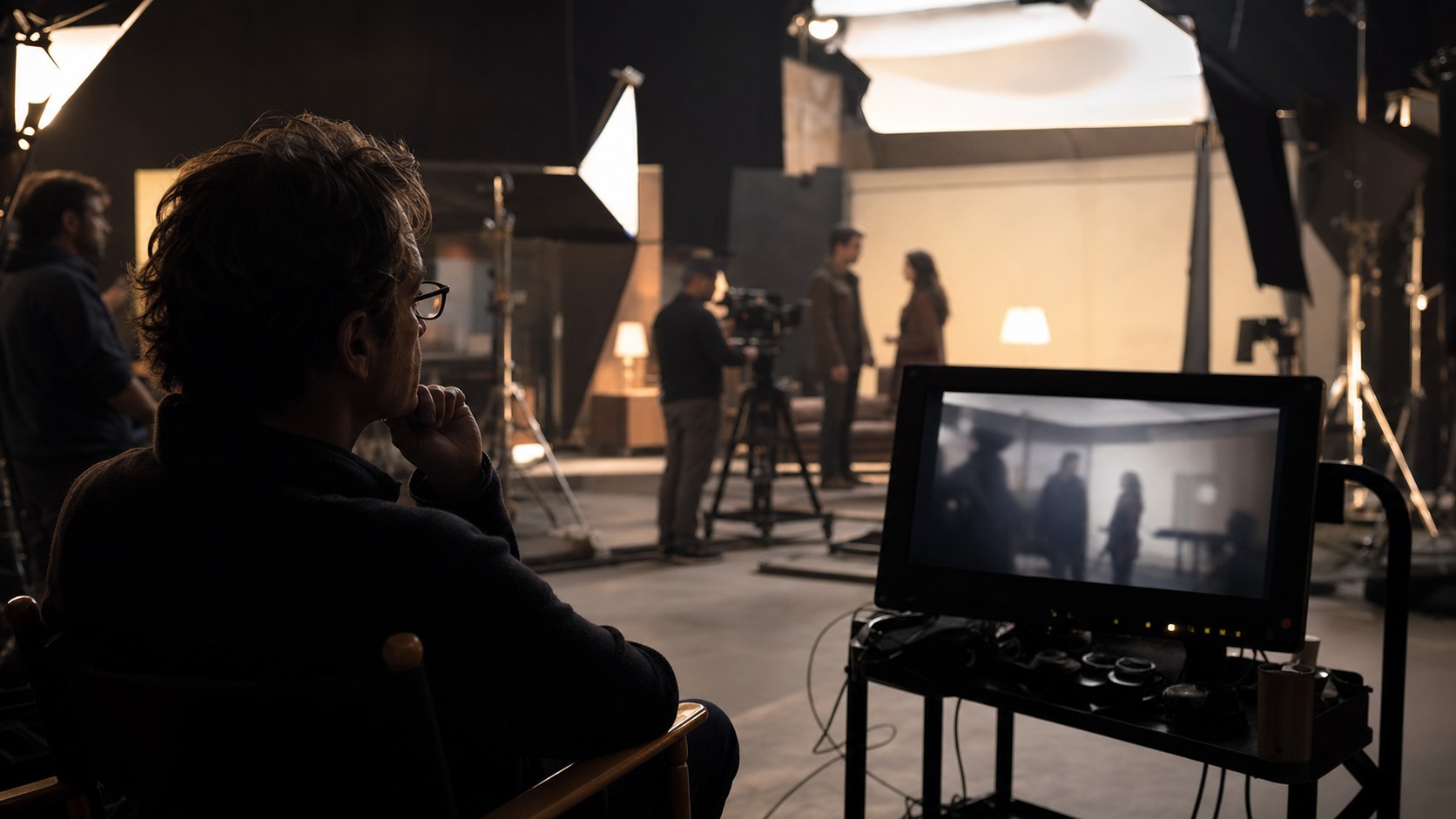
The word assisted matters. The tool assists the director; it does not become the director. A model can generate an idea for how to stage a scene, but it does not know the actor's instincts, the budget, the location, or the private reason the scene matters. The director has to judge whether the suggestion belongs in the movie.
Beginners should think of AI as a preparation partner. It is useful before meetings, before rehearsals, before shot lists, and before post-production reviews. It is less useful when treated as a source of final answers. Film direction depends on living context, and AI only sees the context it is given.
How It Helps With Script Understanding
Many directing problems begin on the page. A scene may have unclear power dynamics, repeated emotional beats, or a visual idea that has not been fully expressed. AI can help a beginner director organize those questions. It can summarize scene turns, list character objectives, group locations, or identify where a motif appears across the script.
That kind of analysis should not be treated as interpretation from above. It is a prompt for the director's own reading. If the AI says a scene is about reconciliation and the director feels it is about avoidance, that disagreement is useful. It forces the director to name the real intention. The tool becomes a mirror for clarifying thought.
Script assistance can also support communication. A director can bring sharper notes to a cinematographer, actor, or producer. Instead of saying the scene feels important, they can explain that the scene is the first time a character gives up control, and every visual choice should protect that turn.
Visual Planning for New Directors
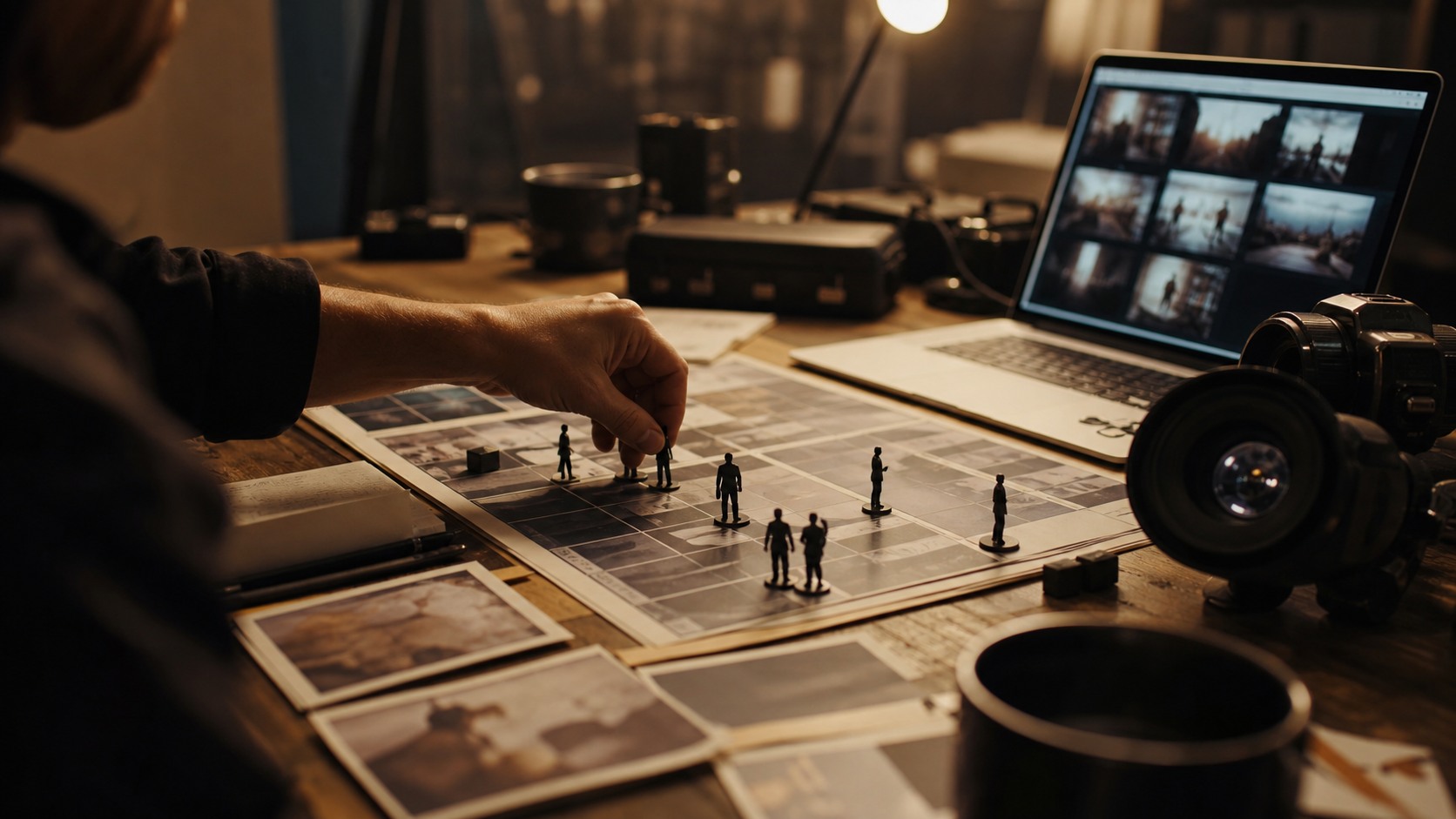
New directors often know the emotional feeling they want but struggle to convert that feeling into shots. AI can help by generating rough visual approaches from plain language. The director can compare a scene staged close to the actor, across a table, through a doorway, or from a distant corner. Seeing those approaches makes the choice more concrete.
The purpose is not to copy the generated image. The purpose is to learn what visual decisions communicate. A low camera may make a character feel powerful. A wide frame may make the same character feel abandoned. A soft backlight may romanticize a moment that should feel harsh. AI can reveal these possibilities quickly, but the director must decide what the story needs.
This visual planning can be especially helpful on small productions. A beginner may not have a large art department or storyboard budget. Early AI references can help the team discuss what is possible. They should still be checked against locations, gear, time, and the skills of the crew.
Rehearsal and Actor Work
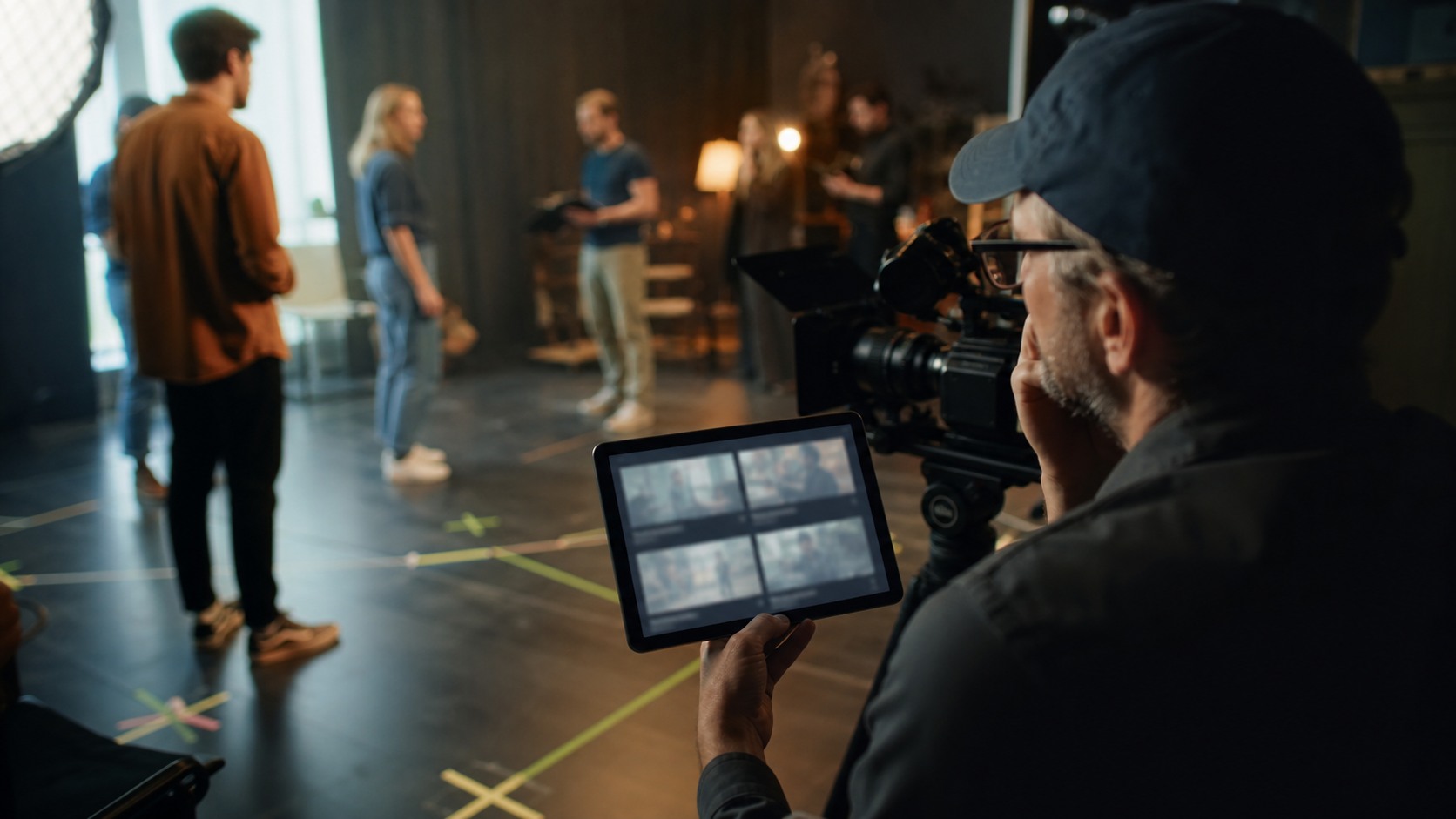
AI can help organize rehearsal notes, but it should not replace rehearsal. Actors need a director who listens, adjusts, and responds to what happens in the room. A generated note about a character's fear may be useful preparation, but the actor may find a better path through behavior, silence, or contradiction.
A beginner director can use AI to prepare questions rather than commands. What is the character trying not to say. Where does the scene shift power. What does the character believe will happen if they tell the truth. These questions can make rehearsal more focused without turning the actor into an executor of software notes.
Respect is essential. AI should never be used to imitate an actor, alter a performance, or create synthetic material without consent. Directing depends on trust. Any tool that weakens that trust will harm the film, even if it seems efficient.
Planning Coverage Without Overcomplicating the Scene
Coverage is the set of shots that allow a scene to be edited. AI can help a beginner think about what coverage may be needed: an establishing angle, a key reaction, a detail insert, or a shot that reveals changing power. This can prevent the common mistake of arriving in the edit without the visual information the scene requires.
The danger is collecting too many shots. AI may suggest every possible angle because it does not feel schedule pressure or emotional rhythm. A director has to choose. Some scenes need restraint. Others need fragmentation. The right coverage depends on the film's style and the scene's purpose.
A good rule is to ask what each shot changes. If a shot does not reveal information, shift emotion, clarify geography, or support a cut, it may not be needed. AI can suggest the menu, but the director orders the meal.
How to Start Responsibly
A beginner can start with one scene and one task. Use AI to summarize the scene's turn, then create three possible visual approaches, then write down which one best supports the character. Next, discuss the result with a collaborator. This keeps the experiment small enough to evaluate.
Keep records of generated references, prompts, and decisions. This habit protects the production and helps the director learn. If a reference becomes important, the team should know where it came from and how it was used. If it is discarded, the reason may still teach something.
AI-assisted directing is most useful when it makes the director more prepared, more articulate, and more open to collaboration. It is least useful when it encourages the director to hide behind generated options. The tool can help beginners find language for their instincts, but the instincts still need to be tested through actors, crew, locations, and edits.
A Simple First Project
A beginner who wants to try AI-assisted directing should avoid starting with a whole film. Choose one scene with two characters and one clear turn. First, write what changes in the scene in your own words. Then use AI to summarize the scene and compare the response with your own reading. If the tool misses the point, revise your prompt or return to the script and clarify the scene for yourself.
Next, ask for a few visual approaches. One might place the camera close to the character who is hiding something. Another might stage the scene in a wider frame where distance becomes the emotional idea. A third might emphasize an object, doorway, or window. Do not choose the prettiest option automatically. Choose the option that makes the scene's change easiest for the audience to feel.
After that, prepare rehearsal questions. Instead of telling the actor how to feel, ask what the character wants to avoid, what they hope the other person will not notice, or when the power in the scene shifts. AI can help generate possible questions, but the director should edit them into natural language. If a question sounds like software, it probably will not help the room.
Finally, make a tiny shot priority list. Name the one shot the scene cannot lose, the reaction that protects the edit, and any detail the audience must see. Bring those priorities to a collaborator and ask what seems practical. This turns AI-assisted directing into a real filmmaking exercise rather than a private experiment.
The lesson from a first project should be modest and useful. AI can help a beginner prepare, but the scene becomes real only when people interpret it together. The director learns by comparing machine suggestions with human response. That comparison is where confidence grows.
Mistakes Beginners Should Avoid
The first mistake is asking AI for a complete directing plan and accepting it as a shortcut. A plan that was not tested against actors, locations, crew, and story is only a guess. Beginners should use AI to create possibilities, then evaluate those possibilities with real collaborators. The learning happens in the evaluation.
The second mistake is sharing too much too early. A director may generate dozens of references while exploring the scene, but the crew needs a curated set. Too many images can make the director seem uncertain and can send departments in different directions. Select the few references that express the actual intention and explain why they matter.
The third mistake is treating AI language as better than plain human language. If a note sounds impressive but no actor can play it and no crew member can act on it, the note is not useful. A beginner director should translate every AI-supported idea into simple filmmaking terms: where is the camera, what changes in the character, what must the audience notice, and what can the team realistically do.
Avoiding these mistakes keeps the tool in proportion. AI-assisted directing should make a beginner more observant, more prepared, and more communicative. It should not make the process more mysterious. The best use of the technology often feels surprisingly ordinary: better questions, cleaner references, clearer priorities, and more thoughtful collaboration.
The Real Beginner Skill
The real beginner skill is not prompting. Prompting matters, but it is only one part of the work. The deeper skill is evaluation. A new director has to look at an AI suggestion and ask whether it makes the scene clearer, more playable, more shootable, or more emotionally precise. If it does not, the suggestion can be discarded.
That evaluation skill grows through practice. Compare two visual options and explain which one better serves the character. Ask a collaborator what feels confusing. Rehearse the scene and see whether the prepared idea survives contact with actors. This is how a beginner learns to use AI without becoming dependent on it.
AI-assisted directing is valuable when it strengthens the habits that already make directors better: preparation, listening, selection, and revision. A beginner who uses the tool in that spirit will not be trying to automate direction. They will be learning how to direct with more clarity.
A beginner should also practice explaining rejected choices. If an AI-generated shot looks impressive but does not fit, say why. Maybe it changes the point of view, overstates the emotion, or creates a production problem the scene does not deserve. Explaining rejection builds the same muscle as explaining approval. Both are part of directing.
Over time, this habit gives beginners confidence. They stop asking whether AI produced the correct answer and start asking whether a suggestion helps the scene become clearer. That shift is small, but it is the difference between using a tool and being led by one.