Directors Are Getting New Ways to Prepare
AI-assisted directing is the use of artificial intelligence to support the director's preparation, planning, communication, and review. It does not mean a machine directs the movie. It means the director can use AI to analyze a script, explore visual approaches, compare coverage, organize references, test pacing, and surface questions before a crew is waiting. Film direction is still about point of view, performance, rhythm, and meaning. AI changes the director's toolkit by making more possibilities visible earlier, which can sharpen choices if the director remains firmly in charge of taste and intention.
What AI-Assisted Directing Includes
AI-assisted directing can begin with the script. A director might use tools to summarize character arcs, identify repeated locations, compare scene purposes, or convert long notes into practical questions for collaborators. The goal is not to let software interpret the film on its own. The goal is to help the director see the shape of the work more clearly before entering rehearsals, design meetings, or production planning.
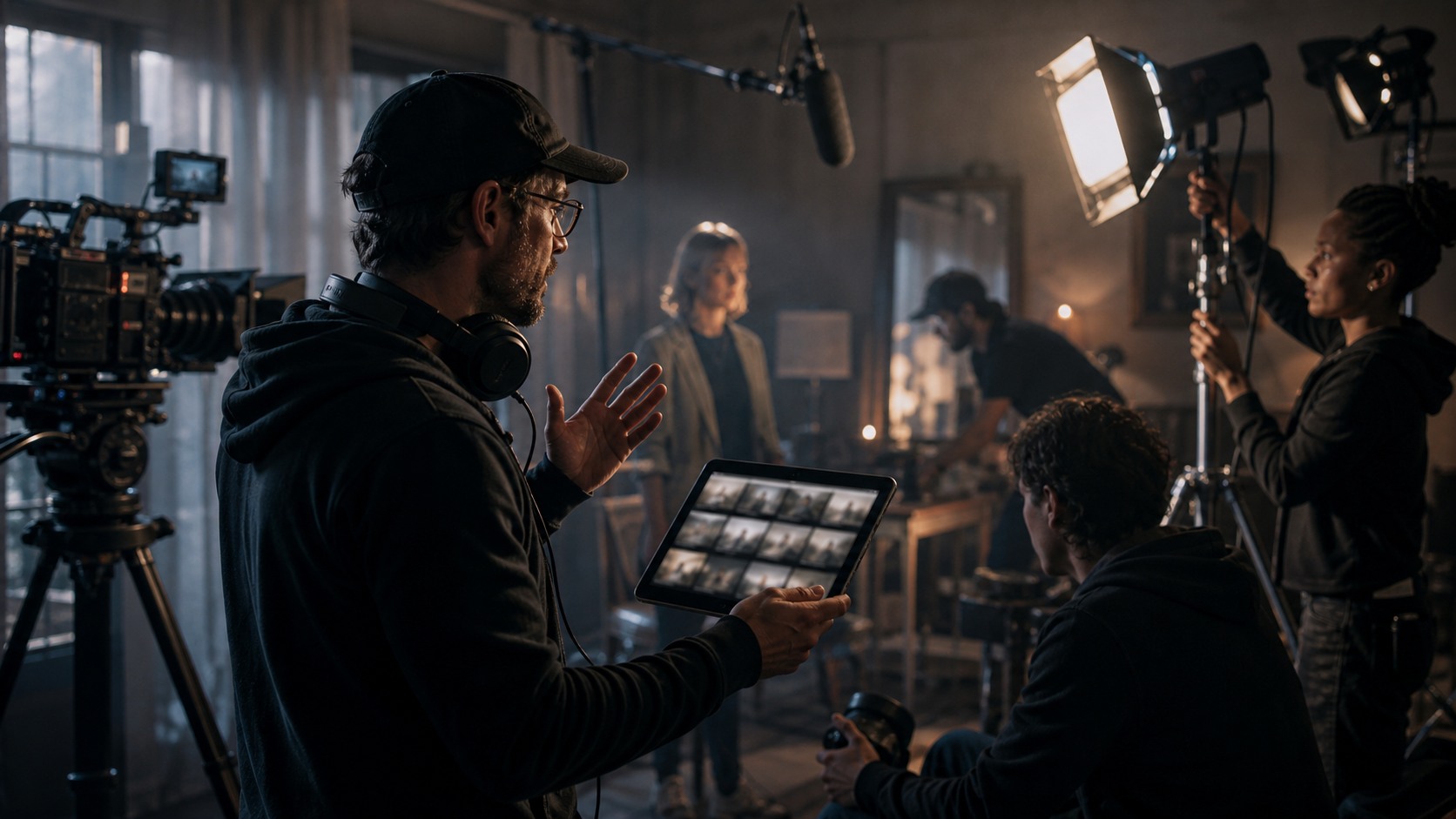
The assistance can also become visual. A director may generate mood references, rough storyboards, previs frames, or alternate blocking ideas. These outputs help translate intention into shareable material. A director who says the scene should feel trapped can show three different visual ways that trapped feeling might appear. The team can then decide which version belongs to the film.
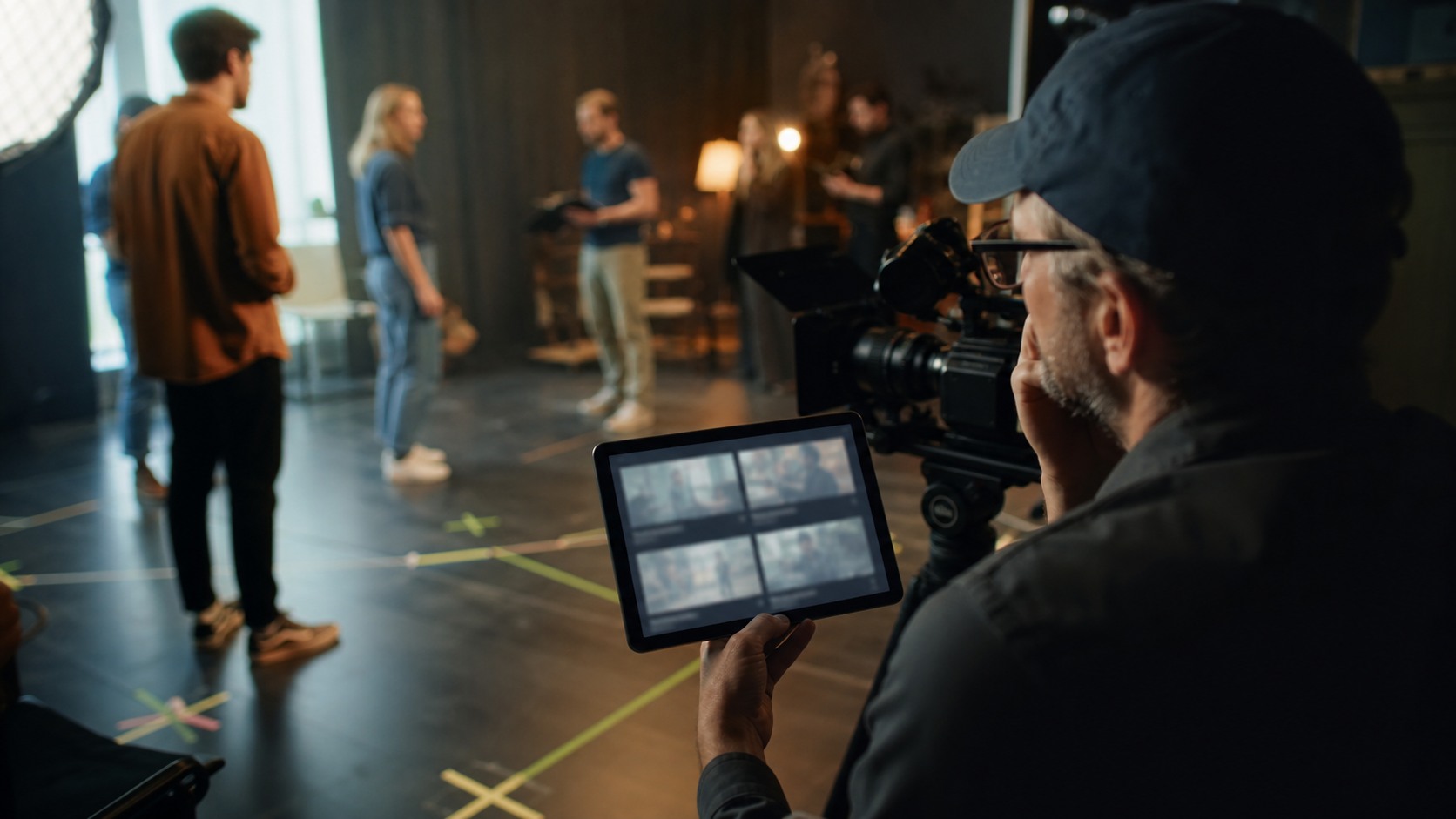
AI may also support review. Transcripts, select reels, continuity notes, and automated organization can help the director navigate large amounts of material. That is especially useful when time is tight. The director still decides what performance matters, where the scene breathes, and how the audience should experience the moment.
How It Changes Preparation
Preparation is where AI-assisted directing often feels most valuable. A director can test ideas without asking the whole production to move around them. They can compare a quiet scene staged in profile, head-on, or from behind a doorway. They can study whether a scene reads better as a single sustained shot or a sequence of reactions. These tests are not final decisions, but they make the director's thinking more concrete.
That concreteness helps collaborators. Cinematographers, designers, producers, editors, and actors all respond better to clear intention. AI-generated references can be rough, but they can still expose what the director wants to protect. They can also expose what the director has not solved. If every visual attempt misses the point, the director may need to clarify the scene itself.
The preparation benefit is not only speed. It is self-knowledge. A director learns by comparing versions and noticing which choices feel false. Over time, that process can sharpen taste because the director sees more options and has to articulate why one option is right.
AI and Performance Direction
Performance remains the area where directors should be most careful. AI can help organize rehearsal notes, compare dialogue rhythms, or summarize emotional beats, but it cannot replace the live exchange between director and actor. Actors respond to trust, context, listening, and adjustment. A model can describe a possible emotional arc, but it cannot feel the tension in the room.
A responsible director may use AI to prepare better questions for rehearsal. What is the character hiding. Where does the power shift. Which line changes the scene. Those questions can support the actor's work without prescribing a synthetic performance. The tool should help the director arrive more attentive, not more rigid.
Synthetic likeness and voice tools raise additional concerns. Directors need clear consent, documentation, and ethical boundaries before using AI to alter performance. A film set depends on trust. If actors feel their work can be changed or imitated without agreement, the creative relationship is damaged.
Scene Planning and Coverage
AI can help directors think through coverage before they arrive on set. A tool can suggest what visual information a scene may need, where a reaction might matter, or how a reveal could be staged. These suggestions are only useful if the director filters them through the film's style. A scene does not need every possible angle; it needs the right angles.
Coverage planning can save production time. If the director understands which shots are essential, the crew can protect those shots when the schedule tightens. AI planning may also reveal when an elaborate idea can be simplified. A generated plan might show that a complex move is less emotionally effective than a still frame with the actor.
The danger is overplanning. Directors should avoid letting AI create a rigid blueprint that leaves no room for discovery. Weather, performance, location, and instinct can all improve a scene. AI-assisted direction works best when it prepares the director to adapt rather than forcing the day to obey a pre-made image.
Communication With the Team
Directing is communication under pressure. AI can help by turning scattered references, notes, and scene ideas into clearer materials for meetings. A director can bring a concise visual board, a list of scene questions, or a comparison of possible tones. This helps department heads respond specifically instead of guessing what the director means.
However, communication can become noisy if the director shares every generated possibility. A team needs direction, not an avalanche of alternatives. The director's job is to curate. Select the references that matter, explain why they matter, and invite collaborators to improve them. That curation is a creative act.
The best AI-assisted directors will probably be more transparent, not less. They will say which images are exploratory, which notes are draft thinking, and which ideas have been approved. That clarity keeps the team aligned and prevents generated material from becoming a silent source of confusion.
The Director's Authority Still Matters
AI can expand the director's options, but it cannot supply a point of view. It can suggest ways to stage grief, fear, or desire, but it cannot know what those emotions mean inside a particular film. The director has to choose the moral, emotional, and visual center of the scene. That responsibility does not shrink because the tools become more capable.
In fact, AI may make directorial authority more important. When options multiply, someone has to say no. Someone has to protect the tone from becoming generic, the performance from becoming over-explained, and the image from becoming impressive but empty. The director's taste becomes the filter that keeps the film from dissolving into possibilities.
AI-assisted directing is therefore not a replacement for directing. It is a preparation and communication layer around directing. Used well, it gives the director more ways to think, test, and explain. Used carelessly, it can bury the film under polished uncertainty. The difference is human judgment.
What Changes in the Director’s Daily Work
In everyday practice, AI-assisted directing may change the director's day more than the director's title. Before a meeting, the director can organize notes and references faster. Before rehearsal, they can prepare sharper questions about character pressure. Before the shoot, they can compare visual options and identify which shots matter most. After the shoot, they can navigate transcripts, takes, and review notes with less friction.
That practical support can make the director more present if it is used wisely. A director who has already sorted the scene's essential questions may listen better in rehearsal. A director who has already explored a few coverage options may respond more calmly when the location changes. Preparation does not guarantee control, but it can create room for better attention.
The danger is that AI can also create false productivity. A director can generate references, lists, scene notes, and alternate plans forever without making a decision. Direction requires commitment. At some point, the director must choose the emotional center, the visual approach, the performance question, and the priority for the day. AI can widen the field, but it cannot step into that moment of responsibility.
Directors also need to protect their collaborators from unclear AI material. If a generated image is only a mood reference, say so. If it is a preferred shot, explain why. If it is no longer relevant, remove it from the conversation. Crews do not need every experiment the director tried. They need the selected ideas that help them do better work.
The most interesting change may be that directors can rehearse their own thinking earlier. They can see when a visual instinct is strong, when a scene question is weak, and when a planned shot is beautiful but unnecessary. That self-review can lead to more confident leadership. The director is not replaced by the tool; the director is asked to become more deliberate about what deserves attention.
A Useful Boundary for Directors
A simple boundary can keep AI-assisted directing healthy: use AI to prepare decisions, not to hide from them. If a tool helps the director understand a scene, organize references, or compare possible approaches, it is serving the work. If it becomes a way to avoid choosing, avoid listening, or avoid responsibility, it is getting in the way.
This boundary is especially important because directing is relational. The director has to earn trust from actors, department heads, producers, and editors. AI can provide notes, but it cannot read the morale of a set or notice when a collaborator is quietly solving the real problem. The director's attention to people remains one of the most important tools on any production.
Directors should also decide what kinds of AI use belong in private preparation and what kinds belong in shared production documents. Private experimentation can be messy. Shared references need context, labels, and approval. That separation lets directors explore freely without confusing the crew about what has actually been chosen.
When the boundary is clear, AI becomes less threatening and more practical. It helps the director arrive with better questions, clearer references, and a stronger sense of priority. The final direction still happens through conversation, rehearsal, framing, timing, and the courage to say yes or no.
Why Taste Becomes More Important
As AI tools create more options, the director's taste becomes more visible. Anyone can ask for variations, but not everyone can recognize which version belongs to the film. The director has to notice when an image is too generic, when a note is too obvious, or when a plan solves a technical issue while weakening the emotional center.
Taste is not only personal preference. It is judgment shaped by story, tone, actors, budget, audience, and the director's own sense of truth. AI-assisted directing works when the tool gives the director more material to judge. It fails when the director treats that material as inherently wiser than the people making the film.
That is why the best AI-assisted directors will not be the ones who use the most tools. They will be the ones who know when a tool has helped enough. They will stop generating, choose a direction, and bring that choice into the human work of rehearsal, shooting, and editing.
A practical way to build that taste is to review AI suggestions after a pause and with another collaborator present. The director may realize that the first exciting reference is too obvious, or that a quieter option leaves more room for the actor. This slower review turns speed into judgment. It also reminds the director that the film is not improved by every available option, only by the choices that deepen the scene.