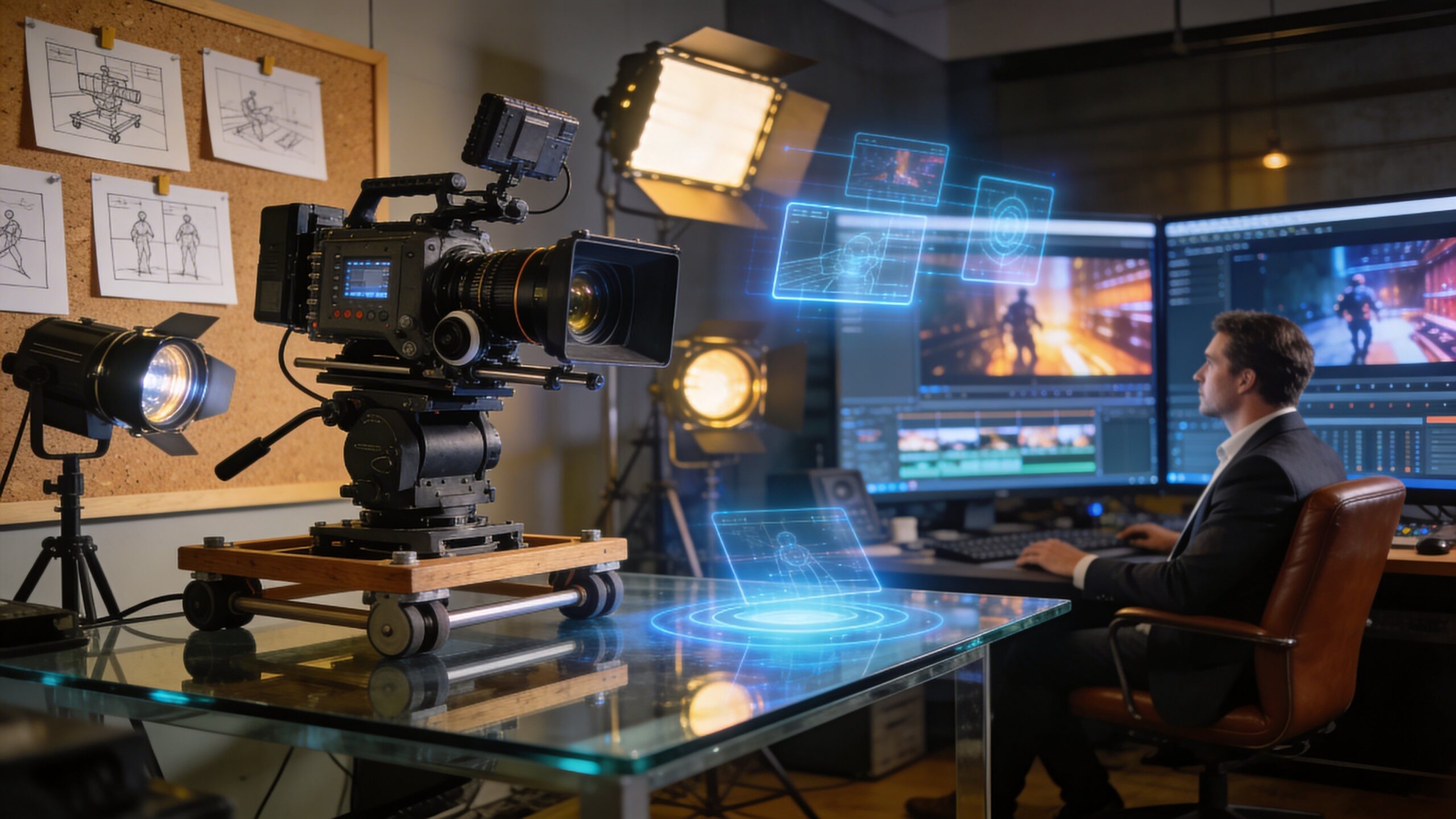
Filmmaking is an intricate, multifaceted art form that has long been a labor of love for directors, writers, actors, editors, and a vast team of creatives and technicians. However, in recent years, the rise of artificial intelligence (AI) has made waves across industries, and filmmaking is no exception. From streamlining production processes to enhancing post-production editing, AI’s capabilities in the film industry are vast and evolving. While AI cannot replace the human touch that brings unique creativity and emotional depth to films, it is revolutionizing how certain tasks are approached, helping filmmakers focus on their art while automating repetitive and time-consuming tasks. In this article, we’ll explore the various aspects of filmmaking that AI can automate, how it’s reshaping the industry, and the benefits and challenges this technology presents.
A: AI can help with drafts, dialogue, and structuring, but creative storytelling still requires a human touch.
A: AI analyzes actors' past performances and audience reactions to recommend the best fit for a role.
A: AI can assist with rough cuts and basic editing, but the artistic side of editing remains human-driven.
A: By analyzing audience data, box office trends, and genre preferences, AI can make informed predictions.
A: AI enhances creativity by automating mundane tasks and providing new tools for experimentation.
A: Yes, AI can automatically generate sound effects and analyze scenes to suggest appropriate soundtracks.
A: AI can generate stunning visual effects and automate time-consuming tasks like rotoscoping and background replacement.
A: AI analyzes audience data to optimize marketing strategies, create personalized trailers, and predict success.
A: Yes, by analyzing audience preferences, AI helps optimize release strategies across platforms and regions.
A: AI assists by automatically adjusting camera settings and optimizing shots for lighting and focus.
1. Scriptwriting and Story Development
Scriptwriting is one of the most creative parts of filmmaking, requiring a balance of imagination, storytelling, and structure. However, AI tools are beginning to play a role in streamlining the scriptwriting process, assisting writers, and even generating scripts on their own.
AI-driven scriptwriting tools, such as ChatGPT and Sudowrite, are capable of assisting with brainstorming ideas, generating plot outlines, and even drafting dialogue. These tools can process massive datasets of films and books to understand narrative structures, character arcs, and language usage. They can offer suggestions on pacing, tone, and character development based on the writer’s input, making the writing process more efficient. While AI-generated scripts are still far from the nuanced storytelling of seasoned writers, they can assist in generating first drafts or helping writers overcome writer’s block. The future could see AI being used more extensively for writing “formulaic” genres like romance, mystery, or action, where structural conventions can be more easily encoded.
2. Pre-Production Planning and Scheduling
In the pre-production phase, much of the work involves planning, scheduling, and managing resources. These tasks are often time-consuming and prone to human error. AI tools are already being employed to automate various parts of this phase, helping to create more efficient workflows.
AI algorithms can analyze production schedules, actor availability, location scouting data, and equipment logistics to optimize production timelines. AI-based tools like CineSched use data-driven predictions to generate the most efficient shooting schedules, ensuring that all the necessary elements align, reducing downtime, and minimizing costs. Moreover, AI can assist with budgeting by tracking and managing expenses in real-time, predicting potential cost overruns, and suggesting adjustments to keep the production within budget. It can even assist in location scouting by using computer vision and machine learning to analyze thousands of potential locations based on criteria like lighting, aesthetic, and logistics, helping directors and production designers find the best shooting spots with ease.
3. Casting and Talent Management
Casting the right actors is critical to the success of any film. While casting directors bring their experience and intuition to the table, AI tools can assist by analyzing actor portfolios, audience feedback, and box office performance to help make more data-driven casting decisions. AI-powered casting platforms can evaluate thousands of potential actors based on specific criteria, such as appearance, acting style, or past performances. By analyzing actor data, these tools can offer suggestions for talent who are more likely to connect with the audience or fulfill a director’s vision for a character. AI can also predict how well an actor might perform in a particular role based on past performances in similar genres or themes. Some studios are even experimenting with AI-powered avatars, which create digital versions of actors for virtual casting calls or test screenings. While this technology is still in its infancy, it could drastically change how talent is discovered and cast in the future.
4. Visual Effects and Animation
AI’s potential in visual effects (VFX) and animation is already being realized through tools that automate complex tasks, saving time and reducing costs. AI algorithms can be used to streamline the process of generating photorealistic effects, making it easier to create stunning visuals that once required highly specialized teams of artists and animators. For example, AI tools like DeepDream and Runway are capable of generating lifelike visual effects by learning from massive datasets of images and videos. These tools can automate the process of rotoscoping, which traditionally involves manually isolating subjects from backgrounds for visual effects. AI can also be used to upscale and enhance low-resolution footage, improving image quality while saving time during post-production.
In animation, AI can help automate the in-betweening process—creating the intermediate frames between keyframes. By analyzing a set of keyframes, AI systems can predict how characters and objects should move between those frames, greatly speeding up the animation process. Additionally, AI can be used to generate facial expressions and lip-syncing for characters, a time-intensive process that animators traditionally handle manually.
5. Cinematography and Camera Work
While cinematography is often seen as an art form requiring deep human intuition, AI tools are being developed to assist camera operators and directors of photography in their work. AI-enhanced cameras are capable of automatically adjusting settings like focus, exposure, and white balance based on the environment, helping to ensure optimal shots with minimal human intervention.
Advanced AI-driven cameras can also automate complex camera movements by tracking subjects and adjusting angles dynamically, creating smooth, professional shots without the need for manual operation. For example, AI can be used to control drone cameras during aerial shots, automatically adjusting flight paths and maintaining focus on subjects as they move. Additionally, AI is helping filmmakers explore new creative possibilities in terms of framing and shot composition. By analyzing visual data from previous films, AI tools can suggest shot compositions that are visually appealing or that align with a director’s aesthetic preferences.
6. Post-Production Editing
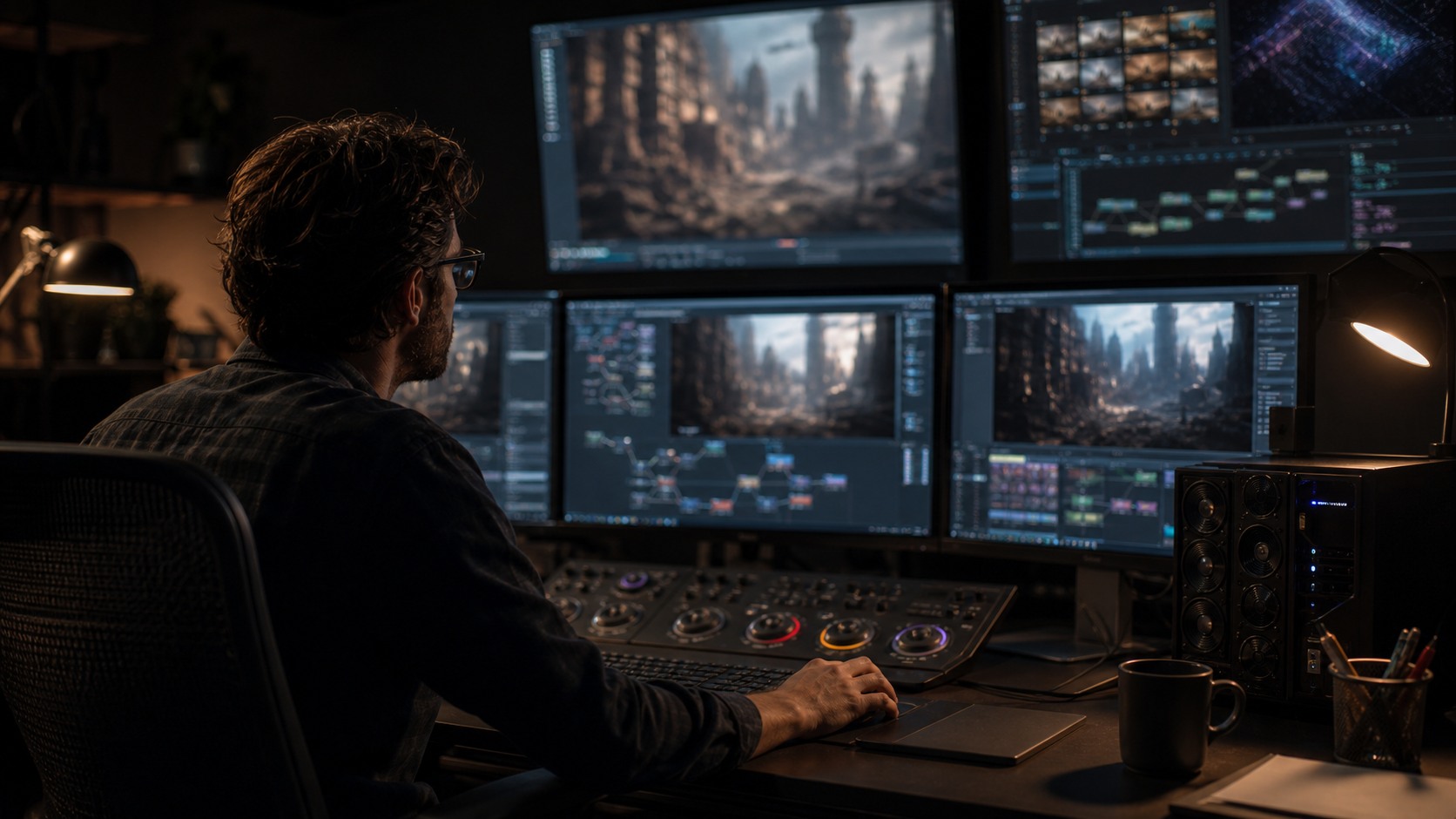
Post-production editing is a crucial part of filmmaking, where raw footage is transformed into the final product. Traditionally, this has been an incredibly labor-intensive process, requiring skilled editors to sift through hours of footage and make decisions about pacing, shot selection, and continuity. However, AI is beginning to take on a larger role in automating certain aspects of this phase.
AI-driven editing software, like Adobe Premiere Pro’s Sensei and Magisto, uses machine learning algorithms to automatically analyze footage, identify the best shots, and suggest edits based on pre-defined criteria. These tools can detect patterns in visual storytelling, such as emotional tone, character focus, and scene transitions, and automatically make suggestions for how the final cut should be shaped. Additionally, AI can automate color grading, a process that traditionally requires manual adjustments to achieve a specific look or mood. AI-powered tools like DaVinci Resolve now use machine learning to analyze footage and apply consistent color correction across multiple shots. This saves time and ensures that the final product maintains a cohesive visual style.
7. Sound Design and Music Composition
Sound design and music composition are essential elements of filmmaking that greatly contribute to the emotional impact of a film. While AI cannot yet replicate the artistry of a composer or sound designer, it is capable of automating various aspects of sound creation and processing.
AI tools can assist with generating background music, creating sound effects, and even composing entire scores based on specific themes, moods, or genres. Platforms like Amper Music and AIVA use machine learning to analyze musical patterns and generate original compositions, allowing filmmakers to quickly create scores that fit their films’ emotional tone. These tools can even adapt to changes in a film’s pacing, adjusting the music to match the on-screen action. AI is also revolutionizing sound design by automating the process of creating and mixing sound effects. AI-based tools can analyze a film’s audio and automatically generate soundscapes that match the visual elements, whether it’s the sound of footsteps in a hallway or the roar of a spaceship’s engine. This helps sound designers save time, especially in projects with large amounts of sound design work.
8. Marketing and Distribution
AI is not limited to the production process; it also plays a significant role in the marketing and distribution of films. AI can analyze massive datasets, including audience demographics, social media activity, and box office trends, to predict how well a film might perform in various markets. This helps studios make more informed decisions about release dates, advertising strategies, and target audiences.
AI-driven tools like MovieBrats can also help studios optimize marketing materials, creating personalized trailers and promotional content tailored to specific audience segments. These algorithms analyze viewer preferences and suggest content that is most likely to engage them, increasing the chances of a film’s success. Moreover, AI can automate parts of the distribution process by identifying which platforms are best suited for a film’s release, optimizing streaming algorithms, and ensuring that content reaches the right audience at the right time.
9. AI’s Limitations and Ethical Considerations
Despite the exciting potential of AI in filmmaking, there are limitations to what it can automate. AI excels at repetitive tasks and analyzing large datasets, but it lacks the creativity, intuition, and emotional intelligence that human filmmakers bring to the table. The essence of storytelling—its depth, emotion, and cultural context—remains uniquely human, and AI tools are still far from replicating this.
Additionally, the increasing reliance on AI in filmmaking raises ethical questions. The use of AI in casting and decision-making may inadvertently reinforce biases or exclude underrepresented groups. Similarly, AI-generated content might raise concerns about authorship and intellectual property rights.
Conclusion
AI is undeniably transforming the filmmaking process, making it more efficient and cost-effective by automating many tasks that were once time-consuming and labor-intensive. From scriptwriting and casting to editing, sound design, and distribution, AI is becoming an indispensable tool in the modern filmmaker’s toolkit. While it may not replace the creativity and artistry of human filmmakers, it is helping to streamline the filmmaking process, allowing them to focus on the creative aspects of their work. As AI technology continues to advance, it will undoubtedly open up new possibilities for filmmakers, pushing the boundaries of what is possible in the world of cinema. By embracing AI’s potential while being mindful of its limitations and ethical implications, the film industry can continue to evolve and thrive in the digital age.