
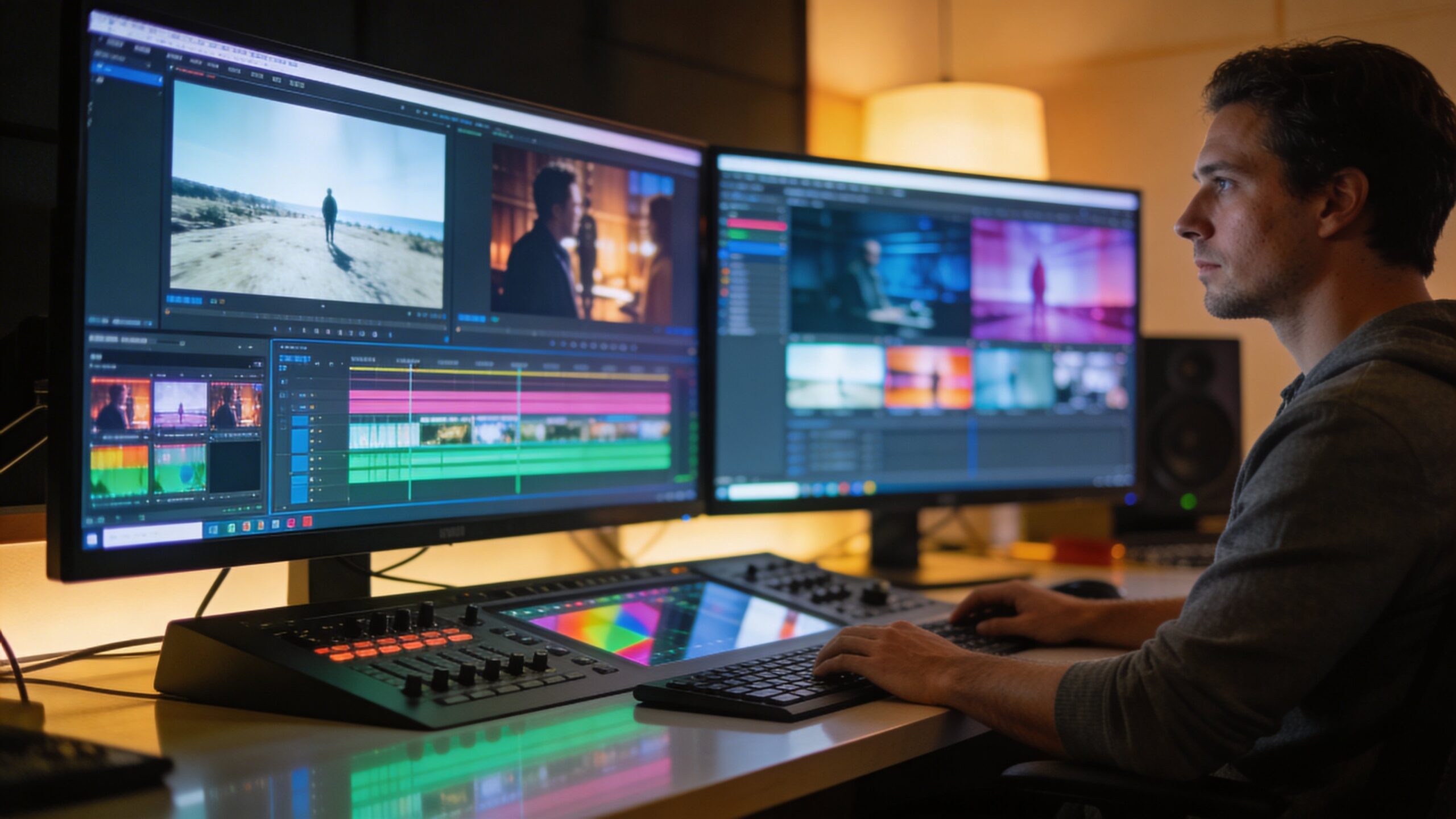
Artificial intelligence in film is no longer a futuristic rumor whispered about in post-production studios. It is here, it is practical, and it is surprisingly accessible. For non-tech creators—directors, writers, producers, editors, cinematographers, and indie filmmakers—AI can feel intimidating at first. The terminology sounds complex, the tools seem experimental, and the headlines often blur the line between reality and science fiction. But when you strip away the jargon, AI in film is simply a new set of creative tools designed to make storytelling faster, more flexible, and more imaginative. AI in film does not replace creativity. It amplifies it. Think of it as a digital collaborator that can analyze footage, generate visuals, assist with editing, enhance sound, and even support script development. Whether you are producing a short film on a tight budget or planning a feature-length production, understanding how AI works at a practical level can help you make smarter creative decisions. This guide breaks down AI in film in clear, non-technical language so you can harness its potential without feeling overwhelmed.
A: No, most AI tools are designed with user-friendly interfaces.
A: No, it enhances workflow but creative judgment remains human.
A: Many affordable subscription tools are available for indie creators.
A: Not yet at professional quality without human direction.
A: It depends on licensing and consent agreements.
A: It can remove noise and enhance dialogue clarity.
A: Yes, through audience analytics and trend prediction.
A: Often yes, especially in post-production tasks.
A: Many systems use AI for tracking and rendering support.
A: Yes, when used strategically it boosts efficiency and creativity.
What AI Really Means in the Film Industry
When people hear “artificial intelligence,” they often imagine sentient robots directing movies. In reality, AI in film refers to software systems trained to recognize patterns, make predictions, and generate content based on data. These systems learn from large collections of images, videos, scripts, or audio recordings. Once trained, they can assist filmmakers with specific tasks such as color grading, rotoscoping, voice enhancement, or visual effects generation. AI tools operate behind the scenes in many modern workflows. For example, editing software can now automatically detect scenes, sort clips by faces, and suggest cuts based on pacing. Sound tools can remove background noise with impressive precision. Visual effects programs can generate realistic environments that once required massive teams and budgets. For non-tech creators, the key takeaway is simple: AI is not a mysterious black box. It is advanced automation powered by pattern recognition. You do not need to understand the mathematics behind it to use it effectively. Just as you do not need to understand the physics of electricity to operate a camera, you only need to understand what AI can do for your creative process.
AI in Pre-Production: From Concept to Script
Pre-production sets the foundation for every film. AI can play a powerful role here, especially in brainstorming and planning. Scriptwriting tools powered by AI can analyze story structure, suggest dialogue variations, and identify pacing issues. They do not replace writers, but they can act as a sounding board. For example, an AI tool can analyze thousands of screenplays and identify common structural patterns in successful films. It might flag a second act that feels too long or suggest strengthening character motivations. For a writer facing creative block, AI-generated prompts can spark new ideas or unexpected twists.
In casting and scheduling, AI can analyze availability, budgets, and logistical constraints to create optimized production schedules. It can also simulate audience responses based on genre trends and market data. While these predictions are not guarantees, they can help producers make more informed decisions. For indie filmmakers, this level of insight used to be reserved for major studios with data analytics teams. Now, AI tools bring strategic planning power directly to creators working from home offices.
AI in Production: Smarter Cameras and Real-Time Tools
During production, AI enhances efficiency and expands creative possibilities. Modern cameras increasingly include AI-driven features such as face detection, subject tracking, and autofocus that adapts to movement. These features reduce technical friction, allowing filmmakers to focus more on composition and performance. Virtual production is another breakthrough. AI-driven systems can track camera movement in real time and render digital environments instantly. Instead of shooting on a distant location, filmmakers can capture scenes against LED walls displaying dynamic, AI-assisted environments. This technology reduces travel costs and increases creative flexibility. AI can also assist with lighting adjustments and real-time color matching. Instead of waiting until post-production to see how a scene will look after grading, creators can preview stylized visuals on set. This speeds up creative decision-making and reduces guesswork. For non-tech creators, the important shift is control. AI does not dictate aesthetic choices. It provides more accurate information and faster feedback, helping directors and cinematographers experiment with confidence.
AI in Post-Production: Editing, VFX, and Sound
Post-production is where AI has made some of its most visible impacts. Editing software can now automatically transcribe dialogue, making it easier to search for specific lines. It can identify similar takes and group them together. It can even generate rough cuts based on script alignment. In visual effects, AI-powered tools can remove unwanted objects from scenes, upscale low-resolution footage, and generate realistic CGI elements. Rotoscoping, once a time-consuming manual task, can now be partially automated. Background replacement and green-screen keying are faster and more accurate.
Sound design has also been transformed. AI noise reduction tools can isolate voices in chaotic environments. Voice cloning technology can recreate dialogue for re-recording sessions without requiring actors to return to the studio. Music generation tools can produce royalty-free scores tailored to a scene’s mood. These capabilities significantly reduce time and cost. For small production teams, this means access to studio-level polish without studio-level budgets.
AI-Generated Visuals and Deepfake Technology
One of the most talked-about areas of AI in film is content generation. AI image and video generators can create realistic environments, characters, and effects from text prompts. This opens doors for concept art, storyboarding, and experimental filmmaking. Deepfake technology, which uses AI to map one face onto another, has both creative and ethical implications. In responsible hands, it can de-age actors or recreate historical figures with stunning realism. In irresponsible hands, it can create misleading or harmful content.
For non-tech creators, understanding the boundaries of ethical use is essential. Transparency, consent, and legal compliance should always guide AI-based transformations. As regulations evolve, filmmakers must stay informed about intellectual property rights and likeness permissions. AI-generated visuals should be treated as tools, not shortcuts to bypass ethical standards.
How AI Impacts Storytelling
At its core, film is about storytelling. AI does not create meaning on its own. It provides options. A filmmaker’s vision still shapes the final product. However, AI can influence storytelling by making experimentation more accessible. Independent creators can test alternate endings, visualize fantastical worlds, or simulate complex scenes without massive resources. This democratization expands who gets to tell stories and how those stories are presented.
AI analytics can also offer insights into audience engagement. Streaming platforms use algorithms to analyze viewer behavior, influencing recommendations and sometimes production decisions. While this data can guide creators, it should not overshadow artistic integrity. Balancing data-driven insights with authentic creative instincts remains one of the most important challenges of the AI era.
Ethical Considerations and Creative Ownership
AI in film raises important ethical questions. Who owns AI-generated content? How should filmmakers credit tools used in production? What safeguards protect actors from unauthorized digital replication? Creators must navigate intellectual property laws that are still adapting to AI technology. If an AI model was trained on existing artwork or scripts, questions arise about originality and fair use. Responsible filmmakers should research licensing agreements and ensure compliance with evolving regulations. Transparency builds trust. Disclosing AI involvement in major creative processes can prevent misunderstandings and strengthen audience relationships. Ethical use of AI protects not only creators but also the broader creative community.
AI for Independent Filmmakers and Content Creators
One of the most exciting aspects of AI in film is accessibility. Independent filmmakers can now achieve effects once limited to blockbuster productions. AI editing tools reduce hours of manual labor. Automated subtitles expand global reach. AI-powered marketing tools help analyze audience demographics and optimize distribution strategies. For YouTubers, short-form content creators, and indie directors, AI offers scalability. A single creator can manage tasks that once required entire departments. This does not eliminate collaboration; rather, it allows smaller teams to operate at higher creative levels. The barrier to entry in filmmaking continues to lower, making diverse voices more visible in the industry.
Practical Steps to Start Using AI in Film
Non-tech creators can begin integrating AI gradually. Start with tools embedded in existing software. Many editing and sound programs already include AI features. Explore automated transcription, noise reduction, or color correction before diving into advanced generative systems.
Next, experiment with AI-assisted storyboarding or concept art. Use text-to-image tools to visualize ideas quickly. Evaluate how these tools fit into your workflow and adjust accordingly. Finally, stay informed. AI technology evolves rapidly. Follow reputable industry sources, attend workshops, and engage with filmmaker communities discussing AI integration. Continuous learning ensures you remain competitive and adaptable.
The Future of AI in Film
The future of AI in film is collaborative. Rather than replacing filmmakers, AI will continue to serve as an intelligent assistant. Real-time rendering, hyper-realistic digital doubles, and fully immersive virtual environments will become more common. As tools become more intuitive, the technical barrier will shrink further. The creators who thrive will be those who understand both storytelling fundamentals and how to leverage AI strategically. Film has always evolved alongside technology—from silent movies to sound, from black and white to color, from practical effects to CGI. AI is simply the next chapter. For non-tech creators, the opportunity lies not in mastering algorithms but in mastering imagination and using AI to bring bold ideas to life. AI in film is not about machines taking over. It is about creators gaining new creative superpowers. The more you understand these tools, the more confidently you can shape the future of cinematic storytelling.


