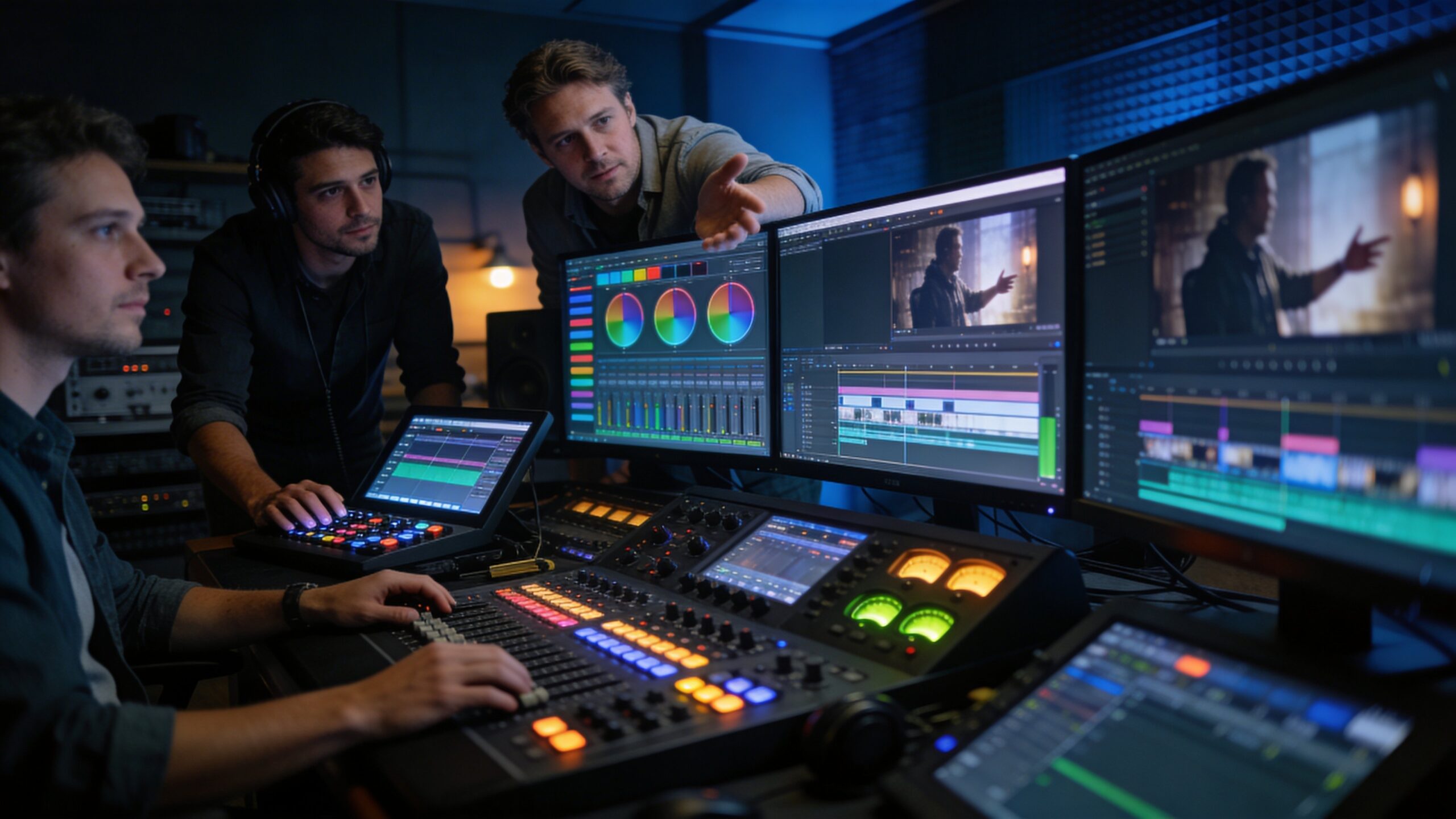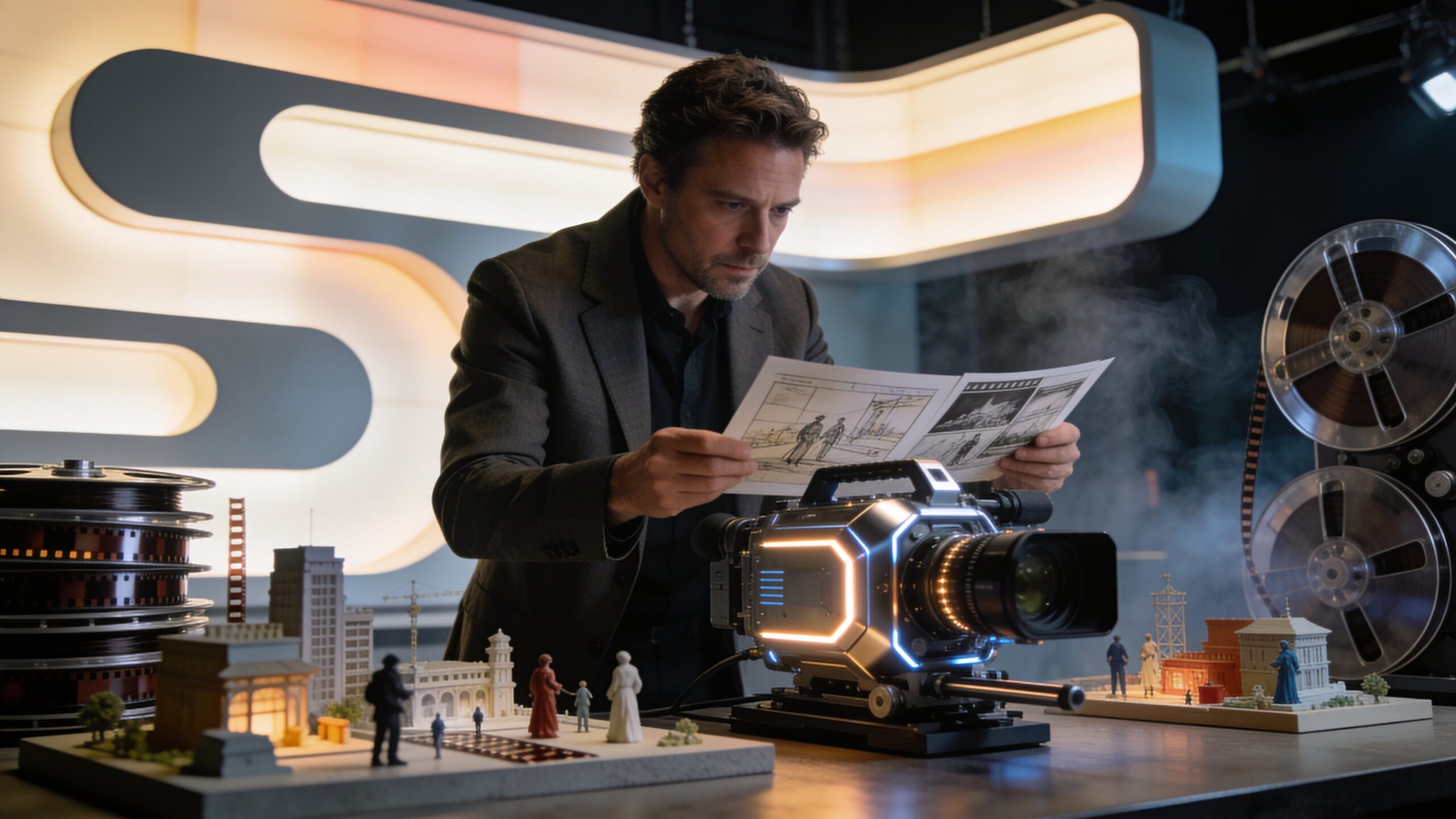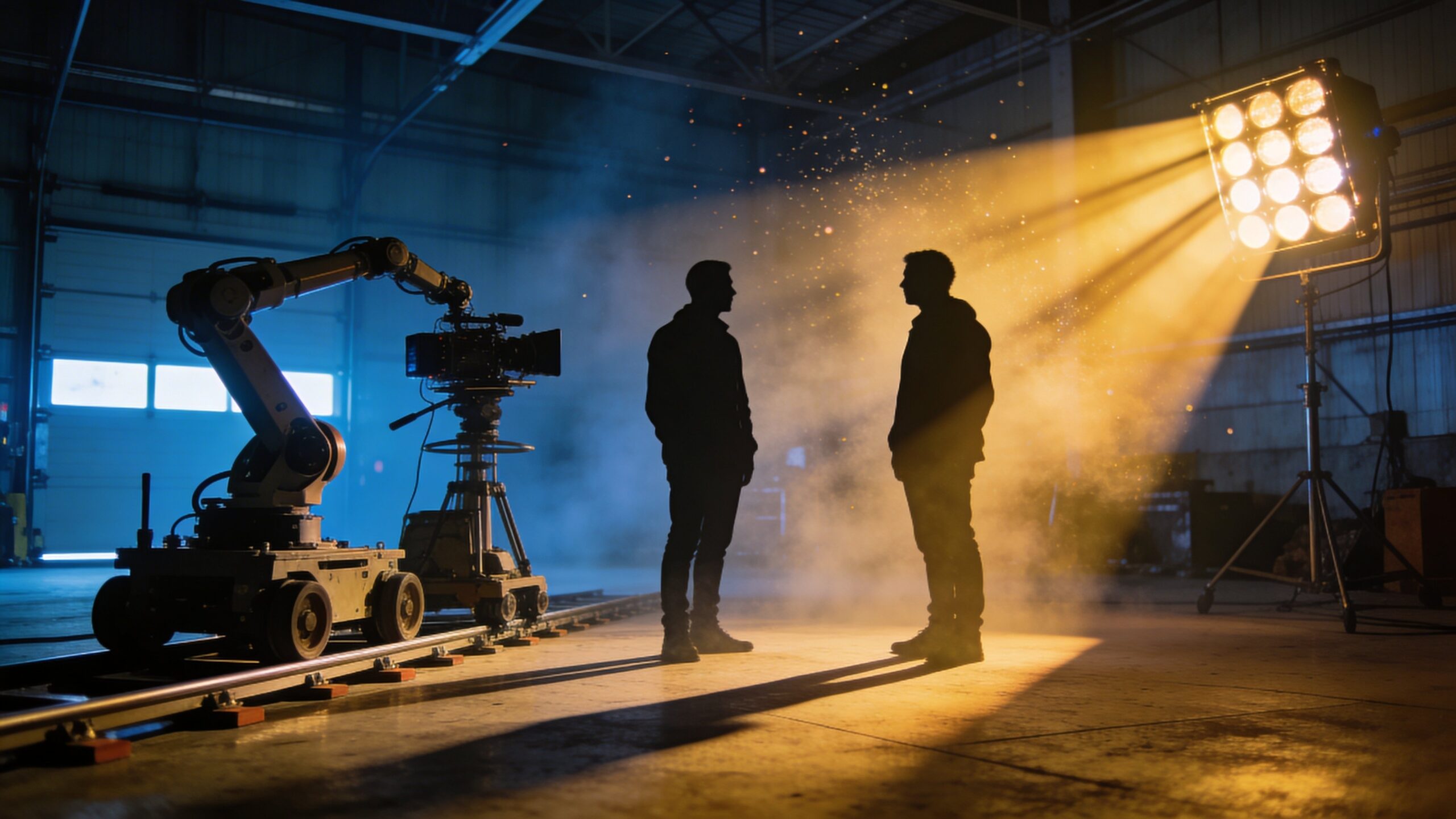
Film has always been a collaboration between magic and machinery. The camera is a machine, but it’s pointed by a person who decides what matters. Editing software is a machine, but it’s guided by a human sense of rhythm, surprise, and heartbreak. Now AI has entered the studio like a new kind of tool—one that doesn’t just speed up work, but can generate images, dialogue, music, story beats, even whole scenes. That’s why the question “Can AI replace human creativity in film?” feels less like a tech debate and more like a plot twist. It touches the soul of cinema: who gets to dream on screen, and why we care. The honest answer is more interesting than a simple yes or no. AI can absolutely mimic patterns, remix styles, and produce “convincing” cinematic material—sometimes shockingly fast. But film creativity isn’t only output. It’s intention, taste, risk, lived experience, and the invisible chain of meaning that connects a creator’s choices to an audience’s emotions. The future isn’t a world where humans vanish from the credits. It’s a world where the definition of “creator” expands, workflows mutate, and the best films are likely made by people who know how to direct AI without surrendering the human spark that makes stories worth watching.
A: It can draft structure and scenes, but human voice and subtext usually need a strong rewrite.
A: Unlikely—directing is taste, leadership, and belief. AI can assist decisions, not own them.
A: Previs, concept exploration, shot planning, and marketing drafts—then refine with human craft.
A: They often lack lived specificity, contradiction, and the imperfect rhythms that feel real.
A: Not automatically, but you should consider consent, licensing, and fair credit/compensation norms.
A: It can simulate faces and voices, but human performance—timing, breath, surprise—remains hard to replicate.
A: Use a style bible, locked references, and continuity tracking so visuals don’t drift.
A: Create a genuine point of view rooted in lived experience—what makes a story feel “necessary.”
A: Many will care about authenticity and labor; clarity and craft will influence acceptance.
A: The emotional thesis: what the film believes about people, and why it had to be told.
What We Mean by “Creativity” in Film
Before AI can “replace” creativity, we have to describe what creativity actually is in cinema. It’s easy to focus on the big, visible parts: the twist ending, the striking shot, the unforgettable monologue. But film creativity lives in smaller places too: the decision to hold a shot three seconds longer, the choice to cut away instead of show violence, the way a character’s silence tells the truth better than words. Creativity is not only invention. It’s selection—choosing one path out of a thousand possible versions. In film, creativity also includes translation. A screenplay is a blueprint, but a film is a performance of that blueprint through sound, light, pacing, and bodies in space. A director translates theme into blocking. A cinematographer translates emotion into lens choice and contrast. An editor translates chaos into inevitability. A composer translates subtext into melody. That translation is deeply human because it’s guided by taste—an intuitive sense of what “feels right,” what’s too much, what’s not enough, and what will land in the gut of a stranger. This matters because AI is strongest at generating options, variations, and approximations. It can propose five endings, thirty posters, a hundred lines of dialogue. But creativity in film is often the courage to commit to one ending and accept the consequences. It’s the willingness to disappoint some viewers in order to haunt the right ones. That’s not a math problem. That’s a human decision.
AI as the New Camera: Tool or Co-Author?
Every major technology in film has triggered a fear that artistry would die. Sound would ruin visual storytelling. Color would cheapen mood. Digital would destroy cinema’s texture. CGI would replace real acting. And yet, each tool expanded the language of film—sometimes making it noisier, sometimes opening new doors for genius. AI is similar, but with a twist: it doesn’t just capture or render. It suggests. It predicts. It imitates. It can act like a creative partner that never sleeps. That’s why people call it a co-writer, a co-director, or a virtual studio. But there’s a difference between collaborating and outsourcing. If a filmmaker uses AI to generate concept art, explore lighting, or quickly mock up a scene, the human still holds the steering wheel. If a filmmaker lets AI decide the story’s emotional spine and simply presses “generate,” the filmmaker becomes a curator, not an author.
Curating isn’t inherently lesser. DJs are artists. Editors are artists. Producers are artists. But film has always had a myth of authorship—someone’s vision poured into the frame. AI challenges that myth by making “vision” easier to simulate. If a machine can produce something that looks like a Wes Anderson parody or a neon noir trailer in seconds, the culture will be flooded with style. And when style becomes abundant, meaning becomes scarce. The filmmakers who stand out won’t be the ones who can generate the most. They’ll be the ones who can choose the most human version—the one with a pulse.
Where AI Already Feels Cinematic
AI doesn’t need to replace creativity to reshape the industry. It’s already altering how films are planned, pitched, and assembled. Pre-visualization—roughly mapping scenes before production—can be faster with AI-generated boards and animatics. Location scouting can be enhanced by tools that simulate different lighting conditions or season changes. VFX pipelines can be accelerated with AI-assisted rotoscoping, cleanup, and compositing. Marketing departments can test poster variations and trailer cuts at insane speed, optimizing for clicks and conversions.
Even the act of writing has changed. Writers can use AI to brainstorm loglines, build character backstories, generate alternative scenes, or troubleshoot plot holes. Some of this is just a fancy form of notes—an always-available assistant that offers suggestions. The risk is when suggestions become the story. AI tends to average toward what has worked before. It often produces dialogue that is competent but smooth, polished in a way that can feel soulless. Film, at its best, isn’t always competent. It’s strange. It’s jagged. It’s brave enough to be awkward. In other words: AI can generate cinematic surfaces easily. The harder part is generating the reason those surfaces should exist.
The Limits: Why “Human” Still Matters
If you’ve ever watched a film that felt like it knew you—like it reached into a private memory you didn’t even realize you shared—that’s the part AI struggles to replicate. Not because AI can’t produce sadness or joy on paper, but because it doesn’t live through anything. It doesn’t carry childhood embarrassment, grief, longing, or the specific texture of a real moment. It can describe those things; it can remix them from what it has learned; but it doesn’t originate them from a life. Film audiences are incredibly sensitive to intention. We can feel when a scene exists because it’s trendy versus when it exists because a filmmaker had to say something. That “had to” is where art is born. AI has no “had to.” It has no inner pressure, no identity to protect, no wound it’s trying to heal, no question it can’t stop asking.
And then there’s taste. Taste isn’t just preference; it’s a worldview expressed through choices. It’s what you leave out. It’s the framing of a moral question. It’s the tone that says, “This story matters.” AI can imitate the taste of a dataset. It cannot develop taste through living and changing and regretting. That’s why AI is more likely to replace certain tasks than replace creativity itself. It may replace drafts, filler, and volume. It may replace the middle layer of “good enough.” But truly human cinema often lives above “good enough,” and sometimes below it—messy, daring, personal.
The New Creative Job: Directing the Machine
If AI doesn’t replace filmmakers, what does it do? It changes what filmmakers do. The director of the future may spend more time shaping prompts, iterating looks, and orchestrating pipelines—like a conductor guiding an orchestra of tools. That doesn’t make them less of an artist. It makes the skillset wider.
Think of it this way: filmmaking has always been about constraints. Time, budget, physics, location, actor availability. AI reduces some constraints and introduces new ones: ethical constraints, legal constraints, and the constraint of sameness. When AI can generate a thousand options, the challenge becomes choosing something that doesn’t feel like everything else. The creative edge will be in specificity. A filmmaker who knows exactly what they want will use AI as jet fuel. A filmmaker who doesn’t know what they want will be buried in pretty choices that lead nowhere.
Originality vs. Remix Culture
Cinema has always borrowed. Genres are built from shared language: the meet-cute, the heist plan, the final showdown, the last look before the door closes. The difference is that humans borrow with context and intent. We steal and transform because we’re responding to culture, to history, to the moment we’re living in. AI borrows differently. It borrows statistically. It remixes patterns because patterns are what it knows. That can create impressive output, but it often lands in a space that feels like déjà vu. Viewers might not be able to explain why a scene feels generic, but they feel it. They sense the absence of a point of view. This is where the question “Can AI replace human creativity?” becomes a question about what audiences value. If audiences only want familiarity, AI can provide it. If audiences crave surprise, vulnerability, and a voice, humans stay essential.
The Ethics That Shape the Art
Film isn’t just art; it’s labor. AI raises hard questions about consent and ownership. Whose work trained the model? Were creators paid? If an AI generates a shot in the style of a living cinematographer, is that homage or exploitation? If an actor’s face and voice can be replicated, what does that do to performance as a profession?
These questions aren’t side issues—they directly shape what gets made and how it feels to watch it. An audience that knows a film was built on uncredited creative labor may experience it differently. A filmmaker who wants to tell human stories may not want their process to harm human creators. The industry will likely evolve new rules, contracts, and norms. Some filmmakers will proudly use AI; others will avoid it; many will land somewhere in the middle—using AI for certain stages while protecting the human core of writing, acting, and directing.
Acting: The Last Frontier
Acting is one of the strongest arguments for why film won’t become fully machine-made. A performance is not just a face and voice. It’s timing, breath, micro-expression, contradiction. It’s the way an actor surprises even themselves in a take. It’s the tension between script and impulse. AI can simulate an actor’s appearance, but it can’t replicate the human process that creates a truly alive moment—at least not in the way audiences respond to.
Even if AI-generated actors become common for background roles or stylized projects, human stars will likely become even more valuable as symbols of authenticity. In a world of infinite synthetic faces, a real face with real history may carry more emotional weight.
The Future: Hybrid Cinema
So can AI replace human creativity in film? Not in the way the fear suggests. AI can replace chunks of the process, especially the repetitive, technical, and exploratory parts. It can help independent filmmakers visualize worlds that used to require massive budgets. It can help writers generate options when they’re stuck. It can help editors test rhythms and structure. It can help studios prototype faster than ever. But the best films won’t be made by AI alone. They’ll be made by humans who use AI the way great filmmakers have always used tools: to express something personal with greater reach and precision. In the end, creativity isn’t the ability to produce. It’s the ability to mean. Cinema is a conversation between the filmmaker and the audience, carried through light and sound. AI can help shape the carrier signal, but the message—the human need behind the story—still has to come from somewhere that can feel. And that “somewhere” is us.