A New Gate Opens in the Old City of Cinema
For most of film history, “becoming a filmmaker” meant finding your way into a fortress. The walls were made of expensive cameras, scarce editing bays, specialized crew networks, and the kind of industry access that tended to circulate inside a few big cities. You could have taste, ambition, and a notebook full of scenes—and still be blocked by the simple fact that cinema was capital-intensive. Even when digital cameras and laptops lowered the drawbridge, the path still required time, training, and a lot of trial-and-error just to speak the language of coverage, continuity, sound, color, pacing, and story structure. AI doesn’t replace the craft of filmmaking, but it’s changing the entry requirements. It’s like someone added new on-ramps to the highway: more ways to test an idea, visualize a scene, edit a cut, clean a soundtrack, design a look, or create a pitch without waiting for permission. That shift is bigger than a new toolset. It changes who gets to participate, who gets to iterate fast enough to improve, and who can translate imagination into something watchable before their momentum runs out.
A: You still do—AI reduces friction, but fundamentals (story, light, sound, pacing) are the real engine.
A: Clean dialogue, consistent lighting on faces, and purposeful editing rhythm—polish follows clarity.
A: It can brainstorm and draft, but your voice comes from your choices—rewrite until it sounds human and specific.
A: For many creators, it’s best for previs and pitches; final choices depend on rights, ethics, and your style goals.
A: Start with short scenes, voice-driven stories, documentary moments, or minimal-cast scripts—constraints can be a signature.
A: Ground your visuals in real references, consistent lighting rules, and a deliberate color palette you control.
A: Safer to learn from influences broadly and build your own blend rather than copying a living artist’s recognizable style.
A: A 2–5 minute short with one location, one strong conflict, and great sound—finish it, then iterate.
A: Make scene studies: dialogue scene, suspense scene, montage, documentary moment—show range and growth.
A: Generating endless options without committing—film rewards decisions, not infinite drafts.
The Filmmaker Identity Is Expanding
The word “filmmaker” used to imply a specific kind of person: someone who had done the traditional reps—film school, gear familiarity, crew experience, and a working knowledge of production pipelines. That definition was partly about skill, but also about proof. You weren’t a filmmaker until you had made something the industry recognized as a film. AI is loosening that definition by making the early stages—ideation, visualization, and rough assembly—more accessible and less punishing. A teenager with a phone and a strong sense of story can now produce a compelling proof-of-concept in days instead of months. A novelist can storyboard scenes without drawing skills. A photographer can explore motion language, shot rhythm, and visual continuity without already knowing the entire post-production stack. These aren’t shortcuts to mastery, but they are shortcuts to feedback—and feedback is where artists grow. When more people can get to a “first watchable version,” more people can become the kind of creators who learn by making.
Pre-Production Is Getting Superpowers
Pre-production is where films are quietly won or lost. It’s where a script becomes a plan, a vision becomes a look, and a budget becomes a set of decisions. Traditionally, pre-production demanded either experience or money—often both. You needed artists to sketch concept frames, designers to explore palettes, and producers to break down scripts into schedules. AI now acts like a rapid prototyping layer over all of it.
Writers can generate multiple loglines, scene variations, and dialogue passes—not to outsource creativity, but to explore the neighborhood of an idea faster. Directors can test tone by producing reference stills, mood boards, and lighting concepts that communicate intent to collaborators. Producers can draft breakdowns and shooting schedules as a starting point, then refine with human judgment. The result is less guessing and more intentionality. When you can “see” your movie earlier, you waste fewer days on the wrong version of it.
The Camera Is Still Real, But the Sandbox Got Bigger
A camera captures what’s in front of it. That hasn’t changed. What AI is changing is how much you can learn before you ever press record. New filmmakers used to burn through time and confidence making early mistakes: poorly motivated coverage, scenes that don’t cut together, dialogue recorded in echo chambers, lighting that fights skin tones, or pacing that drags because the structure isn’t clear in the edit.
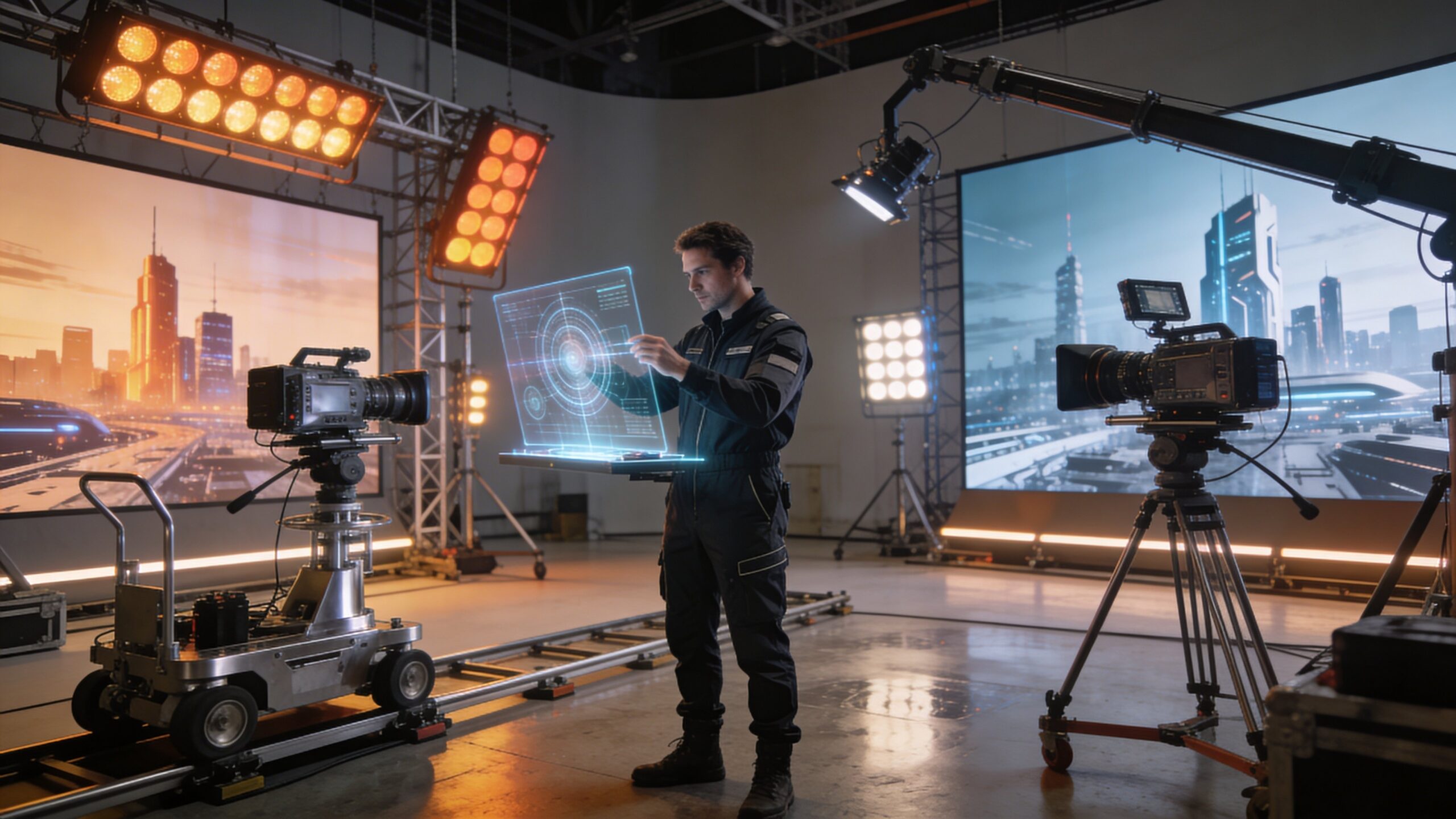
Now you can rehearse decisions in a creative sandbox. You can generate storyboard-like sequences, pre-visualize action beats, test shot sequences, and even practice editing rhythm using placeholder material. That doesn’t mean your final film becomes artificial; it means your final shoot can be more focused. The more you solve on paper—or in a visual draft—the more your limited production days become about performance, emotion, and authenticity.
Editing Is Becoming Less Technical and More Musical
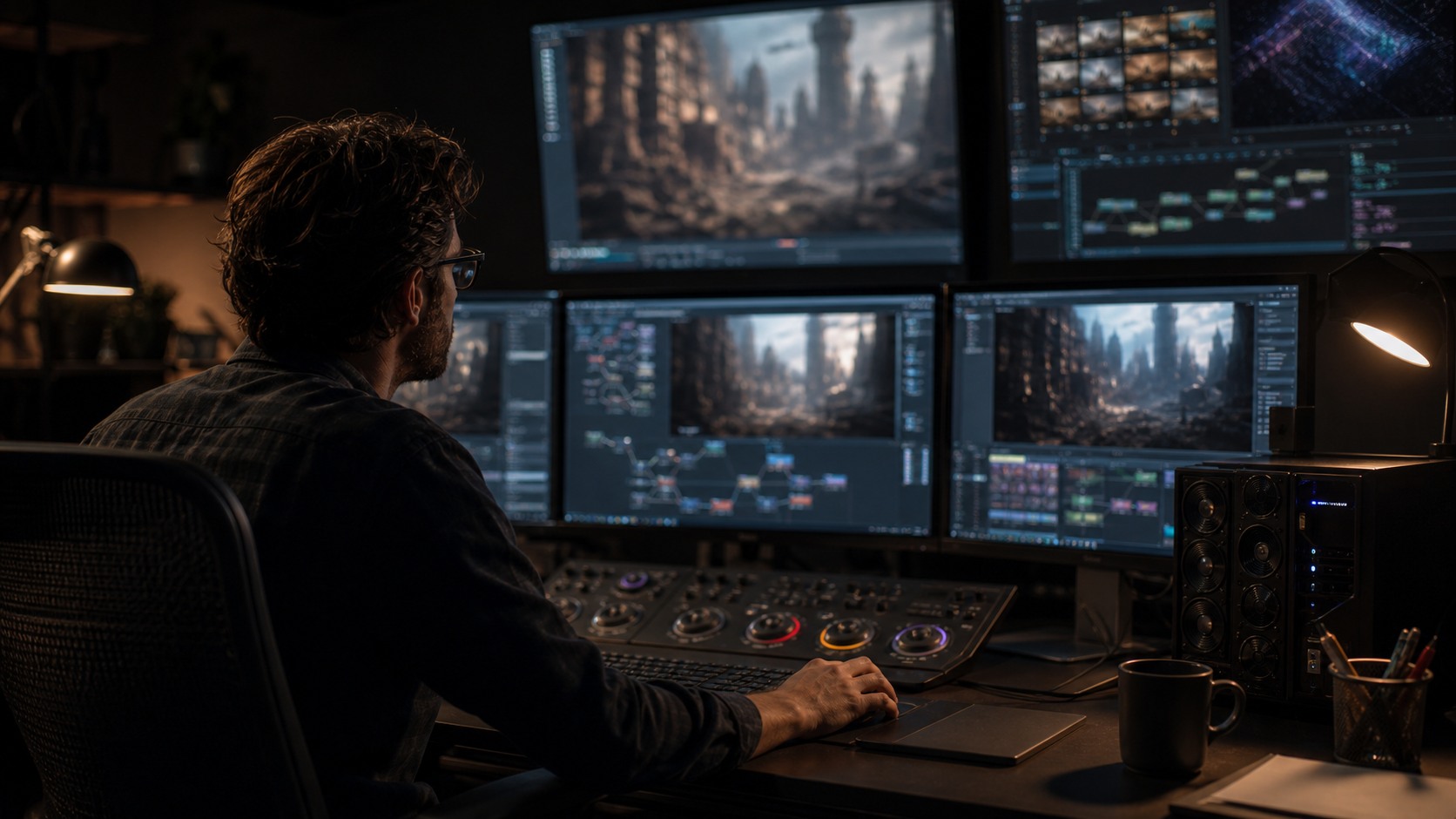
Editing has always been a blend of engineering and poetry. The engineering part—media management, syncing audio, stabilizing shots, removing hum, balancing levels—can be intimidating for beginners. The poetry part—timing, tension, reveal, rhythm—is where stories come alive. AI is increasingly taking the edge off the engineering so more people can get to the poetry sooner.
Tools that transcribe dialogue, detect filler words, suggest cut points, match audio levels, reduce noise, or assist with rough assemblies allow new filmmakers to spend less time wrestling software and more time listening to the emotional shape of a scene. The first cut still needs taste. The best cut still needs patience. But the “I can’t even begin” barrier is lower when the computer helps you organize the chaos. In practice, this means more first-time creators actually finish projects—and finishing is the greatest teacher.
Sound, the Hidden Wall, Is Finally Lower
Many first films fail for one reason: sound. Viewers will forgive imperfect images, but they rarely forgive dialogue they can’t understand. Historically, good sound required microphones, recorders, technique, and post-production knowledge. AI doesn’t replace proper recording, but it can rescue borderline audio, reduce noise, isolate speech, and even help new filmmakers learn what “clean” sounds like.
This matters because sound has been an invisible gatekeeper. Plenty of talented storytellers never got traction because their first work sounded amateurish. When accessible tools help a film reach basic professional clarity, the story gets a fairer audition. And when more people get a fair audition, the culture of filmmaking becomes more diverse—not as a slogan, but as a mathematical outcome of who can produce watchable work.
Visual Effects and Motion Design Are No Longer “Only for Big Teams”
For decades, certain kinds of visuals were reserved for people with access: compositing, cleanup, rotoscoping, advanced color work, motion graphics, and stylized looks that require hours of specialized labor. AI is shrinking the time cost of some of those tasks, making small teams feel larger and allowing creators to attempt ideas that once felt impossible. That doesn’t mean every filmmaker should chase spectacle. In fact, the real impact is subtler: a filmmaker can remove distractions from a shot, fix small continuity issues, generate temporary effects for a pitch, or create graphics that clarify a story. A documentary filmmaker can polish archival material. A micro-budget sci-fi filmmaker can build believable atmospheres. These are not replacements for artists; they’re multipliers for artists who already have taste and direction.
The Rise of the “One-Person Studio”
A new creative archetype is emerging: the one-person studio. This isn’t a lone genius myth. It’s a practical reality for certain kinds of projects—short films, trailers, proof-of-concepts, branded shorts, music videos, and experimental narratives. AI lets a creator move between roles faster: writer, storyboard artist, editor, sound cleaner, color assistant, and marketing coordinator.
The creative benefit is momentum. When you can keep moving, you stay in the story world longer. You don’t lose weeks waiting for the next resource. The risk, of course, is burnout—or making everything alone when collaboration would elevate the work. But as a doorway into the craft, the one-person studio is powerful. It lets new filmmakers build a portfolio, develop their voice, and attract collaborators with something tangible rather than just an idea.
New Paths Into Film Careers
AI isn’t only changing who can make films—it’s changing who can enter film careers. In the past, many roles were hidden behind apprenticeships and access. Now, a person can demonstrate capability publicly: editing rhythms, trailer instincts, color sensibility, sound cleanup skills, or storyboard thinking. When the proof is visible, the resume matters less than the work.
This has already reshaped adjacent creative fields: social video, short-form storytelling, and micro-series production. The boundary between “online creator” and “filmmaker” is thinning. Some people will start with 60-second narratives and grow into longer forms. Others will build careers making pitch materials, previs, or animatics for teams. The industry may still have gatekeeping, but it’s harder to ignore talent that arrives with finished examples.
The Ethics and the Credit Question
Every new tool creates new arguments about fairness. AI is no different, and filmmakers should treat this seriously. Questions about training data, consent, and credit aren’t abstract; they’re about creative labor and ownership. If a tool is built on uncredited work, or if it reproduces styles too closely, creators have a right to be wary. If a project uses AI in ways that mislead audiences, trust erodes. The future of AI in film depends not only on capability but on ethics that people can live with. For emerging filmmakers, the practical approach is clarity. Know what tools you’re using, what rights you have, and what your collaborators expect. When in doubt, use AI for internal ideation and workflow acceleration rather than as a way to mimic identifiable living artists. Treat AI like a power tool: useful, sometimes dangerous, and always revealing of the hands holding it.
The New Literacy: Taste, Direction, and Story Judgment
As AI lowers technical barriers, the value shifts toward judgment. The question becomes less “Can you operate the software?” and more “Do you know what you want the audience to feel?” Taste becomes a skill you can’t fake. Direction becomes a discipline: making choices, narrowing options, and building coherence. AI can generate ten versions of something, but it can’t tell you which version is honest for your story.
In a world where more people can create images and sequences, audiences will be flooded with content. The filmmakers who rise won’t necessarily be the ones with the most tools. They’ll be the ones with the clearest voice. AI makes it easier to speak, but it doesn’t write your truth. The opportunity is massive: more storytellers can get on stage. The challenge is timeless: to say something worth hearing.
What This Means for Film Culture
When more people can make films, film culture changes. Genres expand. Regional voices grow louder. New kinds of hybrids appear—documentary with stylized visualization, micro-budget fantasy with intimate realism, personal essays with cinematic polish. The center of gravity moves from institutions to communities, from permission to practice, from rare opportunities to constant iteration.
This doesn’t end the need for studios, crews, festivals, and craft experts. It changes the flow. More creators will arrive with stronger drafts, clearer intent, and better-developed voice before they ever step into bigger rooms. The most exciting outcome isn’t that AI makes filmmaking “easy.” It’s that AI makes filmmaking possible for more people long enough to become good. And in cinema, possibility is the first ingredient of every future classic.
The Future Filmmaker’s Advantage: Curiosity + Consistency
If you want to become a filmmaker in the AI era, the competitive edge looks surprisingly old-school. Curiosity—about people, about images, about sound, about pacing, about the way scenes make us feel. Consistency—showing up, finishing work, learning publicly, and improving project by project. AI can accelerate your reps, but it can’t do them for you. The best mindset is to treat AI like a rehearsal partner. Use it to explore. Use it to prototype. Use it to sharpen. Then step back into the human parts—casting, performance, real locations, lived emotion, the kind of messiness that makes stories breathe. The door is wider now. What you do with the room on the other side is still yours.