The New Creative Engine Behind the Camera
Artificial intelligence is quickly becoming one of the most fascinating tools in modern filmmaking, not because it replaces imagination, but because it gives filmmakers new ways to shape, test, and expand it. From visual concept development to storyboarding, editing, color exploration, character design, sound experiments, and virtual production, AI models are now being trained to understand the unique creative language of cinema. For filmmakers, this means more than pressing a button and waiting for a result. It means teaching a system how a story should feel, how a world should look, how a character should move, and how every creative choice supports the emotional core of a film. Training AI models for creative work is part technology, part artistry, and part directorial instinct. A filmmaker may feed a model reference images, scripts, shot lists, production notes, mood boards, camera tests, sound palettes, animation samples, or previous footage so the AI can learn a particular style or intention. The goal is not to make the machine “creative” in the human sense. The goal is to build a responsive creative assistant that understands the project’s visual identity, tonal boundaries, pacing, genre language, and production needs.
A: Not always. Many use no-code tools, prompt systems, curated datasets, and platform-based fine-tuning.
A: Scripts, images, production notes, footage, audio, concept art, mood boards, and approved references.
A: No. AI can create rough options, but artists refine composition, continuity, emotion, and production clarity.
A: It speeds up visual exploration, pitch decks, concept testing, footage organization, and early creative planning.
A: Yes, when guided by focused references, strong prompts, clear feedback, and project-specific creative rules.
A: Fine-tuning adapts an AI model so it better understands a specific style, character, object, or world.
A: No. Filmmakers should use original, licensed, public domain, or properly approved materials.
A: Yes. It can organize footage, transcribe dialogue, find takes, group scenes, and support search workflows.
A: AI can analyze patterns, but human filmmakers still provide meaning, taste, emotion, and final judgment.
A: Build a clean mood board, write a visual style brief, test prompts, review results, and refine the dataset.
What It Means to Train an AI Model for Film
When people hear the phrase “training an AI model,” they often imagine massive data centers, endless code, and technical teams working far away from the set. While that can be part of the process, filmmakers often interact with AI training in more practical and creative ways. They may fine-tune a model with a small set of approved references, organize project-specific datasets, build prompt libraries, test outputs against a creative brief, or guide an AI tool through repeated feedback until it starts producing work that aligns with the director’s vision.
In filmmaking, training is not only about data. It is about taste. A horror director may train a model to understand dim corridor lighting, uneasy framing, subtle facial dread, and slow visual tension. A fantasy filmmaker may train a model on costume silhouettes, mythical architecture, magical light behavior, and atmosphere. A documentary editor may train AI systems to help organize interviews, detect emotional beats, identify recurring themes, or suggest archive footage categories. In each case, the filmmaker is teaching the AI what matters creatively.
Why Filmmakers Use AI in the Creative Process
Filmmakers use AI because cinema is built from thousands of decisions, and every decision takes time, money, and energy. Before a scene is shot, artists may need concept art, location ideas, character references, shot options, lighting studies, previs tests, and pitch materials. AI can accelerate these early creative stages by helping filmmakers visualize possibilities faster. Instead of waiting days for one rough concept, a director can explore dozens of visual directions in minutes, then choose which ideas deserve deeper development.
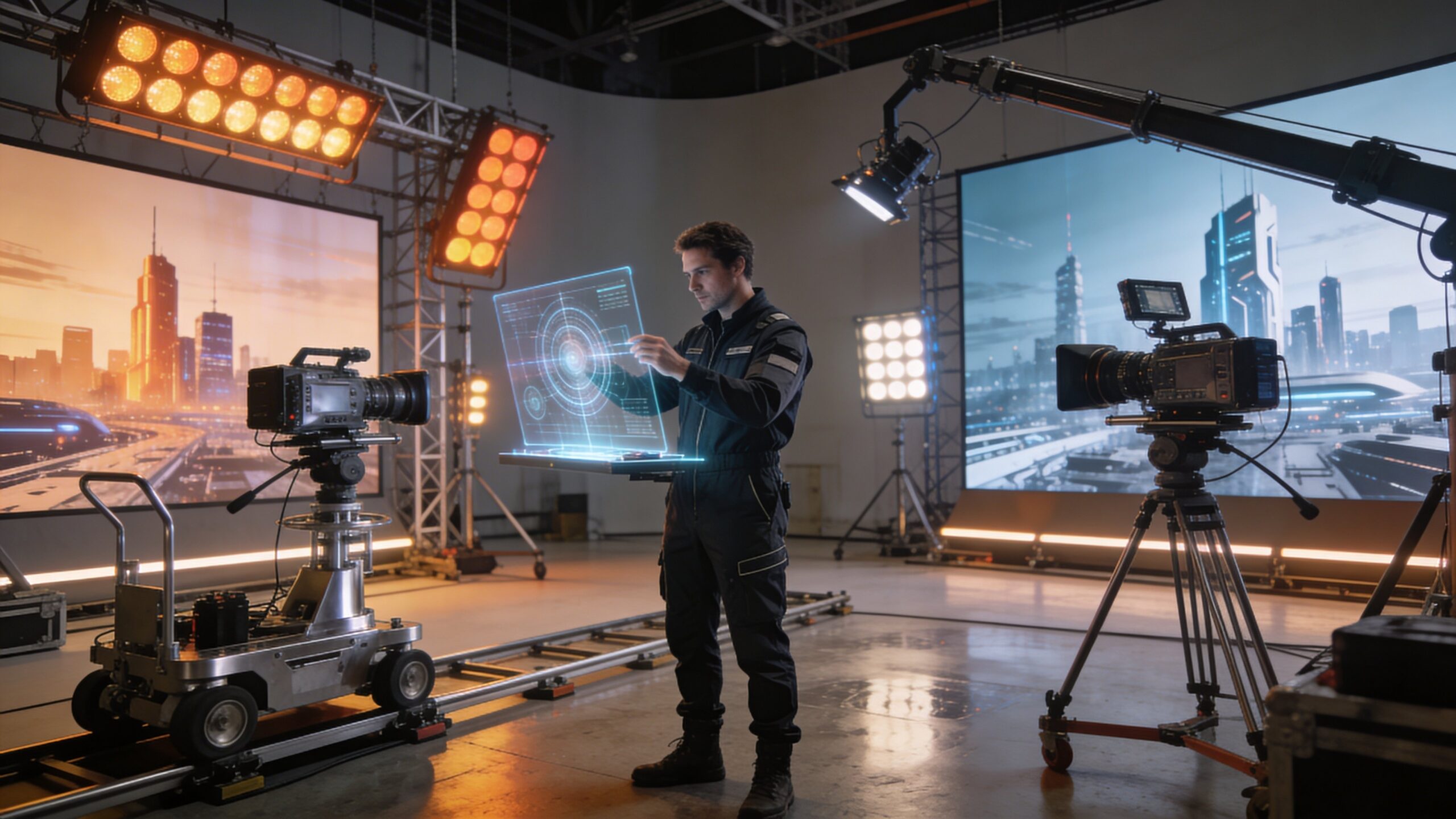
This speed is especially powerful for independent filmmakers, small studios, and content teams that do not have massive art departments. AI can help a small crew test the look of a sci-fi city, preview a dream sequence, generate mood references for investors, or explore how a scene might feel in different seasons, lighting setups, or camera styles. The result is not a finished film, but a stronger creative map. Filmmakers can walk into production with clearer ideas, better references, and more confidence.
Building the Dataset: The Foundation of Creative AI
Every useful AI model starts with a dataset. In filmmaking, a dataset can include anything that teaches the model the project’s creative DNA. This might include approved concept art, production stills, camera tests, costume references, color palettes, sketches, storyboards, location photos, prop designs, actor scans, animation tests, sound references, or editing examples. The better the dataset, the better the AI can understand what belongs in the world of the film.
A strong dataset is not simply a giant folder of random inspiration. Filmmakers need to curate it carefully. If the project is a desert survival thriller, references might focus on harsh sunlight, cracked earth, practical clothing, sweat, dust, handheld framing, and isolated landscapes. If the dataset includes unrelated neon cyberpunk interiors, glossy fashion portraits, and fantasy castles, the AI may produce confused results. Training AI for creative work requires discipline. The model learns from what the filmmakers choose to show it, so every reference becomes a creative instruction.
Teaching AI a Visual Style
One of the most common ways filmmakers train AI is by teaching it a visual style. This can include lighting mood, lens feel, color contrast, production design, camera framing, composition, texture, and atmosphere. A filmmaker might want a film to feel cold and clinical, warm and nostalgic, chaotic and handheld, or polished and dreamlike. By feeding the AI consistent visual references and using carefully written prompts, the creative team can guide the model toward a recognizable look.
This is useful during concept development and pre-production because it helps different departments align early. The director, cinematographer, production designer, costume designer, and visual effects team can all react to the same AI-assisted style frames. They can say, “This lighting works,” “This costume feels too modern,” or “This location has the right emotional weight.” AI becomes a visual conversation starter, helping the team move from abstract ideas to concrete creative choices.
Training AI With Scripts and Story Worlds
Filmmakers do not only train AI with images. They can also use scripts, character descriptions, worldbuilding documents, scene breakdowns, and director’s notes. This helps AI tools understand narrative context. For example, an AI assistant might analyze a screenplay and identify recurring themes, emotional turning points, character arcs, or visual motifs. It can help organize the story’s creative logic and suggest where certain images, sounds, or pacing choices might support the drama.
For genre filmmakers, this can be especially useful. A fantasy series may include kingdoms, rules of magic, family histories, cultural details, and visual traditions. A science fiction film may have technology systems, social structures, invented materials, and futuristic environments. Training AI on these story-world documents helps keep creative outputs consistent. Instead of generating random ideas, the model can work inside the boundaries of the fictional universe.
Using AI for Storyboards and Previsualization
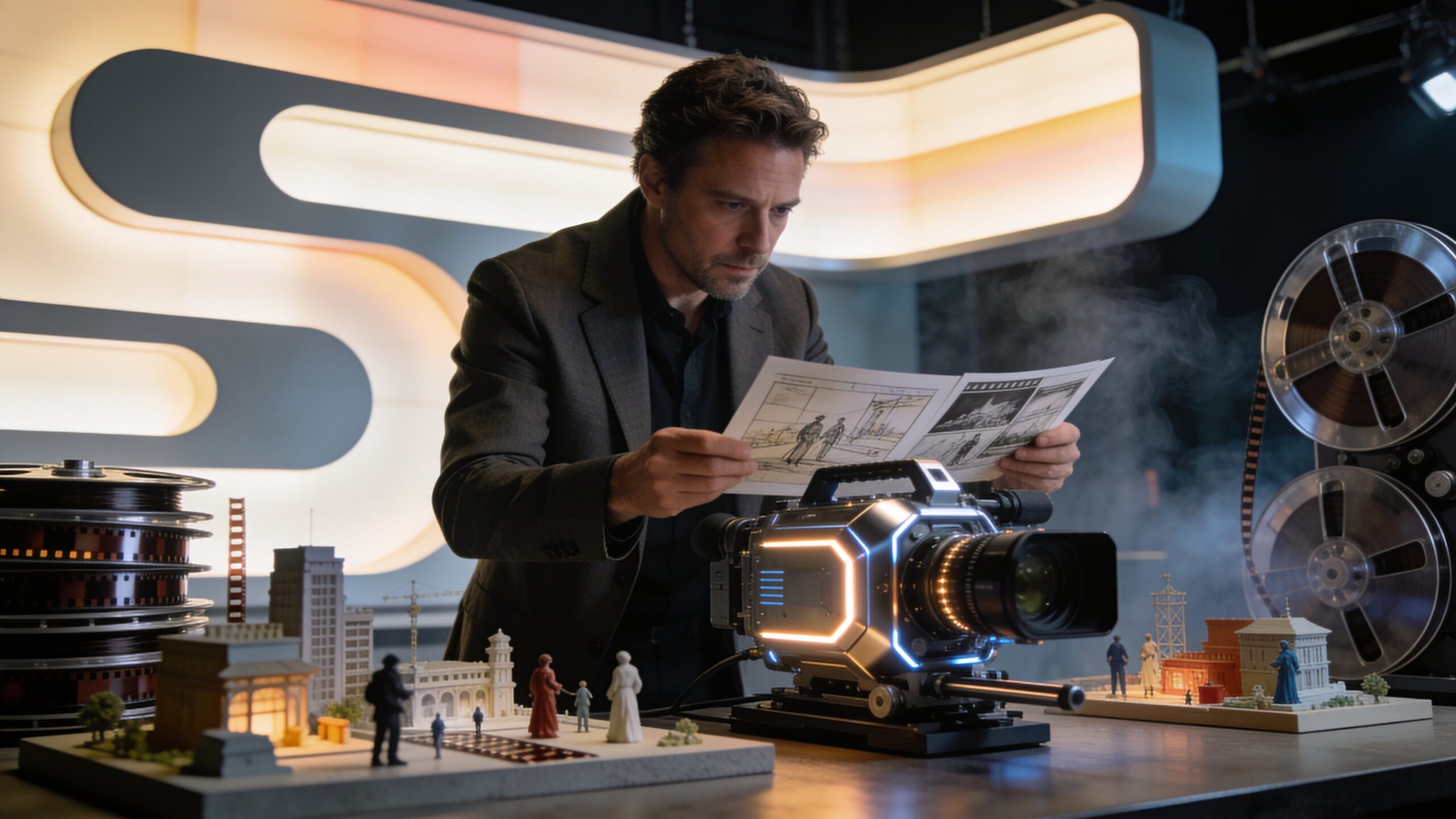
Storyboards and previsualization are major areas where AI training can support filmmakers. A director can use AI to explore camera angles, shot composition, blocking, lighting, and scene transitions before anything is filmed. By training or guiding AI with reference frames, script pages, and desired visual style, filmmakers can generate rough storyboard ideas that help shape the production plan.
This does not remove the need for storyboard artists or previs teams. Instead, it gives them more starting points. AI can quickly create rough visual options, while human artists refine the best ones into usable production materials. A chase sequence, for example, may be tested from multiple camera perspectives. A dramatic confrontation can be explored with different lens choices or lighting moods. AI makes early experimentation faster, but human judgment decides what serves the story.
Training AI for Character Design
Character design is one of the most exciting creative uses of AI in filmmaking. A director may train AI with costume references, cultural details, facial inspiration, body language notes, and personality descriptions to explore how a character might appear on screen. For animated films, fantasy projects, sci-fi stories, and creature features, this can help artists generate a wide range of design possibilities before committing to a final direction.
The key is control. A character is not just a face or outfit. A character carries story, history, emotion, and symbolism. Filmmakers can train AI to understand whether a character should feel elegant, dangerous, exhausted, royal, haunted, rebellious, or mysterious. The strongest AI-assisted character design happens when the model is guided by narrative purpose. The design must answer a story question: Who is this person, and what do we feel when they enter the frame?
Training AI for Locations and Worldbuilding
Locations are more than backgrounds. They shape mood, reveal character, and define the physical reality of a story. Filmmakers can train AI models with architectural references, landscape photography, production design notes, historical research, and visual themes to explore environments before scouting or building sets. This can be useful for everything from indie dramas to large-scale fantasy worlds.
A filmmaker developing a post-apocalyptic city might train AI with images of abandoned factories, overgrown streets, rusted transit systems, weathered signage removed of readable text, and brutalist architecture. A period romance might use references for manor interiors, candlelight, fabric textures, garden layouts, and soft natural palettes. AI can help filmmakers see what a world might become, but the creative team still decides what is practical, cinematic, and emotionally right.
Training AI for Editing and Pacing
AI is also becoming useful in post-production, especially when trained to understand footage organization, scene structure, dialogue patterns, and emotional beats. Editors can use AI-assisted tools to search through footage, identify takes, organize interviews, detect faces, transcribe dialogue, and group shots by scene or subject. For documentaries and unscripted projects, this can save enormous time.
Creative editing is still a deeply human process. Rhythm, tension, silence, surprise, and emotional timing require taste and intuition. However, AI can help editors move through raw material faster. A model trained on a project’s footage and metadata can help find alternate reactions, similar lines, usable cutaways, or moments with certain emotional qualities. The editor remains the storyteller, while AI becomes a powerful assistant in the search for meaning.
Training AI for Sound and Music Exploration
Sound is one of the most emotional parts of filmmaking, and AI can support early sound design experiments. Filmmakers may use AI tools to create temporary soundscapes, generate mood references, clean dialogue, organize audio, or explore musical textures. A director might test whether a scene feels better with low industrial tones, distant wind, soft piano, distorted ambience, or silence broken by tiny environmental details.
Training AI for sound-related creative work often involves reference libraries and descriptive feedback. The filmmaker might guide the system toward sounds that feel intimate, metallic, organic, supernatural, underwater, dreamlike, or claustrophobic. These early experiments can help composers, sound designers, and editors understand the emotional direction. The final sound design still requires professional shaping, but AI can help the team discover the sonic personality of the film earlier.
The Role of Prompts in Creative AI Training
Prompts are one of the most accessible ways filmmakers train AI systems. A prompt is more than a sentence. It is a creative instruction that tells the model what to focus on. Strong prompts include subject, mood, style, camera language, lighting, environment, texture, genre, and restrictions. For filmmaking, a good prompt often reads like a mini director’s brief.
For example, instead of asking for “a futuristic city,” a filmmaker might describe “a rain-soaked vertical city at dawn, built from weathered concrete and warm interior lights, photographed with a grounded cinematic lens, lonely but majestic, no text, no logos, no screens.” The difference is enormous. Prompting teaches the model the filmmaker’s priorities. Over time, teams develop prompt libraries that preserve a project’s visual language and make outputs more consistent.
Fine-Tuning and Custom Models
For more advanced productions, filmmakers may fine-tune AI models or create custom models trained on approved project materials. Fine-tuning means adapting a model so it becomes better at producing a specific style, character, object, environment, or visual system. This can be useful when a film requires consistency across many images or sequences.
For example, a studio might fine-tune a model on a fictional vehicle, creature, costume, or architectural style so future concepts remain visually consistent. A director might want every generated image to follow the same color logic, material language, or cinematic tone. Fine-tuning gives filmmakers more control than generic prompting, but it also requires cleaner datasets, careful testing, and strong ethical guidelines about what source material is used.
Human Feedback: The Real Creative Training Loop
AI training for filmmaking is not a one-time setup. It is a loop. The filmmaker gives the model input, reviews the result, rejects what fails, keeps what works, adjusts the prompt or dataset, and tries again. This repeated feedback is where creative direction happens. The model may generate options, but the filmmaker teaches it taste through selection.
This is similar to working with any creative collaborator. A director does not simply tell a cinematographer, production designer, or composer to “make it cinematic.” They give references, emotional direction, corrections, and examples. AI requires the same kind of guidance. The best results come from filmmakers who can clearly articulate what they want and why they want it.
Protecting Originality and Creative Ownership
As AI becomes more common in filmmaking, questions about originality, copyright, consent, and ownership become essential. Responsible filmmakers must think carefully about what materials they use to train AI models. Using copyrighted images, actor likenesses, artist styles, or private production assets without permission can create legal and ethical problems. Creative AI should be built on approved, licensed, original, or properly cleared materials.
This matters not only for legal safety but also for artistic integrity. A filmmaker’s goal should not be to copy another artist’s signature style. The stronger use of AI is to develop a project’s own identity. Training a model on original concept art, internal production materials, custom photography, and approved references helps ensure that AI supports the film’s voice instead of borrowing someone else’s.
How AI Changes the Filmmaker’s Workflow
AI changes the filmmaking workflow by moving experimentation earlier. Ideas that once required large budgets or long production timelines can now be tested in pre-production. Directors can explore visual tone before hiring every department. Producers can pitch with stronger mood materials. Designers can compare concepts faster. Editors can find footage more efficiently. Small teams can plan with greater clarity.
The biggest shift is not that AI does the work. The biggest shift is that AI lets filmmakers ask more “what if” questions. What if the scene takes place at sunrise instead of night? What if the creature is elegant instead of monstrous? What if the city feels ancient rather than futuristic? What if the final shot is wide and lonely instead of close and intense? AI helps filmmakers explore creative branches before choosing the strongest path.
The Skills Filmmakers Need in the AI Era
Filmmakers who want to train AI models for creative work need more than technical knowledge. They need visual literacy, storytelling instincts, ethical awareness, strong taste, and clear communication. The best AI-assisted filmmakers understand cinematography, editing, design, genre, pacing, tone, and audience emotion. They know what to ask for, what to reject, and how to refine an idea until it fits the story.
Prompt writing, dataset curation, reference organization, and feedback systems are becoming valuable creative skills. A filmmaker who can build a clean mood board, write precise visual prompts, organize project materials, and evaluate AI outputs critically will have an advantage. AI rewards clarity. The more clearly a filmmaker understands the story, the more effectively they can train the tools around it.
AI as a Creative Partner, Not the Director
The most successful filmmakers do not treat AI as the director. They treat it as a creative partner, assistant, and amplifier. AI can suggest, remix, organize, visualize, and accelerate. But it does not understand lived experience, emotional truth, cultural meaning, performance nuance, or the invisible tension that makes a scene unforgettable. Those remain human responsibilities.
A model can generate a beautiful image of a lonely street, but a filmmaker decides why the street matters. A model can suggest a dramatic shot, but a director knows whether that shot belongs in the scene. A model can organize footage, but an editor feels when a pause should last one second longer. AI can expand the creative workspace, but cinema still depends on human intention.
The Future of AI Training in Filmmaking
The future of AI in filmmaking will likely become more personal, more controlled, and more project-specific. Instead of relying only on broad public tools, filmmakers may build private creative models trained on their own production libraries, approved references, actor permissions, and studio assets. These models could help maintain continuity across sequels, generate internal concept directions, support virtual production, and speed up post-production workflows.
We may also see AI tools integrated deeper into cameras, editing software, VFX pipelines, animation systems, and production planning. A director could one day test lighting variations instantly on set, ask an AI assistant to find every usable reaction shot, or generate consistent background design options based on the film’s approved world bible. The technology will grow, but the central question will remain the same: does this choice make the story stronger?
Conclusion: Training AI to Serve the Story
Training AI models for creative filmmaking is not about replacing the magic of cinema. It is about giving filmmakers new ways to discover, shape, and communicate that magic. The strongest results happen when AI is trained with intention: carefully chosen references, clear creative direction, ethical source material, and constant human feedback. AI can help filmmakers move faster, see more possibilities, and build richer visual worlds, but the soul of the film still comes from people.
For directors, writers, editors, designers, cinematographers, and producers, AI is becoming another instrument in the creative orchestra. It can sketch the unknown, organize the overwhelming, and reveal options that might otherwise stay hidden. But like every filmmaking tool, it only becomes powerful in the hands of someone with vision. The future of AI-assisted filmmaking belongs to artists who know how to train the machine without losing the human heartbeat of the story.