Generative AI Can Speed Animation Development, But Consistency Is the Hard Part
Generative AI for animated film production can help teams explore story ideas, character designs, environments, storyboards, color scripts, motion references, and early visual directions. It can make development feel faster because animation requires many decisions before a frame is final. But animated films depend on consistency, performance, appeal, timing, rigging, layout, and a shared style language across hundreds or thousands of shots. AI can generate possibilities, but production teams must choose, refine, standardize, and supervise those possibilities so the film feels intentional rather than assembled from unrelated images.
Animation Starts in Development
Generative AI is often most useful in early animation development. Writers, directors, designers, and producers can use it to explore premises, visual tone, character silhouettes, worlds, and key story moments before the production commits to a path.
This does not mean the AI makes the movie. Development is about asking questions. What kind of world is this. What does the hero feel like in silhouette. What emotional promise does the design make. AI can generate more starting points, but the team decides which ones have appeal and story value.
Character Design Exploration
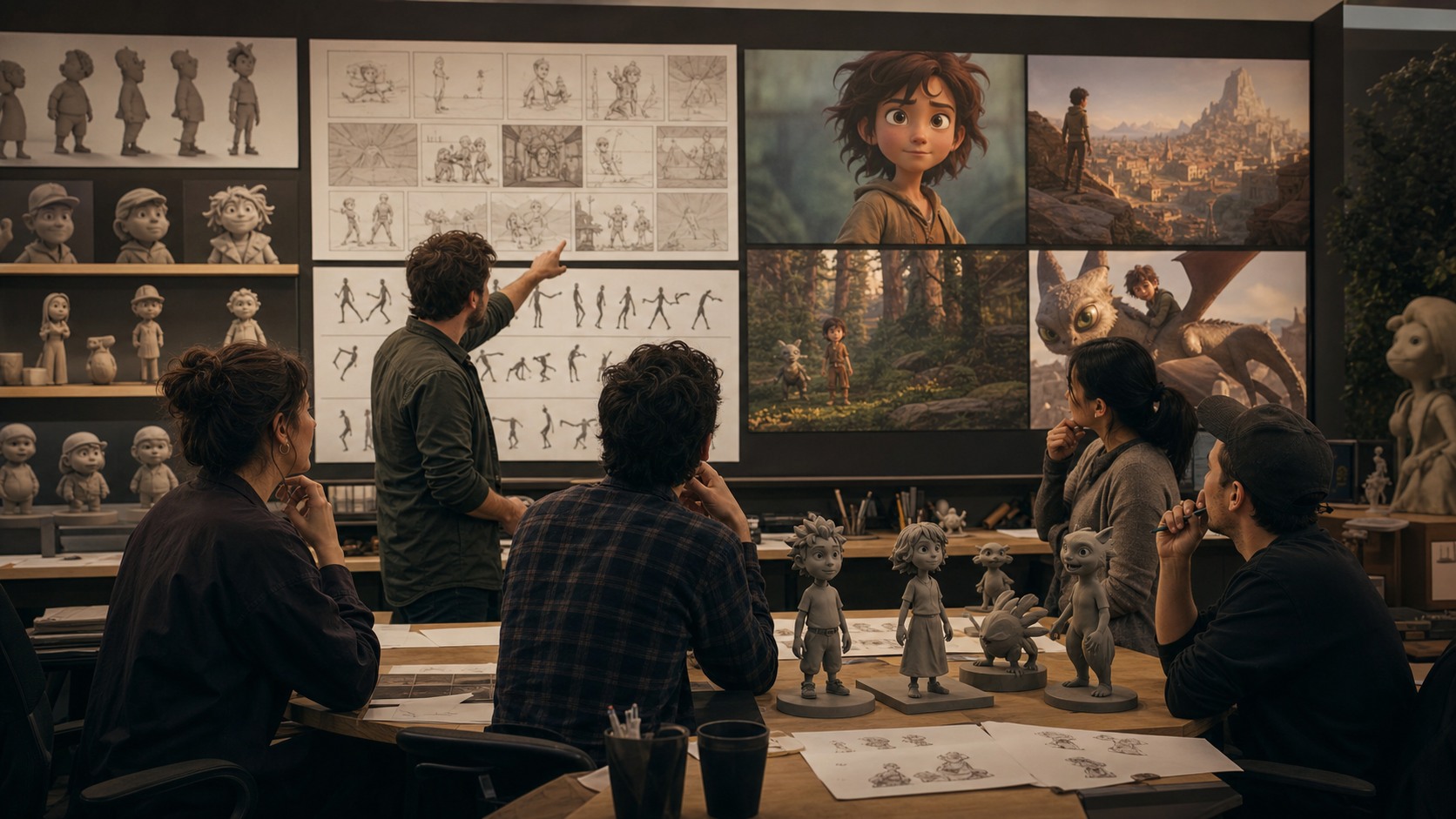
Animated character design requires shape, appeal, expression range, costume logic, and performance potential. AI can help explore broad design families, but the final character must be drawable, riggable, animatable, and emotionally readable.
A design that looks charming in one image may fail in turnarounds, extreme expressions, action poses, or close-ups. Character designers need to translate inspiration into a controlled model. Consistency across shots is much harder than generating a single appealing frame.
World and Environment Design
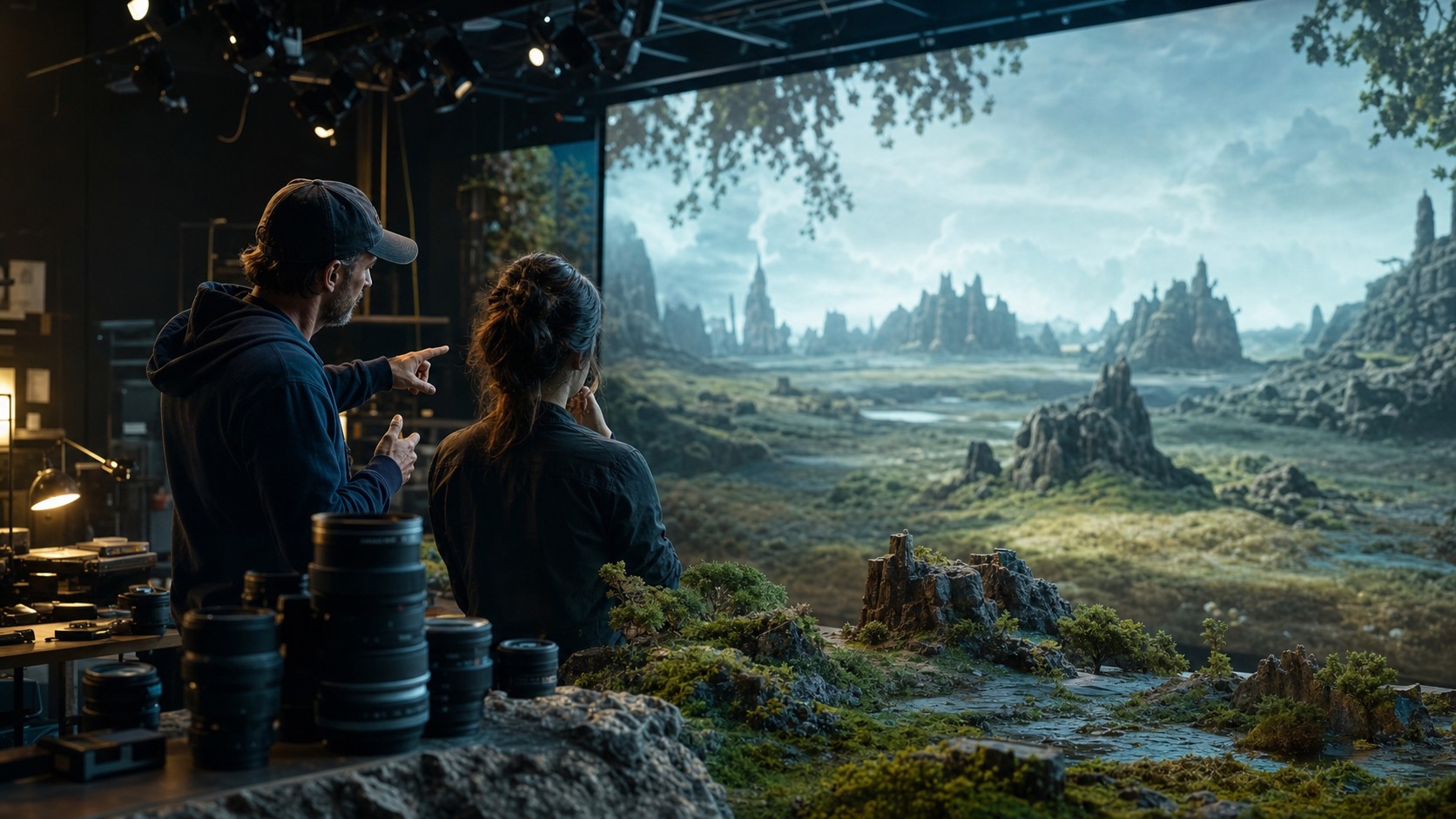
AI can help animation teams explore environments quickly: villages, forests, cities, interiors, vehicles, fantasy worlds, or stylized landscapes. These references can help directors compare tone and scale before the art department builds a final design system.
The world needs rules. Materials, color, architecture, weather, shape language, and cultural details should connect. Without those rules, generated environments may look impressive but disconnected. Animation audiences feel that drift because the whole world is designed.
Storyboards and Beat Tests
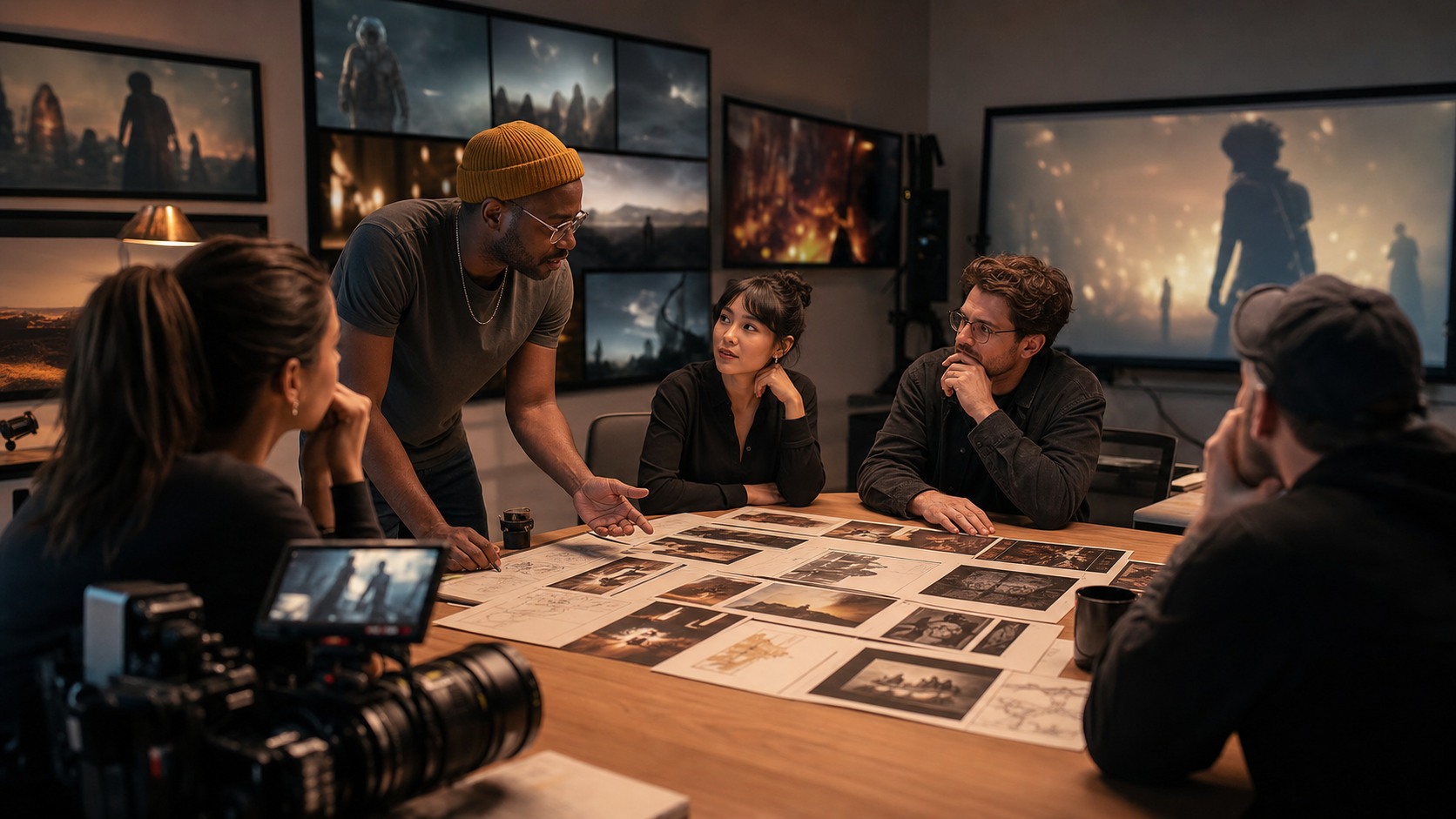
Generative tools can support storyboard exploration by suggesting compositions, action beats, or alternate staging. This can help a story team test whether a sequence reads visually before it becomes expensive animation.
Storyboard artists still shape clarity, rhythm, and performance. A generated panel may show a dramatic image but miss screen direction, timing, or character intention. The board artist turns visual possibility into a sequence the audience can follow.
Layout and Camera
Animation layout defines camera placement, staging, depth, and movement before final animation. AI can help explore layout ideas, but layout artists need to make the scene work in continuity with the sequence.
A beautiful angle may not cut with the previous shot. A dynamic camera move may obscure the character's acting. Layout is where cinematic design meets story clarity. Generative ideas need to be tested inside the whole scene.
Motion Reference
AI can suggest motion ideas, pose families, or action beats, but animation performance depends on timing, spacing, weight, anticipation, and appeal. Those qualities are crafted by animators.
A generated motion concept may be useful as inspiration. It might suggest how a character sneaks, celebrates, collapses, or transforms. The animator still decides the actual performance through poses, arcs, rhythm, and emotional intention.
Style Consistency
Consistency is one of the biggest challenges for AI in animation. A model may generate a character slightly differently each time, change costume details, alter proportions, or shift the visual language of the world.
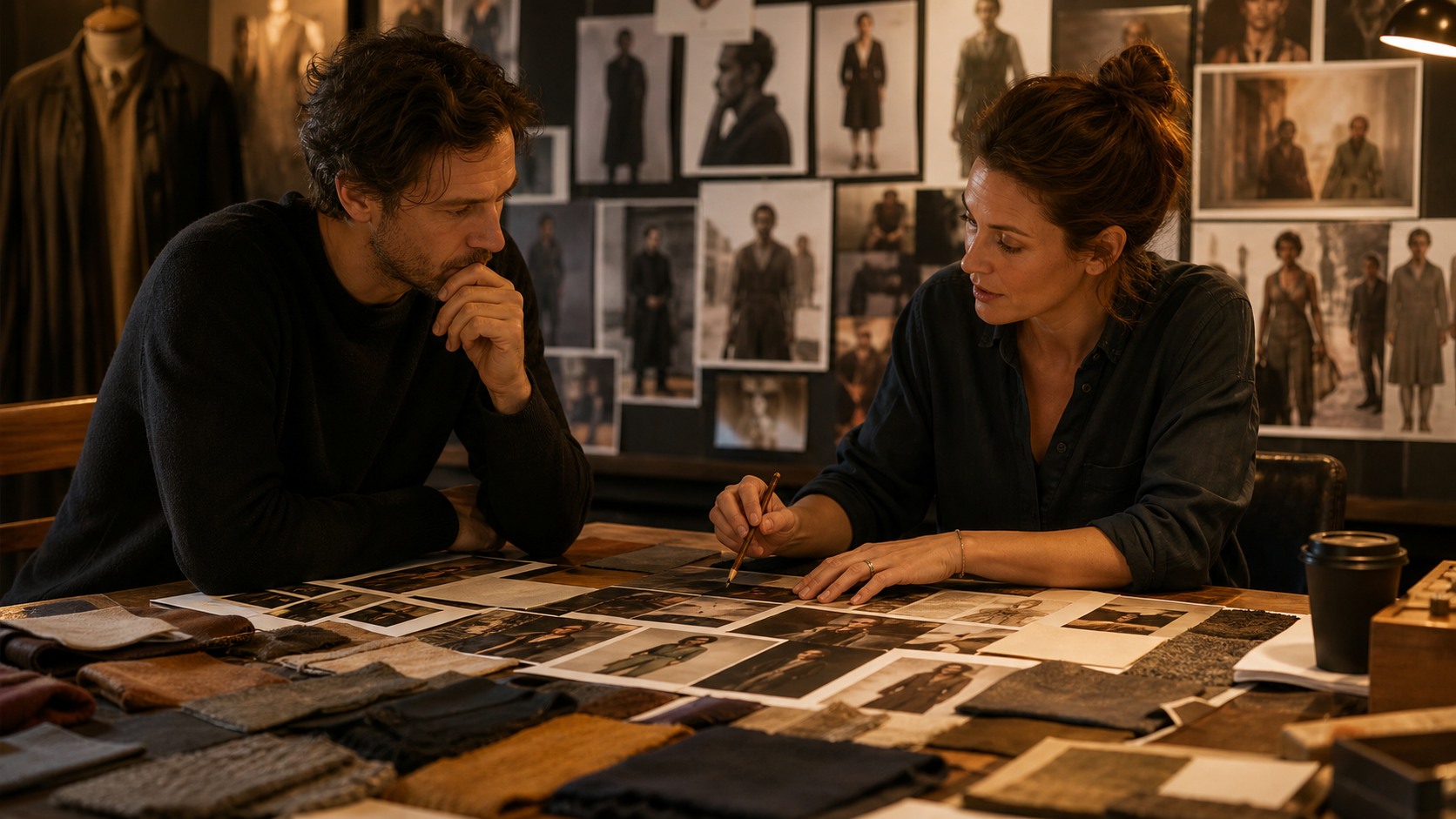
Studios need model sheets, turnarounds, approved palettes, prop guides, and style bibles. AI outputs should be judged against those standards. If the tool cannot maintain consistency, its role may be limited to exploration rather than production imagery.
Color Scripts
Color scripts show how mood changes across the film. AI can help explore color progression for sequences: warm safety, cold isolation, saturated wonder, muted grief, or chaotic danger.
The color script should support emotional structure. If every image is equally dramatic, the film loses rhythm. Human art direction decides where the story needs restraint, contrast, escalation, or release.
Pipeline Integration
Animated production pipelines are complex. Design, modeling, rigging, layout, animation, effects, lighting, compositing, editorial, and sound all depend on approved assets and clear handoffs.
AI-generated material should enter the pipeline with labels. Is it exploration, approved reference, temporary storyboard material, or a final production element. Without labels, teams may waste time chasing images that were never meant to be built.
Small Studio Opportunities
Small animation teams can use generative AI to explore more ideas before hiring specialists or committing to asset builds. It can help create pitch references, compare character directions, and plan a visual language for a short or pilot.
The opportunity is speed, but the risk is overreach. A small studio should use AI to narrow decisions, not to expand the film beyond its capacity. A simpler, consistent animated world is usually stronger than a huge inconsistent one.
Ethics and Artist Roles
Animation is deeply tied to artist labor and style. Studios using generative AI should be clear about how tools are used, what sources are permitted, and which artists own creative decisions.
Trust matters. AI can support brainstorming and iteration, but it should not erase the role of designers, board artists, animators, modelers, and lighters. The best workflows make artists more effective rather than less visible.
Performance and Acting Choices
Animated characters act. Even when there is no live-action camera, performance still depends on intention, timing, posture, breath, reaction, and the small choices that make a character feel alive. AI can suggest poses or expressions, but animators decide the acting.
A generated expression sheet may be useful if it gives the team a range to discuss. It is less useful if it treats emotion as a set of labels. A sad character, a guilty character, and a character pretending not to be hurt may all require different acting choices. Animation needs that specificity.
Rigging and Technical Feasibility
A character design has to become a rig or a repeatable drawing system. AI may create appealing hair, clothing, accessories, or body shapes that are difficult to animate consistently. Technical directors and rigging artists should review designs before they become final.
This review protects the schedule. A beautiful character with impossible cloth, too many tiny details, or unclear joints can slow every shot. Generative AI can offer inspiration, but production design has to respect the reality of animation labor.
Sequence Ownership
Animated films rely on sequence ownership. Story leads, layout supervisors, animation supervisors, lighting leads, and editors all shape the same sequence at different stages. AI-generated material should not blur who owns the creative decision at each step.
A clear workflow lets generated references support the supervisor's judgment rather than bypass it. If a sequence uses AI exploration for environment mood, that does not mean the AI decides staging, acting, or final lighting. Human ownership keeps the film coherent.
Audience Appeal
Animation depends on appeal, a quality that is easier to recognize than define. A character can be strange, simple, ugly, elegant, comic, or frightening and still have appeal if the design invites the audience to watch. AI can generate attractive images, but appeal must survive motion and story.
Teams should test whether a design remains appealing in rough poses, emotional extremes, and repeated shots. A single still may impress; a character who can carry a whole film needs more. The audience has to want to keep looking at the character through change.
Approving AI Ideas for Animation
Animation teams should approve AI-assisted ideas through the same discipline they apply to any design or story choice. The idea has to support the sequence, fit the world, remain consistent, and survive the pipeline. A charming image is not enough if it cannot be turned into boards, models, rigs, motion, lighting, and final shots.
The approval conversation should include the people who will carry the idea downstream. A character designer may see appeal, a rigger may see impossible construction, a layout artist may see camera problems, and an animation supervisor may see performance limitations. Bringing those voices together early saves time later.
A useful AI output often becomes a question rather than a final answer. Could this silhouette be simpler. Could this color idea mark a story turn. Could this environment become a repeatable design language. The studio's job is to turn promising questions into controlled production choices.
The more ambitious the animated film, the more important this control becomes. AI can help a small team imagine a feature-sized world, but the production still has to finish every shot. Consistency, scope, and human supervision determine whether that imagined world becomes a coherent film.
The Practical Takeaway
Generative AI can help animated film production by speeding early exploration, visual development, storyboard tests, environment concepts, and color ideas. It gives teams more material to evaluate.
Its hardest problem is consistency. Animation needs characters, worlds, motion, and style to hold together across the whole film.
A practical studio workflow should approve only the ideas that can become repeatable designs, clear boards, usable rigs, and supervised shots. The more quickly AI produces options, the more carefully the team must label what is experimental and what is production direction.
Animation also needs time for taste to mature. Early AI concepts may excite the room because they are new, but the studio has to ask whether they will still feel right after hundreds of shots. A design that cannot carry acting, comedy, sadness, action, and quiet moments may not be ready for production.
The best use of AI is to broaden discovery before the expensive pipeline begins. Once the film moves toward production, the team has to narrow decisively, document clearly, and protect the artists who make the chosen world consistent.
A finished animated film depends on cumulative trust. Every department has to believe that the approved character, prop, location, and lighting rules are stable enough to build on. AI exploration is useful only when it strengthens that shared confidence.
Studios should also keep room for hand-made discovery. A board artist's rough sketch, an animator's surprising pose, or a modeler's simplification can improve an idea beyond the generated reference. AI should not close the door on those discoveries.
The finished audience experience matters more than the speed of early images. If AI lets the team find a better character shape, clearer world rule, or stronger color arc, it has served the film. If it only creates more images to sort through, it has added work.
Final approval should ask whether the idea can move. Animated characters and worlds need to survive poses, staging, transitions, lighting, and repeated emotional beats. A still image that cannot become performance remains only a development artifact.
Supervisors should compare the idea against schedule, staffing, rigging, rendering, and story clarity before it becomes part of the production plan.
That review protects both the artists and the audience.
Stable decisions are what let animated teams finish beautifully.
Use AI as a development accelerator, then rely on artists, supervisors, and production pipelines to turn chosen ideas into consistent animated storytelling.