AI Can Imitate Visual Patterns, But Cinematography Is More Than a Look
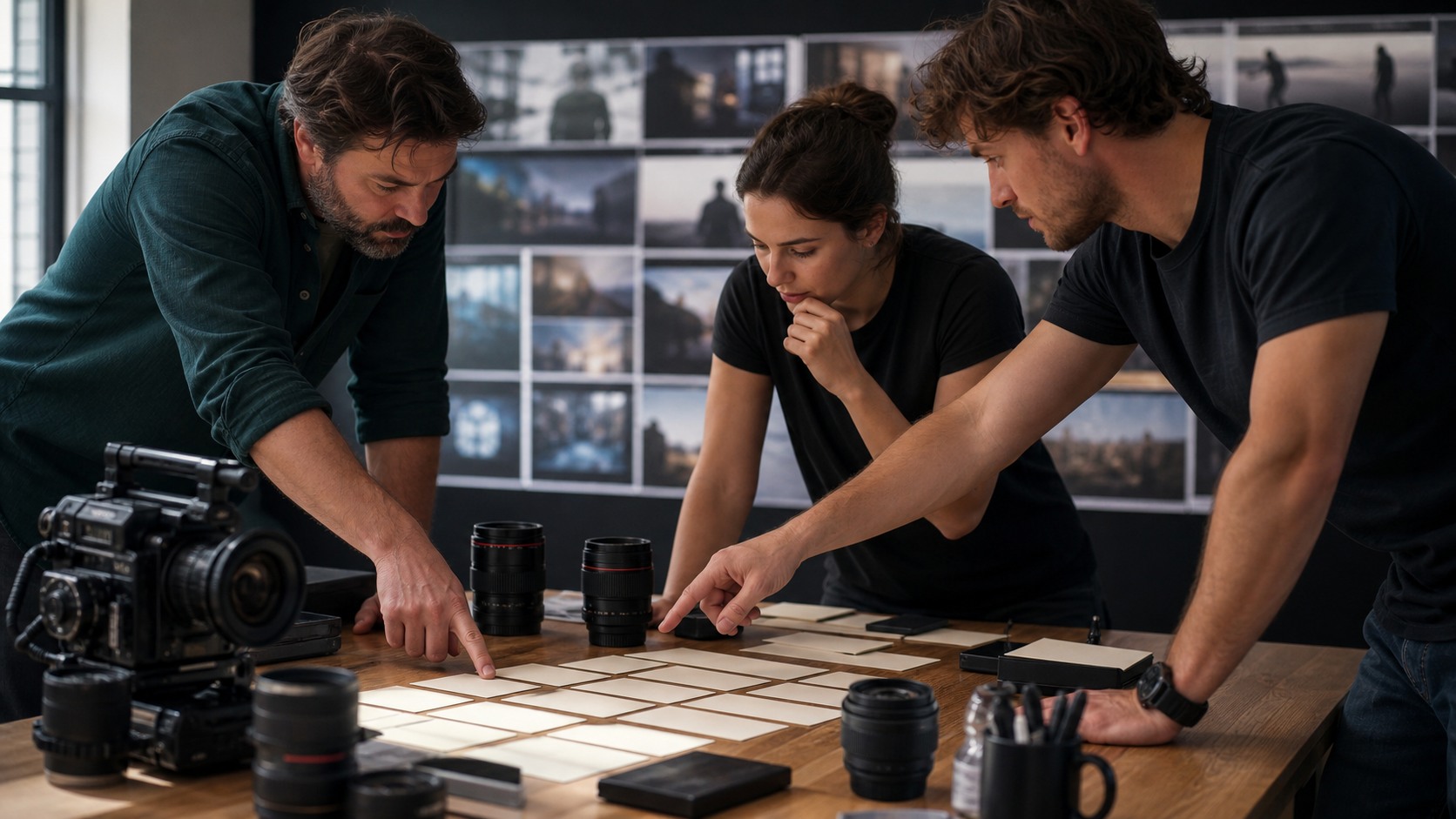
AI simulates cinematography styles by learning patterns in lighting, framing, contrast, color, lens feel, texture, depth, and composition. It can create references that suggest moody noir, soft naturalism, glossy commercial imagery, handheld realism, bright comedy, or painterly fantasy. These simulations can help filmmakers communicate visual direction quickly. But cinematography is not only a surface look. It is a set of choices made around story, actors, locations, lenses, exposure, movement, color pipeline, and emotion. AI can propose visual styles, but the cinematographer decides how the image should behave in a real scene.
Style Is a System
A cinematography style is not one filter. It is a system of choices: where light comes from, how faces are shaped, how deep shadows fall, how color behaves, what lenses do to space, how the camera frames bodies, and how movement changes attention.
AI can imitate parts of that system, but the filmmaker should identify which parts matter. A reference may be valuable for contrast but wrong for lensing. Another may have useful color but impossible lighting. Separating the ingredients keeps the team from copying a look blindly.
Lighting Simulation
AI can generate lighting references quickly. A scene can be imagined with window light, hard noon sun, neon spill, soft overhead practicals, candlelight, stormy ambience, or stylized backlight. This helps directors and cinematographers discuss mood before the technical plan is built.
The reference still needs translation. Real fixtures, locations, actor skin tones, camera sensitivity, and schedule all affect the final image. A generated frame may inspire the lighting plan, but the cinematographer designs the real exposure.
Lens Feel
AI images can suggest lens feel through compression, distortion, depth of field, and perspective. A wide lens close to a character creates a different emotional relationship than a long lens across a room. Style depends heavily on that relationship.
A model may not understand lens mechanics perfectly, so cinematographers should read AI references as mood rather than measurement. If a reference suggests intimacy, distance, surveillance, or grandeur, the DP can choose real lenses and camera positions to achieve that feeling.
Color and Palette
AI can explore color palettes quickly: cool institutional tones, warm domestic interiors, desaturated realism, saturated musical color, earthy period texture, or high-contrast genre looks. These references can support conversations with production design, costume, and color teams.
Color should serve story and continuity. A dramatic palette can become a trap if every scene looks the same. The cinematographer and colorist need to decide how color changes across locations, acts, emotional states, and time.
Framing and Composition
Cinematography style includes where characters sit in the frame, how much headroom exists, how negative space works, and whether the frame feels balanced, crowded, distant, or unstable. AI can propose compositions that reveal these options.
Directors should connect composition to story. A lonely character may be swallowed by architecture. A powerful character may control the center. A comic scene may use wider framing to preserve body language. AI can show possibilities, but blocking and performance decide the frame.
Texture and Grain
AI can simulate texture such as soft halation, film grain, clean digital sharpness, mist, flare, haze, or aged image character. Texture can be emotionally powerful, but it can also become a gimmick.
The cinematographer should decide whether texture belongs to the world of the film. A gritty texture may support a story about exhaustion or memory. It may feel false in a clean corporate thriller. Texture is meaningful when it supports the film's point of view.
Avoiding Style Theft
Filmmakers should be careful about asking AI to copy a specific living cinematographer or a protected film look too directly. A safer and more creative approach is to describe qualities: low-key side light, restrained color, deep focus, handheld uncertainty, or soft morning haze.
This keeps the visual direction original. It also forces the team to understand what they actually want rather than relying on a name. Cinematography references should inspire choices, not replace them.
Testing Across Scenes
A style reference may work for one scene and fail across a whole film. AI can help test how a look might behave in day, night, interior, exterior, close-up, crowd, action, and quiet dialogue scenes.
This matters because a visual style must survive variety. If a look only works in dramatic night interiors, the film needs rules for other situations. Testing several scene types helps the DP create a style that can flex without breaking.
Production Design Connection
Cinematography style cannot be separated from production design and costume. A color palette in the camera depends on wall color, fabric, props, practical lights, locations, and skin tone. AI references should be reviewed across departments.
A cinematography reference may require darker wardrobe, warmer practical lamps, less reflective furniture, or a different wall texture. If departments do not align, the final image may fight itself. Style is collaboration.
Colorist Collaboration
The colorist can help turn AI style references into a realistic finishing plan. They can identify what should be captured in camera and what can be shaped later. They can also warn when a generated reference depends on impossible color separation or excessive contrast.
Early color conversations prevent surprises. If the final look requires shadow detail, skin protection, or controlled highlights, the shoot should be planned accordingly. AI can inspire the destination, but the pipeline has to carry the image there.
Human Taste and Restraint
AI style simulation can encourage over-stylization because dramatic images are easy to admire. Filmmakers should ask whether the style supports the scene or overwhelms it. A subtle scene may need less visual intensity than the reference suggests.
Restraint is part of cinematography. The DP may choose a quieter light, a simpler frame, or a less obvious color contrast because performance needs room. The best image is not always the loudest image.
Building a Look Bible
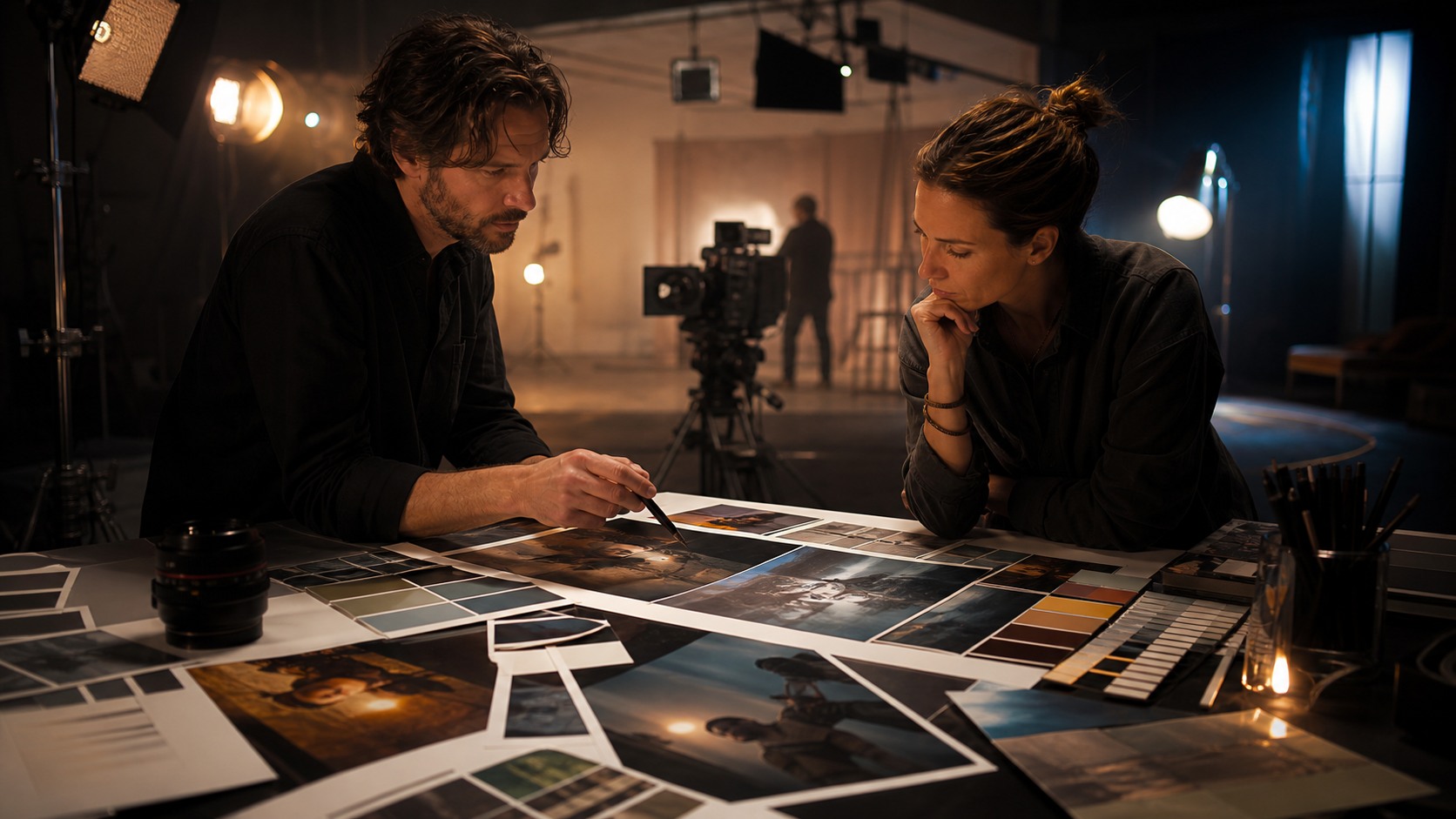
A look bible turns AI style experiments into production guidance. It can include approved references, lighting rules, lens preferences, contrast boundaries, color notes, texture limits, and examples of what the film should avoid. This keeps the style from drifting as more scenes are shot or designed.
The look bible should not be overloaded with every generated image. It should include only the references that survived human review. Each image needs a note explaining what is useful: the soft side light, the low saturation, the wide-lens intimacy, or the practical glow. Without notes, departments may chase the wrong feature.
Style for Different Characters
A film may use cinematography style to distinguish characters or story worlds. One character might be framed with distance and hard light, while another is photographed with warmth and shallow depth. AI can help test those differences before the DP builds a unified approach.
The danger is making the film visually fragmented. Character-based style shifts still need a larger system. The audience should feel intentional contrast, not a random sequence of different looks. Human judgment decides how much variation the film can hold.
Testing With Real Faces
AI references often look persuasive without the actual actors. Cinematography, however, is judged on real faces, skin tones, wardrobe, locations, and performance. A style test should eventually include the people and materials the camera will photograph.
This is where the DP's craft becomes visible. A generated reference may suggest a beautiful shadow pattern, but the actor's face may need a different angle or softness. The real test is not whether the reference is attractive. The test is whether the chosen style honors the performers and the story.
Avoiding One-Note Visuals
A strong cinematography style still needs variation. If every scene uses the same contrast, color, lens distance, and camera mood, the film can become visually monotonous. AI can accidentally encourage one-note visuals by producing a consistent mood board that looks impressive but lacks progression.
Filmmakers should design visual rhythm across the story. The image may become warmer, colder, closer, wider, steadier, or more fractured as the character changes. Style is not static decoration. It is part of how the film moves emotionally.
Approving a Cinematography Direction
A cinematography direction should be approved as a practical system, not a pile of attractive references. The director and DP should identify which qualities are approved: the softness of the key, the limited palette, the deeper shadows, the wide-lens proximity, the restrained camera, or the way practical lights motivate the image. That precision helps every department work toward the same picture.
The approval should also name what the film is avoiding. Maybe it is avoiding glossy highlights, blue shadows, handheld instability, heavy diffusion, or saturated production design. Negative rules can be as useful as positive ones because they prevent the look from drifting when new locations or scenes appear.
Finally, the style has to be tested with real conditions. A reference may look strong in a generated frame, but the final film has actors, costumes, skin tones, sets, lenses, schedule limits, and a color pipeline. The DP's work is turning an idea into repeatable photographic behavior.
The Practical Takeaway
AI can simulate cinematography styles by producing quick references for lighting, lens feel, color, framing, and texture. This helps teams discuss visual direction earlier.
It cannot replace the cinematographer's judgment about story, actors, locations, exposure, camera movement, and finishing. A style has to work in production, not just in a reference frame.
The best style process turns generated references into rules the crew can repeat. Those rules might describe when the camera stays distant, where warmth enters the palette, how faces hold shadow, or when handheld motion appears. Rules make the look usable across scenes.
Cinematography also has to leave space for surprise. A look bible gives the team consistency, but the DP still needs room to respond to a location, an actor's face, a sudden weather change, or a better idea discovered during blocking. AI references should support that judgment, not freeze it too early.
A useful simulated style therefore becomes a conversation starter with limits. It points toward a visual language while allowing the cinematographer to adapt the language to real conditions. That is where a look becomes filmmaking rather than image matching.
The final image should feel authored, not sampled. Viewers should sense a coherent visual point of view even if they never know which references or tools shaped the early exploration.
A style review should happen again after test footage. Real footage can reveal that shadows are too heavy, highlights are too sharp, or the palette fights costume and skin. That feedback is where the simulated look becomes practical cinematography.
The team should keep only the references that help real decisions. Too many style images can blur the look, while a smaller approved set can guide lighting, design, wardrobe, color, and camera choices with confidence.
The DP can also decide where the reference should be ignored. Real locations, actor movement, weather, and schedule often suggest a better version of the look than the early image did.
That selective judgment protects the film's image.
Use AI to explore visual possibilities, then let the DP, director, designer, and colorist build a cinematography system the film can actually sustain.