Artificial intelligence has moved from novelty to necessity in modern filmmaking. What once required massive teams, long timelines, and enormous budgets is now being reshaped by intelligent systems that can analyze stories, generate visuals, enhance performances, and streamline post-production. This transformation is not incremental. It is foundational. AI is changing how films are imagined, produced, distributed, and experienced, altering the creative process from the first line of a script to the final frame on screen. This shift does not signal the end of human creativity. Instead, it represents a new cinematic era where storytellers collaborate with machines, using AI as a creative amplifier rather than a replacement. Understanding how AI is reshaping each phase of filmmaking reveals why this technology is not a passing trend, but a permanent force redefining cinema itself.
A: No—AI amplifies creative decision-making and efficiency.
A: No—independent filmmakers benefit greatly from lower costs.
A: It can assist, but human vision drives compelling stories.
A: Extremely fast and precise, but final judgment stays human.
A: Only with consent and clear rights management.
A: Dramatically—especially in post-production.
A: It offers insights, not guarantees.
A: Often yes, especially for complex environments.
A: When used wisely, it enhances narrative clarity.
A: Yes—alongside human imagination.
The Evolution of Filmmaking Meets Artificial Intelligence
For over a century, filmmaking evolved through technological breakthroughs such as sound, color, digital cameras, and computer-generated imagery. Each advancement expanded creative possibility while challenging traditional workflows. AI stands apart because it does not merely add new tools; it introduces systems capable of learning, adapting, and making creative suggestions.
Unlike traditional software, AI analyzes massive datasets of scripts, films, audience reactions, and visual styles. From this analysis, it identifies patterns that can guide decision-making. This ability allows filmmakers to explore creative directions that might otherwise remain invisible. AI does not just execute instructions; it collaborates by offering insights, alternatives, and optimizations that reshape how stories are told.
Scriptwriting in the Age of Intelligent Storytelling
The filmmaking journey begins with the script, and AI has become a powerful presence in the writing room. Modern AI systems can analyze thousands of screenplays to understand narrative structure, pacing, character arcs, and dialogue rhythms. This enables writers to test story ideas before committing months or years to development.
AI-assisted script tools can suggest plot developments, identify weak character motivations, or flag pacing issues that might disengage audiences. Writers can experiment with multiple versions of a scene in minutes, exploring tonal shifts or alternate endings without starting from scratch. This does not diminish authorship; instead, it frees writers to focus on emotional depth, originality, and thematic resonance.
Beyond structure, AI can also assist with genre blending and audience alignment. By comparing a script against successful films within specific genres, AI systems can predict how different demographics might respond. This insight helps creators refine stories that remain artistically bold while being commercially viable.
Pre-Production Transformed by Predictive Intelligence
Pre-production has traditionally been one of the most complex and costly phases of filmmaking. Location scouting, casting, scheduling, and budgeting involve countless variables. AI dramatically simplifies this stage by introducing predictive analysis and intelligent automation.
AI-driven tools can analyze scripts to estimate production costs, identify potential scheduling conflicts, and recommend optimal shooting sequences. Location data combined with visual recognition allows filmmakers to virtually scout environments around the world without traveling. These systems can even simulate lighting conditions at different times of day, helping directors plan shots with precision.
Casting decisions are also evolving. AI can evaluate actor availability, past performances, audience appeal, and even on-screen chemistry by analyzing previous films. While final decisions remain human, AI provides data-driven insights that reduce risk and uncover unexpected casting opportunities.
Virtual Production and the Rise of AI-Enhanced Sets
One of the most visible impacts of AI is in virtual production. Intelligent systems now help create digital environments that respond dynamically to camera movement, lighting changes, and actor positioning. This reduces the need for physical sets and extensive location shoots.
AI-generated environments allow directors to visualize scenes in real time, adjusting angles, backgrounds, and effects on the spot. This immediacy enhances creative experimentation and shortens production timelines. Actors perform within immersive digital worlds, while filmmakers maintain full creative control over the visual landscape. This approach also democratizes filmmaking. Independent creators can achieve high-production-value visuals that were once exclusive to major studios. AI lowers barriers to entry, allowing talent and vision to matter more than access to resources.
AI on Set: Smarter Cameras and Assisted Direction
During production, AI operates quietly but powerfully behind the scenes. Intelligent camera systems can track actors automatically, maintain focus, and suggest optimal framing based on cinematic principles. This reduces technical complexity and allows cinematographers to concentrate on artistic choices.
AI can also assist directors by analyzing live footage for continuity errors, lighting inconsistencies, or performance variations. These real-time insights help teams catch issues early, preventing costly reshoots later. On set, AI acts as an extra set of eyes, enhancing precision without interrupting creative flow.
Sound recording also benefits from AI. Advanced noise reduction systems isolate dialogue in challenging environments, while intelligent mixing tools balance audio levels instantly. These improvements ensure cleaner production sound, which saves time and resources in post-production.
Performance Enhancement and Digital Actors
AI is redefining what performance means in filmmaking. Motion capture combined with machine learning allows digital characters to move, emote, and speak with unprecedented realism. Facial expressions can be captured and enhanced, while subtle emotional cues are amplified without losing authenticity.
In some cases, AI assists human actors by smoothing performances, adjusting timing, or enhancing vocal delivery. These refinements are invisible to audiences but contribute to a more polished final product. AI does not replace the actor’s craft; it enhances it, preserving emotional truth while improving technical consistency.
The emergence of digital actors also raises profound questions. AI-generated performers can be created from scratch or based on existing likenesses. While this technology opens new creative doors, it also requires careful ethical consideration regarding consent, ownership, and artistic integrity.
Post-Production Revolution: Editing at Machine Speed
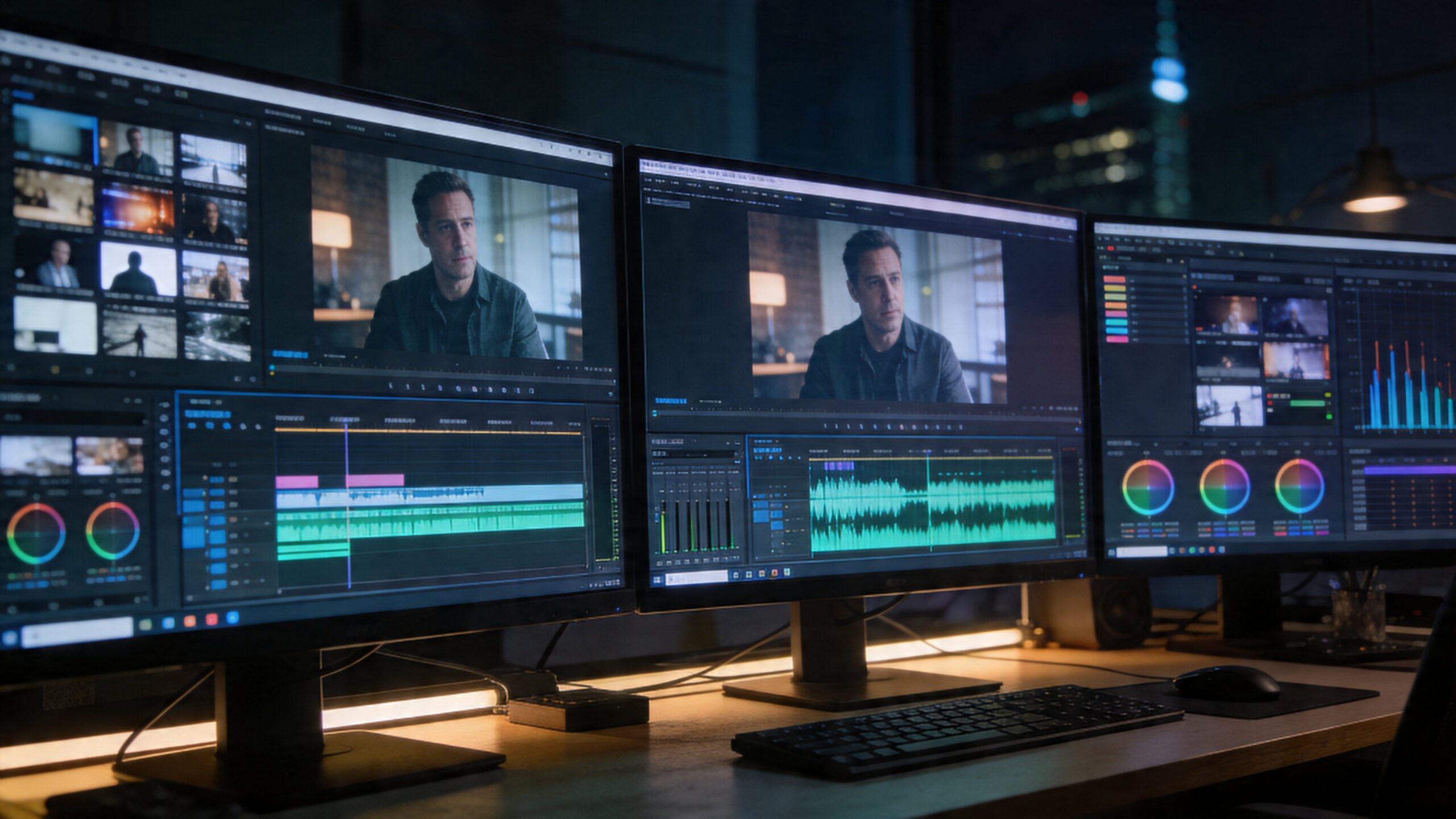
Post-production is where AI’s impact becomes most dramatic. Editing, visual effects, color grading, and sound design have traditionally required extensive time and specialized expertise. AI accelerates these processes without sacrificing quality. AI-assisted editing tools can analyze footage to identify the best takes based on performance, focus, and emotional impact. Editors can assemble rough cuts in hours rather than weeks, freeing time for creative refinement. Intelligent systems can suggest alternate cuts, pacing adjustments, or scene transitions based on narrative goals.
Visual effects benefit enormously from AI automation. Tasks like rotoscoping, object removal, and background replacement are now faster and more precise. Color grading tools powered by AI can match visual styles across scenes or emulate the look of iconic films while allowing for customization. Sound design also evolves through AI. Intelligent systems generate ambient soundscapes, enhance dialogue clarity, and adapt music cues to emotional beats. The result is a cohesive sensory experience crafted with both speed and sophistication.
Distribution, Marketing, and Audience Targeting
AI continues to shape filmmaking long after a movie is completed. Distribution strategies now rely on data-driven insights that predict audience behavior across platforms. AI analyzes viewing habits, regional preferences, and engagement patterns to determine optimal release strategies.
Marketing campaigns are increasingly personalized. Trailers can be dynamically assembled to highlight different aspects of a film depending on the viewer’s interests. AI-driven analytics help studios refine messaging, choose release dates, and allocate advertising budgets more effectively.
Even streaming platforms use AI to recommend films, influencing which stories find audiences. While this raises concerns about creative homogenization, it also allows niche films to reach viewers who might otherwise never discover them.
Ethical Challenges and Creative Responsibility
With great power comes responsibility, and AI introduces complex ethical considerations. Questions about authorship, originality, and intellectual property become more urgent when machines contribute creatively. Filmmakers must navigate issues of consent, especially when using AI-generated performances or recreating likenesses.
There is also the risk of over-reliance on data-driven decision-making. If algorithms dictate creative choices too strongly, storytelling could become formulaic. Preserving human intuition, cultural nuance, and emotional authenticity is essential in an AI-enhanced filmmaking landscape. Transparency and regulation will play crucial roles. Clear guidelines around data usage, creative credit, and performer rights are necessary to ensure AI strengthens the industry rather than undermines it.
The Future of Cinema in an AI-Driven World
Looking ahead, AI will continue to blur the boundaries between imagination and execution. Real-time story adaptation, interactive narratives, and personalized films may soon become mainstream. Audiences could experience stories that change based on their reactions, creating deeply immersive cinematic experiences.
Filmmakers of the future will not choose between creativity and technology. They will master both. AI literacy will become as essential as understanding cameras or editing software. Those who embrace AI thoughtfully will gain unprecedented creative freedom.
Cinema has always evolved through collaboration between art and technology. AI represents the next chapter in this ongoing story. By amplifying creativity, reducing barriers, and expanding what is possible on screen, AI is not just changing filmmaking. It is redefining what cinema can be.
A New Creative Partnership
Ultimately, the most important transformation AI brings to filmmaking is not technical but philosophical. It challenges creators to rethink the relationship between human imagination and machine intelligence. When used responsibly, AI becomes a partner that enhances vision rather than replaces it. From script development to final distribution, AI reshapes every step of the filmmaking process. It accelerates workflows, deepens creative exploration, and opens cinema to new voices and perspectives. As this partnership matures, the future of filmmaking looks not less human, but more imaginative than ever.