Generative AI Helps LED Volume Teams Explore Faster, But the Stage Demands Discipline
Generative AI plays a growing role in LED volume filmmaking by helping teams explore environments, lighting moods, set extensions, weather, color palettes, and location alternatives before final wall content is built. On an LED volume, the background is not just a post-production idea. It affects lighting, reflections, actor performance, camera framing, and production timing. AI can speed up creative exploration, but LED volume work still depends on virtual production supervisors, production designers, cinematographers, real-time artists, color pipelines, camera tracking, and careful stage tests. The wall may be digital, but the decisions are very real.
What an LED Volume Does
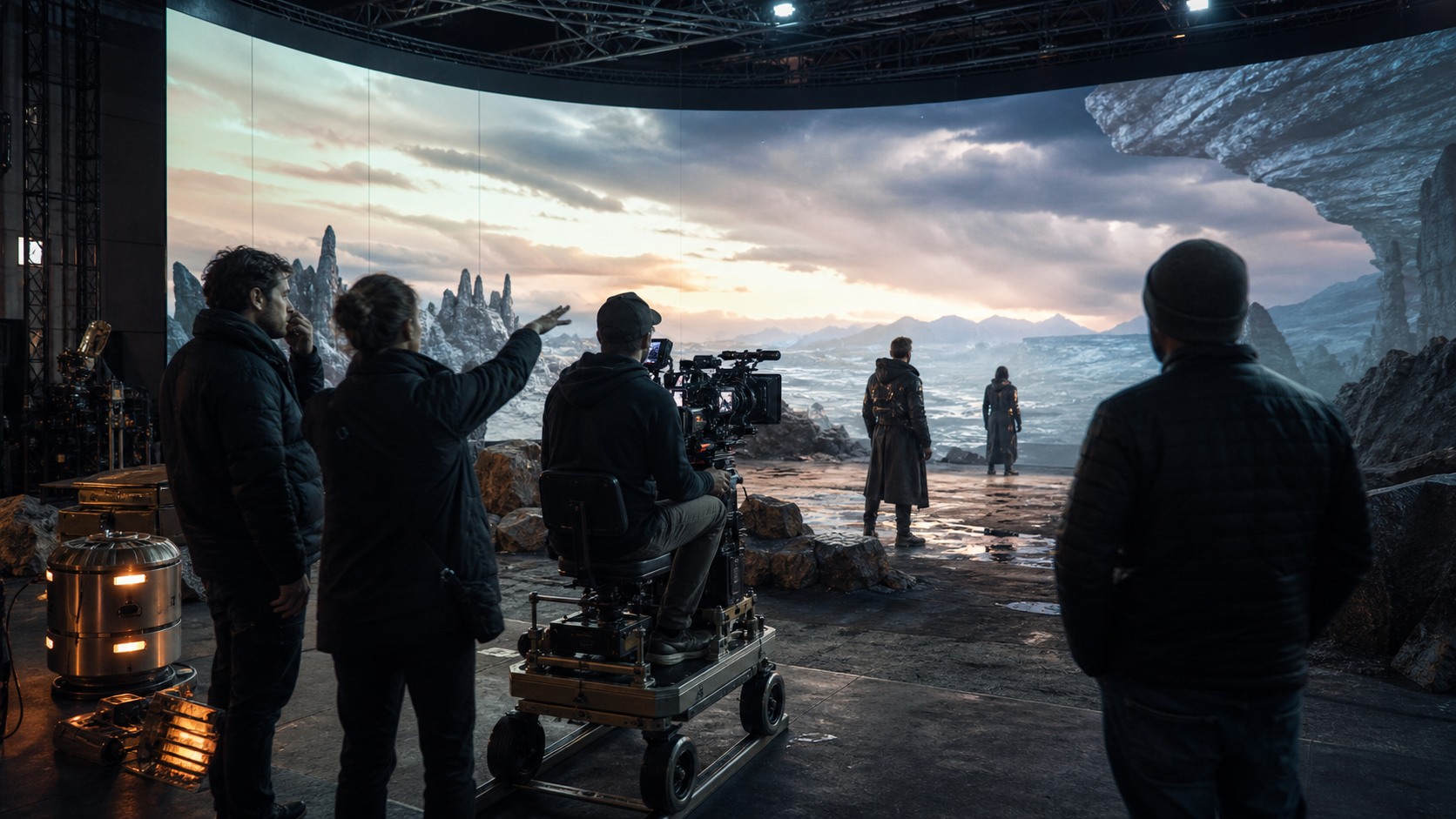
An LED volume surrounds the set with large display walls that show a digital environment during filming. The background can provide perspective, light, reflections, and performance context. Unlike a green screen, the actors and camera can see a version of the world on the shoot day.
This changes the production conversation. Directors can frame against the environment, cinematographers can judge interactive light, and actors can understand space. Generative AI supports the earlier stage of that process by helping teams imagine what the wall might show.
AI as Environment Exploration
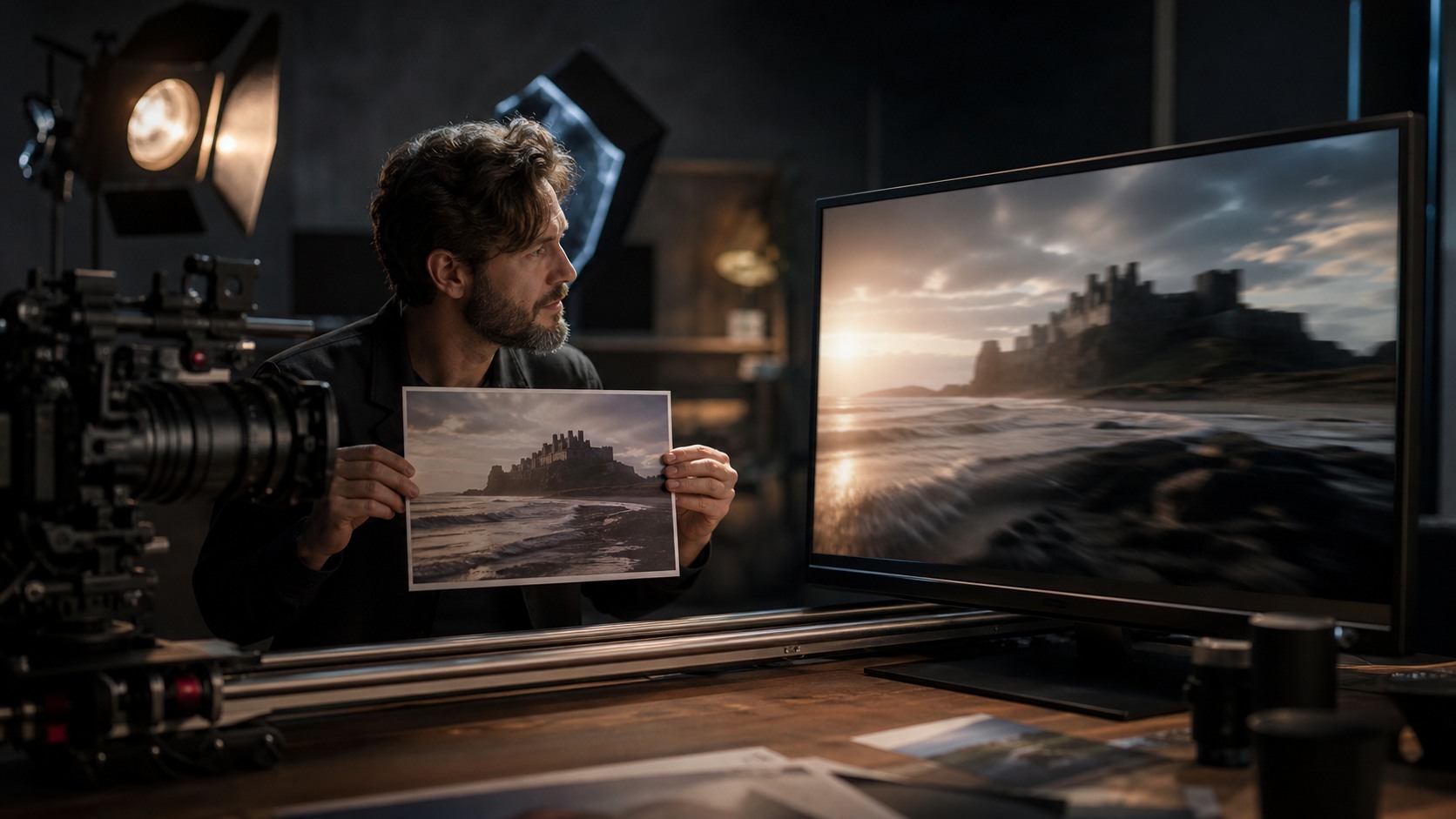
Generative AI is especially useful before final LED assets are built. It can create quick references for deserts, cities, spacecraft interiors, forests, coastlines, fantasy worlds, or period streets. A team can compare multiple directions before hiring deeper asset work or committing stage time.
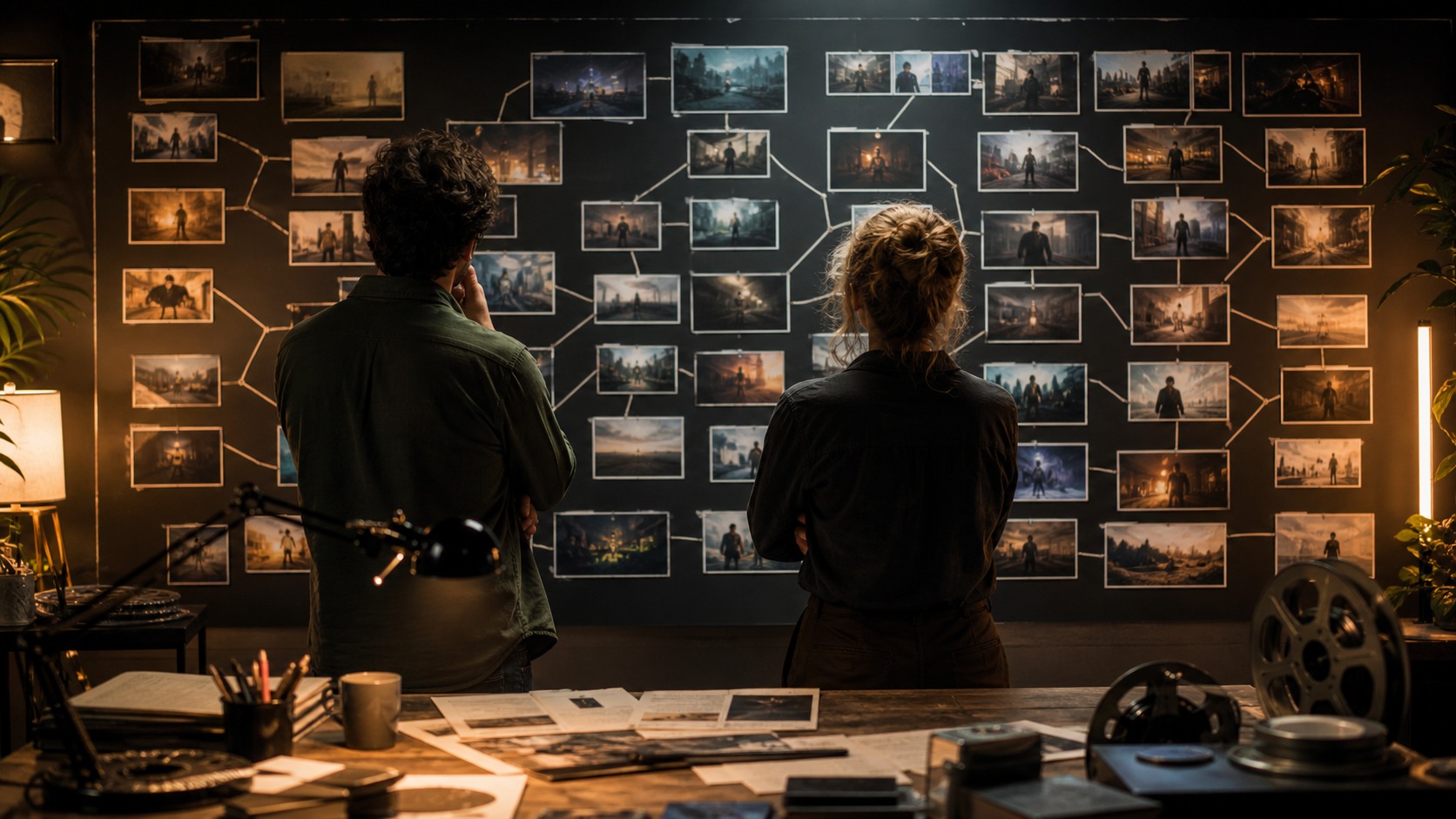
The key is curation. LED volume references need to follow the film's visual rules. If the AI produces a dozen exciting worlds that do not belong together, it has not helped the production. It has only created more decisions.
Lighting From the Wall
LED walls can influence real lighting on faces, costumes, vehicles, and reflective props. That is one of the reasons volumes are powerful. A sunset wall can warm the foreground. A cold moonlit background can shape shadows. Generative AI can help test those moods early.
The cinematographer still needs to translate mood into exposure and contrast. Wall brightness, camera settings, practical fixtures, and color management determine whether the image works. A generated reference is only useful if it can become a real lighting condition.
Stage Readiness
A generated image is not ready for a volume simply because it looks convincing. LED content may need correct resolution, perspective, parallax behavior, color calibration, playback performance, and camera tracking. Technical review determines whether the idea can survive filming.
Productions should separate idea approval from stage approval. The director may approve a visual direction, while the virtual production team still needs time to build, optimize, and test the environment. Confusing those approvals creates schedule risk.
Physical Foreground Integration
LED volume scenes work when the foreground set and wall content feel like one place. A rock, doorway, vehicle, floor texture, window frame, or practical lamp may need to connect the actor to the digital world. Generative AI can suggest the larger environment, but production design decides what has to be built physically.
That boundary affects everything: actor movement, camera placement, lighting, budget, and audience belief. If the set edge is weak, the scene may look like people standing in front of a picture. If the edge is strong, the volume disappears into the world.
Director and DP Collaboration
LED volumes reward collaboration between the director and cinematographer. The director may care about performance and final image. The DP may care about exposure, lensing, wall behavior, and reflection control. Generative AI can give them shared reference points before the stage is booked.
The best conversations are specific. Are they approving the horizon height, the storm atmosphere, the color of the sky, the density of the city, or the emotional isolation of the landscape. Clear approval notes prevent the team from chasing the wrong part of a generated image.
When AI Adds Cost
AI can add cost when it encourages constant redesign. LED volume production depends on preparation, and late changes can affect assets, tests, stage scheduling, lighting plans, and camera blocking. A new background may appear quickly in a concept tool, but it may not be quick to make stage-ready.
Producers should set exploration windows and approval deadlines. Use AI to compare directions early, then narrow the choices. The stage should not become the place where the team continues browsing.
Actor Performance Context
Actors can benefit from LED volumes because they see more of the environment around them. A generated landscape can suggest distance, weather, danger, or scale before final assets are complete. This can help rehearsal and emotional preparation.
The director should use this context thoughtfully. Actors need the story condition, not a technical lecture. If the world helps them feel the scene, it is useful. If it pulls them into production mechanics, it may distract.
Previs Before the Stage
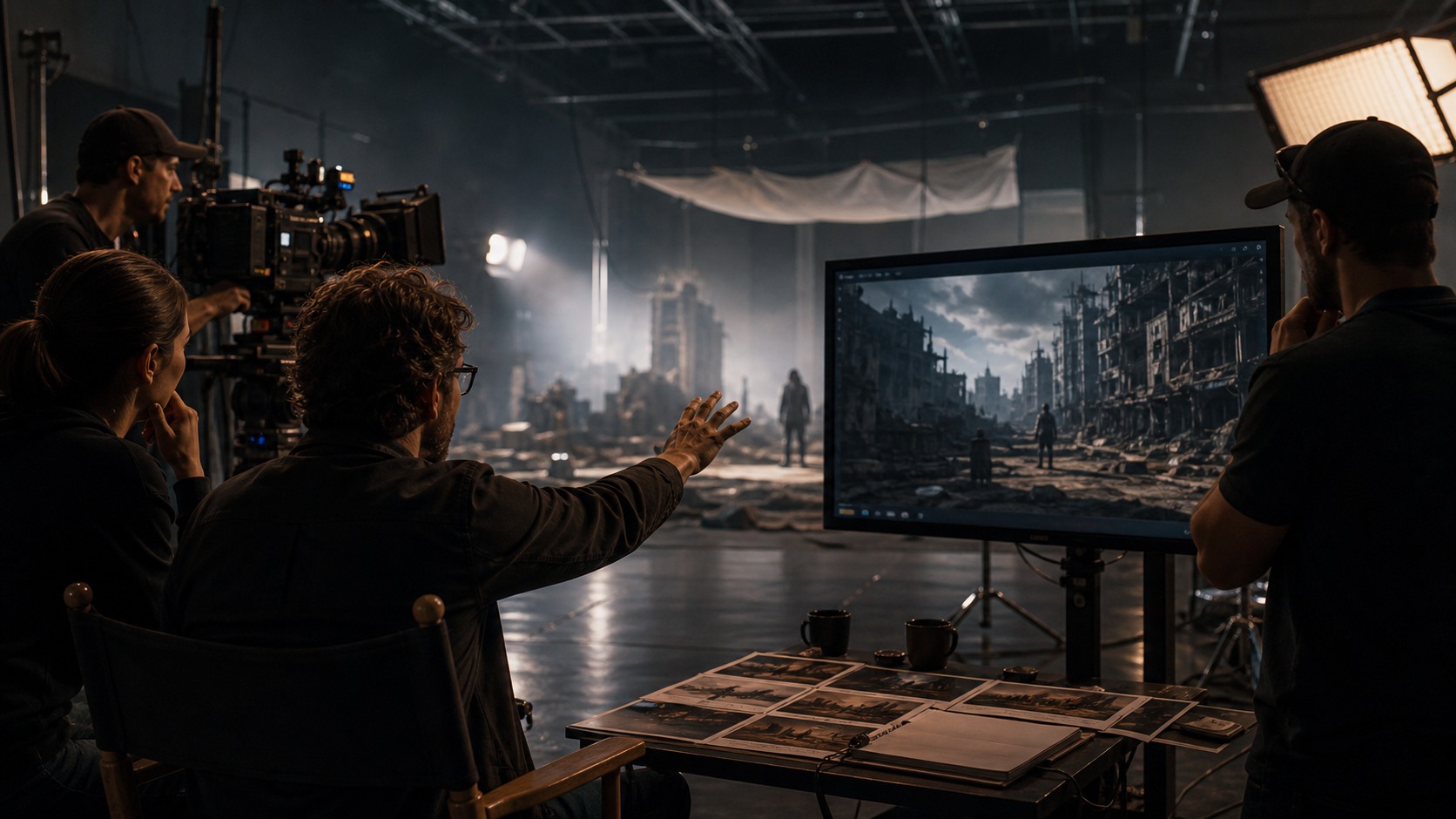
Generative AI is often most valuable before a stage team begins serious build work. Early visual options can help the director decide whether a scene needs a vast exterior, a tighter interior, a moving background, or a restrained atmospheric plate. That information can shape previs, blocking, lens tests, and the physical set boundary before the production spends stage time.
This prep phase should stay honest about resolution. A generated concept might communicate mood but not parallax. It might suggest architecture but not usable geometry. It might inspire a horizon line but not a final sky. Treating those differences clearly helps the LED team build from the idea without being trapped by it.
Color Pipeline Discipline
LED volume work depends on color discipline. The image on the wall, the light hitting the actors, the camera sensor, the monitor, and the final grade all influence the result. Generative AI can create attractive color palettes, but those palettes still need to survive calibration, exposure, and production monitoring. A concept image that looks rich on a laptop may behave very differently on a wall.
Cinematographers and color scientists should review the intended look early. They can identify oversaturated skies, unstable contrast, or colors that will contaminate skin tones. The goal is not to flatten the creative idea. The goal is to make sure the wall can deliver the idea in a controlled photographic system.
Movement and Parallax
Many generated references are still images, while LED volume scenes often depend on camera movement. When the camera moves, the background must maintain perspective, depth, and believable parallax. A concept that looks strong from one angle may fail when the camera tracks, pans, or pushes in. This is one reason technical review matters before the stage is booked.
The production should test representative moves. If the scene only needs a locked-off shot, the wall content can be simpler. If the shot demands complex movement, the team may need real-time environments, tracked cameras, layered assets, or another solution. The AI concept should guide that decision, not conceal it.
Set Edge Planning
The boundary between the physical set and LED background deserves special attention. Floors, rocks, furniture, windows, doorways, vehicles, and foreground architecture can help the wall feel connected to the actor's space. Generative AI can suggest what the world looks like beyond the set, but the production designer must decide which pieces need to be real.
Good set edge planning also protects the camera. It gives the cinematographer something tangible to frame through, light around, and use for depth. When the edge is weak, even expensive wall content can feel flat. When the edge is thoughtful, the audience stops noticing where the practical set ends.
Decision Ownership
LED volume filmmaking involves many specialists, so decision ownership has to be clear. The director may approve the world. The production designer may approve the design logic. The cinematographer may approve the photographic behavior. The virtual production supervisor may approve stage feasibility. Producers may approve cost and schedule. Generative AI adds speed, which makes this ownership even more important.
A simple approval matrix can prevent confusion. It should name who can request changes, who can approve final direction, and which changes require technical retesting. Without that structure, a fast AI concept workflow can produce beautiful images that nobody is fully responsible for turning into a shootable environment.
Editorial Coverage
LED volume scenes still need coverage logic. A background may be spectacular in a master shot, but the scene may rely on matching close-ups, inserts, or over-the-shoulder angles. Generative AI can help test the larger environment, yet the team has to know how that environment behaves across the actual shot plan. Otherwise the wall may be optimized for the wrong frame.
Directors and editors should review where the scene begins, where it turns, and where the audience needs spatial information. That review can reveal whether the wall content needs depth, motion, or a simpler design. The strongest LED planning supports the edit rather than treating every generated image as equally important.
Backup Plans
A backup plan is part of responsible LED volume work. Wall playback can fail, tracking can drift, content can render poorly, or a last-minute creative change can break the planned background. Generative AI can support backup options by helping the team prepare simpler skies, alternate weather, tighter framing references, or fallback plates before the shoot day.
The backup does not need to be defeatist. It gives the director more confidence to work creatively because the production is not dependent on a single fragile setup. Producers, virtual production supervisors, and cinematographers should know which fallback protects the scene best if the preferred approach becomes impractical.
Testing the Final Camera Path
Before a generated idea becomes part of an LED volume shoot, the team should test the final camera path as closely as possible. The background may look convincing from a static angle and then reveal scale issues, perspective mismatch, moire, or weak depth once the camera moves. Those problems are much easier to solve during prep than while the stage clock is running.
A practical camera-path test also helps the creative team decide how ambitious the scene should be. If the wall holds up beautifully, the director may keep the planned move. If it struggles, the team can adjust lens choice, blocking, foreground set pieces, or shot design. That kind of test turns generative exploration into production knowledge.
The test should leave the team with a clear production note. Maybe the wall content is approved for a locked-off angle, maybe it needs a rebuilt depth layer, or maybe the scene should be covered more tightly. Each answer helps the shoot day run with fewer surprises.
The Practical Takeaway
Generative AI helps LED volume filmmaking by speeding environment exploration and giving teams earlier visual choices. It can support design, lighting, pitch, previs, and stage planning.
It cannot replace stage discipline. LED volumes require technical readiness, foreground integration, lighting review, camera testing, and clear approvals. Use AI to find the direction faster, then let the volume team make that direction stable enough to photograph. The strongest productions keep the generated idea inspiring while making the stage plan specific, tested, and accountable. That balance lets the wall support the story instead of turning prep into uncontrolled experimentation during expensive stage time and rehearsals.