The New Creative Engine Behind Modern Visual Storytelling
Generative AI for film and video is quickly becoming one of the most talked-about creative technologies in modern media, but it is often misunderstood. Some people imagine it as a tool that simply replaces artists, editors, cinematographers, and directors. Others see it as a futuristic novelty with little practical value beyond experimental clips and eye-catching demos. The reality is far more interesting. Generative AI is best understood as a creative system that can assist with ideation, accelerate production tasks, expand visual possibilities, and help filmmakers explore concepts that once required much larger budgets, crews, or time commitments. In film and video, generative AI refers to systems that can create or transform media based on prompts, references, patterns, or learned relationships in large datasets. That can include generating images, video sequences, concept art, sound, dialogue variations, visual effects elements, storyboards, backgrounds, voice simulations, editing suggestions, and more. Instead of merely analyzing existing footage, generative systems can produce new material or help reshape existing material into something different. That shift makes the technology feel less like a traditional software tool and more like a creative collaborator with unusual strengths and obvious limitations.
A: It can generate pieces and prototypes, but strong films still require human direction, editing, and storytelling judgment.
A: No, smaller teams may benefit even more because AI can reduce the cost of visualization and experimentation.
A: Not in any meaningful creative sense; it provides options, but humans still shape performance, tone, and narrative meaning.
A: Often in pre-production, concept development, previz, asset ideation, and selected post-production tasks.
A: It can, but consistency, realism, and emotional precision often still need significant human refinement.
A: Motion errors, continuity issues, and subtle visual instability can make scenes feel unnatural or emotionally flat.
A: Prompting matters, but taste, revision, art direction, and integration into a broader workflow matter more.
A: Yes, it can support rough concepts, alternates, placeholders, and creative exploration during post-production.
A: Absolutely—copyright, training data, likeness rights, and consent are major concerns in film and video work.
A: Treat it as a creative assistant that speeds up exploration while keeping humans in charge of the final vision.
Why Generative AI Matters to Filmmakers and Video Creators
The rise of generative AI matters because filmmaking has always been shaped by the tools available at a given moment. Cameras changed storytelling. Nonlinear editing changed pacing and workflow. Digital effects changed what could be shown on screen. Streaming changed what kinds of stories could find audiences. Generative AI is entering that same historical line, not because it erases the fundamentals of storytelling, but because it changes how quickly ideas can move from imagination to visible form. For filmmakers, one of the biggest advantages is speed in the early creative stages. A director can explore mood, lighting, costume ideas, set concepts, and visual tone before a production designer builds anything physical. A commercial team can generate multiple style directions before committing to one campaign. An indie creator can test looks for a sci-fi world or fantasy setting without paying for dozens of custom illustrations. These are not small conveniences. They can reshape planning, communication, and risk-taking across the entire production cycle. The appeal also extends to accessibility. Tools that once required large teams or specialized software can now be approached by smaller creators with fewer resources. That does not mean mastery becomes automatic. Taste, judgment, storytelling skill, and technical understanding still matter enormously. But generative AI can lower the barrier to experimentation, and that can be powerful in an industry where creative ideas are often limited by time and budget long before they are limited by imagination.
What Generative AI Actually Does in Film and Video Workflows
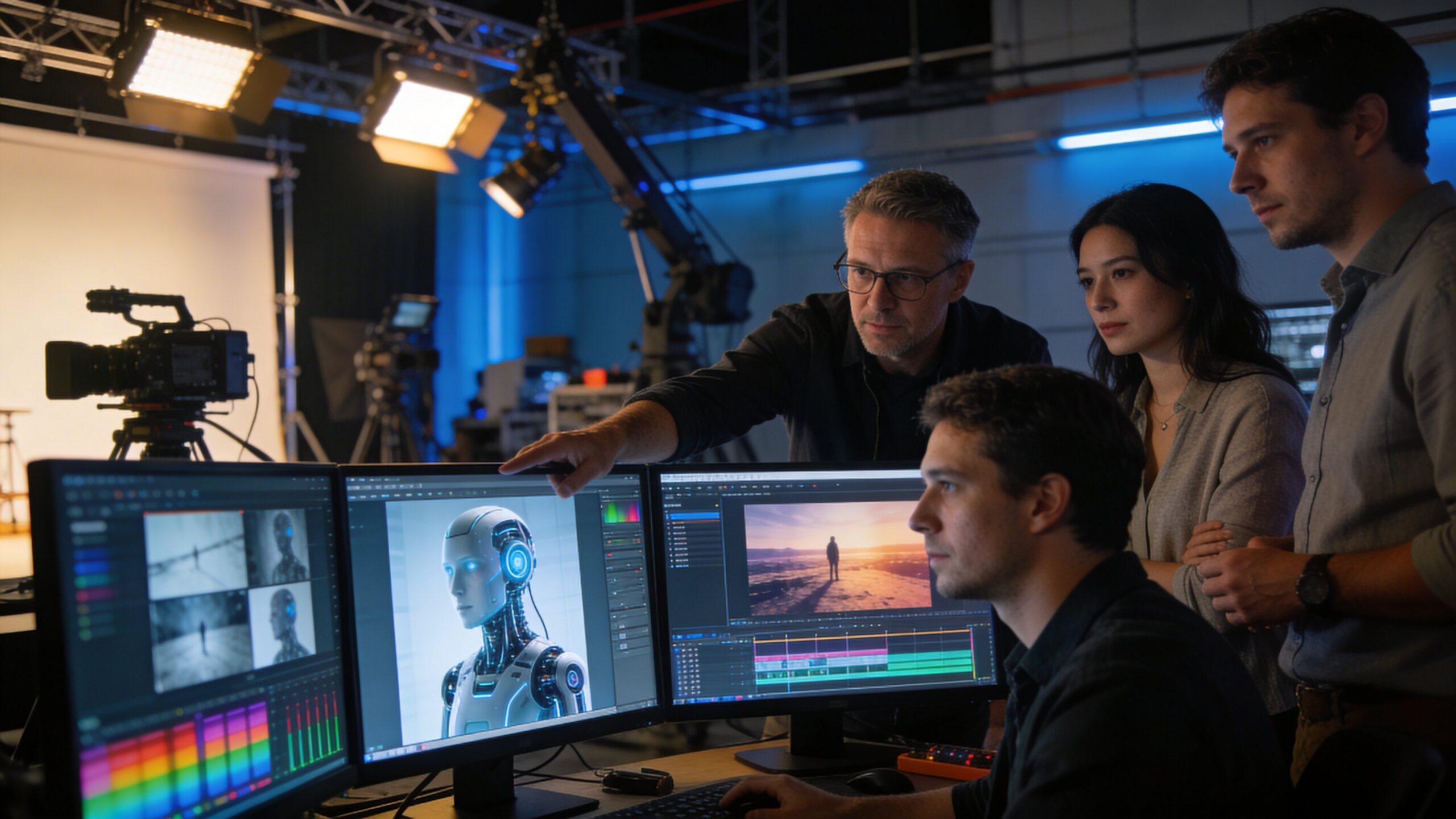
One of the clearest ways to understand generative AI is to look at where it fits into film and video workflows. In pre-production, it can help generate concept frames, moodboards, script visualizations, character styling ideas, and location alternatives. Instead of describing a scene only in words, a filmmaker can create a rough visual direction that helps align producers, clients, designers, and crew members around a shared vision. That alignment can reduce confusion and sharpen creative decision-making before expensive production days begin. During production, generative AI may play a smaller but still meaningful role. It can support virtual production planning, fast previz, shot design exploration, synthetic reference clips, or adaptive on-set visualization. It may help teams imagine how unfinished scenes will look once backgrounds, effects, or extensions are added later. In some cases, it can also support real-time creative iteration by giving directors and editors a quick visual language for evaluating possibilities.
In post-production, the uses become even broader. Editors can experiment with alternate cuts, effects artists can generate elements to composite into scenes, marketers can build promotional variations, and finishing teams can enhance or transform imagery more rapidly. Voice tools may help with temporary dialogue, localization experiments, or accessibility workflows. Audio tools may help with cleanup, sound design concepts, or musical exploration. The common thread is not that AI magically completes a film. It is that AI can generate options, shortcuts, and starting points that professionals then refine, reject, reshape, or elevate.
Pre-Production Is Where the Technology Often Shines Brightest
Pre-production may be the stage where generative AI feels most immediately useful and least controversial. That is because this phase of filmmaking is already built around imagining what does not yet exist. Storyboards, lookbooks, pitch decks, location references, costume sketches, camera tests, and animatics are all tools for translating an internal vision into a communicable form. Generative AI fits naturally into this world because it is exceptionally good at creating fast visual possibilities.
A filmmaker developing a noir thriller can test different cityscapes, lighting moods, wardrobe silhouettes, or poster treatments within hours instead of days. A music video team can explore surreal visual themes before designing practical sets. A documentary team can visualize opening title concepts or stylized historical transitions. In each case, the technology is not replacing the final craft. It is strengthening the conversation that leads to the final craft. This matters because misalignment in pre-production can be expensive. When a crew reaches set with different mental versions of the project, delays and compromises follow. When visual tone is clearer early on, production tends to move with more confidence. Generative AI gives creators a fast way to make abstract ideas visible, and that visibility often leads to better planning, stronger collaboration, and more daring choices.
How Generative AI Is Changing Visual Development
Visual development has traditionally required a blend of hand-drawn artistry, photo research, design software, and iterative feedback. Generative AI adds a new layer to that process by allowing creators to describe a visual direction in language and receive multiple variations almost immediately. That can accelerate exploration of color palettes, production design ideas, wardrobe concepts, creature designs, stylized worlds, and cinematic compositions.
For film and video, that speed can be transformative. A director who once had time to review three concept directions might now examine thirty. A brand team unsure whether a campaign should feel glossy, gritty, nostalgic, futuristic, or dreamlike can test each path visually before committing. A production designer can use generative outputs as conversation starters rather than finished blueprints. The important distinction is that AI-generated imagery often works best as a catalyst, not as the unquestioned final answer. Used well, it can broaden the creative search. Used poorly, it can flatten originality if everyone relies on the same obvious prompts and default aesthetics. That is why strong visual leadership still matters. The people guiding the process must know what they want, what feels generic, what supports the story, and what deserves a human touch that no system can imitate convincingly.
The Role of Generative AI in Editing and Post-Production
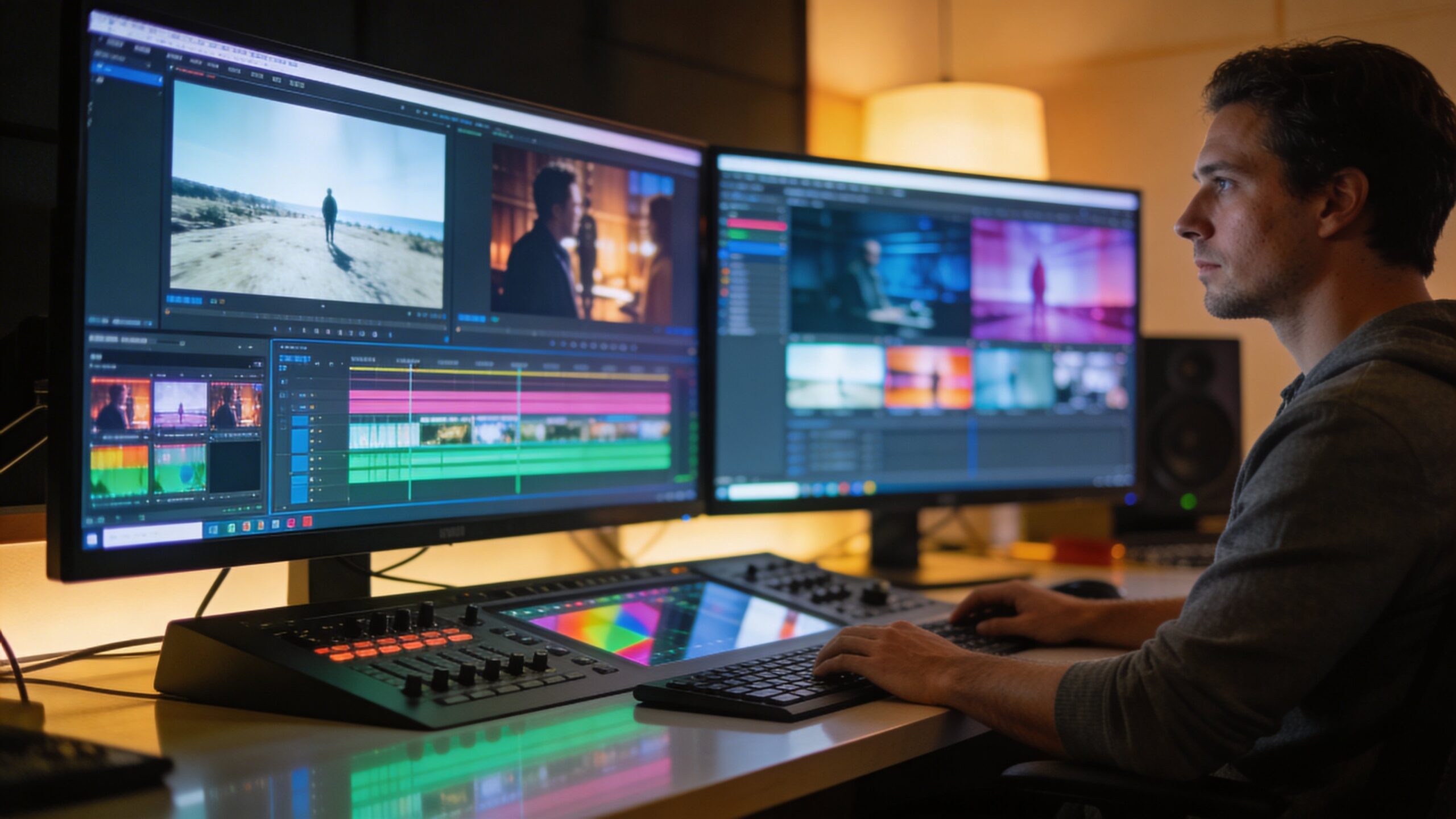
Post-production is full of repetitive, technical, and exploratory work, which makes it fertile ground for AI-assisted tools. Editors already work by testing rhythm, trimming material, comparing options, and shaping performance. Generative systems can support that process by speeding up rough ideation, creating placeholder assets, suggesting alternate approaches, or helping teams visualize edits before committing major resources. Imagine a trailer editor creating multiple tone versions for a film launch. One version leans suspenseful, another emotional, another high-energy. Generative tools can help rapidly create visual placeholders, textural transitions, alternate voice styles, or concept imagery that clarify each direction. The final polished piece still requires human judgment, but the exploration phase becomes faster and wider.
The same is true in visual effects and finishing. Background extensions, cleanup assists, stylized textures, synthetic inserts, and design elements may be generated or partially generated as part of a broader workflow. This does not eliminate the need for skilled compositors, colorists, or VFX supervisors. Instead, it can change what they spend time on. Rather than building every starting asset from zero, they may focus more on integration, quality control, artistic coherence, and problem-solving.
Creativity, Control, and the Human Factor
One of the biggest questions around generative AI is whether it dilutes creativity or expands it. The answer depends almost entirely on how it is used. If creators treat AI outputs as final products and accept whatever appears first, the work may feel shallow, derivative, or visually inconsistent. If they use it as a sketching partner, a reference generator, or a rapid iteration engine, it can unlock surprising directions that might not have surfaced otherwise.
Film and video have always depended on constraint and control. A story is not compelling because infinite things happen. It is compelling because specific choices happen at the right time, in the right way, with emotional clarity. Human creators still provide that control. They decide what a scene means, what emotion it should land, what pace it should carry, and what visual language suits the material. Generative AI can produce options, but it does not inherently understand the deeper intention behind a film. That human factor is especially important in performance, tone, and narrative structure. A machine can simulate style, but filmmaking is more than style. It is timing, subtext, symbolism, restraint, and emotional architecture. The creators who will benefit most from generative AI are not those who surrender authorship to it. They are the ones who know how to direct it with precision and then edit its outputs with discipline.
The Big Opportunities for Independent Creators and Small Studios
Independent filmmakers, solo video creators, and boutique studios may be among the biggest beneficiaries of generative AI. Large productions have always had access to departments for concept design, previs, VFX testing, marketing variations, and asset development. Smaller teams often have to compress all of those responsibilities into just a few people. Generative AI can help close part of that gap.
A small studio pitching a branded short film can create sophisticated visual references without hiring a full concept team. A documentary producer can test title sequence concepts before choosing a motion designer. A creator making educational or cinematic web content can generate visual support elements that improve presentation value without requiring a blockbuster budget. These gains do not erase the advantages of scale, but they do give smaller teams more ways to present themselves professionally and think ambitiously. There is also a confidence factor. When creators can quickly visualize ideas, they may be more likely to pursue bold concepts, refine them, and communicate them effectively to collaborators or clients. In that sense, generative AI is not just a production tool. It can also be a confidence amplifier for emerging voices that previously struggled to make their ideas legible at a professional level.
The Limits, Risks, and Ethical Questions
For all its promise, generative AI comes with serious limitations and meaningful risks. Visual consistency across shots can still be a challenge. Motion realism may break down. Characters may subtly shift between frames. Physics, continuity, and fine detail can become unstable. Outputs may look impressive at a glance but weak under closer professional scrutiny. These issues matter enormously in film and video, where continuity and believability are central to audience immersion. There are also ethical and legal questions that creators cannot ignore. Concerns around training data, authorship, likeness rights, consent, copyright, performer protections, and labor displacement remain central to the conversation. In film and video, these questions are especially sensitive because the medium often involves recognizable faces, voices, styles, and creative contributions from many different people. A flashy tool does not remove the responsibility to use it carefully. Audiences are also developing sharper instincts. They can often sense when something feels emotionally hollow or overly synthetic. That does not mean AI-assisted work is doomed. It means creators must be thoughtful. The most effective use of generative AI in media will likely come from teams that combine innovation with restraint, transparency, artistic standards, and respect for the people whose work and identities intersect with the technology.
What the Future of AI in Film and Video May Look Like
The future of generative AI in film and video will probably be less about one tool taking over the industry and more about dozens of specialized uses becoming normal. Some tools will help with ideation. Others will support editing, localization, effects, previsualization, audio, versioning, marketing, accessibility, or archive restoration. Over time, these systems may become less visible as standalone novelties and more embedded into everyday creative software.
That future will reward creators who understand both storytelling and systems. Knowing how to prompt well will matter, but knowing how to judge, revise, combine, and contextualize outputs will matter more. The strongest professionals will be those who can move between vision and workflow, between artistic intuition and technical experimentation.
Film has always evolved through a dance between craft and technology. Generative AI is simply the newest step in that dance. It is not the end of filmmaking, and it is not a shortcut to meaningful cinema by itself. But it is a powerful new layer in the creative toolkit. For filmmakers, editors, studios, and video creators willing to learn its strengths and respect its limitations, it offers something genuinely exciting: a faster path from imagination to image, and from concept to screen.
Understanding the Technology Means Understanding the Opportunity
To understand generative AI for film and video is to see both its creative energy and its practical boundaries. It can accelerate pre-production, expand concept development, support post-production, and open new doors for smaller creators. It can help visualize what once stayed trapped in pitch decks and notebooks. It can make experimentation cheaper, faster, and more collaborative. But the technology becomes most valuable when it is guided by strong human intent. Story still matters. Taste still matters. Ethics still matter. The future will not belong to those who simply press a button and accept the result. It will belong to creators who know how to shape tools into meaningful work. In that sense, generative AI is not replacing film language. It is giving filmmakers a new way to speak it.