Indie Filmmakers Need Visual Certainty Before Money Gets Spent
AI pre-visualization is becoming essential for indie filmmakers because small productions cannot afford to discover every problem on set. A studio film may have large departments, long prep periods, and room for expensive revisions. An indie filmmaker often has a tiny crew, borrowed locations, limited shoot days, and one chance to make the scene work. AI previs helps turn script ideas into rough images, shot sequences, timing tests, and production conversations before the camera rolls. It does not replace directing, but it can make limited resources feel less blind.
Why Indie Pre-Production Is Different
Indie filmmaking is built around constraints. A director may be writing, producing, scouting, casting, and planning coverage at the same time. Decisions that a larger production spreads across departments may land on a few people. That makes visual planning more important, not less.
AI pre-visualization can help an indie team see the shape of a scene before committing to a location, schedule, or shot list. A rough generated frame can reveal whether a room feels too small, whether a wide shot is worth the setup, or whether a scene needs a simpler visual idea. The image is not the finished film. It is a planning signal.
This matters because indie mistakes are expensive in time. If a scene is visually confusing on set, the team may not have the luxury of reshoots. A little previs can prevent a long day of improvising under pressure.
Seeing the Scene Before the Shoot
Many indie scripts are planned in words until the last possible moment. The director imagines the shot, the cinematographer imagines a slightly different shot, and the producer imagines the budget version of both. AI previs gives everyone something visible to discuss earlier.
A rough frame can show point of view, distance, lighting mood, blocking, and scale. It can also show what the team does not want. Sometimes a generated image proves that the obvious version of a scene feels generic. That discovery is useful before the crew arrives.
The strongest previs process is specific. Instead of generating random cinematic looks, the filmmaker asks targeted questions: how do we reveal the room, how close should the reaction be, does the ending need a wide frame, and can the location support this camera position.
Making Pitches More Concrete
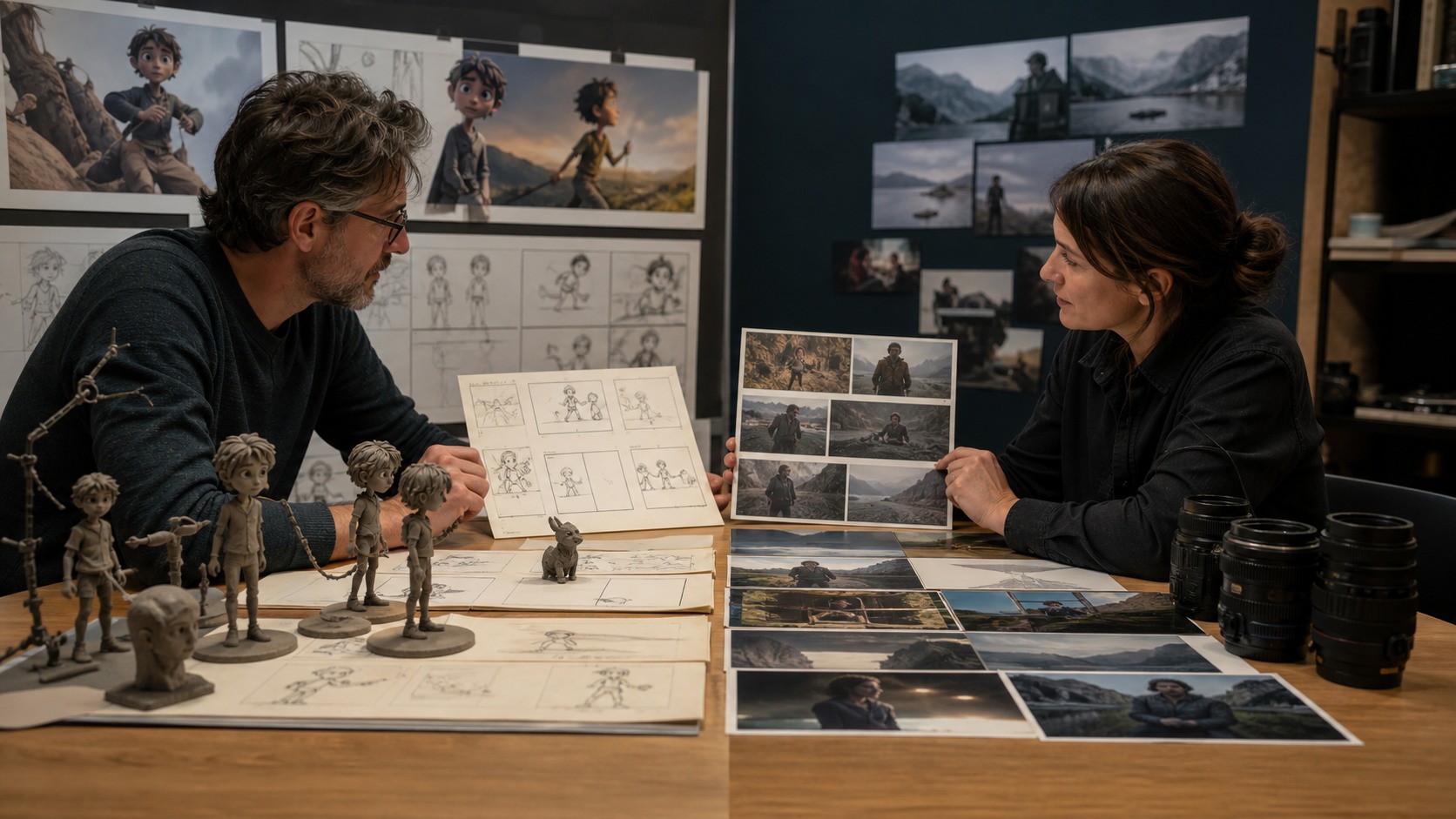
Indie filmmakers often need to pitch before the film exists. They may pitch to collaborators, small investors, actors, festivals, grant panels, or online supporters. AI previs can help communicate tone and scope in a way that words alone cannot.
A pitch image should be honest about its purpose. It is not proof that the final film is already solved. It is a visual promise of direction. When used responsibly, previs can make a project easier to understand without pretending the team has finished production assets.
This can be especially valuable for genre work, animation hybrids, speculative stories, and stylized drama. If the project depends on atmosphere, a few strong previs frames can help people feel what the filmmaker is trying to build.
Protecting the Budget
AI previs can protect a budget by exposing expensive assumptions early. A generated shot may imply a crane, a crowd, a night exterior, a complex set extension, or a visual effect the team cannot afford. Seeing that implication gives the filmmaker a chance to redesign the scene.
Previs can also reveal when a cheaper solution is enough. A close shot, a silhouette, an insert, or a sound cue may carry the same story beat without a large setup. Indie filmmaking often improves when the team finds the simplest image that still works.
The key is to treat AI frames as budget questions. What would this shot require. Can we actually capture it. Is there a smaller version. Does the story need the expensive version. Those questions turn previs into production strategy.
Helping Small Crews Align
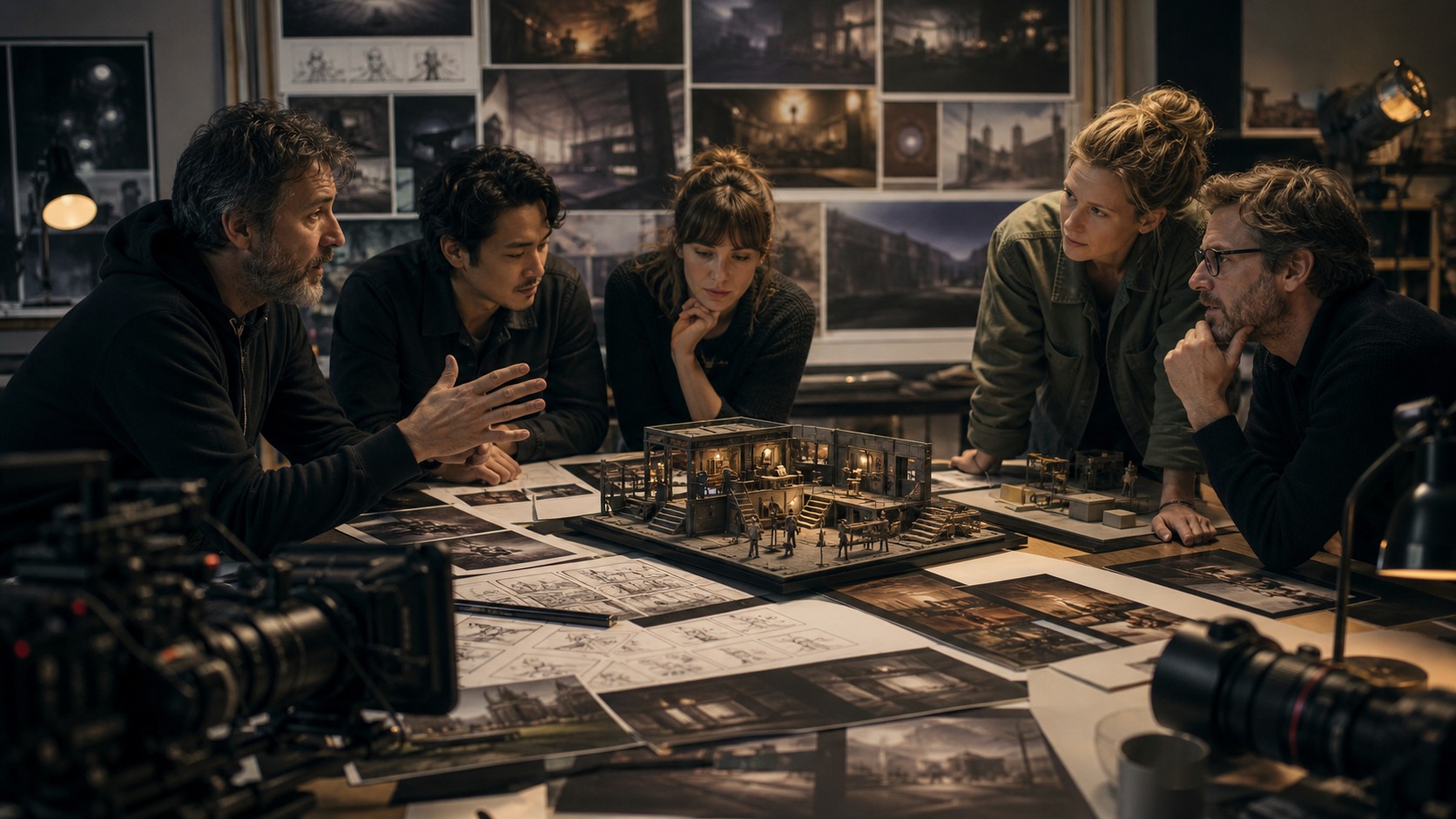
Small crews move faster when everyone understands the plan. AI previs can help the director explain visual priorities to the cinematographer, production designer, assistant director, actors, and editor. A selected image can show tone, while a storyboard sequence can show coverage.
The images should be labeled carefully. A crew needs to know whether a frame is a mood reference, a camera target, a blocking idea, or only a rejected test. Without labels, collaborators may assume the wrong detail is important.
Good previs does not remove collaboration. It starts better collaboration. The cinematographer may improve the camera idea, the designer may simplify the set, and the actor may reveal a better movement during rehearsal.
Improving Shot Lists
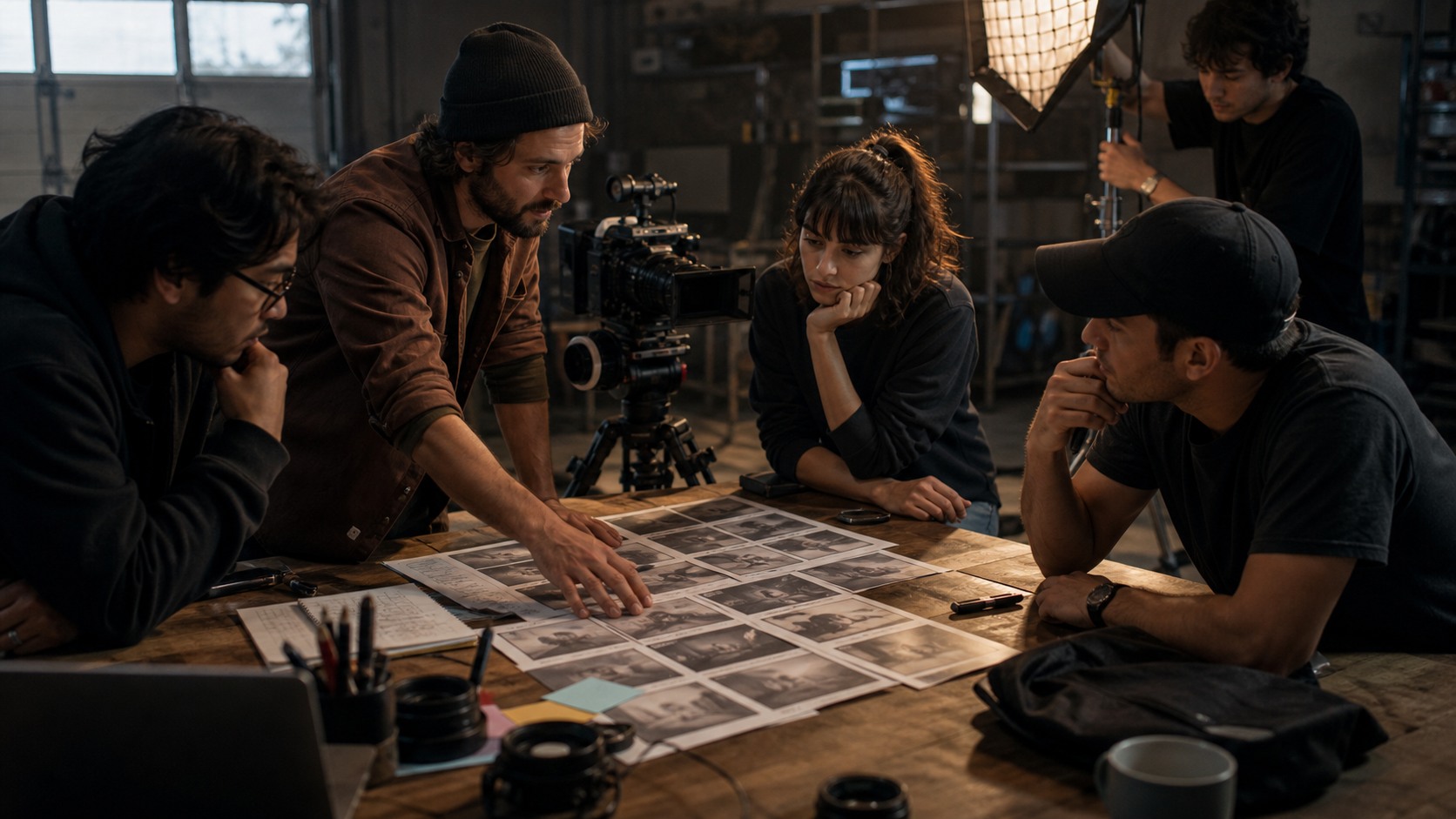
A shot list is stronger when it grows from visual testing. AI previs can help the filmmaker decide which shots are essential, which are helpful, and which are optional. That hierarchy matters when a production day runs behind.
Indie filmmakers often overshoot coverage because they are afraid of missing something. Previs can reduce that fear by showing what the scene actually needs. It may reveal that one strong wide shot and two reactions are enough, or that a missing insert will be essential in the edit.
A good shot list should carry the lesson of the previs. It should not be a separate document disconnected from the visual plan. The selected frames, camera notes, and shot priorities should agree with one another.
Testing Timing Without a Full Edit
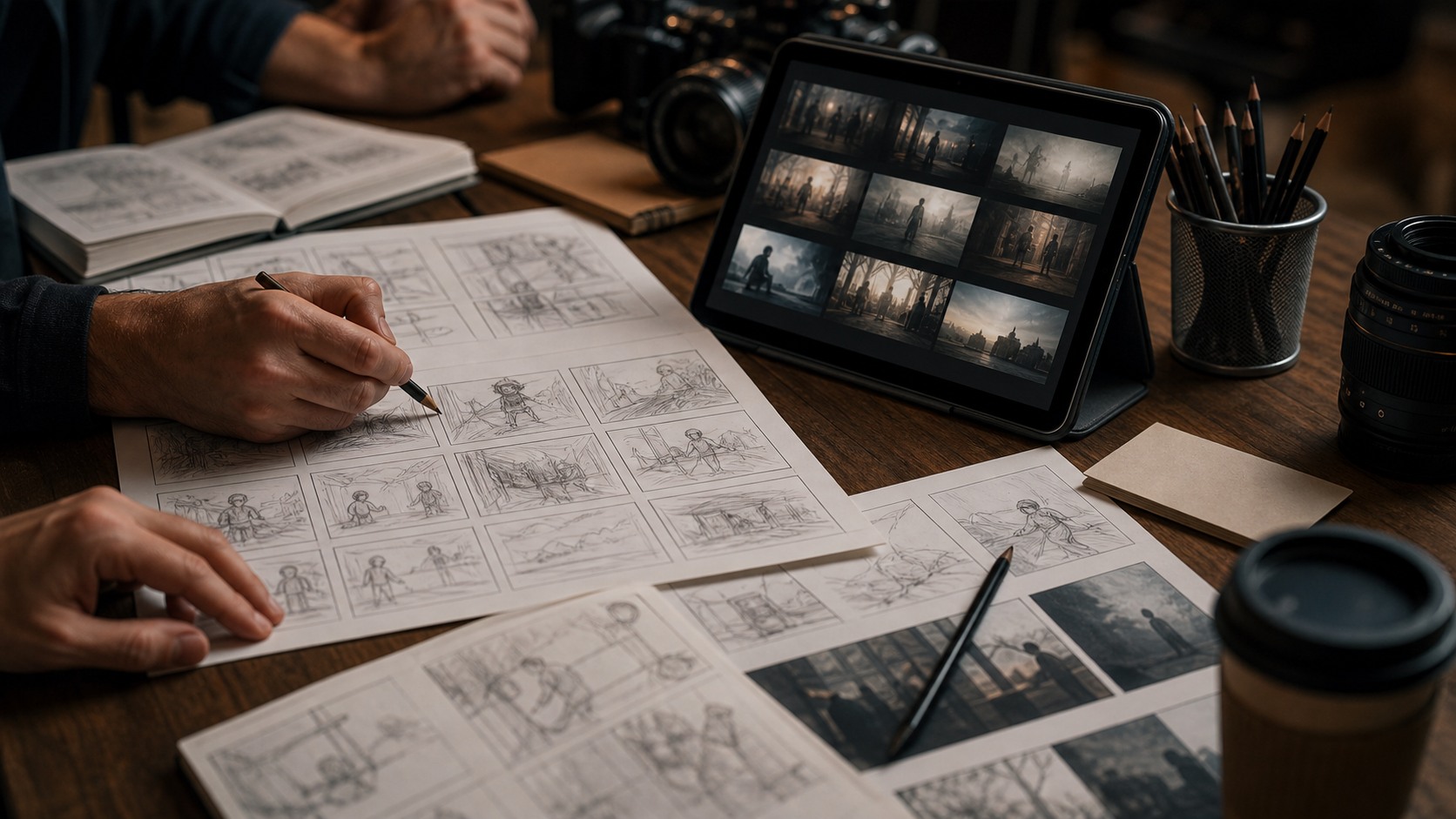
A simple animatic can help indie filmmakers test timing before shooting. Even still frames placed on a timeline with temporary sound can reveal whether a reveal is too early, whether a pause is needed, or whether the scene lacks a reaction.
This is valuable because timing mistakes can be hard to fix after production. If the team did not shoot the reaction or transition, the editor may have few options. A rough animatic can expose those needs in advance.
The animatic does not need polish. It needs to be honest. If the scene feels dull with rough frames, the team should ask whether the script beat, shot order, or sound idea needs revision.
Choosing What Not to Shoot
One of the most useful indie skills is choosing what not to shoot. AI previs can make that decision easier. When multiple versions are visible, the director can remove shots that repeat information, confuse geography, or require too much setup for too little story value.
This is not about lowering ambition. It is about concentrating effort. A small production that spends time on the right shots will often look more confident than a production that chases every idea.
AI can create many possibilities, but indie filmmaking needs commitment. The director must use previs to narrow the plan, not expand it forever.
Keeping the Process Ethical
Even internal previs should be handled carefully. If images rely on specific likenesses, recognizable brands, or unclear references, the team should avoid using them publicly without review. Pitch materials can travel farther than expected.
Indie creators should keep records of prompts, references, and approved images when those images shape the project. This does not need to be complicated. A folder with notes can help answer questions later.
Responsible practice builds trust with collaborators. Actors, artists, and funders may be more comfortable with AI use when the filmmaker is clear about what the images are and how they will be used.
Using Previs During Location Scouting
Location scouting becomes more productive when the filmmaker already has rough visual questions. Instead of walking into a space with only a general feeling, the team can ask whether the room supports the planned wide shot, whether a window can motivate light, or whether a hallway allows the movement the scene needs.
AI previs can be updated after scouting. A generated frame may have suggested a large industrial room, but the available location may be smaller and more intimate. That is not a failure. It is new information. The filmmaker can use the real location to revise the visual plan into something shootable.
For indie teams, this loop is valuable because locations are often found through favors, availability, or cost. Previs helps the filmmaker adapt the idea to the space without losing the scene's purpose.
Turning Previs Into a Crew Day Plan
Previs becomes essential when it affects the actual day plan. Selected frames can help the assistant director group setups, help the cinematographer estimate lighting needs, and help the producer understand which shots should be protected if time gets tight.
A good day plan does not include every generated image. It includes a practical order, a list of essentials, and the few references that explain the visual target. This keeps the crew moving instead of debating a large folder of options.
Indie productions often succeed by being decisive. AI previs supports that decisiveness when it turns uncertainty into priorities. The crew needs to know what matters most before the day begins.
How Previs Helps Post-Production
Previs can also help after the shoot. If the editor understands the intended sequence, they can see why certain shots were captured and where alternates might fit. A rough animatic or storyboard can become a map for the first assembly.
This does not mean the editor must obey the previs. Editing may reveal a better rhythm. But the original plan provides context, especially when coverage is limited. The editor can understand what problem each shot was meant to solve.
For indie films, where pickups may be difficult, that context can be important. A clear previs trail helps the team make the most of the material they have.
Building a Repeatable Indie Previs Habit
AI previs becomes most useful when it becomes a repeatable habit rather than a frantic last-minute experiment. An indie filmmaker can choose one important scene, identify the core beat, generate a few frames, build a simple sequence, and revise the shot list. That small routine builds visual confidence long before production begins.
A repeatable habit also helps the filmmaker learn what the tool is good at. Some prompts may create useful location references. Others may be weak for performance or continuity. By testing early, the filmmaker learns where AI helps the project and where traditional planning is better.
The habit should end with decisions. Which shots are essential. Which shots are too expensive. Which visual idea should be shown to collaborators. Which idea should be abandoned. If each previs session produces decisions, the production becomes more prepared. If it only produces more options, the filmmaker should narrow the process.
Indie filmmaking rewards preparation that stays flexible. AI previs gives directors and producers a way to prepare visually while still leaving room for rehearsal, location discoveries, and actor choices. That balance is why the practice is becoming less optional for serious small teams.
Why It Is Becoming Essential
AI previs is becoming essential because it gives indie filmmakers earlier clarity. It helps them see scenes, explain ideas, test timing, refine shot lists, protect budgets, and align small teams. Those are not luxury benefits. They are survival tools for limited productions.
The point is not to make every indie film look synthetic. The point is to help filmmakers make better human decisions before time and money are gone. AI previs is valuable when it makes the shoot more focused, not when it creates more distraction.
For indie filmmakers, the future advantage may belong to the people who can plan visually, revise quickly, and still stay grounded in story. AI pre-visualization supports that discipline when it is used with purpose.