AI didn’t arrive in cinema like a new camera or a faster lens. It arrived like a new language—one that can be spoken with images, rhythm, and intent, and understood by machines that learned to “see” from billions of frames. For filmmakers, that changes the craft in a very specific way: you’re no longer limited to what you can physically shoot or what a traditional pipeline can afford to simulate. You’re limited by clarity—your ability to describe what you want, to shape it, to revise it, and to keep it consistent across time. That’s the heart of this new language. It’s not just typing prompts. It’s translating story into instructions a system can interpret, then translating the output back into story with taste, restraint, and purpose. In the same way directors learned to communicate with DPs through references, lighting diagrams, and shot lists, creators are now learning to communicate with models through mood, blocking, lens behavior, motion grammar, and continuity constraints. The result isn’t “AI makes movies.” The result is that filmmaking is gaining a new layer—an expressive toolset where iteration is fast, visualization is constant, and creative direction becomes more explicit than ever.
A: Not really—think direction, continuity control, editorial planning, and look supervision.
A: Consistent lens feel, motivated light, coherent space, controlled motion, and strong sound design.
A: Lock a canonical reference set (face, wardrobe, silhouette) and build every shot from those anchors.
A: Start with previz mood frames, pick “canon” looks, then generate edit-aware coverage (wide to close).
A: Use fewer conflicting descriptors, keep lighting rules stable, and iterate with small targeted changes.
A: Sometimes for specific shots, but it shines most as a visualization, concept, and enhancement pipeline.
A: Coherence: stable characters, clear geography, consistent tone, and a strong edit with sound.
A: Chasing pretty frames instead of building a consistent scene that can cut together.
A: Use specific references, a defined palette, intentional blocking, and a signature rhythm in editing.
A: Establish a look bible early—then treat every new shot as a continuity test against it.
From Camera Language to Model Language
Traditional film language is built on choices the audience feels even when they can’t name them: focal length, depth of field, composition, movement, cutting, and sound. AI filmmaking keeps those choices, but it adds a second layer beneath them: how you specify the choices so a system can reproduce them reliably. If camera language is what you shoot, model language is what you define. That definition can be as poetic as “a lonely street at blue hour,” but the new language rewards specificity. Not because art needs rules, but because systems need constraints. The more you clarify what must remain consistent—character identity, wardrobe, location geometry, lens feel, lighting direction—the more your output behaves like a coherent scene instead of a collection of pretty frames. In practice, this is why AI filmmaking conversations sound like hybrid notes: part director’s intention, part VFX breakdown, part editorial plan. A filmmaker might describe a sequence emotionally, then lock technical anchors: camera height, movement style, lighting mood, and scene continuity. You can feel the shift: directing becomes less about capturing a moment once and more about guiding a moment into existence across iterations, like sculpting.
Previsualization Becomes a Creative Space, Not a Step
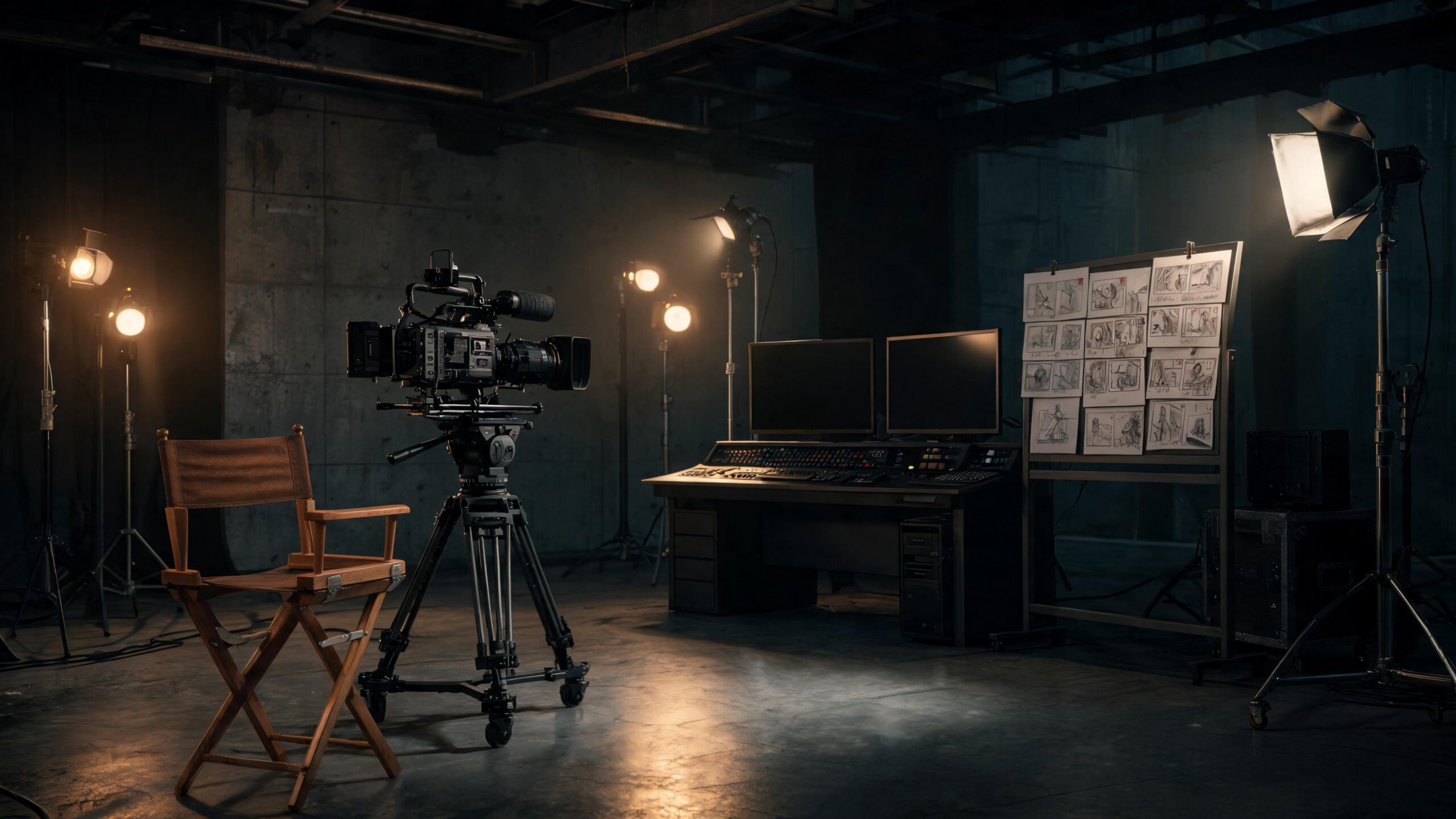
Previz used to be a stage you survived—useful, necessary, and often blunt. The new language turns previsualization into a creative playground where you can audition story decisions at the speed of thought. You can try a different location without moving a crew. You can test whether a scene wants handheld intimacy or controlled dolly glide. You can see the emotional temperature change when you adjust contrast, time of day, or lens character.
This changes what “planning” feels like. It’s no longer just logistics and safety; it becomes artistic exploration. A director can iterate on tone before production, not as a rigid “this is what we must do,” but as a living set of options. Writers can generate visual beats for a script not as storyboards that freeze ideas too early, but as mood studies that help identify what the story is really about. And because iteration is cheap compared to reshoots, the best use of AI here isn’t replacing production—it’s reducing uncertainty. It helps you discover what matters before you commit resources, time, and people.
The Prompt Is Not the Script—It’s the Brief
One of the biggest misunderstandings is thinking the prompt is the creative work. In reality, the prompt is closer to a production brief. It carries intent, constraints, and references. The artistry shows up in how you structure that brief and how you respond to what comes back.
The new language includes patterns: starting wide with mood and subject, then tightening with camera behavior, then locking continuity. It includes “negative space” too—what you exclude so the system doesn’t drift into cliché. It includes iterative direction: you keep what works, rewrite what doesn’t, and progressively narrow the system’s freedom until it matches your vision. Great AI direction feels like a filmmaker giving notes: “Keep the blocking, change the lens feel.” “Same performance, softer backlight.” “Hold the silhouette, reduce haze.” That’s not magic. That’s craft expressed as constraints.
Continuity: The Real Test of AI Cinema
Single images are easy. Cinema is continuity—identity over time, space that makes sense, cause and effect, consistent physics, consistent wardrobe, consistent light. The new language of AI filmmaking is obsessed with continuity because continuity is where “AI art” becomes “AI film.” Continuity isn’t only technical; it’s emotional. If a character’s face subtly shifts from shot to shot, the audience feels it as instability. If lighting jumps between angles, the scene feels false. If the environment morphs, tension breaks. Filmmakers have always fought these issues; AI just moves the battle to a new front.
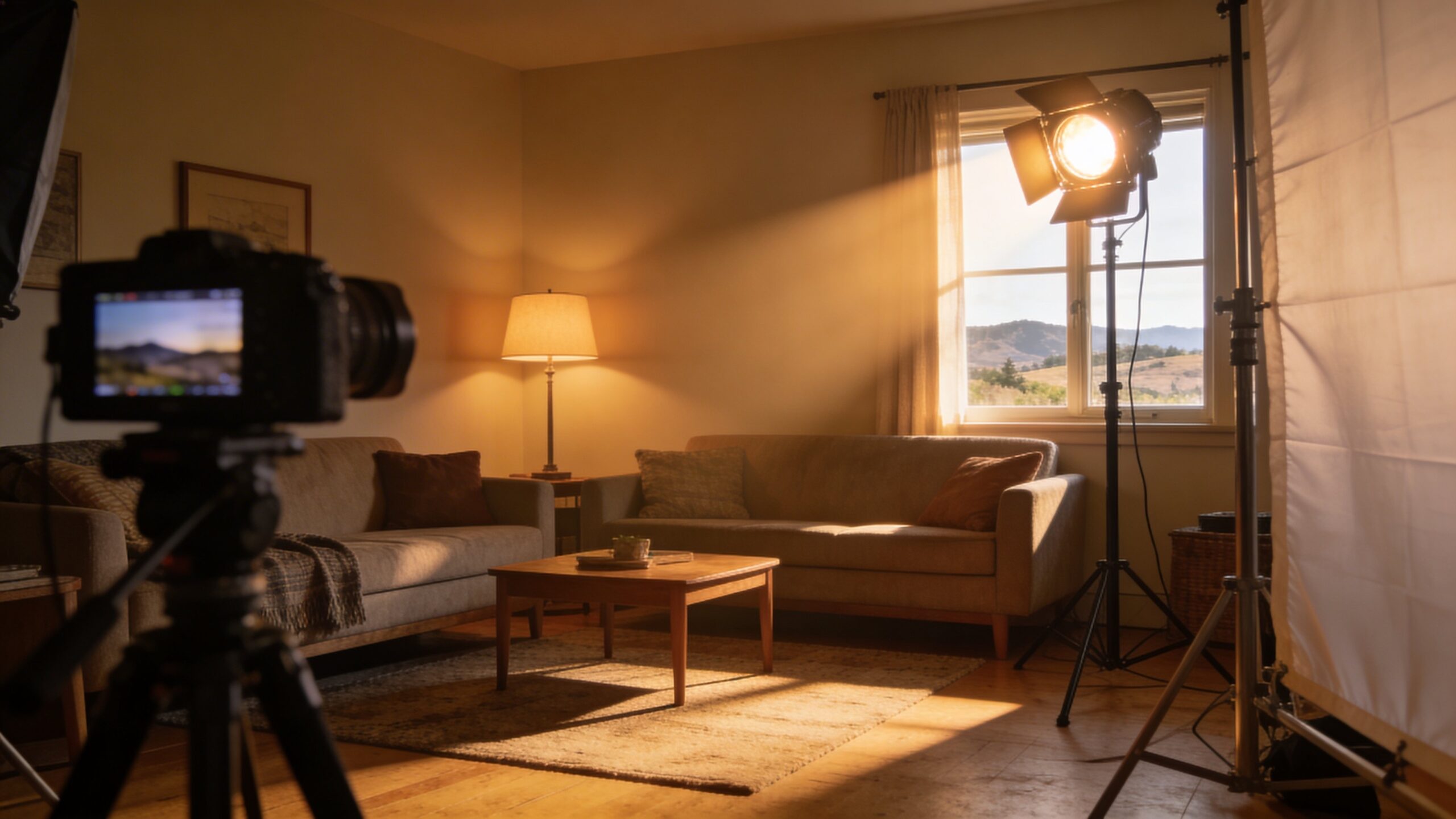
That’s why serious AI workflows emphasize “anchors.” You define a character clearly. You define the environment geometry. You define a lens package look. You define a lighting plan. You create a reference set—images, frames, palettes—and you stick to them like a bible. The new language is less like wishing and more like supervising: your job is to protect the story’s consistency from entropy.
Editing Evolves Into “Selection + Coherence”
AI output often arrives as options. Dozens of variations. Multiple plausible angles. Alternate moods. That shifts editing earlier into the pipeline. You’re not only cutting footage—you’re selecting realities. You’re choosing which version of a character is the “real” one, which lighting is canonical, which set dressing becomes the scene’s truth.
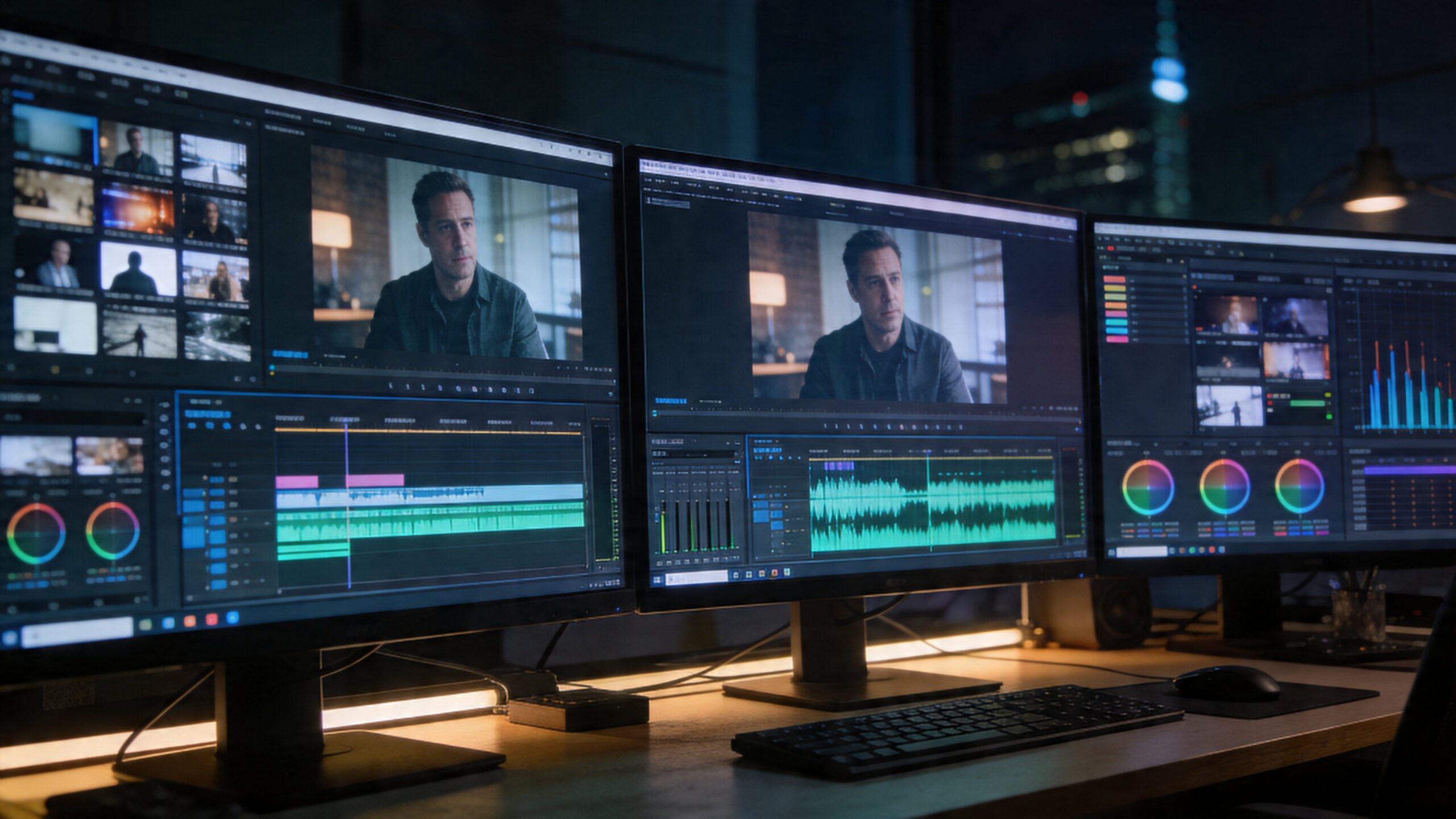
Then you have to make it coherent. Coherence becomes a top-tier creative skill: matching motion, matching grain, matching color behavior, matching camera dynamics, matching performance energy. In traditional filmmaking, coherence is captured on set through discipline. In AI filmmaking, coherence is assembled through curation and refinement. This is where the new language starts to resemble editorial thinking. You learn to generate with the cut in mind: what do you need for a reaction? How long can the shot hold? What kind of motion will cut cleanly? What must remain consistent to preserve spatial logic? The model doesn’t know your edit. You do. So your prompts and iterations start to anticipate the timeline.
A New Role: The AI Cinematic Designer
As tools mature, we’re seeing a new hybrid craft emerge. Call it an AI cinematic designer, a model-side filmmaker, or a generative supervisor. This role sits between production design, cinematography, VFX, and editorial. They define the look system, maintain continuity rules, organize references, and translate directorial intent into a repeatable generation strategy.
This doesn’t replace directors or DPs. It supports them—like how production designers support story through space, or how colorists support story through mood. The language is different, but the goal is the same: emotional clarity. In many ways, it’s the return of a classic truth: cinema is collaborative. AI doesn’t reduce collaboration; it changes who collaborates and where the decisions happen. Instead of “fix it in post,” you get “define it before it exists.”
Performance, Not Just Faces: The Human Core
A lot of AI filmmaking talk fixates on realism—skin texture, lens blur, cinematic lighting. But film lives or dies by performance. The new language is slowly learning to speak performance: micro-expressions, timing, posture, eye focus, breath, and intention. These are subtle, and audiences are ruthless about them. So the best AI filmmaking doesn’t chase “perfect realism.” It chases “believable intention.” It finds ways to preserve human choices: using actors as reference, using consistent performance direction, using motion that feels motivated. It treats the character as more than an image.
This also raises an artistic opportunity: stylization. If you can’t reliably deliver nuanced live performance in every case, you can embrace aesthetics that don’t demand it. Animation has always done this. AI filmmaking can too. The new language includes deciding when to aim for documentary authenticity and when to lean into graphic, painterly, surreal, or heightened cinematic worlds where the audience expects a different kind of truth.
Sound, the Invisible Language Layer
AI visuals get the spotlight, but cinema is audio. Sound is often the glue that makes imperfect images feel intentional. The new language of AI filmmaking includes sound design early: the tone of a room, the texture of footsteps, the emotional weight of silence, the grit of a distant city.
When visuals are generated, sound becomes a powerful stabilizer. A consistent sonic world can make varied images feel like one place. A score motif can bind scenes. A carefully shaped ambience can imply spatial continuity even when the background is imperfect. If you want AI filmmaking to feel like film, treat sound as a first-class creative language, not a finishing touch.
Ethics, Consent, and Trust as Part of Craft
The new language also includes what you don’t do. Filmmaking has always had ethics—safety, consent, representation, truth in documentary. AI adds new ethical terrain: likeness, ownership, training data controversies, disclosure, and the risk of misleading audiences.
Professional practice here looks like clarity and consent: using properly licensed assets, respecting performers, avoiding deceptive work, and being transparent when transparency matters. Audiences may not require a technical explanation, but they do respond to trust. If your work feels manipulative or careless, it breaks the relationship. If it feels intentional and honest, audiences are surprisingly open to new methods—because cinema has always been a form of illusion.
What This Means for Indie Creators
For independents, the shift is enormous. You can prototype worlds you couldn’t afford to build. You can test concepts before raising money. You can create pitch materials that feel like the finished film. You can iterate on tone until your voice becomes obvious. But the competitive edge won’t belong to whoever generates the most images. It will belong to whoever can direct with taste, maintain continuity, and build a coherent emotional experience. The new language rewards storytellers who understand film grammar and can translate it into constraints and revision cycles. In other words: it doesn’t replace fundamentals. It makes fundamentals more valuable. If you understand composition, rhythm, performance, and sound, AI becomes a lever. If you don’t, AI becomes a slot machine.
A Practical Way to Think About the New Language
If you want a grounded mental model, think of AI as a production department that works at the speed of iteration. You still need to be the director. You need references like a production designer. You need shot logic like a DP. You need continuity discipline like a script supervisor. You need selection instincts like an editor. The new language is how you communicate with that department.
It’s also why the best AI filmmaking workflows feel surprisingly traditional. They have bibles. They have shot lists. They have continuity notes. They have look references. They have an editorial plan. The difference is that the “camera” is partially virtual, and the “set” can be described as much as it is built.
Where It’s Going Next
The next phase is not just better realism. It’s better control: consistent characters across scenes, stable environments, reliable motion, editable performances, and deep integration with editing and compositing. As control improves, the language becomes less about clever phrasing and more about real filmmaking parameters: blocking, lens packages, lighting diagrams, scene continuity, and performance direction. At that point, “AI filmmaking” stops being a novelty category and becomes part of filmmaking—like digital color, like CGI, like virtual production. The winners won’t be the ones who used AI first. They’ll be the ones who learned to speak it fluently without losing the human voice inside the work. Because in the end, audiences don’t fall in love with tools. They fall in love with stories—told with intention, shaped with rhythm, and made real by choices. The new language of AI filmmaking is simply the newest way to make those choices visible, repeatable, and shareable across the entire creative process.