Good Script Prompts Are Directing Notes, Not Magic Spells
Prompt engineering for AI film scripts is the craft of giving a model enough story intention, constraints, and context to produce useful development material. It is not about finding a secret phrase that writes a finished screenplay. Strong prompts describe premise, genre, scene purpose, character pressure, tone, format, limits, and the kind of answer the writer needs. Weak prompts ask for a movie and hope the model invents taste. The better the prompt, the more useful the draft, outline, scene test, or rewrite note becomes. The writer still decides what belongs in the film.
Begin With the Job
A good prompt starts by naming the job. Are you asking for a logline, beat sheet, scene outline, dialogue test, rewrite diagnosis, alternate ending, or production-aware simplification. These are different tasks, and the model needs to know which one it is doing.
When the job is vague, the output often becomes overbroad. A request like write a film scene may produce format, dialogue, and action, but it may not solve the problem the writer actually has. A precise job turns the prompt into a development instruction.
Describe the Premise Clearly
The premise should be compact but specific. Include the central situation, protagonist, pressure, obstacle, and genre promise. A model can work with very little, but a thin premise often leads to familiar material.
For example, a prompt about a detective, a missing person, and a secret city may generate a standard mystery. Adding the protagonist's flaw, the social setting, the moral dilemma, and the visual world gives the model better boundaries. Specificity does not limit creativity. It gives the draft something to push against.
Use Constraints on Purpose
Constraints are one of the strongest prompt tools. A writer can set location limits, budget limits, cast size, time period, tone, rating, scene length, amount of dialogue, or visual style. Those boundaries help the AI produce material that is closer to the project.
Constraints also reveal tradeoffs. If a scene must happen in one room with two characters and no exposition, the model has to find pressure in behavior. The writer can then judge whether the scene has drama rather than spectacle.
Give Characters Pressure
Character prompts should include want, fear, secret, tactic, and relationship tension. A model that only receives names and occupations may generate generic dialogue. A model that understands what each person wants from the scene can create more useful conflict.
The prompt should avoid overexplaining backstory unless that backstory affects the moment. The scene needs present pressure. The writer can always develop the biography later, but the prompt should make the character act now.
Ask for Scene Purpose
Every scripted scene should have a purpose. It might reveal a clue, force a choice, change a relationship, escalate danger, create comic reversal, or set up a later payoff. Put that purpose in the prompt before asking for pages.
This keeps the model from writing scenes that merely exchange information. If the purpose is clear, the writer can evaluate whether the generated scene did its job. If the purpose is missing, the output may sound polished while adding little to the story.
Control Tone Carefully
Tone words can be slippery. Words like dark, funny, grounded, cinematic, or emotional mean different things to different people. A better prompt anchors tone through examples of effect rather than imitation. Say the scene should feel restrained, awkward, tense under politeness, or funny because the character is trying too hard.
Avoid asking the model to copy a living writer or a specific protected script. Describe the emotional and structural goal instead. That keeps the work cleaner and gives the writer more control over voice.
Prompt for Alternatives
AI is often most useful when asked for alternatives rather than a single answer. A writer can request three different scene approaches, five possible reversals, or several ways to reveal the same information visually.
The alternatives should be meaningfully different. Ask for versions that change tactic, power dynamic, setting pressure, or emotional outcome. If the options only change surface details, the prompt needs stronger directions. The writer's job is to compare the choices and select what belongs.
Rewrite Prompts Need Diagnosis
A rewrite prompt works best when it includes the problem. Do not simply ask the model to improve a scene. Say whether the issue is weak conflict, flat dialogue, too much exposition, unclear geography, passive protagonist behavior, or an unearned reversal.
The model can then target the revision. Even if the output is not usable as final writing, it may show a path through the problem. Vague improvement prompts often produce smoother but less specific pages. Diagnosis keeps revision useful.
Ask for Less When Needed
Prompt engineering is partly knowing when to ask for less. A full scene may be unnecessary if the writer only needs ten possible beats. A dialogue pass may be unnecessary if the problem is structure. A complete outline may be excessive if the writer is testing one act turn.
Smaller requests make the output easier to judge. They also reduce the chance that the model's default rhythm will take over the project. Writers can use AI in controlled pieces, then assemble and rewrite with intention.
Format Helps Review
Good prompts can request a reviewable format: numbered beats, scene cards, a table of options, a short diagnosis, or screenplay-style pages. The format should fit the decision the writer needs to make.
If the team is comparing endings, a table may be better than prose. If the writer is testing dialogue, pages may be better. Format is not decoration. It controls how quickly humans can evaluate the output.
Protect Voice in the Rewrite
AI-generated screenplay text often trends toward a smooth average voice. Writers should protect specific voice by using AI for structure, pressure, and options, then rewriting lines in the characters' actual rhythms.
A useful prompt may ask for subtext rather than finished dialogue. It can ask what each character is hiding, what tactic they use, and where the power shifts. The writer then writes the lines. This keeps authorship closer to the human voice of the film.
Track Prompt Experiments
Prompt experiments can pile up quickly. Writers should track which prompts created useful results, which produced generic material, and which accidentally shifted the story away from its purpose.
A small prompt log can save time. It also helps collaborators understand why a version changed. If a producer asks where an alternate scene came from, the team can see the prompt context and decide whether the material still fits.
Prompting for Subtext
Subtext is one of the best reasons to prompt carefully. Instead of asking AI to write a polished argument, a writer can ask what each character wants, what each character refuses to admit, and what tactic each person uses to avoid the truth. That produces material the writer can turn into playable dialogue.
A subtext prompt might ask for the hidden version of a scene before asking for the spoken version. The hidden version lists desire, fear, leverage, and avoidance. The spoken version can then be shorter because the writer understands what is underneath.
This keeps the model from overexplaining. Screen dialogue often improves when the characters do not say the thing directly. AI can help identify the pressure, but the writer should still craft the silence, misdirection, and rhythm of the line.
Prompting for Visual Storytelling
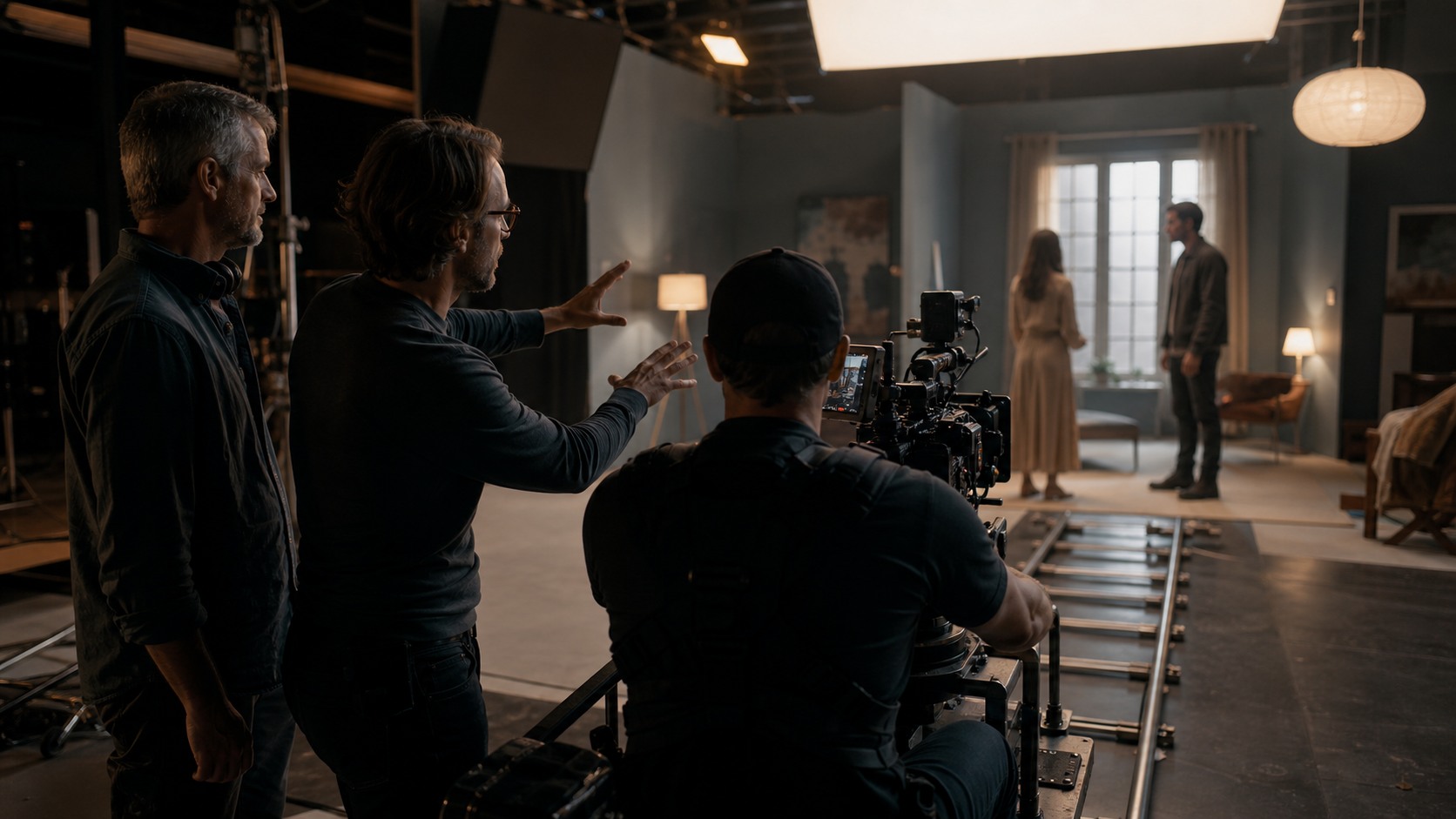
Script prompts should not only ask for dialogue. Film is built from behavior, blocking, objects, camera attention, and image. A strong prompt can ask for ways to reveal information without speech or for props and actions that carry the emotional turn.
This is useful when a draft becomes talk-heavy. The writer might prompt for five visual ways to show distrust, three ways to reveal a secret through blocking, or several object-based payoffs for an earlier setup. Those ideas can then be rewritten into scenes.
The key is to prompt for cinematic choices, not decorative business. A visual action should change what the audience knows or feels. If it only makes the scene busy, it does not belong.
Prompt Safety and Attribution
Prompt engineering also includes boundaries. Writers should avoid prompts that ask for imitation of living writers, direct continuation of protected scripts, or scenes in the exact voice of a famous film. Those shortcuts can create ethical and legal uncertainty.
A safer prompt describes craft goals in original terms: restrained dialogue, escalating suspicion, awkward comic timing, contained production, or a final image that reframes the opening. That gives the model direction without asking it to copy someone else's signature.
Teams should also note where AI helped. The record does not need to be dramatic, but it should be clear enough for collaborators to understand which material was generated, rewritten, rejected, or approved.
Prompting as a Collaboration Habit
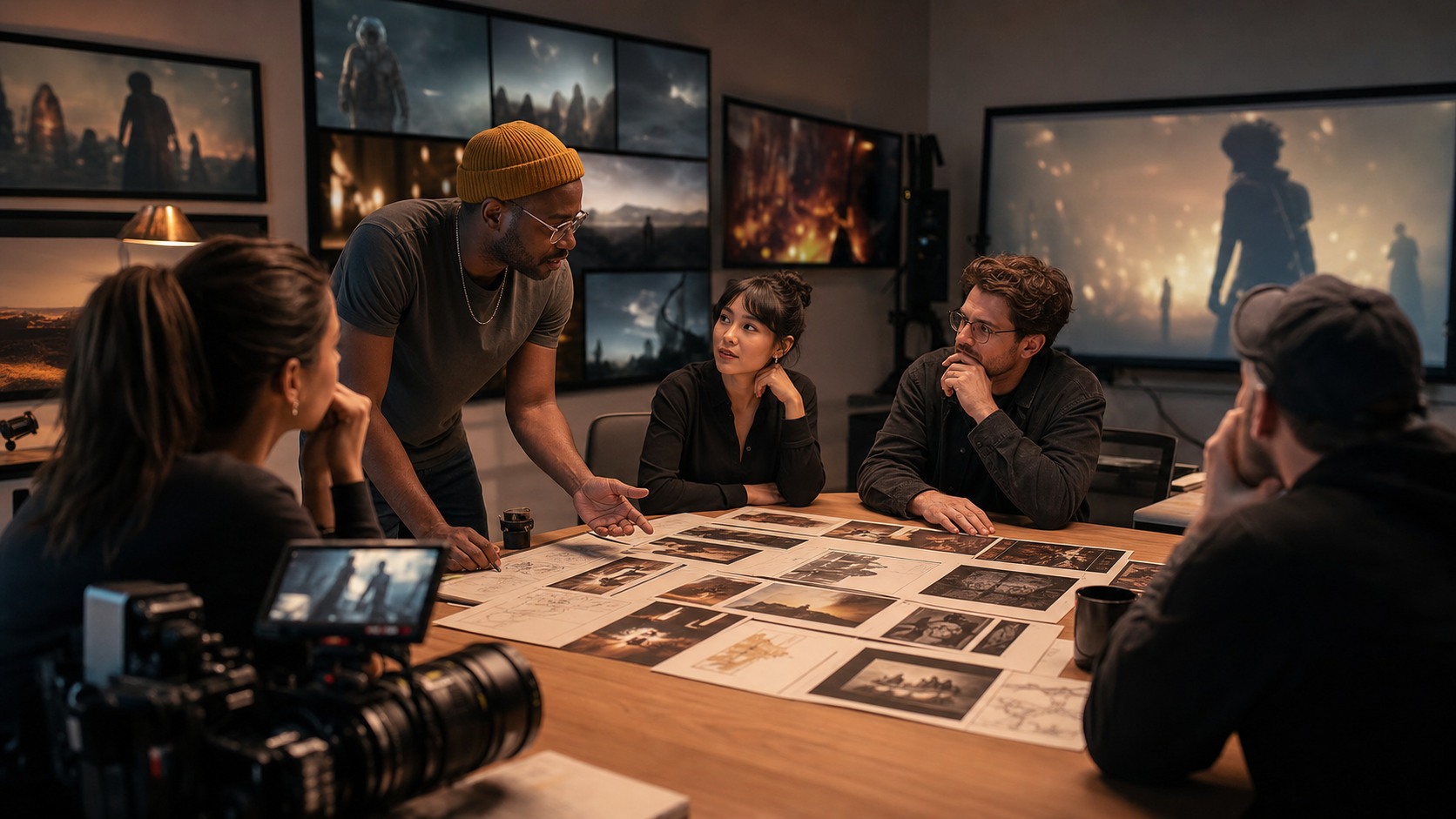
The strongest prompting habit is collaborative rather than solitary. A writer can bring AI-generated options into a room with a director, producer, or editor and ask which choice exposes the real problem. Maybe the scene does not need sharper dialogue; maybe it needs a more active protagonist. Maybe the third option fails, but it reveals a better location or a cleaner reversal.
That process works best when the writer keeps ownership. The model offers material, but the room decides what the material teaches. A useful prompt can become a rehearsal for the creative conversation, helping people name pressure, stakes, rhythm, or tone more clearly.
Prompting also gets better when teams reuse lessons, not sentence patterns. If one prompt showed that a character needs a stronger tactic, the next prompt should reflect that insight in a new way. The goal is an evolving understanding of the script, not a reusable formula that makes every scene sound alike.
Prompting for Constraints at Different Budgets
A prompt for a micro-budget short should not resemble a prompt for a studio feature. The short may need one location, two speaking roles, minimal effects, and a scene that can be shot in daylight. The feature may allow larger set pieces, more characters, and a more complex visual world. Prompt engineering should reflect that production reality.
Budget-aware prompting helps writers avoid seductive but unusable pages. It can ask the model to solve the scene with what the production actually has: a car, a kitchen, a rooftop, a hallway, a small cast, or a single night shoot. Those limits often create better drama because they force pressure into behavior.
This also helps producers read AI-assisted material more clearly. They can see whether the writer is using the tool to solve the real project or to drift into a version that cannot be made.
The Practical Takeaway
Prompt engineering for AI film scripts is about clarity, constraints, and human judgment. The prompt should define the job, premise, pressure, scene purpose, tone, limits, and review format.
The output should be treated as development material, not finished authorship. A good prompt can make AI more useful, but the writer still chooses, rewrites, cuts, and owns the final screenplay.
The strongest prompts behave like clear directing notes. They tell the model what problem to work on, what boundaries to respect, and what kind of decision the writer needs to make afterward.
Use prompts to ask better questions of the script, then turn the answers into deliberate writing.