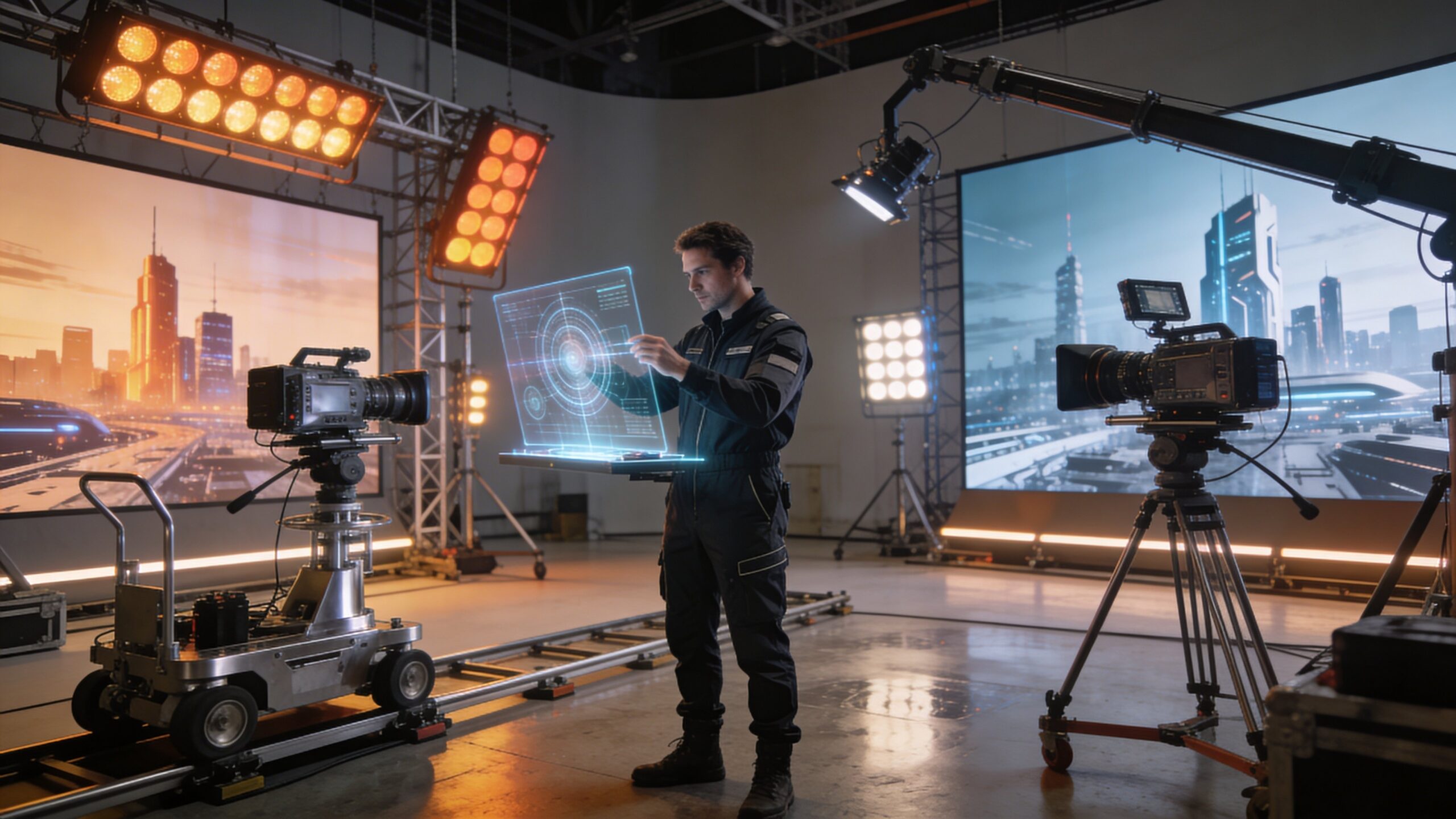
In recent years, artificial intelligence (AI) has made waves across various industries, from healthcare to finance, and entertainment is no exception. One of the most fascinating developments in the world of film and television is the rise of AI directors. While the concept of a machine leading the creative charge in filmmaking might seem like a futuristic fantasy, it is rapidly becoming a reality. But does this mean the end of human directors? Or can AI and human collaboration create a new era of filmmaking? In this article, we will explore the myth, reality, and the implications for creative control when AI enters the director’s chair.
A: No, most tools are designed for non-technical creatives.
A: No, it supports creative decision-making.
A: It can assist, but human storytelling is essential.
A: Many tools are affordable or subscription-based.
A: Yes, they are designed to be intuitive.
A: Only if used without intention.
A: Especially for editing, sound, and color.
A: No, refinement is part of the process.
A: Ownership depends on platform terms and creator input.
A: Faster iteration with creative control.
The Myth: Can AI Really Direct a Film?
The idea of an AI director seems almost absurd at first glance. After all, filmmaking is a deeply human art form. It involves complex decisions about emotion, culture, tone, and nuance—things that seem to require a deeply personal, creative touch. However, with the rapid advancement of AI technologies, some wonder: could a machine one day replace the director’s seat in a studio? Many people dismiss the idea of AI directors as a myth, believing that AI lacks the human elements essential to storytelling. For instance, how can a machine understand the subtleties of human relationships or the cultural context of a specific setting? How can it feel the emotional arc of a character and translate that into compelling visuals? While these concerns are valid, they overlook the increasing sophistication of AI systems. AI may not “feel” in the same way humans do, but it can analyze massive amounts of data, learn patterns, and adapt quickly to new information. This ability to process and synthesize information could make AI a powerful tool in the hands of filmmakers, if not a full replacement for human directors.
The myth of AI directing films, however, is rooted in the belief that creativity is an inherently human trait. Creativity, in the conventional sense, involves inspiration, intuition, and the ability to transcend logic. AI, at its core, operates based on algorithms and pre-programmed rules—doesn’t this limit its potential to create something truly unique? The myth is not entirely unfounded. AI’s ability to create is grounded in data and past examples. It can analyze a vast array of movies, scripts, and visual styles to identify patterns, but can it truly generate a masterpiece? The distinction between “following” patterns and “creating” something novel remains at the heart of the debate.
The Reality: How AI Is Revolutionizing Filmmaking
While it is unlikely that AI will completely replace human directors anytime soon, its role in the filmmaking process is undeniably expanding. Today, AI is already playing a pivotal role in various stages of production, from scriptwriting to editing, to visual effects. But where does the line blur between AI as a tool and AI as a director?
AI in Scriptwriting and Storytelling
AI has proven its ability to assist in the creation of compelling narratives. Tools like OpenAI’s GPT series are capable of generating scripts, storylines, and dialogue, often with surprising depth. These AI systems analyze existing scripts and creative works, learning the structures and techniques that resonate with audiences. They can then produce content that mimics the patterns of successful storytelling.
However, the key to understanding AI’s potential in this space is recognizing that it is not solely generating scripts from scratch. Instead, AI is a co-creator, augmenting human creativity rather than replacing it. Filmmakers and writers can use AI to brainstorm, refine ideas, and accelerate the creative process. This collaboration leads to a symbiosis where AI handles repetitive, technical tasks, and humans inject the emotional and cultural intelligence needed for a nuanced story.
AI in Cinematography and Editing
AI’s involvement in cinematography is another area where it is making a significant impact. In the realm of camera work and editing, AI systems are already capable of identifying the most visually compelling shots, suggesting camera angles, and even determining the best sequence of scenes.
AI-based editing tools are becoming more sophisticated, offering smart suggestions for cuts based on pacing, rhythm, and mood. Algorithms can analyze scenes in real time, determining which shot evokes the most emotional reaction and even suggesting changes to better align with the intended tone of the film. While AI’s input may not replace the human touch entirely, it streamlines the editing process, freeing up directors to focus more on the broader vision rather than getting bogged down in technical decisions.
AI in Visual Effects and Animation
Visual effects (VFX) are another area where AI is revolutionizing the filmmaking process. Generative AI models can create complex visual effects, from digitally de-aging actors to simulating entire worlds in hyper-realistic detail. These systems can learn from existing VFX styles and automatically apply them to new projects, saving time and money.
In animation, AI tools are now being used to automate certain aspects of the animation process, such as facial expression mapping, motion capture refinement, and even entire character designs. This technology makes it easier for animators to bring their ideas to life with far less effort than traditional methods would require.
AI in Personalized Filmmaking
Perhaps one of the most exciting areas of AI-driven innovation in film is personalized filmmaking. With AI, it’s now possible to tailor a film to individual viewers. For example, AI could analyze a viewer’s preferences, including their past movie choices, emotional responses to certain scenes, and even real-time reactions to content. Based on this data, AI could alter a film’s storyline or visuals in real-time, creating a unique viewing experience for each person. While still in its infancy, this concept hints at a future where AI is an active participant in shaping not only the creation but also the consumption of media.
Creative Control: Will AI Take Over?
The rise of AI directors raises an important question: who holds the creative control? As AI systems become more adept at handling various aspects of filmmaking, there is the potential for a shift in the traditional power dynamics between directors, producers, and other creative personnel. On one hand, AI could be seen as a tool that amplifies the director’s vision, offering new ways to express creativity and streamline processes. In this sense, the human director remains at the helm, using AI as a partner rather than a replacement.
However, the possibility that AI could begin to take over more creative functions is a real concern. As machine learning algorithms improve, they may be able to make decisions previously reserved for human creators. AI could theoretically decide on casting, suggest plot twists, and even determine character arcs—all based on data rather than intuition. In the future, directors may not be the sole decision-makers in the creative process. Instead, they may work in tandem with AI, directing the technology toward their vision. It’s important to note, however, that no matter how sophisticated AI becomes, there will always be elements of human intuition, emotion, and culture that a machine cannot replicate entirely.
Ethical Implications and the Future of AI in Filmmaking
As AI continues to play a larger role in filmmaking, questions about ethics and creative integrity will become increasingly important. If AI is used to generate scripts or make casting decisions, who owns the intellectual property? Can AI be held accountable for a film’s success or failure?
Additionally, as AI systems become more autonomous, there is the risk of bias in decision-making. Since AI learns from existing data, it may perpetuate stereotypes or reflect the biases inherent in the datasets it was trained on. This raises important questions about how to ensure AI-driven films are inclusive, diverse, and reflective of a broad range of human experiences. In the long term, AI’s role in filmmaking will likely evolve as technology advances. Rather than replacing human directors, AI will likely become an essential part of the creative process, offering new tools and insights that empower filmmakers. But the heart of cinema—the human stories, emotions, and cultural nuances—will remain a domain where humans are irreplaceable.
Conclusion: AI and the Future of Filmmaking
The rise of AI directors is neither a myth nor a completely realized reality—it is somewhere in between. AI is already transforming the filmmaking process, offering new tools for scriptwriting, cinematography, editing, and visual effects. However, the idea of an entirely AI-driven director is still a long way off. As we look to the future, it is clear that AI will play an increasingly vital role in filmmaking. But rather than replacing human directors, it will likely serve as a powerful ally, streamlining processes and enhancing creativity. The key to the future of filmmaking lies in the collaboration between humans and machines, where AI takes care of the technical tasks, and humans bring the emotion, culture, and vision that make films unforgettable. In the end, the director’s chair will always be a place where the human touch is essential. AI can assist, but it cannot replace the unique, unpredictable creativity that only humans can bring to the art of storytelling. As technology and creativity continue to evolve, the future of filmmaking will be a fascinating blend of human vision and AI precision.